News

Domo Named a ‘One to Watch’ in Snowflake’s Modern Marketing Data Stack Report
marketing 30 Jun 2026
As enterprise marketing shifts toward AI-powered decision-making, governed data has become a prerequisite for effective personalization and automation. Reflecting that evolution, Domo has been recognized by Snowflake as an Analytics & Measurement "One to Watch" in the latest edition of The Modern Marketing Data Stack: Governing the Agentic Enterprise, highlighting the growing role of AI-ready analytics platforms in modern marketing operations.
Artificial intelligence is fundamentally changing how enterprise marketing teams collect, analyze, and activate customer data. However, as organizations expand AI adoption, many continue to struggle with fragmented data environments, inconsistent governance, and disconnected analytics systems that limit the effectiveness of AI-driven marketing.
Domo announced that it has been recognized by Snowflake as an Analytics & Measurement "One to Watch" in the fifth edition of The Modern Marketing Data Stack: Governing the Agentic Enterprise. The recognition highlights Domo's capabilities in helping organizations operationalize marketing data and deliver AI-powered insights through its analytics platform and integration with Snowflake Cortex.
The annual report reflects a broader transformation occurring across enterprise marketing technology.
Rather than relying on disconnected point solutions, organizations are increasingly building unified marketing ecosystems centered on governed, AI-ready data. According to Snowflake, this year's report draws insights from more than 11,500 customers and ecosystem partners spanning 13 technology categories, illustrating how enterprises are modernizing marketing infrastructure to support faster execution, intelligent automation, and trusted AI.
Domo's recognition comes within the Analytics & Measurement category, where the company was acknowledged for enabling organizations to transform complex marketing data into operational insights that frontline marketing teams can access in real time.
The announcement underscores one of the defining trends shaping enterprise marketing.
Generative AI, predictive analytics, and autonomous marketing agents all depend on consistent, high-quality customer data. Without trusted governance, AI models risk generating inaccurate recommendations, inconsistent personalization, or unreliable business insights.
Domo's platform addresses this challenge by combining data integration, business intelligence, workflow automation, and AI-powered analytics within a unified environment. Its integration with Snowflake Cortex extends those capabilities by enabling organizations to leverage governed enterprise data while deploying AI-powered applications closer to where business information resides.
The concept aligns with the growing adoption of the agentic enterprise, where autonomous AI systems assist employees by analyzing data, recommending actions, and automating operational workflows. Instead of manually preparing reports or building dashboards, marketing teams increasingly expect AI to surface actionable insights, identify opportunities, and support real-time decision-making.
This evolution is changing the role of analytics platforms.
Traditional business intelligence solutions focused primarily on historical reporting. Modern analytics platforms are increasingly expected to support predictive modeling, conversational AI, workflow orchestration, and intelligent automation that directly influence business outcomes across customer acquisition, campaign optimization, and customer retention.
The partnership between Domo and Snowflake reflects broader industry momentum toward composable AI ecosystems built upon secure cloud data platforms.
Major technology providers including Google, Microsoft, Salesforce, Adobe, and Amazon continue expanding AI-powered analytics and customer engagement capabilities, emphasizing unified data architectures that enable enterprise AI initiatives while maintaining governance, compliance, and security.
Marketing organizations are particularly affected by these developments.
As customer interactions span websites, mobile applications, e-commerce platforms, advertising channels, CRM systems, and customer service operations, marketers require analytics platforms capable of consolidating diverse data sources into a trusted operational foundation for AI-powered decision-making.
Industry analysts continue to identify governed data as a critical factor for enterprise AI success. Gartner has emphasized that organizations investing in AI-ready data management and decision intelligence are better positioned to scale intelligent business operations. Similarly, IDC forecasts continued enterprise investment in cloud analytics, AI platforms, and unified data ecosystems as businesses accelerate digital transformation initiatives.
Beyond product recognition, Domo's inclusion in Snowflake's report illustrates the increasing convergence of analytics, artificial intelligence, and enterprise marketing operations. Rather than functioning as standalone reporting tools, analytics platforms are becoming operational intelligence systems capable of supporting autonomous marketing execution and real-time business optimization.
As organizations continue building AI-enabled marketing infrastructures, technologies that combine governed data, cloud-native analytics, and intelligent automation are expected to become essential components of modern MarTech stacks. Recognition within Snowflake's ecosystem signals growing industry focus on analytics platforms that not only visualize data but also transform trusted information into actionable intelligence for enterprise marketing teams.
Market Landscape
Enterprise marketing organizations are shifting from fragmented analytics environments to unified, AI-powered data ecosystems built on governed cloud platforms. Gartner identifies AI-ready data management and decision intelligence as strategic priorities for digital transformation, while IDC projects sustained growth in enterprise spending on cloud analytics and artificial intelligence. As organizations adopt agentic AI and autonomous marketing workflows, platforms capable of combining trusted data, analytics, and operational intelligence are becoming foundational to modern marketing technology strategies.
Top Insights
- Domo has been recognized by Snowflake as an Analytics & Measurement "One to Watch" for helping organizations operationalize AI-ready marketing data through governed analytics.
- The recognition reflects growing enterprise demand for unified analytics platforms that combine data governance, AI insights, and operational decision-making across marketing functions.
- Domo's integration with Snowflake Cortex enables organizations to deploy AI-powered analytics closer to governed enterprise data, improving marketing agility and operational efficiency.
- Snowflake's latest Modern Marketing Data Stack report highlights the industry's transition toward agentic AI systems built on secure, trusted, and connected data foundations.
- AI-powered analytics platforms are evolving beyond reporting tools into operational intelligence systems that support real-time personalization, campaign optimization, and business decision-making.
Get in touch with our MarTech Experts
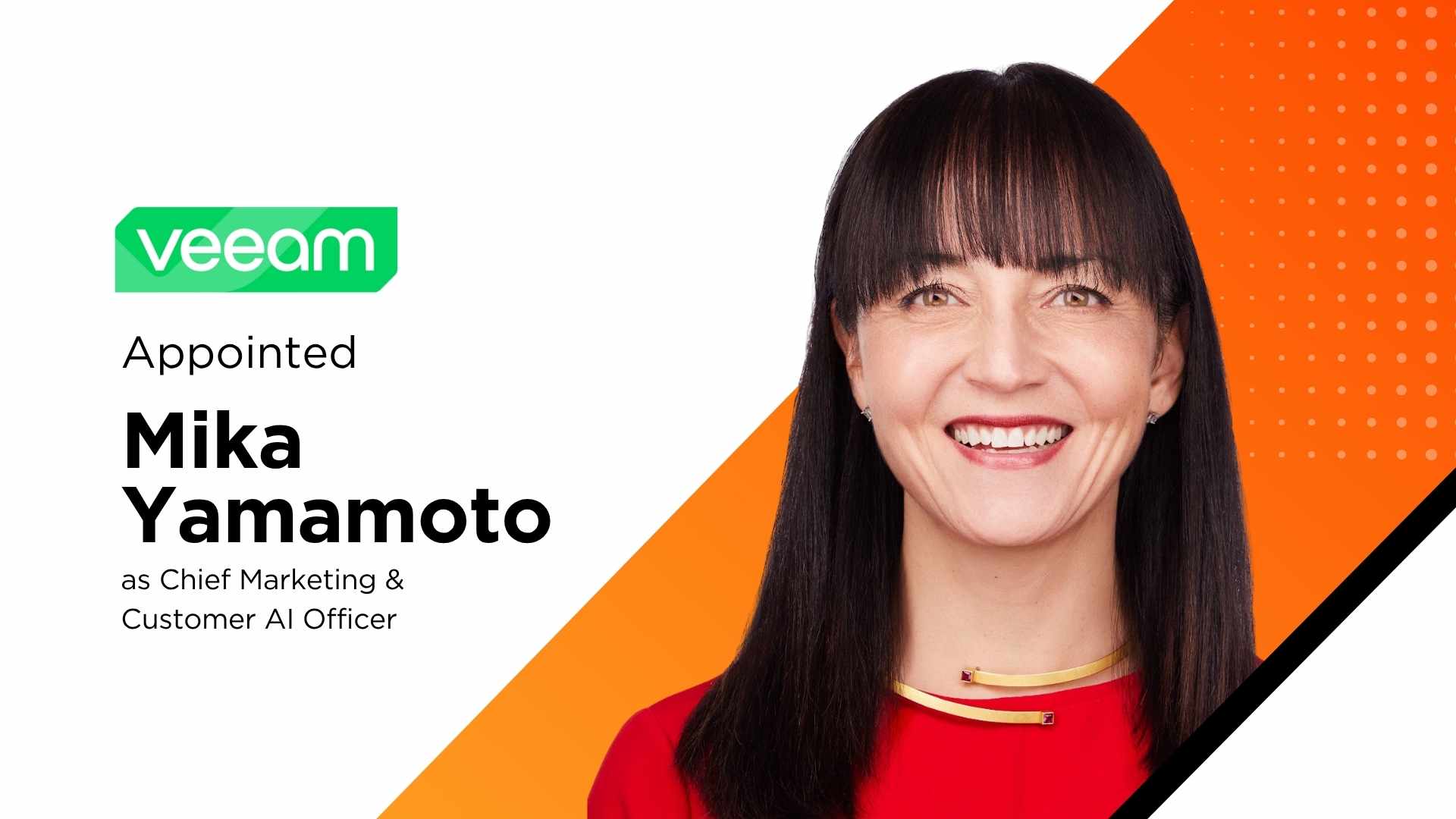
Veeam Appoints Mika Yamamoto as Chief Marketing and Customer AI Officer
marketing 30 Jun 2026
As enterprises accelerate AI adoption, technology vendors are increasingly reshaping executive leadership to align marketing, customer experience, and artificial intelligence strategies. Veeam Software has appointed veteran technology executive Mika Yamamoto as its new Chief Marketing and Customer AI Officer, expanding the role of marketing leadership to include AI-driven customer engagement and experience across the company's global operations.
Artificial intelligence is changing not only enterprise technology platforms but also the structure of executive leadership teams. As organizations seek to deliver more personalized customer experiences while helping enterprises navigate AI adoption, marketing leaders are increasingly taking responsibility for AI strategy, customer engagement, and digital transformation.
Veeam Software has appointed Mika Yamamoto as Chief Marketing and Customer AI Officer, a newly expanded executive role that combines global marketing leadership with responsibility for the company's customer AI strategy. The appointment reflects Veeam's broader focus on helping enterprises securely manage the data infrastructure that powers artificial intelligence initiatives.
In her new position, Yamamoto will oversee Veeam's worldwide marketing organization while leading the company's customer AI framework. According to Veeam, the framework is intended to ensure customer interactions become increasingly personalized, context-aware, and connected across the customer lifecycle by leveraging data-driven intelligence.
The appointment comes as enterprises continue investing heavily in AI technologies while seeking greater clarity around governance, security, and data management. Rather than focusing solely on product promotion, enterprise marketing organizations are increasingly expected to educate customers, simplify AI adoption, and demonstrate measurable business outcomes.
Yamamoto brings more than two decades of leadership experience spanning marketing, customer success, sales, product strategy, and enterprise software.
Most recently, she served as Chief Integrated Customer Growth Officer at Freshworks, where she led AI-powered customer and employee experience initiatives across marketing, sales, customer success, and support. Prior to that, she was Chief Customer Engagement and Marketing Officer at F5, overseeing customer engagement modernization and digital transformation initiatives across networking and cybersecurity markets.
Her executive experience also includes leadership positions at Marketo, Adobe, SAP, and Microsoft, alongside earlier roles as a Research Vice President at Gartner and a consultant at Accenture. Yamamoto also serves on the board of BlackLine, where she chairs the Compensation Committee.
The appointment highlights a broader trend emerging across enterprise software companies.
Chief Marketing Officers are increasingly responsible for integrating artificial intelligence into customer engagement strategies, reflecting the growing convergence of marketing technology, customer experience, and AI-driven business operations. Rather than operating as separate organizational functions, marketing, customer success, and AI initiatives are becoming increasingly interconnected through unified customer data and intelligent automation.
For Veeam, whose platform focuses on data resilience, backup, recovery, cybersecurity, and AI-ready data management, customer trust remains central to its value proposition. As enterprises deploy generative AI, agentic AI systems, and intelligent automation across business operations, ensuring secure, accessible, and governed data has become a prerequisite for successful AI implementation.
The newly created executive role underscores Veeam's belief that customer engagement should evolve alongside advances in artificial intelligence. Instead of treating AI solely as a product capability, the company is integrating AI into how customers discover, evaluate, adopt, and expand their use of Veeam's technologies.
The appointment also reflects wider developments across enterprise technology.
Companies including Google, Microsoft, Salesforce, Adobe, and Amazon continue expanding AI capabilities across their enterprise software portfolios, while simultaneously investing in AI-powered customer engagement, marketing automation, and intelligent customer experience platforms. Executive leadership structures are evolving to support these integrated strategies, combining brand development, AI governance, customer experience, and go-to-market execution under unified leadership.
Industry analysts continue to emphasize the importance of customer-centric AI adoption. According to Gartner, organizations are increasingly prioritizing trustworthy AI, decision intelligence, and customer-centric digital transformation initiatives that combine technological innovation with governance and operational transparency. Meanwhile, IDC projects continued growth in enterprise spending on AI-enabled customer experience technologies as businesses modernize engagement across sales, marketing, and support functions.
For enterprise organizations evaluating AI investments, leadership appointments such as Yamamoto's illustrate how customer engagement is becoming an increasingly strategic component of AI transformation. Rather than viewing marketing solely as a demand generation function, technology companies are positioning customer understanding, AI adoption, and data-driven experiences as core business capabilities.
As enterprises continue balancing rapid AI innovation with security, governance, and customer trust, executive roles that combine marketing leadership with AI strategy are expected to become increasingly common across the enterprise software industry.
Market Landscape
Enterprise software vendors are increasingly integrating AI into marketing, customer experience, and go-to-market operations. Gartner identifies trustworthy AI and customer-centric digital transformation as strategic priorities, while IDC forecasts sustained growth in enterprise investments across AI-powered customer engagement and intelligent business applications. As organizations build AI-driven operations, executives capable of connecting marketing strategy, customer experience, and AI governance are becoming critical to long-term business growth.
Top Insights
- Veeam has appointed Mika Yamamoto as Chief Marketing and Customer AI Officer, expanding executive responsibility to include global marketing and AI-driven customer engagement.
- The new role reflects growing convergence between marketing, customer experience, and artificial intelligence as enterprise software vendors modernize customer interactions.
- Yamamoto brings leadership experience from Freshworks, F5, Marketo, Adobe, SAP, Microsoft, Gartner, and Accenture, spanning marketing, AI, and customer success.
- Veeam aims to strengthen customer understanding through AI-powered engagement while supporting enterprises managing secure, AI-ready data infrastructure.
- The appointment highlights a broader enterprise trend where AI strategy is becoming an integral component of executive marketing leadership.
Get in touch with our MarTech Experts

Manago AI Rebrands From SALESmanago, Introduces Agentic AI for Customer Engagement
artificial intelligence 30 Jun 2026
Marketing automation platforms are rapidly evolving into AI-driven customer engagement systems capable of making decisions, creating campaigns, and acting on customer insights with minimal manual intervention. Reflecting that industry shift, Manago AI—formerly known as SALESmanago—has unveiled a new corporate identity alongside a suite of agentic AI capabilities designed to simplify customer engagement for e-commerce brands and accelerate campaign execution.
Artificial intelligence is redefining how marketing teams manage customer relationships, moving beyond workflow automation toward autonomous decision-making. As brands seek to deliver increasingly personalized experiences across multiple channels, marketing platforms are racing to reduce the time between customer insight and campaign execution.
Manago AI, formerly operating as SALESmanago, has announced a comprehensive platform evolution that includes a corporate rebrand, expanded agentic AI capabilities, an updated user experience, and a simplified commercial model aimed at helping growing businesses adopt AI-powered customer engagement more efficiently.
The rebranding marks a strategic transition for one of Europe's early marketing automation providers as it positions itself around intelligent customer engagement rather than traditional campaign automation. The company's latest platform focuses on enabling marketers to analyze customer behavior, generate campaigns, automate execution, and personalize interactions through conversational AI powered by natural language prompts.
Rather than requiring marketers to manually configure audiences, workflows, and campaign logic, Manago AI enables users to interact with the platform using everyday language. Marketing teams can request customer analyses, build audience segments, create omnichannel campaigns, and receive recommendations for next-best actions without navigating multiple interfaces or complex automation builders.
The launch reflects a broader transformation underway across the marketing technology industry.
Traditional marketing automation platforms have largely centered on rule-based workflows, email sequences, and predefined customer journeys. Agentic AI platforms introduce a different operating model by allowing intelligent systems to interpret customer signals, recommend strategic actions, generate campaign assets, and automate execution while maintaining human oversight.
According to Manago AI, its platform is built on a unified architecture that combines customer data, engagement channels, predictive intelligence, and automation within a single environment. This architecture enables marketers to move from customer insight to campaign activation within minutes rather than days, reducing operational bottlenecks that frequently delay marketing initiatives.
The company's latest AI capabilities span multiple stages of the marketing lifecycle.
Users can build customer journeys through conversational prompts, automatically generate campaign briefs, produce email copy and subject lines, create brand-aligned marketing images, identify high-value customer segments, and deliver personalized product recommendations across digital channels. The platform also analyzes behavioral signals to recommend the next most effective customer engagement opportunities.
Beyond product enhancements, the company has introduced a simplified commercial model featuring flexible packaging, transparent pricing, and AI-assisted onboarding designed to shorten implementation timelines for growing organizations.
The announcement aligns with broader enterprise investment in agentic AI.
Technology providers including Google, Microsoft, Salesforce, Adobe, and Amazon have expanded AI-powered capabilities across their enterprise platforms over the past year, introducing autonomous assistants, conversational interfaces, predictive analytics, and workflow automation. Manago AI's latest release reflects the same industry direction while focusing specifically on customer engagement and e-commerce marketing.
One notable aspect of the platform is its emphasis on reducing marketing complexity rather than simply adding AI functionality. Many organizations continue to manage disconnected customer data, multiple engagement channels, and fragmented marketing tools that slow campaign execution despite increasing technology investments.
By integrating customer intelligence, omnichannel messaging, AI-generated content, and automation into a single platform, Manago AI aims to address these operational challenges while enabling marketers to remain responsible for strategic decision-making.
Industry research continues to support growing enterprise adoption of AI-driven marketing technologies. Gartner has identified generative AI and autonomous decision intelligence as transformative capabilities for customer engagement platforms, while McKinsey & Company estimates that organizations implementing advanced AI-powered personalization can improve marketing productivity and achieve revenue growth of 5% to 15%.
For e-commerce businesses, these capabilities are becoming increasingly important as customer expectations evolve toward individualized experiences delivered across email, SMS, websites, mobile applications, and other digital channels. AI systems capable of continuously interpreting behavioral signals and responding with personalized recommendations may provide competitive advantages in customer acquisition, retention, and lifetime value.
The rebranding from SALESmanago to Manago AI therefore represents more than a visual identity change. It reflects a strategic repositioning around autonomous marketing operations, where artificial intelligence functions not only as a productivity tool but as an active participant in customer engagement workflows.
As enterprise marketing technology continues shifting toward agentic AI, platforms that combine unified customer data, conversational interfaces, predictive intelligence, and automated execution are expected to play an increasingly central role in helping brands simplify operations while delivering more relevant customer experiences at scale.
Market Landscape
The global marketing technology market is entering a new phase driven by agentic AI, unified customer data, and autonomous decision-making. Gartner identifies generative AI and decision intelligence as strategic priorities for enterprise customer engagement, while McKinsey & Company reports that organizations adopting AI-powered personalization consistently outperform competitors in customer acquisition and revenue growth. As marketing teams seek to reduce operational complexity while scaling personalization, AI-native customer engagement platforms are becoming a cornerstone of modern MarTech stacks.
Top Insights
- Manago AI has rebranded from SALESmanago, reflecting its transition from traditional marketing automation to an AI-powered customer engagement platform built around agentic intelligence.
- The platform introduces conversational AI that enables marketers to analyze customer behavior, create campaigns, build audiences, and automate execution using natural language prompts.
- Unified customer data, omnichannel engagement, predictive analytics, and AI-generated marketing content work together to reduce campaign execution time from days to minutes.
- A simplified pricing model and AI-powered onboarding are designed to accelerate implementation and improve time-to-value for growing e-commerce businesses.
- The launch aligns with broader enterprise adoption of agentic AI as organizations modernize customer engagement and marketing operations through autonomous decision-making.
Get in touch with our MarTech Experts

Universities Face £2 Billion Clearing Challenge as Contact Center Performance Becomes Critical
marketing 30 Jun 2026
While exam season has ended for secondary school students across the UK, another period of intense pressure is just beginning for universities. As institutions prepare for the annual UCAS Clearing process, the ability to answer prospective students quickly has become more than a customer service metric—it is increasingly a financial and operational priority. New insights from business communications provider 8x8 suggest that contact center performance could play a significant role in determining student recruitment outcomes during one of higher education's busiest admission periods.
The annual UCAS Clearing process has evolved into one of the most demanding operational events for UK universities. Over a matter of days, thousands of prospective students contact admissions teams to secure available university places, creating sharp spikes in call volumes that can overwhelm traditional communications infrastructure.
According to 8x8 Inc., universities could collectively compete for more than £2 billion in tuition revenue during this year's Clearing period, underscoring the growing importance of scalable customer experience (CX) technologies in higher education.
The estimate is based on projections that more than 80,000 students may apply through Clearing, with each undergraduate place representing approximately £29,000 in tuition revenue over a standard three-year degree. While student recruitment has always been a strategic priority, the increasing competitiveness of the UK higher education sector means every unanswered enquiry or abandoned call may translate into lost enrolments.
Clearing traditionally begins after A-level results are released and allows students without confirmed university placements to apply for available courses. Because many admissions decisions are made on a first-come, first-served basis, response times have become a critical operational metric for universities seeking to maximize student intake.
Data shared by 8x8 highlights significant differences in how institutions managed peak demand during the previous Clearing cycle.
Universities using the company's cloud communications platform reportedly answered calls in as little as eight seconds during high-volume periods. By comparison, publicly available reports and online discussions referenced by the company suggest that applicants contacting some institutions without comparable contact center capabilities experienced wait times exceeding 18 minutes.
Although individual university performance varies depending on staffing, infrastructure, and demand, the findings illustrate the broader role that cloud-based customer engagement platforms are beginning to play outside traditional commercial industries.
Higher education has increasingly embraced customer experience technologies commonly used across retail, banking, and telecommunications. Admissions teams now rely on cloud contact centers, omnichannel communications, workforce management, conversational AI, and real-time analytics to manage large-scale applicant interactions while maintaining service quality during peak enrolment periods.
The University of Worcester, cited by 8x8, handled more than 3,300 Clearing calls during last year's admissions cycle with an average wait time of 32 seconds, while maintaining wait times below ten seconds on its busiest day.
Beyond operational efficiency, shorter response times may directly influence recruitment outcomes. Students applying through Clearing often contact multiple universities within a short timeframe, making the speed and quality of admissions support increasingly important in competitive decision-making.
The challenge also reflects wider digital transformation across higher education.
Universities continue modernizing legacy communications systems as they balance rising student expectations with constrained budgets. Cloud-native customer experience platforms enable institutions to scale rapidly during seasonal demand, integrate digital channels such as voice, web chat, SMS, and messaging, and provide admissions teams with unified access to applicant information.
Artificial intelligence is also becoming a larger component of university communications strategies. AI-powered virtual assistants, automated call routing, conversational analytics, and predictive workforce planning help institutions manage surging enquiry volumes while reducing administrative workloads for admissions staff.
Major enterprise technology vendors including Google, Microsoft, Salesforce, and Adobe have expanded AI-powered customer engagement capabilities in recent years, reflecting growing demand for intelligent customer experience solutions across both public and private sectors. Providers such as 8x8 are applying similar innovations to education, where seasonal demand creates unique operational challenges.
Industry analysts continue to emphasize customer experience as a competitive differentiator beyond traditional commercial markets. According to Gartner, organizations are increasingly investing in AI-enabled customer service and cloud communications platforms to improve responsiveness and operational resilience. IDC similarly forecasts continued growth in cloud-based customer experience technologies as organizations prioritize digital engagement.
For universities, Clearing is no longer solely an admissions process—it has become a large-scale customer engagement operation where technology infrastructure directly supports recruitment objectives. Institutions capable of combining scalable communications platforms with AI-driven customer service tools may be better positioned to respond quickly during peak demand while improving applicant satisfaction.
As student expectations continue to evolve and competition for enrolments intensifies, investment in modern contact center technology is likely to become an increasingly important component of higher education's digital transformation strategy.
Market Landscape
Higher education institutions are accelerating investments in digital customer experience platforms as student recruitment becomes increasingly competitive. Gartner identifies cloud contact centers and AI-powered customer service as strategic priorities for organizations managing high-volume customer interactions, while IDC projects continued growth in cloud communications and customer engagement technologies. Universities are adopting capabilities such as omnichannel communications, conversational AI, workforce optimization, and real-time analytics to improve admissions efficiency and deliver better applicant experiences during critical enrolment periods like UCAS Clearing.
Top Insights
- UK universities face more than £2 billion in potential tuition revenue during UCAS Clearing, making contact center responsiveness an increasingly important recruitment and customer experience priority.
- 8x8 reports significant differences in applicant wait times, highlighting how cloud communications infrastructure can influence admissions efficiency during peak demand periods.
- Universities are increasingly adopting AI-powered customer engagement technologies, including cloud contact centers, conversational AI, and workforce optimization, to support student recruitment.
- Fast response times during Clearing can improve applicant experiences while helping institutions compete more effectively for prospective students in an increasingly competitive higher education market.
- The findings demonstrate how customer experience technology is expanding beyond enterprise sectors into education, where digital transformation is reshaping admissions operations.
Get in touch with our MarTech Experts

Klaviyo Expands AI CRM With Composer and Customer Agent to Unify Marketing and Customer Service
artificial intelligence 30 Jun 2026
Artificial intelligence is reshaping how brands engage customers, but many businesses still struggle to generate measurable returns from AI investments. Klaviyo is addressing that challenge by expanding its AI-powered CRM platform with two autonomous AI agents designed to connect marketing and customer service around a shared customer profile. The company has announced the public beta of Composer, its AI marketing agent, alongside significant enhancements to Customer Agent, positioning the platform as an integrated revenue growth engine for consumer brands.
As enterprise marketers increasingly adopt artificial intelligence, many organizations continue to face a familiar challenge: AI tools often operate in isolation. Marketing automation platforms, customer service applications, and customer relationship management systems frequently maintain separate data environments, limiting their ability to deliver consistent, personalized customer experiences.
Klaviyo announced a major expansion of its AI capabilities by introducing the public beta of Composer, an AI marketing agent, while enhancing Customer Agent, its AI-powered customer service assistant. Both agents operate within Klaviyo's autonomous B2C CRM platform, sharing the same real-time customer profile to help brands improve campaign performance, personalize customer interactions, and drive revenue.
Unlike standalone generative AI assistants, Klaviyo's approach centers on contextual intelligence. The platform continuously analyzes customer behavior, purchase history, engagement signals, and service interactions, enabling both AI agents to make decisions based on a unified view of each customer.
The announcement reflects an emerging trend across enterprise customer engagement platforms, where AI is evolving from content generation toward autonomous decision-making. Rather than simply helping marketers write emails or answer customer questions, intelligent agents are increasingly expected to identify business opportunities, recommend actions, automate execution, and continuously learn from customer interactions.
Composer represents Klaviyo's latest step in that direction.
Designed as an AI marketing agent, Composer analyzes campaigns, customer segments, and automated workflows to identify potential revenue opportunities. It evaluates existing marketing programs, detects underperforming customer journeys, and recommends improvements before generating complete cross-channel campaigns that include audience selection, email content, SMS messaging, and campaign structure.
According to Klaviyo, the platform leverages more than 14 years of customer engagement data, campaign performance insights, and best practices derived from nearly 200,000 brands. Marketing teams maintain final approval before campaigns are deployed, allowing AI to accelerate execution while preserving human oversight.
Early users including AS Beauty, SPANX, and Dermalogica tested Composer during its private beta, using the platform to identify workflow conflicts, optimize automated journeys, and uncover campaign opportunities that might otherwise have remained hidden.
Customer Agent extends the same intelligence into customer support.
Traditional AI-powered service assistants often respond only to information available within a support conversation. Klaviyo's Customer Agent instead accesses the same customer profile used by Composer, including purchase history, browsing activity, previous marketing interactions, product preferences, and behavioral signals. This shared context enables the assistant to deliver more personalized responses while completing customer service tasks such as processing returns, applying loyalty rewards, recommending products, and supporting multilingual conversations.
A distinguishing aspect of the platform is the continuous exchange of intelligence between both AI agents. Customer service interactions update customer preferences and intent signals, enriching future marketing campaigns. Marketing engagement data simultaneously helps Customer Agent personalize future conversations, creating what Klaviyo describes as a self-improving operational cycle.
This bidirectional data sharing addresses one of the longstanding limitations of customer relationship management systems. Historically, marketing automation, customer service, and sales technologies have operated independently despite relying on many of the same customer signals. AI agents built upon unified customer data may help organizations eliminate those silos while improving both operational efficiency and customer experience.
The announcement also reflects broader developments across the enterprise software market. Companies including Google, Microsoft, Salesforce, and Adobe have significantly expanded their AI offerings by introducing intelligent assistants, workflow automation, and predictive customer analytics into their cloud platforms. Klaviyo's latest release differentiates itself by focusing specifically on consumer brands through tightly integrated marketing and customer service intelligence.
Industry analysts continue to view AI-powered personalization as a significant competitive advantage. Gartner projects that autonomous AI capabilities will increasingly become embedded within customer engagement platforms, enabling organizations to automate decision-making while improving customer satisfaction. Meanwhile, McKinsey & Company estimates that businesses implementing advanced personalization strategies can increase revenue by 5% to 15% while improving marketing efficiency and customer retention.
For retailers, direct-to-consumer brands, and e-commerce businesses, integrated AI agents may become particularly valuable as customer expectations for personalized experiences continue rising across digital channels, including email, SMS, web chat, and messaging platforms such as WhatsApp.
Rather than treating AI as a collection of disconnected productivity tools, Klaviyo's latest product expansion signals a broader industry shift toward autonomous customer relationship management, where intelligent agents collaborate across marketing and service functions using a single source of customer truth. As enterprises continue modernizing customer engagement infrastructure, platforms capable of combining unified data with coordinated AI decision-making are likely to play an increasingly central role in digital commerce strategies.
Market Landscape
Enterprise CRM platforms are rapidly evolving into AI-powered decision engines capable of orchestrating personalized customer experiences across multiple channels. Gartner identifies autonomous AI and decision intelligence as emerging priorities for customer engagement technologies, while McKinsey & Company reports that organizations adopting advanced personalization strategies consistently outperform competitors in revenue growth and customer loyalty. As brands consolidate customer data across marketing and service operations, AI agents capable of acting on unified customer profiles are becoming a key differentiator in the modern MarTech landscape.
Top Insights
- Klaviyo has expanded its autonomous B2C CRM platform with Composer and enhanced Customer Agent, enabling AI-powered collaboration between marketing and customer service.
- Both AI agents operate from the same real-time customer profile, allowing marketing campaigns and service interactions to continuously improve one another through shared customer intelligence.
- Composer identifies revenue opportunities, optimizes campaigns, and builds cross-channel marketing programs using AI trained on customer behavior, campaign performance, and industry best practices.
- Customer Agent delivers personalized support by combining customer history, behavioral signals, and automated workflows to complete service tasks across multiple communication channels.
- The announcement reflects growing enterprise demand for AI-powered CRM platforms that unify customer data, automate decision-making, and improve revenue through intelligent personalization.
Get in touch with our MarTech Experts

RAD Intel Acquires Majority Stake in AVCommunications to Expand AI-Powered Multicultural Marketing
artificial intelligence 30 Jun 2026
Artificial intelligence is becoming an increasingly important tool for brands seeking to understand diverse consumer audiences, but cultural expertise remains difficult to automate. RAD Intel is addressing that challenge through acquisition. The AI-driven marketing decision intelligence company has acquired a majority stake in AVCommunications (AVC), a Canadian multicultural marketing agency, in a move designed to combine AI-powered audience intelligence with decades of human-led cultural strategy.
As enterprise marketers place greater emphasis on personalization and inclusive customer engagement, understanding multicultural audiences has become a strategic priority rather than a niche marketing initiative. Brands are investing more heavily in data-driven audience insights while recognizing that demographic data alone rarely captures the cultural context that shapes purchasing decisions.
RAD Intel announced that it has acquired a majority stake in AVCommunications Inc. (AVC), one of Canada's largest independent multicultural marketing agencies. The transaction establishes a strategic partnership that integrates RAD Intel's AI-powered marketing decision intelligence platform with AVC's multicultural marketing expertise across North America, Asia, and Europe.
The acquisition is the latest step in RAD Intel's broader expansion strategy, which focuses on building a portfolio of specialized marketing businesses connected through shared artificial intelligence, audience intelligence, and operational infrastructure. Rather than operating solely as a software provider, the company is expanding into services-led organizations where AI insights can directly support marketing strategy and execution.
For AVCommunications, the partnership introduces AI-powered audience and creator intelligence capabilities designed to enhance campaign planning without changing the agency's leadership or client relationships. CEO Joycelyn David will continue leading the organization while leveraging RAD Intel's technology across audience research, creator identification, content strategy, and campaign optimization.
The announcement reflects an important shift occurring across enterprise marketing technology. Artificial intelligence has become increasingly effective at analyzing behavioral signals, social conversations, creator ecosystems, and digital engagement patterns. However, interpreting cultural relevance still requires human expertise capable of understanding language, identity, values, and community dynamics.
RAD Intel positions the acquisition as an effort to bridge those two capabilities.
Its proprietary intelligence platform analyzes audience behavior, creator performance, content trends, and competitive positioning across major social and digital platforms before campaigns launch. Instead of relying solely on historical campaign metrics, marketers gain predictive insights into audience preferences, creator alignment, and emerging content opportunities that can inform strategic decisions earlier in the planning process.
Combining those capabilities with AVC's multicultural marketing experience enables brands to move beyond demographic segmentation toward more nuanced audience understanding. This is particularly relevant as multicultural communities continue influencing consumer behavior, digital culture, and creator economies across multiple industries.
The acquisition also underscores the growing importance of creator intelligence within modern marketing strategies. As influencer marketing matures, brands increasingly seek data-driven methods to evaluate creator authenticity, audience overlap, cultural credibility, and long-term campaign effectiveness rather than relying primarily on follower counts or engagement metrics.
Large enterprise technology providers—including Google, Microsoft, Salesforce, and Adobe—have expanded AI-powered marketing capabilities that help organizations automate personalization, content creation, and customer journey optimization. RAD Intel's strategy differentiates itself by focusing on audience intelligence and cultural decision-making before campaign execution begins, complementing broader enterprise MarTech ecosystems.
Industry analysts continue to emphasize the business importance of audience intelligence. According to Gartner, organizations are increasingly investing in AI-powered decision intelligence to improve marketing performance and customer engagement. Meanwhile, McKinsey & Company reports that companies delivering highly personalized customer experiences can achieve revenue growth of 5% to 15% while improving marketing efficiency through data-driven decision-making.
The transaction also highlights the evolution of AI from standalone software into embedded operational infrastructure. Rather than replacing agency expertise, AI increasingly serves as a decision-support layer that augments strategic planning with predictive insights, helping marketers identify opportunities that may otherwise remain hidden within large datasets.
For enterprise brands operating across multiple regions, the combination of artificial intelligence and multicultural expertise may become particularly valuable as customer bases grow more diverse and digital communities become increasingly fragmented across platforms.
RAD Intel's portfolio strategy suggests that future growth in marketing technology may come not only from software innovation but also from integrating specialized industry expertise with AI-powered intelligence platforms. By combining technology, human insight, and operational execution, companies may be better positioned to deliver measurable business outcomes in increasingly complex consumer markets.
While financial terms of the acquisition were not disclosed, the partnership signals continued investment in AI-powered marketing intelligence as organizations seek more sophisticated ways to understand evolving audiences. As multicultural consumers continue shaping commerce, media consumption, and digital conversations, technologies capable of combining cultural expertise with predictive intelligence are likely to become an increasingly important component of enterprise marketing strategies.
Market Landscape
Multicultural consumers represent one of the fastest-growing segments influencing global commerce, digital media, and creator economies. At the same time, AI-powered marketing platforms are evolving from campaign automation tools into strategic decision intelligence systems. Gartner identifies decision intelligence as an emerging enterprise capability that improves business outcomes through AI-assisted analysis, while McKinsey & Company reports that organizations adopting advanced personalization strategies consistently outperform peers in customer acquisition and retention. The convergence of audience intelligence, creator analytics, and cultural expertise is becoming a defining trend across modern MarTech platforms.
Top Insights
- RAD Intel has acquired a majority stake in AVCommunications, combining AI-powered audience intelligence with multicultural marketing expertise to strengthen enterprise customer engagement strategies.
- The partnership integrates predictive audience analytics, creator intelligence, and cultural strategy, enabling brands to make more informed marketing decisions before campaigns launch.
- AVCommunications retains its leadership and client operations while gaining access to AI-powered tools for audience research, content optimization, creator discovery, and campaign planning.
- The acquisition reflects growing enterprise demand for AI solutions that complement human expertise rather than replace strategic marketing and cultural decision-making.
- The deal positions multicultural marketing as a core business strategy supported by artificial intelligence, predictive analytics, and data-driven audience intelligence.
Get in touch with our MarTech Experts

Forme Becomes First E-Commerce Brand to Hedge Marketing Risk on Kalshi
marketing 30 Jun 2026
Retail promotions often force brands to balance customer engagement with financial risk. Forme® Science is testing a different approach. The wearable technology company has partnered with PlayAbly and prediction market platform Kalshi to launch what the companies describe as the first e-commerce promotion backed by a regulated prediction market, allowing customers to receive a full refund if Team USA reaches the 2026 World Cup Final.
As brands compete for consumer attention during major global sporting events, promotional campaigns have become increasingly creative—but also more expensive. Offering substantial rewards tied to unpredictable outcomes can generate customer interest, yet it also exposes businesses to significant financial liabilities if those promotions succeed.
Forme® Science believes regulated prediction markets may offer a solution.
The smart posture and recovery wearables company announced a promotional campaign that uses prediction market infrastructure to hedge the financial risk associated with a sports-based customer offer. Through June 30, shoppers purchasing products from Forme's online store using the promotional code TEAMUSA will receive a full refund—excluding taxes and shipping—if Team USA advances to the 2026 World Cup Final.
The initiative brings together three companies with distinct roles. Forme® provides the consumer-facing campaign, PlayAbly designed and manages the promotional framework, and Kalshi supplies the regulated prediction market infrastructure that enables the company to offset the financial exposure associated with the offer.
While promotions tied to sporting events are common, most brands either self-insure the financial risk or purchase specialized promotional insurance. Forme's campaign introduces another option by leveraging prediction markets as a business risk-management tool rather than solely as a financial trading platform.
Prediction markets allow participants to trade contracts based on the likelihood of future events. Traditionally associated with forecasting elections, economic indicators, and major sporting events, these markets are increasingly being explored for commercial applications where uncertain outcomes create measurable business risk.
According to Forme®, the campaign represents the first known instance of an e-commerce retailer using this model to structure a consumer promotion.
The announcement also highlights a broader evolution in promotional marketing. Instead of limiting campaigns because of uncertain financial exposure, brands may increasingly explore financial instruments capable of balancing promotional creativity with predictable risk management.
PlayAbly, the promotions platform behind the initiative, positions the model as a way to make shopping more interactive by connecting purchasing decisions with major cultural moments. Rather than offering traditional discounts, brands can design campaigns around live events while maintaining greater financial certainty through hedging mechanisms.
For marketers, this represents a potential expansion of the promotional technology stack. Marketing teams have historically relied on customer data platforms, loyalty programs, personalization engines, and marketing automation software to improve engagement. Financial infrastructure capable of supporting event-driven campaigns could become another emerging component of enterprise marketing technology.
The strategy may be particularly attractive during globally watched events such as the FIFA World Cup, the Olympic Games, or championship tournaments where brands seek to capitalize on heightened consumer attention without assuming unlimited promotional costs.
Kalshi, which operates a regulated prediction market, views the partnership as an example of how prediction markets can extend beyond investment products into enterprise business infrastructure. Rather than serving only traders, regulated event markets may increasingly support commercial decision-making, budgeting, inventory planning, and promotional campaign management.
Beyond the campaign itself, Forme continues expanding its position within the connected health and wearable technology market. The company develops patented intelligent posture and recovery wearables designed to improve musculoskeletal health, athletic performance, and recovery. Its products are used by professional athletes, healthcare professionals, and sports organizations, including its role as the Official Posture & Recovery Partner of the MLB Players Association.
The campaign also reflects a growing convergence between financial technology and marketing technology. Enterprise marketing increasingly incorporates AI-driven personalization, customer analytics, dynamic pricing, and real-time decision engines. Adding financial risk management capabilities to promotional campaigns represents another example of how MarTech continues to evolve beyond communications into broader business operations.
Large enterprise technology providers such as Google, Microsoft, Salesforce, and Adobe have invested heavily in AI-powered marketing platforms capable of optimizing customer journeys and campaign performance. The emergence of financial infrastructure supporting promotional innovation may complement these ecosystems by enabling marketers to execute more ambitious customer engagement initiatives while maintaining budget predictability.
Industry analysts continue to identify customer experience as a primary competitive differentiator. According to Gartner, organizations increasingly invest in technologies that improve customer engagement while delivering measurable business outcomes. Meanwhile, McKinsey & Company has reported that companies excelling at customer experience can achieve faster revenue growth and stronger customer loyalty than industry peers.
Although prediction-market-backed promotions remain in their early stages, the Forme–PlayAbly–Kalshi collaboration illustrates how financial technology may begin influencing mainstream marketing operations. If successful, similar models could expand into retail, travel, entertainment, hospitality, and consumer packaged goods, enabling brands to create high-profile promotional campaigns without assuming unlimited financial exposure.
The campaign signals that prediction markets may be evolving into practical enterprise infrastructure—opening new possibilities for marketers seeking to combine customer engagement, financial innovation, and intelligent risk management.
Market Landscape
The convergence of MarTech and FinTech is creating new opportunities for enterprise marketers. AI-powered personalization, customer data platforms, and predictive analytics already help brands optimize campaigns in real time. Now, financial technologies such as regulated prediction markets are emerging as tools for managing promotional risk. Gartner continues to identify customer experience as a leading business priority, while McKinsey & Company reports that organizations delivering personalized customer experiences can outperform competitors in revenue growth. As enterprises seek innovative ways to engage consumers during major cultural events, financial risk-management infrastructure could become an increasingly valuable addition to modern marketing technology stacks.
Top Insights
- Forme® Science has introduced what it describes as the first e-commerce promotion hedged through a regulated prediction market, combining retail marketing with financial risk management.
- The campaign integrates Forme®, PlayAbly, and Kalshi to enable a World Cup-themed cashback promotion while limiting financial exposure through prediction market infrastructure.
- The initiative demonstrates how prediction markets may evolve from trading platforms into enterprise business tools supporting promotional marketing, budgeting, and campaign innovation.
- Retail marketers could benefit from new approaches that enable large-scale event-driven promotions without relying solely on insurance or assuming unlimited promotional costs.
- The collaboration highlights growing convergence between marketing technology, financial technology, and customer engagement platforms as enterprises modernize digital commerce strategies.
Get in touch with our MarTech Experts

MoEngage Partners with Boldest to Bring AI-Powered Cognitive Marketing to Telecom Operators
artificial intelligence 30 Jun 2026
Telecommunications providers are under growing pressure to improve customer retention while delivering increasingly personalized digital experiences. Against this backdrop, customer engagement platform MoEngage has entered a strategic partnership with Boldest, part of Prodapt, to help telecom operators modernize customer engagement through artificial intelligence, real-time decisioning, and cognitive marketing capabilities. The collaboration aims to address persistent industry challenges, including fragmented customer data, subscriber churn, and slow campaign execution.
The telecommunications industry generates enormous volumes of customer data across billing systems, mobile applications, customer service interactions, and network usage. Yet many operators continue to struggle with disconnected data environments that limit their ability to deliver personalized customer experiences at scale.
MoEngage announced a strategic partnership with Boldest, a company within the Prodapt ecosystem, to introduce AI-powered cognitive marketing capabilities designed specifically for telecom operators. The joint solution combines MoEngage's agentic customer engagement platform with Boldest's Cognitive Marketing framework to help operators deliver more intelligent, real-time customer engagement throughout the subscriber lifecycle.
The partnership reflects a broader shift in enterprise marketing, where organizations are increasingly moving beyond rule-based campaign automation toward AI-driven customer decisioning. Instead of relying on predefined customer segments and manual workflows, businesses are adopting technologies capable of continuously analyzing customer behavior and determining the next best engagement action for each individual user.
A key element of the announcement is MoEngage's recently completed acquisition of Aampe, which expands the company's artificial intelligence capabilities. According to MoEngage, the integration enables marketer workflow agents and individual customer decisioning agents to operate within a unified engagement platform. The objective is to automate personalization at the individual level rather than relying solely on traditional audience segmentation.
For telecom operators, this approach could help reduce one of the industry's most persistent challenges: subscriber churn. Customer retention has become increasingly important as telecom markets mature and acquiring new subscribers becomes more expensive. AI-powered decisioning allows operators to identify behavioral signals that may indicate customer dissatisfaction or changing usage patterns before customers decide to switch providers.
Within the partnership, Boldest serves as the implementation and campaign execution partner, applying its proprietary Cognitive Marketing framework to transform customer insights into personalized engagement strategies. The framework is designed to analyze subscriber intent signals in real time, enabling telecom marketers to respond with relevant communications across multiple customer touchpoints.
Together, the two companies describe the offering as a closed-loop customer engagement system that spans the complete subscriber journey—from onboarding and product adoption to renewal and retention. By combining AI-driven decisioning with campaign execution, the platform aims to reduce manual marketing operations while improving customer experience outcomes.
The announcement also highlights an emerging trend across enterprise marketing technology. Organizations are increasingly investing in AI-powered engagement platforms capable of orchestrating personalized interactions across email, SMS, mobile applications, web experiences, and other digital channels. Vendors including Google, Microsoft, Salesforce, and Adobe have expanded their own AI capabilities in recent years, reflecting growing enterprise demand for intelligent marketing automation and predictive customer engagement.
Unlike conventional marketing automation platforms that primarily execute predefined workflows, agentic AI platforms are designed to continuously evaluate customer context, behavioral signals, and business objectives before determining the most relevant engagement strategy. This evolution represents a significant shift toward autonomous marketing operations that require less manual campaign optimization.
For telecom operators, the value extends beyond marketing efficiency. Customer engagement increasingly influences revenue growth, customer lifetime value, upselling opportunities, and long-term loyalty. AI-driven personalization enables operators to present relevant offers, recommend services, and proactively address customer needs before dissatisfaction escalates into churn.
Industry analysts continue to identify artificial intelligence as a major driver of enterprise digital transformation. Gartner has projected that organizations will increasingly incorporate generative AI and autonomous decision intelligence into customer engagement strategies over the coming years, while McKinsey & Company estimates that AI-enabled personalization can significantly improve marketing effectiveness and revenue growth across industries.
The MoEngage–Boldest partnership illustrates how customer engagement platforms are evolving from campaign management tools into intelligent decisioning systems capable of supporting enterprise-scale personalization. As telecom providers continue investing in digital transformation initiatives, AI-powered customer engagement is likely to become an increasingly important competitive differentiator.
Although the partnership is initially focused on telecommunications, its underlying approach reflects broader enterprise trends toward cognitive marketing, unified customer data, and autonomous engagement—capabilities that are expected to shape the next generation of enterprise marketing technology.
Market Landscape
Telecom providers are accelerating investments in AI to improve customer engagement, operational efficiency, and subscriber retention. Gartner predicts that AI-powered decision intelligence will become a core capability across enterprise customer experience platforms, while McKinsey & Company reports that organizations adopting AI-driven personalization can achieve revenue increases of 5–15% and improve marketing efficiency. As customer expectations continue to rise, enterprises are shifting away from static campaign management toward real-time, AI-driven engagement platforms that combine customer data, predictive analytics, and autonomous decisioning. This trend positions cognitive marketing as an increasingly strategic capability for telecommunications providers seeking long-term competitive differentiation.
Top Insights
- MoEngage and Boldest have partnered to deliver AI-powered cognitive marketing for telecom operators, combining agentic customer engagement with real-time decisioning to improve subscriber experiences and retention.
- The collaboration integrates AI-driven personalization with campaign execution, helping telecom providers identify customer intent signals earlier and reduce churn through proactive engagement.
- MoEngage's acquisition of Aampe strengthens its agentic AI capabilities by enabling marketer workflow automation alongside individualized customer decisioning within a unified engagement platform.
- The partnership reflects the broader enterprise shift toward autonomous marketing platforms that replace manual audience segmentation with continuous AI-powered personalization across multiple channels.
- Telecommunications providers stand to benefit from improved customer lifetime value, faster campaign execution, and more intelligent engagement strategies powered by cognitive marketing technologies.
Get in touch with our MarTech Experts
Page 79 of 637