News

Yesway Taps Retail Veteran Ray Harrison as New Marketing and Merchandising Chief
customer experience management 5 Sep 2025
Yesway, one of the fastest-growing convenience store chains in the US, has named Ray Harrison its new Chief Marketing and Merchandising Officer. Harrison, a retail veteran with more than three decades of experience across marketing, category management, and omnichannel strategy, joins the company’s senior leadership team effective immediately.
From Brookshire to Yesway: A Retail Career Built on Loyalty and Merchandising
Harrison’s resume reads like a playbook for modern convenience retail. Most recently, he served as Chief Marketing Officer at Cal’s Convenience, overseeing marketing and merchandising across 500-plus stores. There, he rolled out a digital loyalty program that became a cornerstone of customer retention and spearheaded omnichannel marketing initiatives spanning social media, delivery platforms, and in-store media networks.
Earlier in his career, Harrison spent nearly two decades at Brookshire Grocery Company, moving from store-level leadership to Vice President of Category Management. His success in private label strategy and promotional execution earned him industry recognition, including PepsiCo’s Category Manager of the Year award.
A Guest-First Mandate
For Yesway—which operates both Yesway and Allsup’s branded locations—Harrison’s arrival signals a sharpened focus on customer loyalty, private-brand expansion, and foodservice growth.
“I am eager to support our store teams, strengthen supplier partnerships, and deliver growth through a sharper, guest-first merchandising strategy,” Harrison said in a statement. “Together, we will make every visit faster, friendlier, and more rewarding.”
CEO Tom Trkla framed the appointment as a strategic move to align vision with measurable results. “Ray is an exceptional leader with a proven ability to translate strategy into execution. His expertise and innovative mindset make him the ideal choice to lead our marketing and merchandising efforts as we continue to grow and evolve,” Trkla said.
Why It Matters
Yesway has been expanding aggressively in a highly competitive convenience market that includes established players like 7-Eleven, Circle K, and Casey’s. With consumer expectations shifting toward digital-first loyalty programs, mobile ordering, and curated private-label products, Harrison’s track record in data-driven merchandising could give Yesway an edge.
Beyond customer-facing programs, Harrison is also expected to deepen supplier partnerships and modernize category management strategies—both critical as convenience retail faces supply chain pressures and tighter margins.
Industry Ties
Harrison is a Certified Professional Strategic Advisor with the Category Management Association and has served on multiple advisory councils, including the Food Marketing Institute and Topco Private Brands Council. He also sits on the advisory board of the Promotions Optimization Institute (POI).
For Yesway, his blend of operational depth and marketing innovation positions the company to keep pace with an evolving retail landscape where data, personalization, and convenience are no longer optional—they’re table stakes.
Get in touch with our MarTech Experts.

NTL Media Pushes Global Reading Initiatives With Digital and Philanthropic Twist
artificial intelligence 5 Sep 2025
NTL Media Ltd., a young but fast-scaling cultural media company founded in 2023, is betting big on a model that fuses digital reading platforms with social responsibility. The company announced the global expansion of its reading promotion programs and philanthropic partnerships this week, signaling that its growth strategy goes hand in hand with cultural impact.
The move comes as the broader digital content industry grapples with how to balance commercial ambitions with social good. For NTL Media, the answer seems to be scaling access to digital books while funneling resources into disadvantaged communities.
Reading Meets Responsibility
Operating across 20 countries—including the US, India, Africa, and Europe—NTL Media says millions have already tapped into its digital reading platform. But unlike most tech players, the company emphasizes that reach is only half the story.
In India, for example, the company partners with NGOs, schools, and local governments to supply free e-book resources and devices to children in remote areas. It’s also funding relief efforts for orphans, disadvantaged youth, and the elderly. Analysts note this mix of cultural enrichment and hands-on welfare programs is rare in the content space—where philanthropy often comes as an afterthought.
“Media also has the power to drive social progress,” the company said in a statement, framing cultural accessibility as central to its mission.
A Dual-Support Model
What makes NTL Media’s approach stand out is its attempt to weave economic empowerment into its cultural mission. Beyond simply giving away books, the company is rolling out a “reading plus employment” model. Beneficiaries not only gain access to reading resources but are encouraged to participate in content creation and platform development—building digital skills that can lead to sustainable income.
This is part of the company’s wider emphasis on job creation in emerging markets, particularly in India, where it has scaled hiring across tech, editorial, and customer support roles.
Local Strategies, Global Reach
NTL Media adapts its initiatives to regional needs:
-
United States: Partnering with schools and libraries to offer free digital reading programs.
-
Africa: Donating hardware devices to bridge the digital divide.
-
India: Deploying “Smart Education plus Public Welfare” initiatives with government and NGO backing.
Industry watchers suggest this flexible, multi-region model could become a template for other cultural enterprises looking to scale responsibly without losing sight of profitability.
The Tech Angle: AI Meets Cultural Impact
Looking ahead, NTL Media isn’t stopping at e-books and devices. The company has its eyes on artificial intelligence and big data to drive personalization in reading programs and measure impact more effectively. If done right, this could blend the efficiency of tech-driven platforms with the depth of cultural outreach—giving NTL Media an edge in a competitive but socially conscious content landscape.
Why It Matters
As cultural media companies increasingly face pressure to prove their relevance beyond entertainment, NTL Media’s growth-through-giving model may offer a playbook for competitors. By embedding philanthropy into the business DNA, the company is positioning itself as more than a platform—it’s trying to become a global cultural catalyst.
Whether rivals follow suit—or stick to purely commercial paths—remains to be seen. But for now, NTL Media is betting that reading, responsibility, and revenue can coexist.
Get in touch with our MarTech Experts.

Scality Hires Tom Leyden as VP of Product Marketing to Drive AI & Enterprise Growth
technology 4 Sep 2025
Scality, a global leader in cyber-resilient storage software for the AI era, has appointed Tom Leyden as Vice President of Product Marketing. Leyden brings more than 20 years of experience in SaaS, storage, backup, and AI, having held leadership roles at Amplidata (acquired by HGST/Western Digital), DDN, Excelero (acquired by NVIDIA), and Kasten by Veeam.
Driving Marketing for AI-Ready Storage
Leyden will lead global product marketing for Scality’s RING and ARTESCA platforms, focusing on hybrid cloud and AI workloads. His mandate includes marketing execution targeting large enterprises, including Global 2000 companies and public cloud providers, while coordinating closely with strategic partners such as Weka, Commvault, and Veeam to ensure joint go-to-market success.
“Tom’s deep storage expertise and strategic marketing leadership makes him an ideal fit for Scality’s next chapter,” said Paul Speciale, CMO of Scality. “His understanding of enterprise data challenges, AI-driven infrastructure demands, and the evolving backup landscape will be instrumental as we scale our reach across cloud, cyber-resilience, and AI markets.”
A Proven Track Record in Enterprise Tech
Over his career, Leyden has led global marketing initiatives across storage technologies, from object storage and scale-out NVMe to Kubernetes-native backup and Agentic AI. He has a proven record of building high-performing marketing teams, defining go-to-market strategies, and driving growth in enterprise sales via partner ecosystems—capabilities that align with Scality’s expansion into AI-ready storage and cyber-resilient hybrid cloud solutions.
With Leyden on board, Scality aims to accelerate its go-to-market efforts and strengthen its position in the enterprise AI and storage markets, supporting organizations as they manage increasingly complex, mission-critical data workloads.
Get in touch with our MarTech Experts.

Helm Expands Automotive Services with Stellantis Partnership
marketing 4 Sep 2025
Helm, a leading provider of tech-enabled consulting, brand marketing, and engagement services, has expanded its automotive portfolio with two new initiatives in partnership with Stellantis, aiming to strengthen fleet support, collision repair, and wholesale parts operations.
Mopar Fleet Initiative: Streamlined Service for Operators
The first program, Mopar Fleet, spotlights Stellantis’s centralized billing system, Servicent. The platform allows fleets of all sizes to access services at any of Mopar’s 2,600 U.S. dealerships while receiving one consolidated monthly bill. Servicent also offers pre-authorization features, giving fleet managers better cost control and operational efficiency.
Frank Donnelly, Helm’s EVP of Retail Network Solutions, is leading the effort alongside a five-member team, working closely with Stellantis’s Fleet organization. Two additional Helm team members will manage administrative functions supporting Servicent.
Wholesale & Collision Support: Bridging Dealers and Repair Shops
Helm also introduced five Wholesale Managers to enhance Stellantis’s physical Business Centers. Their mission: support collision and wholesale mechanical operations by connecting repair shops and dealerships with Mopar programs, tools, and parts.
While much collision work occurs outside dealership networks, ensuring access to quality parts and guidance is key. The Wholesale Managers will help independent repair shops servicing older vehicles and ensure Stellantis dealers supply the necessary parts and resources for efficient repairs.
“Building teams dedicated to support and delivering value-driven solutions underscores Helm’s commitment to advancing the automotive industry,” said Ryan Maguire, CEO of Helm. “By strengthening fleet service and wholesale parts operations, we’re helping Stellantis and Mopar dealers better serve customers wherever and however they maintain their vehicles.”
Get in touch with our MarTech Experts.
Goldcast Launches Agentic Video Marketing Tools in Beta
marketing 4 Sep 2025
Goldcast, the AI-powered video platform for B2B marketers, unveiled a bold new agentic product vision at AI Marketing School, co-hosted with the AI Marketing Alliance. The company also opened beta access for its first agentic solutions—AI tools designed not just to assist, but to act as autonomous teammates driving measurable business outcomes.
Unlike traditional AI plug-ins, Goldcast’s agents understand brand context, anticipate marketer needs, and execute toward results such as pipeline growth, reach, and ROI.
“Marketers don’t need more dashboards or editing tools—they need outcomes,” said Palash Soni, CEO and Co-founder. “Our agents eliminate bottlenecks and deliver real results, whether that’s polished video content, stronger campaign performance, or actionable event insights.”
First Agentic Tools in Beta
Goldcast launched three initial agents:
-
Agentic Video Editor (Beta): Turns raw recordings into polished, branded videos—complete with jump cuts, captions, and scene transitions—ready to publish in minutes.
-
Agentic Content Curator (Beta): Finds the most relevant, high-impact clips across a brand’s library to support campaigns, storytelling, or role-specific messaging.
-
AI Event Analyst (Coming Soon): Benchmarks events against historical and industry data, delivering actionable insights to improve engagement, prove ROI, and guide next steps.
Together, these tools reduce manual work, accelerate speed-to-market, and enable marketers to scale video and event impact consistently.
Context: A Shift to Agentic Marketing
The announcement took place during AI Marketing School, a virtual program for senior marketers featuring leaders from OpenAI, Salesforce, Zapier, and the Marketing AI Institute. Sessions focused on AI-ready teams, workflow automation, and responsible innovation, highlighting how agentic systems are shaping the future of marketing operations.
Goldcast invited attendees to join the beta waitlist, giving marketers early access and a chance to influence the roadmap for future agentic capabilities.
“With Goldcast Agents, every marketer gets a 24/7 collaborator,” added Soni. “This is the start of a truly agentic video content operating system.”
Get in touch with our MarTech Experts.

Symmetri Raises Seed Round to Take On the Agent Economy
artificial intelligence 4 Sep 2025
The Pitch: AI Agents for Marketing, Not Just Another Tool
Traditional marketing software promises automation but often leaves teams drowning in dashboards, integrations, and manual work. Symmetri, a new AI-native marketing platform, says it has a fix: agent networks that can think, learn, and optimize campaigns without human babysitting. Today, the company announced its seed funding led by super(set)—and it’s not just another GenAI experiment.
The startup, founded by enterprise software veterans with $3B in prior exits to Salesforce, Microsoft, Oracle, and LiveRamp, is betting big on what it calls the “Agent Economy.” In this near-future, brand discovery and purchase decisions are mediated less by people and more by AI assistants, LLMs, and autonomous systems making split-second choices.
What’s New: From Pilots to Platforms
While most enterprises are stuck in the “AI pilot purgatory” stage, Symmetri positions itself as an enterprise-class, AI-native alternative. Instead of bolting AI onto old workflows, the platform deploys specialized AI agents that cover marketing tasks end-to-end:
-
Answer Engine Optimization for visibility in AI-driven search
-
Predictive segmentation for better targeting
-
Content optimization tuned for LLMs
-
Real-time campaign orchestration through agent networks
-
Customer loyalty enhancement via adaptive personalization
In essence, marketers focus on strategy; Symmetri’s agents handle execution at scale.
Why It Matters: Entering the Agent Economy
If PwC’s forecast of $15.7 trillion in AI-influenced decisions by 2030 sounds extreme, just consider how consumers already use ChatGPT, Gemini, or Perplexity to evaluate brands before hitting a website. Symmetri calls this the “GenAI Divide”: 95% of companies tinker with point solutions, while 5% rewire their stack to compete in machine-to-machine channels.
“Brands are being evaluated by AI agents you can’t see, using criteria you don’t control, in channels you may not even know exist,” said CEO Tom Chavez. “Symmetri helps companies capture revenue competitors miss by optimizing content for AI discovery, qualifying leads automatically, and adapting campaigns in real time.”
The Team Behind It
Symmetri’s leadership reads like a “who’s who” of marketing tech exits:
-
Tom Chavez (CEO): Ex-Rapt, Krux, Habu → exits to Microsoft, Salesforce, LiveRamp
-
Vivek Vaidya (CTO): Former CTO of Salesforce Marketing Cloud, ex-Krux and Habu co-founder
-
Steven Wolfe Pereira (CGO): Ex-Datalogix, Neustar, Publicis Groupe
-
Jeremy Micley (CRO): Former exec at Spectrum Labs, Mavrck
-
Jed Putterman (CPO): Serial founder with multiple acquisitions
Industry Context: Competing With Incumbents
Symmetri isn’t alone in spotting the shift. Adobe, Salesforce, and Oracle are racing to bolt AI onto their marketing clouds. But Symmetri’s bet is that incumbents can’t move fast enough to rearchitect for agentic, always-learning AI networks. Its early integrations span Adobe, Google, Microsoft, Snowflake, and Databricks—making it more plug-and-play than most newcomers.
For marketing leaders, the pitch is simple: stop juggling 30+ SaaS tools and start orchestrating a network of agents that learn faster than competitors. Early customers are already reporting lower CAC, faster content production, and measurable pipeline growth.
The Bottom Line
Marketing’s future may not be fought in email inboxes or on landing pages, but in invisible AI-to-AI conversations. Symmetri wants to be the platform that helps brands win where human marketers can’t even see the battlefield.
Get in touch with our MarTech Experts.
Storable Newbook Brings Websites and Digital Marketing Services to RV Parks
technology 4 Sep 2025
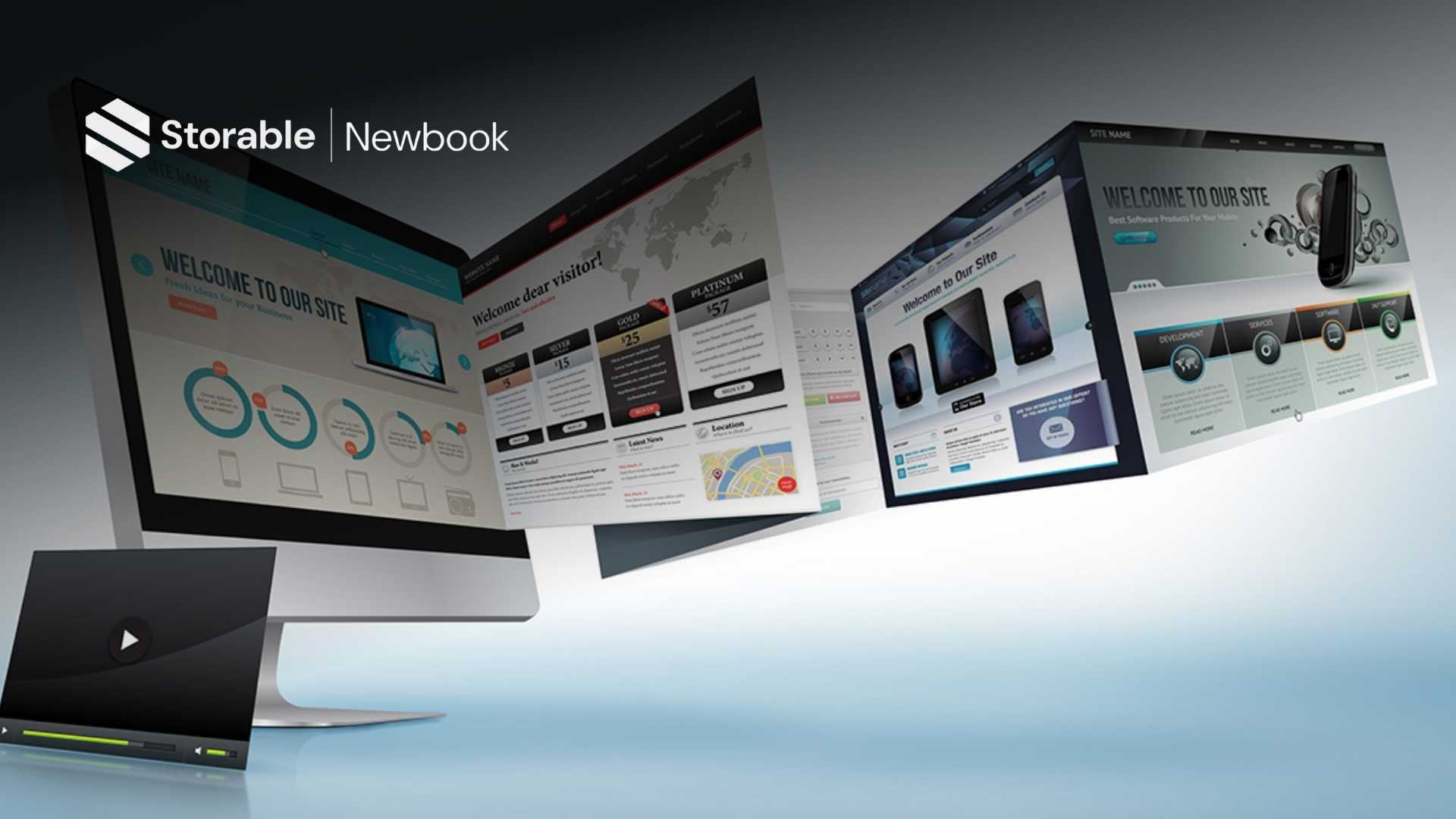
If you’re an RV park or campground operator, odds are your website is either your biggest sales driver—or your biggest liability. Storable Newbook, the property management software provider for the outdoor hospitality industry, thinks it’s time for operators to stop losing bookings to slow sites and clunky systems. Its answer: a new Websites and Digital Marketing Services (DMS) package aimed at converting more visitors into direct bookings and lifting occupancy rates.
Why Now? The Shift Toward Direct Booking
Consumer behavior is changing. According to Newbook’s latest research, 36% of campers now book directly on property websites. That’s good news for operators—if their digital storefronts can keep up. For many, an outdated website means missed opportunities, revenue leakage, and overreliance on costly online travel agencies (OTAs).
“Operators need to win on two fronts,” said Simon Smith, General Manager of Storable RV & Camping. “A strong owned website strategy with Newbook, and smart use of OTAs for visibility. Done together, you capture new demand, build stronger guest relationships, and avoid the higher costs of closed marketplace models.”
Websites Built to Convert
The Newbook Websites product is designed less like a static brochure and more like a digital booking engine. Among the highlights:
-
Custom Branding: No cookie-cutter templates—each site is tailored to the park’s brand.
-
Mobile-First: Fast, responsive designs optimized for speed and uptime.
-
Real-Time Booking: Guests can browse rates, select sites, add extras, and pay securely without ever leaving the page.
-
Integrated Payments & Guest Portal: PCI-compliant transactions and a self-service hub for booking management.
-
Scalability: From single-park operators to multi-property portfolios.
-
Always-On Support: Hosting, updates, and a support team promising 10-second response times.
In short, these sites are designed not just to look good but to fill empty sites—even in off-peak seasons.
Adding Marketing Firepower
On top of the new websites, Storable Newbook is offering a Digital Marketing Services (DMS) bundle. The package includes targeted Google and Facebook ads, SEO and local search optimization, GA4-powered analytics, and campaign management by Newbook’s in-house team. The idea: not just to drive clicks, but to drive bookings operators actually own.
For an industry that has historically lagged behind in digital sophistication, this marks a significant step toward parity with hotels and short-term rental platforms, which have long mastered the art of converting website visitors into guests.
Market Context
Outdoor hospitality has exploded in the past five years, with RV parks and campgrounds seeing surging demand post-pandemic. At the same time, operators face stiff competition from OTAs, rising guest expectations, and the operational headaches of juggling bookings across multiple channels. Newbook’s dual approach—strengthening direct channels while leveraging OTA visibility—mirrors broader hospitality trends, where “owning the guest journey” has become a critical advantage.
With its new Websites and DMS offering, Newbook is betting that campground operators are ready to trade outdated templates and commission-heavy OTAs for a more direct, data-driven strategy.
Get in touch with our MarTech Experts.

Constant Contact Report: SMBs Are Spending More on Marketing, But Confidence Is Falling
email marketing 4 Sep 2025
Small businesses are working harder than ever on marketing—but they’re not feeling good about it.
That’s the takeaway from Constant Contact’s new Small Business Now report, The State of Small Business Marketing. The study paints a paradoxical picture: while SMBs are spending more, using more sophisticated tools like AI and video, and leaning on reliable channels like email, their confidence in results is eroding.
In 2024, 27% of SMBs felt “very confident” in their marketing. In 2025, that number is down to just 18%. In the U.S., many admit they’re “not confident at all.”
Economic Pressure Meets Marketing Fatigue
Small businesses globally are still battling rising costs, tariffs, and supply chain turbulence. According to the report:
-
44% cite rising goods costs as their top concern.
-
62% say tariffs have negatively impacted operations.
-
Nearly half have raised prices, while 39% have switched suppliers.
Regional differences are telling. Canadian SMBs are leaning into the “Buy Canadian” movement, even as U.S. trade policies bite. In Australia and New Zealand, optimism is highest, with 67% of SMBs upbeat about the year ahead.
More Marketing, Less Clarity
Despite the turbulence, SMBs aren’t retreating from marketing—they’re doubling down.
-
37% increased marketing spend this year.
-
44% now say email is their most effective channel, nearly doubling from 2024.
-
But 42% have less than an hour a day to spend on marketing.
-
And the top frustration globally? Not knowing what’s working.
This mismatch—more effort, less confidence—is driving the anxiety.
“Small businesses are under real pressure to see positive results from their marketing, but many feel like they are doing more without getting more back,” said Smita Wadhawan, CMO at Constant Contact.
AI and Video on the Rise
The bright spot is technology adoption. Nearly half (48%) of SMBs globally are now using AI in some form, mostly for copywriting and social posts, but also for visuals and data analysis.
Those who use AI across multiple channels are seeing measurable gains in email, paid social, and search performance. Still, concerns linger:
-
35% worry about data privacy.
-
31% distrust AI-generated content.
-
26% fear it weakens brand voice.
Video has become nearly universal, with 78% of SMBs using it. Customer testimonials, culture clips, promotions, and practical tips are the most effective formats.
The Bottom Line
Small businesses are hustling. They’re raising budgets, adopting AI, and embracing video. But marketing confidence is sliding, weighed down by economic uncertainty and the sheer difficulty of proving ROI.
Constant Contact’s findings suggest the next frontier isn’t just giving SMBs more tools—it’s giving them more clarity.
Get in touch with our MarTech Experts.
Page 314 of 645
Most Recent


Website Architecture Emerges as a Core SEO and UX Lever
EIN Presswire

Fresha Expands DACH Push With New Germany GM
Business Wire


Influ2 Launches MCP to Connect Contact-Level ABM With AI
Business Wire