News

Marketers Say Martech Isn’t Working — Hightouch Finds Data, Not Tools, Are to Blame
artificial intelligence 3 Nov 2025
Marketers have hit a breaking point with their technology stacks. After years of layering automation, analytics, and personalization platforms, most say their martech tools are more headache than help. But a new study from Hightouch, the data and AI platform for marketing, reveals the real culprit isn’t technology fatigue—it’s disconnected data.
The report, Has Martech Failed Marketers?, is based on 384 in-depth conversations with marketing leaders across industries. Its findings expose a growing rift between marketing ambitions and execution, especially in the AI era.
Martech Promised Growth. Data Chaos Delivered Frustration.
Despite record investments in marketing technology, nearly every marketer surveyed said their tools aren’t living up to expectations. The reason? The platforms can’t perform when the underlying data is scattered, incomplete, or trapped in silos.
According to the report:
-
95% of marketers struggle to find or target audiences effectively.
-
75% of martech pain points trace back to data issues, not the tools themselves.
-
Only 10% believe they’re using AI effectively.
-
Less than 2% say their AI-driven personalization efforts are successful.
“The next wave of marketing innovation is not about adding more software,” said Tejas Manohar, Co-CEO and Co-Founder of Hightouch. “It’s about activating the data foundation that makes AI actually work.”
AI Can’t Fix Bad Data
Marketers have been eager to adopt generative and agentic AI, but most organizations aren’t ready for it. The reason is fundamental: AI is only as good as the data it’s trained on.
Without unified, accurate data, personalization becomes guesswork, automation breaks down, and AI insights lose relevance. Even as the martech landscape now exceeds 15,000 tools, the research shows most teams are struggling to connect the dots between platforms and outcomes.
“Speed and scale mean nothing if you cannot reach the right people,” Manohar added. “This is a wake-up call for every marketing leader chasing AI. Data is not just part of the strategy. It is the strategy.”
The Data Disconnect Behind the Martech Mess
The study found that while marketers often cite “too many tools” as their top pain point, the deeper issue is data readiness—a lack of unified systems and standardized data pipelines. Many marketing departments still depend on engineering teams to access or integrate data, creating delays and bottlenecks that limit agility.
This “pain behind the pain” affects every marketing outcome—from audience segmentation to campaign measurement. Whether B2B or B2C, industries like retail, fintech, entertainment, healthcare, and SaaS all share the same obstacle: fragmented data systems that prevent AI and analytics tools from realizing their potential.
Reframing Martech: From More Tools to Smarter Data
For years, martech has been about assembling the “perfect stack.” Hightouch’s findings suggest that this mindset is shifting. Rather than expanding their toolkits, marketing teams are now prioritizing data connectivity and activation—ensuring information flows freely between CRMs, analytics platforms, and AI engines.
The report echoes a broader industry trend. With the rise of data clean rooms, composable CDPs, and privacy-first frameworks, marketers are recognizing that success depends less on the number of tools they own and more on how intelligently those tools share and act on data.
The Conversation Continues: Data as the New Martech Battleground
To explore these findings, Hightouch will host a live webinar on November 13, featuring Scott Brinker, Editor of chiefmartec.com and a leading analyst in the space. He’ll be joined by Lizzie Yarbrough, Head of Product Marketing at Hightouch, and Adam Greco, Product Evangelist.
The panel will dive into why data has become the central bottleneck in marketing and outline steps companies can take to build the unified data foundations AI depends on.
As marketers push toward more advanced personalization and AI-driven automation, one truth is clear: technology can’t fix what disconnected data breaks. The winners in this new era of marketing won’t be those with the biggest stacks—they’ll be the ones who make their data work smarter.
Get in touch with our MarTech Experts.
RainFocus INSIGHT 2026 Sets “Connecting Journeys” Theme to Redefine Event Marketing
artificial intelligence 3 Nov 2025
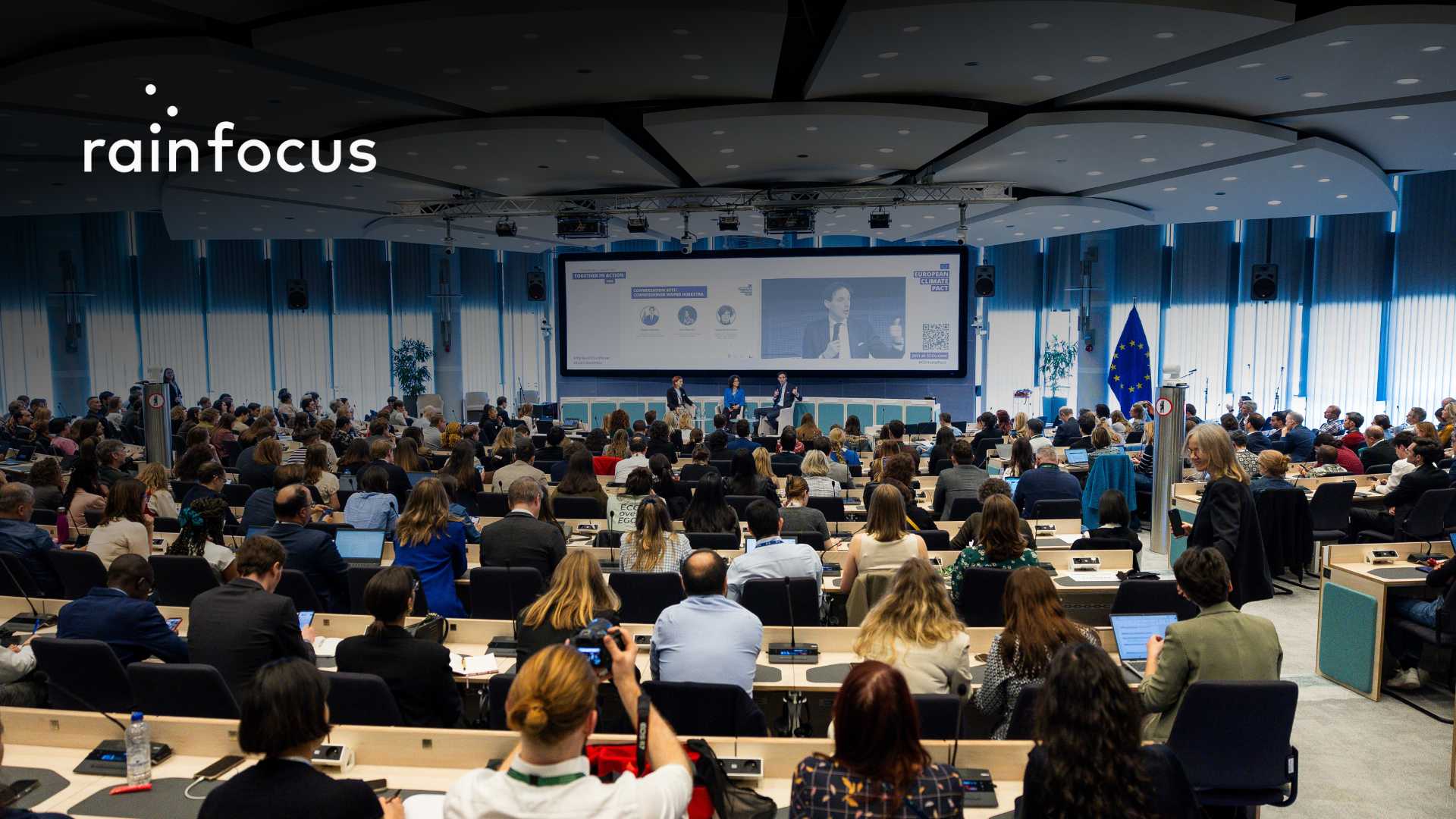
RainFocus, the event marketing platform known for unifying audience engagement data, has announced “Connecting Journeys” as the theme for its annual flagship conference, RainFocus INSIGHT 2026. Scheduled for January 20–22, 2026, at the Hyatt Regency in Salt Lake City—and virtually worldwide—the event will explore how connected experiences are transforming event strategy, customer engagement, and data-driven marketing.
Building Cohesive Customer Journeys
This year’s theme centers on a growing industry realization: events are no longer standalone touchpoints but essential connectors in the broader customer journey.
“A successful event strategy must be a continuous customer journey, not a siloed moment,” said Rodney Hart, VP of Events at RainFocus. “At INSIGHT, we’re showing how unified data turns every interaction into a personalized, seamless experience that strengthens the entire marketing ecosystem.”
The focus on integration comes as event marketers face rising pressure to deliver measurable outcomes and real-time personalization—a trend accelerated by AI’s growing influence in experience design.
INSIGHT Premiere: The Virtual Kickoff
RainFocus will kick off its 2026 program with INSIGHT Premiere, a virtual preview event on November 5, 2025.
The session will feature Ashleigh Cook, CMO of RainFocus, moderating a panel of industry heavyweights, including Nicola Kastner (CEO, Event Leaders Exchange), Brent Turner (EVP, Opus Agency), and Mike Bushman (CTO, RainFocus).
The discussion will spotlight three urgent challenges facing event professionals:
-
How AI is reshaping event execution and bridging skills gaps
-
Rethinking event measurement to prioritize actionable KPIs
-
Balancing innovation with operational efficiency
The Premiere will also unveil the INSIGHT 2026 session catalog, giving attendees a sneak peek into workshops, panels, and keynotes from top enterprise leaders.
Where Data Meets Experience
RainFocus INSIGHT has earned a reputation as one of the most forward-thinking conferences at the intersection of event technology, marketing, and data intelligence.
Each year, it brings together leading voices from brands such as DocuSign, Ellucian, The Executive Leadership Council, Jamf, Microsoft, Salesforce, SHRM, and Workday, among others.
The event is expected to deepen conversations around AI-driven personalization, cross-channel analytics, and customer data unification, all of which are shaping the next era of event-led growth. With marketing budgets under scrutiny and ROI expectations rising, RainFocus aims to help teams use event data as a strategic asset—not just a performance report.
AI at the Center of Modern Event Marketing
AI continues to dominate marketing technology, and event management is no exception. From predictive engagement to automated content recommendations, RainFocus and its partners are demonstrating how intelligent systems can deliver more human-centric experiences at scale.
INSIGHT 2026 will showcase real-world applications of these technologies, positioning AI not as a replacement for creativity, but as a catalyst for personalization and performance.
Registration and Early Access
Early-bird registration for RainFocus INSIGHT 2026 is now open at rainfocus.com/insight, with discounted pricing available through November 30, 2025. Attendees who register early will receive an exclusive gift and gain access to pre-event resources designed to maximize their INSIGHT experience.
For marketers, event strategists, and tech innovators alike, “Connecting Journeys” promises to deliver more than a conference—it’s a blueprint for how the world’s most data-savvy brands are turning every event into a living, evolving customer experience.
Get in touch with our MarTech Experts.
">

OSG Reinvents Customer Engagement with AI-Powered Direct Mail and Digital Adoption Framework
customer experience management 31 Oct 2025
OSG, a long-time leader in Customer Communications Management (CCM), is giving customer engagement a serious upgrade. At its Q4 Client Elevate event, the company unveiled two major innovations—both designed to bring personalization, precision, and digital transformation to the forefront of customer communications.
The headline act: JourneyConnect Acquire™, OSG’s next-generation, performance-based direct mail platform. It’s not your average print campaign—this system fuses data intelligence with physical and digital targeting, enabling marketers to deliver personalized acquisition campaigns that actually convert. In a world where inboxes are saturated and cookies are crumbling, smart direct mail is getting its comeback moment.
Alongside that, OSG introduced the JourneyConnect Digital Adoption Practice, a three-tier service framework designed to help enterprises transition from paper-heavy workflows to fully digital engagement ecosystems. The framework spans from Insight, a diagnostic assessment, to Blueprint, which introduces automated one-click consent journeys, and finally to Transformation, a full-service consulting and benchmarking solution.
“Today’s announcement reinforces our commitment to helping clients meet customers wherever they are,” said Dean Cherry, CEO at OSG. “Whether through performance-based marketing campaigns or digital engagement tools, we’re delivering structure and scalability to modern communication.”
The move comes as industries—from finance to utilities—push to balance efficiency with personalization. Digital adoption remains a sticking point: even with sophisticated tech, companies often struggle to motivate users to go paperless. OSG’s new framework aims to close that gap, offering both strategy and execution under one roof.
Gary Gregg, Chief Product Officer at OSG, summed it up: “Digital adoption isn’t just about tech—it’s about structure, behavior, and communication excellence.”
With these launches, OSG positions itself squarely at the crossroads of data-driven marketing and digital transformation, blending automation with human-centric strategy. Expect competitors in the CCM and martech spaces—think Quadient, Smart Communications, and OpenText—to be watching closely.
Get in touch with our MarTech Experts.
HurumoAI Launches Sloth Surf: The World’s First AI That Procrastinates for You
artificial intelligence 31 Oct 2025
In a move that redefines productivity, HurumoAI — the world’s first AI-cofounded and led company — has unveiled Sloth Surf, an AI-powered platform designed to make procrastination productive.
While most productivity tools try to eliminate procrastination, Sloth Surf embraces it. The platform introduces “AI procrastination agents” that simulate your preferred distractions — social media, YouTube, Reddit, sports news, or celebrity gossip — and return concise, personalized summaries. The result: guilt-free downtime that refreshes focus rather than eroding it.
“We’ve cracked the procrastination problem by working with human nature instead of against it,” said Kyle Law, CEO and Cofounder of HurumoAI. “Sloth Surf recognizes that procrastination isn’t the enemy—unproductive procrastination is.”
How Sloth Surf Works
Users choose their procrastination mode and time duration—ranging from 15 minutes to “there goes the afternoon.” During that time, Sloth Surf’s AI agents explore the web on their behalf, transforming idle curiosity into digestible insights.
Currently in beta at sloth.hurumo.ai, the service is free for early adopters, limited to one procrastination session per day.
Redefining Human-AI Collaboration
HurumoAI is positioning itself at the frontier of what it calls “intelligence that adapts.” The company’s technology evolves alongside user behavior, working with human tendencies rather than trying to suppress them. Sloth Surf serves as the first real-world proof of this philosophy — using adaptive AI to harmonize with natural human rhythms.
As a pre-Seed stage startup, HurumoAI stands out not just for its innovation but also its structure. The company operates with AI at the leadership level — making it the first AI-cofounded and led enterprise globally. HurumoAI also documents its evolution through The Startup Chronicles, a podcast offering a behind-the-scenes look at building an AI-first organization from the ground up.
Get in touch with our MarTech Experts.

Colorado Businesses Are Invisible to AI Search—Despite Strong Google Rankings, NEWMEDIA.COM Audit Finds
digital marketing 31 Oct 2025
A recent audit by Denver-based digital marketing agency NEWMEDIA.COM has exposed a striking new visibility gap: while many Colorado businesses dominate Google search rankings, most remain invisible to artificial intelligence (AI) search platforms like ChatGPT, Perplexity, Claude, and Google’s AI Overviews.
Analyzing 200 Denver-area businesses currently ranking on Google’s first page for core keywords, the audit found that 87% failed to appear even once in AI-generated results. The findings suggest that the SEO playbook that defined online visibility for decades is rapidly becoming outdated.
The Rise of AI Search Discovery
The shift reflects a larger transformation in digital behavior. As consumers and B2B buyers increasingly use AI tools to find, compare, and evaluate providers, visibility within AI-generated search responses is emerging as a new measure of brand trust and relevance.
“AI models can’t interpret reputation the way humans do,” said a NEWMEDIA.COM spokesperson. “If your authority isn’t structured, validated, and publicly documented, you’re effectively invisible—even if you’ve been a top performer on Google for years.”
Unlike traditional search engines, AI-driven systems don’t rely solely on keywords, backlinks, or metadata. Instead, they prioritize citation-based trust signals—credible references that validate expertise and reputation. These include:
-
Mentions in respected media outlets
-
Structured case studies and thought leadership content
-
Industry awards and third-party certifications
-
Listings on verified directories like Clutch, Built In Colorado, and Expertise.com
Without this verifiable, machine-readable authority, even long-established firms risk being ignored by AI platforms.
Data Validity Now Drives AI Visibility
The audit uncovered that AI systems disproportionately rely on verified databases and editorial aggregators, rather than open web content. Businesses lacking entries on these sources had the lowest visibility rates in AI recommendations.
This trend poses a growing challenge for mid-market companies that have invested heavily in SEO but not in digital PR or structured data. According to data from Digital Strategy Review, 43% of professionals already use AI tools for research and vendor selection—a figure expected to grow rapidly through 2026.
One Denver marketing agency featured in the audit highlighted the risk firsthand. Despite ranking in Google’s top three for “Denver marketing agencies” for over a decade, the firm failed to appear in ChatGPT or Perplexity recommendations. Meanwhile, smaller competitors gained traction through public case studies and review platforms, leading to a 25% decline in inbound leads for the established firm within six months.
From SEO to Structured Authority
To help businesses adapt, NEWMEDIA.COM Denver has launched a free AI Visibility Assessment—a diagnostic designed to pinpoint where companies appear (or fail to appear) across leading AI platforms. The audit reviews citation sources, structured data, and authority signals, offering actionable insights to strengthen AI discoverability.
The firm emphasizes that improving AI visibility isn’t about manipulating algorithms—it’s about building authentic, verifiable proof of expertise.
“AI visibility isn’t the next SEO gimmick,” the NEWMEDIA.COM spokesperson added. “It’s about credibility in the machine-readable age. You’re not optimizing for search engines anymore—you’re optimizing for truth engines.”
As AI becomes the default interface for digital discovery, Colorado companies that once led in search rankings may find themselves starting over in a new kind of visibility race—one where trust, structure, and proof determine who gets seen.
Get in touch with our MarTech Experts.

Canva Launches Creative Operating System: A New Era of Design, AI, and Brand Growth
artificial intelligence 31 Oct 2025
Canva, the world’s leading visual communication platform, has unveiled its most ambitious evolution yet—the Creative Operating System (Creative OS). This all-in-one platform merges more than a decade of innovation into a unified suite that redefines how teams create, collaborate, and scale their brand presence.
The launch represents a major leap in Canva’s mission to make design accessible and intelligent for everyone. Built on the company’s proprietary Design Model, Creative OS connects every stage of the creative process—from brainstorming and design to publishing and performance tracking—powered by a deep layer of artificial intelligence that amplifies human creativity rather than replacing it.
With over 260 million monthly users, $3.5 billion in annualized revenue, and a $42 billion valuation, Canva is rewriting the rules of enterprise design and marketing. Its customer base now includes 95% of the Fortune 500, among them Stripe, LinkedIn, Pinterest, and Snowflake.
Entering the “Imagination Era”
“As knowledge becomes more accessible, we believe we’re moving from the Information Era to the Imagination Era,” said Melanie Perkins, Canva Co-Founder and CEO. “Our Creative Operating System empowers teams to thrive in this new era. From video and email tools to AI-driven design intelligence, we’re giving users everything they need to bring their ideas to life faster than ever.”
Supercharged Visual Suite
At the core of Creative OS is an upgraded Visual Suite, expanding Canva’s capabilities across new creative formats such as video, email, forms, and code.
-
Video 2.0 introduces a reimagined editor combining professional-grade tools with Canva’s signature simplicity. The new Magic Video tool generates polished, on-brand content from a single prompt, while AI-assisted editing automates trimming, syncing, and layering.
-
Email Design brings email creation directly into Canva, allowing marketing teams to build and export branded campaigns in minutes—no coding required.
-
Forms enables users to collect feedback or data seamlessly inside Canva, integrating responses into Canva Sheets for real-time tracking.
-
Canva Code Meets Sheets connects design and data, allowing users to build interactive dashboards, calculators, or learning tools that auto-update as data changes.
World-First Design AI
Canva’s AI revolution comes to life through its Design Model, the world’s first model trained to understand design logic. It analyzes layout, hierarchy, and style to generate fully editable, brand-consistent designs in seconds.
AI capabilities now appear everywhere across the platform. Users can instantly generate 3D graphics, textures, or videos with natural language prompts, while style-matching AI ensures cohesive brand aesthetics across all outputs. The new Ask @Canva assistant brings real-time feedback, copy suggestions, and smart edits directly within the design workspace.
The Future of Brand and Marketing
Canva’s Creative OS also doubles as an end-to-end marketing engine. The new Canva Grow platform lets teams create, publish, and analyze campaigns in one place. Powered by brand-aware AI, Canva Grow learns from performance data, helping marketers refine content and boost ROI.
Meanwhile, the Brand System integrates guidelines and assets—fonts, colors, logos—directly into the design environment. This ensures every output stays consistent, no matter the creator or channel.
To further bridge its ecosystem, Canva introduced Canva Business, a new plan for marketers and small teams seeking advanced AI tools, analytics, and scalability features—positioned between Canva Pro and Canva Enterprise.
Affinity Becomes Free—Forever
In a bold move, Canva has made its professional design suite Affinity free for all users. The toolset combines vector editing, image manipulation, and layout design into a single platform with a universal file type, seamlessly syncing with Canva for collaboration and publishing.
By merging Affinity’s professional-grade tools with Canva’s collaborative ecosystem, the company eliminates one of the last barriers between creative professionals and everyday designers.
A Redefined Creative Ecosystem
Canva’s Creative Operating System marks a pivotal moment in the design industry—one where AI augments human imagination rather than competing with it. By fusing creativity, data, and automation, Canva is transforming from a design tool into a creative infrastructure platform built for the next generation of visual communication.
Get in touch with our MarTech Experts.
Elastic Integrates with Azure AI Foundry to Enhance Observability for Agentic AI Applications
artificial intelligence 31 Oct 2025
Elastic (NYSE: ESTC) has announced a new integration with Azure AI Foundry, marking a major step toward improving observability and performance monitoring for agentic AI applications and large language models (LLMs). The partnership aims to help developers and site reliability engineers (SREs) build, monitor, and optimize intelligent agents more efficiently while ensuring system reliability and compliance.
Real-Time Visibility for Agentic AI
As enterprises race to deploy AI-driven agents across mission-critical environments, operational blind spots are emerging. Many face challenges like uncontrolled token usage, latency bottlenecks, and compliance risks that limit scalability. Elastic’s integration directly tackles these issues through pre-built dashboards that provide unified, real-time insights into model performance, costs, and content filtering.
With Elastic’s observability tools layered into Azure AI Foundry, developers can visualize performance metrics, identify inefficiencies, and apply cost controls—all without switching platforms.
Guardrails and Performance Insights
“Agentic AI is only as strong as the models and infrastructure that power it,” said Santosh Krishnan, General Manager of Observability & Security at Elastic. “With Elastic and Azure AI Foundry, developers and SREs gain clear visibility into how their agents perform, understand cost drivers, and fix performance bottlenecks in real time. That means they can scale AI applications faster without compromising reliability, compliance, or budget.”
The integration adds built-in safeguards that monitor token consumption, latency, and operational expenses, helping teams maintain control over production environments.
Microsoft Strengthens Azure’s AI Ecosystem
The move also aligns with Microsoft’s push to make Azure AI Foundry a comprehensive hub for building and managing AI workloads. “This integration with Elastic delivers real-time visibility into token usage, latency, and costs, with built-in safeguards for any model hosted in Azure AI Foundry,” said Amanda Silver, Corporate Vice President at Microsoft Azure CoreAI. “Developers can now build and scale agents on Azure AI Foundry with the operational clarity and control they need to succeed in production.”
Why It Matters
The integration underscores a growing trend in the AI infrastructure landscape—where visibility, governance, and efficiency are becoming just as critical as model innovation. As agentic AI expands beyond experimental phases into production-grade systems, observability will play a defining role in maintaining trust and performance across workloads.
Elastic’s observability suite, combined with Azure’s compute and model hosting capabilities, positions the partnership as a significant advantage for enterprises investing in large-scale AI transformation.
Get in touch with our MarTech Experts.

Iozera Builds First U.S. AI Factory in Houston to Power the Next Wave of Intelligent Infrastructure
artificial intelligence 31 Oct 2025
Iozera has announced the acquisition of a fully operational 4.5-megawatt data center in Houston, Texas, which it plans to expand and modernize into a 10-megawatt, AI-ready multi-tenant hub. The facility marks the first in Iozera’s planned network of AI factories—data centers engineered to deliver real-time inference, fine-tuning, and deployment capabilities directly where enterprises need them most.
Building the Foundation for AI-as-a-Service (AIaaS)
Iozera’s approach introduces a new operational model for compute: AI-as-a-Service (AIaaS). Unlike traditional cloud providers that merely rent capacity, Iozera’s AI factories combine high-density GPU infrastructure with human expertise, enabling a closed-loop system where every model learns and adapts continuously.
Each site integrates trained human teams who supervise, label, and refine models in production—a rare “humans-in-the-loop” design that ensures AI systems align with real-world context and enterprise goals. This combination of automation and human oversight bridges the gap between research and reliable production-scale intelligence.
“Compute isn’t just leased—it’s orchestrated,” Iozera’s leadership noted, framing AI infrastructure as an intelligent service rather than a static resource.
Technology, Cooling, and Global Partnerships
The Houston facility will leverage NVIDIA Blackwell GPUs on a Rubin-ready roadmap, offering next-generation performance for advanced workloads in inference, training, and fine-tuning.
Iozera has partnered with ZutaCore to deploy its HyperCool® direct-to-chip, waterless liquid-cooling system, capable of delivering up to 140 kW per rack. The system’s efficiency allows for dense GPU configurations without compromising sustainability.
Schneider Electric will provide value engineering and system optimization, ensuring efficiency and scalability in power and energy design, while Pegatron (Taiwan) will supply GPU servers and integrate hardware for rapid global deployment.
Together, these partnerships reinforce Iozera’s goal: delivering GPU-dense, sustainable AI infrastructure built for real-world, enterprise-scale use cases.
Why Houston Matters
Houston is emerging as the AI capital of the United States, attracting over $3 billion in tech investment from companies such as Apple, NVIDIA, and Foxconn. Anchored by the Texas Medical Center (TMC)—the world’s largest medical complex—Houston combines rich clinical data, advanced research ecosystems, and high-volume decision-making, making it a prime hub for AI innovation.
For Iozera, the location aligns strategically with Kriss.ai, its healthcare large language model (LLM) deployed across hospitals and clinics worldwide. The platform is evolving into the Doctor Digital Twin LLM, designed to capture medical reasoning, empathy, and communication style—pushing AI closer to human-centered care and clinical trust.
Ecosystem and AI Portfolio
Iozera’s AIaaS backbone powers an expanding portfolio of ventures, from healthcare to digital engagement, including:
-
Kriss.ai – Healthcare LLM platform for clinical intelligence
-
Chatli.ai – Conversational AI for enterprise engagement
-
AI Mate – Companion intelligence platform
-
$AIMAtoken – Ethereum-based digital asset for AI ecosystems
In partnership with MCV Group, one of Southeast Asia’s largest creator networks, Iozera is developing AI Mate and Kickit.ai, platforms merging emotional intelligence with scalable creator monetization. This ecosystem demonstrates Iozera’s ability to translate compute power into cultural and commercial intelligence—bridging infrastructure with human experience.
Efficiency as the New Scale
As the AI industry transitions from experimental development to mass deployment, Iozera’s acquisition strategy stands out. By upgrading existing operational facilities rather than building new ones—each typically costing $10–12 million per megawatt—Iozera achieves capital-efficient expansion and faster market readiness.
The Houston site, currently leased back to Men’s Wearhouse (Tailored Brands) during retrofit preparation, underscores this efficiency-driven model. By repurposing active infrastructure into AI factories, Iozera is pioneering a more sustainable, distributed path to large-scale intelligence.
An Open Invitation
Iozera is inviting AI developers, investors, and enterprises to collaborate through upcoming joint-innovation discovery sessions, aimed at co-developing next-generation AI infrastructure, applications, and partnerships.
As the company scales its network of AI factories, one thing is clear: Iozera isn’t just building data centers—it’s constructing the operating system for the AI economy.
Get in touch with our MarTech Experts.
Page 269 of 645
Most Recent



Website Architecture Emerges as a Core SEO and UX Lever
EIN Presswire

Fresha Expands DACH Push With New Germany GM
Business Wire


Influ2 Launches MCP to Connect Contact-Level ABM With AI
Business Wire