News

Intercept Music Appoints J.C. Montes as EVP to Drive Global Marketing and Strategic Partnerships
business 14 Jan 2026
Intercept Music is sharpening its global growth strategy by adding seasoned leadership at the intersection of music, marketing, and technology.
The independent music distribution and marketing platform announced the appointment of J.C. Montes as Executive Vice President, Global Marketing & Strategic Partnerships, a newly expanded role designed to accelerate international expansion and deepen platform-driven partnerships. The move underscores Intercept Music’s ambition to become a go-to global destination for independent artists and labels navigating an increasingly data-driven music economy.
A Strategic Hire for a Global Expansion Phase
Montes brings more than 20 years of experience across Mexico, Latin America, and the U.S. Latin markets, combining commercial strategy, digital innovation, and hands-on artist marketing. His résumé includes senior leadership roles at Spotify, Amuse, and Universal Music Group, where he led regional growth initiatives and high-impact artist campaigns that helped shape Latin America’s modern streaming ecosystem.
“J.C. is a tactical force with a rare ability to bridge technology, marketing, and cohesive partnerships,” said Ralph Tashjian, Founder and Chairman of Intercept Music. “As we continue to evolve internationally, his experience across Latin America and the U.S. will be critical in accelerating growth and strengthening the value we deliver to independent artists and labels.”
Connecting Artists, Platforms, and Purposeful Partnerships
In his new role, Montes will oversee global marketing initiatives, build scalable partnership models, and forge alliances that connect artists more effectively with audiences and platforms. The emphasis on “purposeful partnerships” reflects a broader industry shift: independent artists increasingly expect distributors to provide more than distribution—they want marketing intelligence, audience access, and strategic leverage.
“What drew me to Intercept is the opportunity to redefine how data-driven platforms can better serve independent artists,” said Montes. “This is about moving beyond traditional frameworks and creating long-term value through technology, insights, and real partnership.”
Entrepreneurial DNA Meets Platform Scale
Beyond his corporate leadership, Montes is also a proven entrepreneur. He founded About Music, a boutique agency focused on digital innovation and audience development, where a data-first approach drove growth for independent catalogs. He also co-founded WKMX Records, a regional Mexican label under WK Records, overseeing marketing and artist development and helping expand WK’s footprint in the fast-growing Regional Mexican market.
That blend of entrepreneurial execution and enterprise-scale experience aligns with Intercept Music’s positioning as a technology-forward platform built to support long-term artist growth rather than short-term releases.
Why This Matters Now
The independent music sector is more competitive—and more global—than ever. As streaming platforms mature and algorithms become central to discovery, independent artists are looking for partners that can translate data into strategy and open doors across regions.
Montes joins Intercept Music at a pivotal moment as the company expands international operations, strengthens industry alliances, and invests in tools designed to help artists scale beyond regional boundaries. With Latin music continuing to drive global streaming growth, his appointment signals a clear intent: Intercept Music wants to compete where culture, data, and global audiences converge.
Get in touch with our MarTech Experts.
">

BRMG Adds Marketing Veteran Kensel Tracy as Operating Partner to Expand Strategy and AI Capabilities
artificial intelligence 14 Jan 2026
BRMG is doubling down on its operator-led agency model by bringing in a seasoned marketer who’s spent decades bridging strategy with execution.
The Hover Group–backed firm announced that Kensel Tracy, a veteran marketing strategist and widely known “Marketing Coach,” has joined as an Operating Partner. The move expands BRMG’s capabilities in strategic marketing, sponsorship and partnership development, and AI-enabled business transformation—areas increasingly critical as agencies rethink how they deliver value beyond campaign execution.
A Strategic Hire for an Operator-Led Agency Model
Based in Ottawa, Tracy brings more than 30 years of experience spanning marketing strategy, advertising, communications, and partnership marketing across private-sector brands, government, tourism, associations, and non-profits. His résumé includes leadership roles at Byward Marketing Group, Octagon Communications, and Acart Communications, along with a long-running independent coaching and advisory practice.
That blend of agency leadership and hands-on advisory work aligns closely with BRMG’s thesis: experienced operators, not layers of management, drive better outcomes for clients.
“Kensel has spent his career helping organizations navigate real-world marketing challenges,” said Alex Verdurmen, President of BRMG. “His ability to think strategically while staying close to execution is exactly what our model is designed to support.”
Bringing AI Advisory Into the BRMG Ecosystem
A key part of Tracy’s role will be integrating his Centre for Business Transformation, an AI advisory and training platform, into BRMG’s operator network. The platform’s tools, frameworks, and programs will be embedded into BRMG’s playbooks, training, and client engagements.
That matters as agencies increasingly face client pressure to move beyond AI experimentation and into practical adoption—especially in areas like go-to-market strategy, partnerships, and operational efficiency.
Within BRMG, Tracy will advise clients on growth strategy, communications, sponsorship programs, and partnership ecosystems. He’ll also support BRMG’s work with non-profits, public sector organizations, and tourism and event clients, sectors where sponsorship and partnership models are often mission-critical.
Scaling a Model, Not Just a Roster
From Hover Group’s perspective, Tracy’s appointment signals a shift from validating BRMG’s model to scaling it.
“In many ways, 2025 was about proving the model,” said Matthew Hollingshead, Partner at Hover Group. “Bringing Kensel and the Centre for Business Transformation into BRMG is a launching point for 2026—growing the model, adding operators, and expanding disciplines.”
The hire also reflects a broader agency trend: assembling modular networks of senior specialists who can collaborate across shopper marketing, experiential, digital, and promotional disciplines without the overhead of traditional agency structures.
Strategy, Partnerships, and Execution—Together
As an Operating Partner, Tracy will work alongside BRMG’s existing specialists to build integrated programs that connect planning with execution, including brand partnerships, sponsorship sales, events, activations, and promotional campaigns.
“I’ve always believed the best marketing happens at the intersection of strategy, partnerships, and execution,” Tracy said. “BRMG is building a platform where experienced operators can focus on delivering their best work—and that’s exactly the environment I want to be part of.”
For BRMG, the addition strengthens its positioning as an agency platform designed not around services, but around people who know how to turn strategy into results—an approach gaining traction as brands demand more accountability, flexibility, and impact from their marketing partners.
Get in touch with our MarTech Experts.

SymphonyAI Unveils Agentic AI Merchandising Agents to Help Retailers Protect Margin in Real Time
artificial intelligence 14 Jan 2026
Retailers have no shortage of data. What they lack is time. SymphonyAI is betting that agentic AI can close that gap.
The Vertical AI specialist today launched the next generation of CINDE Merchandising Agents, introducing a new class of autonomous, role-based AI agents designed to work the way merchants actually operate—weekly, promotion-driven, launch-focused, and reset-oriented. Built on Microsoft Foundry, the agents embed directly into core merchandising workflows, aiming to turn margin insights into action while the week is still unfolding.
Instead of waiting days for analysts to stitch together reports, SymphonyAI’s agents continuously analyze performance, explain what’s changing, identify why it’s happening, and recommend prioritized next steps—automatically.
From Lagging Insights to Live Merchandising Decisions
In most retail organizations, margin-impacting signals surface well before teams act on them. The delay isn’t due to a lack of BI tools—it’s caused by manual interpretation, cross-system analysis, and the handoffs required to make sense of performance shifts.
CINDE Merchandising Agents are designed to eliminate that lag. Rather than reacting after the fact, merchants can intervene mid-cycle, correcting issues before margin erosion compounds across weeks.
“Retailers are no longer reacting to what happened last week—they’re making profitable decisions while the week is still unfolding,” said Manish Choudhary, President of SymphonyAI Retail.
Four Agents, One Merchandising Rhythm
Unlike generic AI assistants, CINDE’s agents are purpose-built for specific merchandising roles:
-
Merchant Planner delivers weekly sales insights and flags margin opportunities early.
-
Promo Coach explains causal drivers behind promotion performance and recommends optimization moves.
-
Launch Analyst surfaces early indicators of new item success—or failure—while there’s still time to course-correct.
-
Reset Advisor evaluates post-reset impact and suggests next actions to recover or grow performance.
Together, the agents cover the full in-store merchandising lifecycle, aligning AI output to how merchants already plan, review, and execute.
Agentic AI That Explains the “Why,” Not Just the “What”
A key differentiator is causality. SymphonyAI’s agents don’t just detect anomalies; they explain what’s driving them.
In one real-world example, a regional grocer saw dairy sales decline and initially blamed competitive pricing. The Merchant Planner agent pinpointed the true cause within hours: Greek yogurt had been moved off eye level in a subset of stores during a planogram reset. The agent recommended restoring placement, allowing the retailer to recover margin the following week instead of losing another cycle.
That ability to connect performance shifts directly to operational decisions is where SymphonyAI sees “return on intelligence” becoming tangible.
Built on Microsoft Foundry, Focused on ROI
The agents are built using Microsoft Foundry, Microsoft’s framework for building enterprise-grade, action-oriented AI systems. According to Keith Mercier, VP of Worldwide Retail and Consumer Goods Industries at Microsoft, retailers are done experimenting.
“Retailers are looking for AI that moves beyond pilots and acts as a real margin multiplier,” Mercier said. “By aligning intelligence to the rhythm of weekly retail decisions, SymphonyAI is helping merchants turn insight into profitable action.”
This focus on ROI reflects a broader industry shift: AI in retail is moving from dashboards and forecasts to systems that actively shape decisions in real time.
Why This Matters Now
Merchandising remains one of the most margin-sensitive functions in retail, with outcomes decided store by store and week by week. As pricing pressure, assortment complexity, and labor constraints intensify, the cost of delayed action continues to rise.
By embedding agentic AI directly into merchandising workflows, SymphonyAI is positioning CINDE not as another analytics layer, but as an operational system that helps merchants act faster, more consistently, and with greater confidence.
Retailers attending NRF 2026 can see CINDE Merchandising Agents in action at SymphonyAI’s booth (#1915) and in Microsoft’s “Return on Intelligence” Showcase.
Get in touch with our MarTech Experts.

Highspot’s Winter Launch 2026 Pushes Agentic AI From Insight to Deal Execution
artificial intelligence 13 Jan 2026
Highspot is sharpening its pitch to revenue leaders who are tired of dashboards that explain deals after they’ve already slipped. With its Winter Product Launch 2026, the company is rolling out a new wave of agentic AI capabilities designed to do more than surface insights—they actively guide sellers on what to do next, inside live deals.
At the center of the launch is Deal Intelligence, powered by a new Deal Agent that analyzes CRM data, buyer engagement, and meeting insights in real time. The goal: help sales teams improve deal execution, increase deal velocity, and win more consistently in an era where buying journeys are longer, messier, and harder to predict.
From Fragmented Signals to a Single Deal Truth
Most GTM teams are drowning in signals—CRM updates, email engagement, meeting notes, content views—but still struggle to answer basic questions: Is this deal healthy? Why is it stalling? What should the seller do next?
Highspot’s Deal Intelligence aims to consolidate those fragmented inputs into a single, unified view of deal health. Buyer activity, CRM changes, and meeting intelligence are brought together so sellers and managers can see what’s actually happening across every active opportunity.
This is where Deal Agent comes in. Rather than stopping at analysis, the agent recommends data-backed next steps tailored to each deal. That might mean flagging risk, suggesting a deal-specific AI Role Play, or prompting the seller to launch a Digital Sales Room (DSR) to re-engage stakeholders.
Crucially, Deal Agent is built on Highspot Nexus, the company’s unified AI and analytics engine, and connects directly to the organization’s CRM. That tight integration is meant to ensure recommendations reflect how the business actually sells—not a generic AI playbook.
Agentic AI That Lives Inside the Deal
Highspot is positioning this release as a shift away from AI that advises from the sidelines. Many sales AI tools today still function as copilots that generate summaries or suggestions sellers must interpret and act on manually.
By contrast, Highspot’s approach embeds agentic guidance directly into the flow of work. Deal Agent doesn’t just highlight risk; it nudges sellers toward concrete actions that can move the opportunity forward while it’s still alive.
That distinction matters as revenue leaders look for AI investments with measurable ROI. Insight without execution hasn’t proven enough.
Digital Sales Rooms Get More Structured
The Winter Launch also expands Digital Sales Rooms, Highspot’s secure, branded spaces where sellers and buyers collaborate throughout the buying journey.
New mutual action plans, embedded directly in DSRs, allow both sides to align on roles, milestones, and timelines. For sellers, this reduces back-and-forth and late-stage confusion. For buyers, it provides clarity and structure from first meeting through close—an increasingly important factor as buying groups grow larger and consensus harder to reach.
In practice, Highspot is betting that clearer collaboration translates to shorter sales cycles and fewer deals that quietly die from inertia.
Preparing Sellers When It Actually Matters
Execution depends on preparation, and Highspot is extending its AI-powered coaching to connect directly with live deals. AI Role Play is now available inside Deal Agent, allowing sellers to practice real scenarios using the actual context of an active opportunity.
Sellers can rehearse tough conversations or stakeholder objections anytime—on web or mobile—without waiting for scheduled coaching sessions. It’s a practical move in distributed sales environments where managers can’t always provide hands-on training at the right moment.
The Winter Launch also introduces broader enablement enhancements:
-
Highspot Skills, a GTM-tested framework for defining and measuring critical seller capabilities
-
AI-powered skill assessments to scale coaching and training programs
-
Automated AI Feedback for Training, which evaluates submissions automatically to reduce review bottlenecks and speed up seller readiness
Together, these features point to a more systematized approach to sales readiness—less reliant on ad hoc manager feedback and more grounded in consistent measurement.
Why This Matters Now
Deals are getting more complex. Buying groups are larger. Budgets are scrutinized. And sellers are under pressure to execute flawlessly with fewer resources.
Highspot’s Winter Launch reflects a broader market shift toward AI that doesn’t just analyze performance but actively guides execution. Instead of adding another tool or layer of complexity, the company is embedding recommendations directly into daily workflows.
That aligns with what analysts are seeing across the revenue tech landscape. According to the Gartner Magic Quadrant for Revenue Enablement Platforms 2025, the market is moving away from episodic, generic tools toward connected, insight-driven solutions, with AI now viewed as business-critical rather than experimental.
Highspot is clearly positioning itself on the “prove it” side of that shift.
Leadership’s Take
“Your go-to-market strategy lives or dies with the deal,” said Robert Wahbe, CEO of Highspot. “Our Winter Launch turns insight into action inside live deals, giving sellers the agentic platform they need to win more consistently.”
It’s a concise summary of the company’s bet: that execution, not analysis, is where AI can make the biggest difference for revenue teams
Get in touch with our MarTech Experts.

Cast AI Debuts OMNI Compute as It Crosses $1B Valuation, Targets Cloud Lock-In in the AI Era
artificial intelligence 13 Jan 2026
Cast AI is betting that the next major bottleneck in AI infrastructure isn’t algorithms—it’s access to compute. The Application Performance Automation company today unveiled OMNI Compute, a unified compute control plane designed to let enterprises tap into available cloud capacity across providers and regions as if it were native infrastructure. At the same time, Cast AI announced a strategic investment from Pacific Alliance Ventures (PAV), the U.S.-based corporate venture arm of South Korea’s Shinsegae Group, pushing the company’s valuation beyond $1 billion.
The dual announcement underscores Cast AI’s growing influence as enterprises struggle with GPU shortages, cloud lock-in, and rising infrastructure costs driven by AI workloads.
Why OMNI Compute Matters Now
AI adoption has exposed a structural weakness in cloud computing: capacity is fragmented, region-bound, and often unavailable when demand spikes. Enterprises may have Kubernetes clusters running efficiently—until they need GPUs in a region where supply is constrained or pricing becomes prohibitive.
OMNI Compute is Cast AI’s answer. The platform automatically discovers external compute resources—including GPUs—across cloud providers and regions, and extends existing Kubernetes clusters to consume them transparently. No code changes. No reconfiguration. No operational overhaul.
In practice, that means teams can run workloads where compute is actually available, rather than where their cloud contracts or regions force them to be.
“Enterprises don’t just need cheaper infrastructure—they need infrastructure that adapts automatically as workloads and constraints change,” said Yuri Frayman, Co-Founder and CEO of Cast AI. “That is what our automation agents were built to do.”
Turning GPUs Into a Shared, Global Resource
A central promise of OMNI Compute is fungibility—making GPUs interchangeable at the infrastructure layer. Instead of capacity being trapped inside a single hyperscaler or geography, Cast AI allows workloads to move across clouds while remaining governed and predictable.
According to Laurent Gil, Cast AI President and Co-Founder, the goal is to remove artificial barriers that slow AI deployment. “OMNI Compute makes GPUs fungible so capacity isn’t trapped inside a single cloud or region. Teams can run production workloads wherever compute is actually available.”
This is especially relevant for AI inference, the first workload Cast AI is prioritizing with OMNI Compute. Unlike training, inference must run continuously and close to users, making regional shortages and pricing volatility particularly painful.
Oracle Joins the Multi-Cloud Push
One of the first major providers making GPU capacity available through OMNI Compute is Oracle Cloud Infrastructure (OCI). Through the integration, enterprises running on any hyperscaler can instantly access OCI’s GPU infrastructure across Oracle regions worldwide.
“OMNI Compute removes the barriers that traditionally kept enterprises locked into a single cloud,” said Karan Batta, SVP at Oracle Cloud Infrastructure. For Oracle, the partnership opens access to customers who may not otherwise consider OCI—but need GPU capacity now, not after months of procurement.
This dynamic reflects a broader shift in cloud competition: capacity availability and flexibility are becoming as important as services and pricing.
From Optimization to Infrastructure Orchestration
Cast AI has historically focused on continuous optimization—automating rightsizing, cost control, and performance tuning for Kubernetes workloads. OMNI Compute extends that same logic beyond a single cloud boundary.
External capacity brought in through OMNI Compute is automatically optimized using Cast AI’s existing tooling, including GPU sharing, monitoring, and rightsizing. The result is consistent behavior across environments, even as workloads span multiple clouds and regions.
For enterprises, this means scaling AI services without pinning workloads to a single provider, while still meeting compliance, regulatory, and data residency requirements.
Early Enterprise Validation
Customers already running AI in production see OMNI Compute as a practical solution to real-world constraints.
Uniphore, which operates real-time AI workloads globally, says the ability to provision GPUs across clouds without changing application code fundamentally alters how it deploys inference. “Access to reliable, affordable GPU capacity exactly where and when you need it is mission-critical,” said Erik Johnson, VP of Product Management at Uniphore.
Samsung Electronics also sees broader implications. “OMNI Compute’s unified control plane has the potential to change how enterprises like Samsung run AI infrastructure globally,” said Kyotack Tylor Kim, Head of Next Gen Cloud Group at Samsung Electronics.
The $1B Valuation Signal
The strategic investment from Pacific Alliance Ventures, backed by Shinsegae Group, adds more than capital. Shinsegae operates across retail, consumer, and digital platforms—industries increasingly dependent on AI-driven applications at scale.
PAV’s backing follows Cast AI’s recent Series C round led by G2 Venture Partners and SoftBank Vision Fund 2, with participation from Aglaé Ventures and others. Together, the funding validates Cast AI’s thesis that automation—not manual cloud management—will define the next phase of infrastructure operations.
“We see strong global demand for Cast AI’s platform,” said Hyuk Jin Chung, Managing Partner at PAV, pointing to expansion opportunities across Asia.
Global Growth and Market Momentum
Cast AI’s customer roster already includes Akamai, BMW, Cisco, FICO, HuggingFace, NielsenIQ, Swisscom, and more—spanning industries from telecom to automotive to AI-native companies.
Following its Series C, the company has expanded aggressively, opening offices in Bangalore, London, New York, and Tel Aviv, and establishing subsidiaries across Europe, Asia, and North America. That footprint reflects the global nature of the problem Cast AI is addressing: infrastructure scarcity doesn’t respect regional boundaries.
The Bigger Picture
As AI workloads proliferate, enterprises are discovering that cloud-native doesn’t automatically mean cloud-flexible. GPU shortages, regional constraints, and vendor lock-in are becoming strategic risks—not just operational headaches.
OMNI Compute positions Cast AI at the intersection of AI infrastructure, Kubernetes automation, and multi-cloud strategy. By abstracting compute availability from provider boundaries, the company is effectively arguing that the future of AI infrastructure is adaptive, automated, and provider-agnostic.
For marketing and digital leaders watching the AI stack evolve, the message is clear: performance, cost, and scale will increasingly depend on how intelligently infrastructure adapts behind the scenes.
Get in touch with our MarTech Experts.

Five9 Expands Google Cloud Partnership to Launch Enterprise CX AI Solution
artificial intelligence 13 Jan 2026
Five9 (Nasdaq: FIVN) has expanded its partnership with Google Cloud, unveiling a new joint Enterprise Customer Experience (CX) AI solution designed to help large organizations deliver more intelligent, personalized, and seamless customer interactions at scale.
The integrated offering combines the Five9 AI-Infused Intelligent CX Platform with Google Cloud’s Gemini Enterprise for Customer Experience (GECX), alongside advanced AI services including Gemini models and Vertex AI. Together, the platforms aim to unify data, AI, and human workflows across digital and voice channels.
Connecting Data, AI, and Human Engagement
As enterprises accelerate CX modernization, many continue to struggle with fragmented systems and disconnected AI initiatives. Five9 and Google Cloud position their joint solution as an end-to-end CX platform that bridges that gap—enabling organizations to move from isolated automation to coordinated, AI-driven engagement.
“Enterprises today are looking for an end-to-end platform that connects data, AI, and humans to turn every interaction into a meaningful outcome,” said Mike Burkland, Chairman and CEO of Five9. “By combining Five9’s AI-driven platform with Google Cloud’s leadership in AI and data innovation, we’re making it easier for businesses to deliver smarter, more personalized customer experiences.”
A Unified Experience for Agents and Customers
The Enterprise CX AI solution is designed to deliver a seamless experience for agents, supervisors, and administrators, integrating contact center workflows, analytics, and real-time AI assistance into a single environment.
For customers, this translates into faster, more proactive, and more personalized interactions. For enterprises, the platform promises greater agility—enabling teams to innovate quickly, scale operations efficiently, and manage CX capabilities with increased confidence.
Gemini-Powered CX at Enterprise Scale
At the core of the solution is Gemini Enterprise for Customer Experience, which brings Google’s generative AI models into live customer engagement workflows. When combined with Five9’s intelligent CX capabilities, the solution enables AI-assisted conversations, deeper contextual understanding, and real-time decision support across channels.
“Digital transformation requires technology that helps businesses solve complex challenges unique to their industry, especially in customer engagement,” said Kevin Ichhpurani, President, Global Ecosystem and Channels at Google Cloud. “By utilizing Gemini Enterprise for Customer Experience with Five9’s intelligent CX platform, Five9 is delivering a unified, AI-led CX solution that moves the contact center industry forward.”
Industry Focus and Go-To-Market Expansion
The expanded partnership includes a strengthened go-to-market strategy targeting industries such as retail, financial services, healthcare, and other customer-intensive sectors.
As part of the agreement, Five9 is now available through the Google Cloud Marketplace, allowing customers and partners to simplify procurement, consolidate billing, and apply purchases toward existing Google Cloud spend commitments.
Five9 Deepens Its Own Use of Google Cloud AI
Beyond customer-facing solutions, Five9 is also expanding its internal use of Google Cloud’s AI infrastructure. The company is running key enterprise workloads on Google Cloud and leveraging Gemini Enterprise to drive efficiency across sales, legal operations, customer success, and business operations.
This internal adoption underscores Five9’s broader strategy to operationalize AI not just as a product feature, but as a core business capability.
Why This Matters
As contact centers evolve into intelligence-driven engagement hubs, enterprises are demanding platforms that unify AI, analytics, and human workflows rather than layering point solutions. The Five9–Google Cloud collaboration reflects a broader industry shift toward enterprise-grade, AI-native CX platforms built for scale, governance, and real-world execution.
Get in touch with our MarTech Experts.
CloudMasonry Launches Data & AI Practice to Expand Salesforce-Led Transformation
artificial intelligence 13 Jan 2026
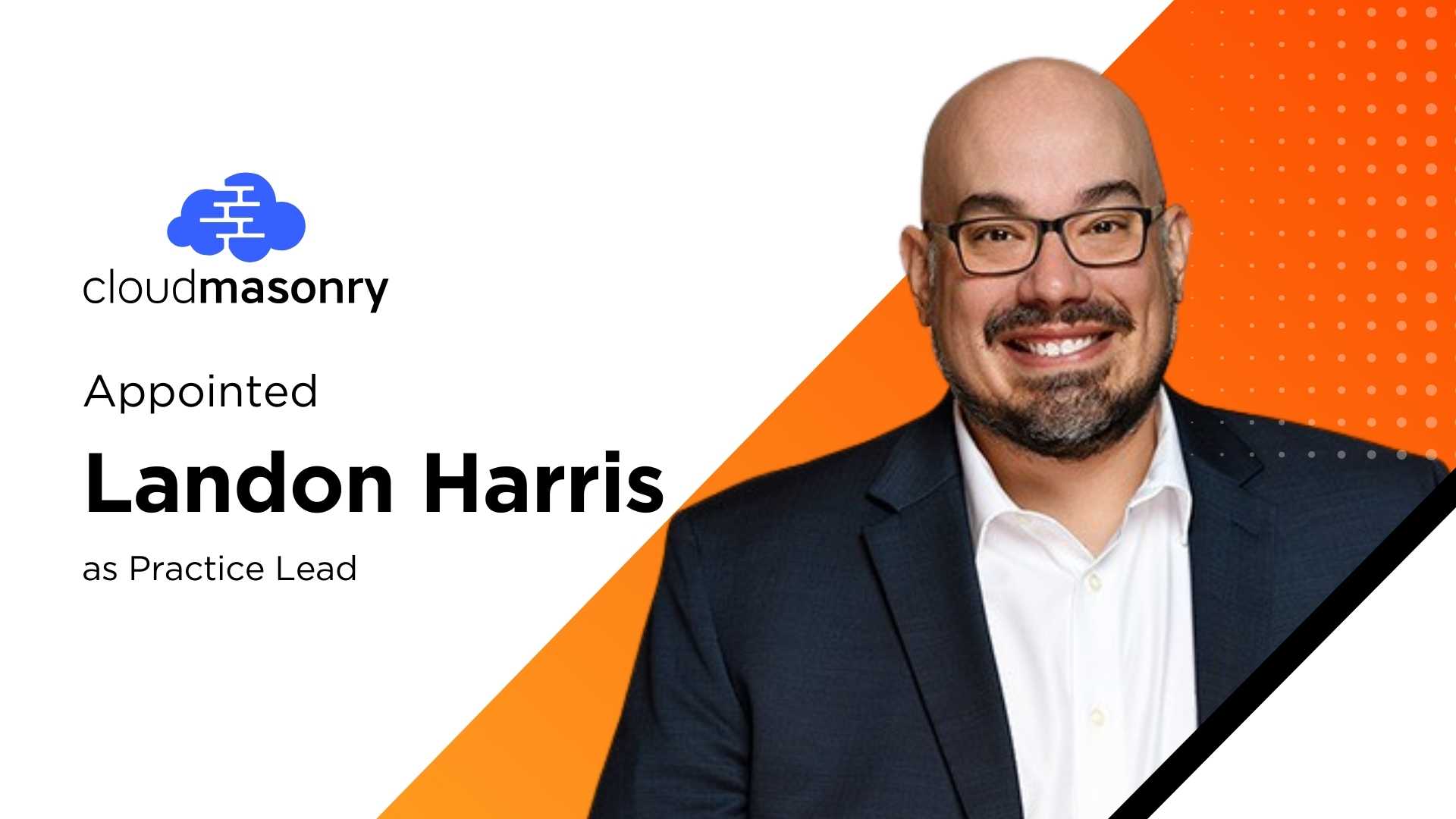
CloudMasonry, a Salesforce-focused consulting firm, has formally launched its Data & AI Practice, signaling a strategic expansion beyond implementation services into advanced analytics, artificial intelligence, and enterprise data strategy. The company also announced the appointment of Landon Harris as Practice Lead, tasking him with building and scaling the new offering.
The move reflects growing enterprise demand for AI capabilities that extend beyond experimentation and into operational impact—particularly within Salesforce-led environments where data, automation, and customer engagement increasingly converge.
From Salesforce Expertise to Data-Led Intelligence
CloudMasonry has built its reputation around deep expertise across the Salesforce ecosystem, including Sales Cloud, Service Cloud, Marketing Cloud, Agentforce, and Data 360 (Data Cloud). As generative AI, embedded analytics, and real-time data orchestration reshape how businesses operate, the firm is positioning data and intelligence as the foundation of its next growth phase.
According to CEO Peter Ryan, the new practice is designed to help clients move from fragmented data initiatives to intelligence-driven execution.
“As businesses look to stay ahead in an AI-driven world, data and intelligence are at the core of transformation,” Ryan said. “Our Data & AI Practice empowers clients to unlock the value of data and turn AI innovation into real-world impact.”
What the Data & AI Practice Delivers
The newly launched practice brings together strategy, architecture, and execution across several core areas:
-
Data strategy, governance, and architecture
Helping organizations define how data is structured, secured, and activated across systems. -
Cross-cloud integration
Connecting Salesforce with modern data platforms such as Data Cloud and Snowflake to enable unified, AI-ready workflows. -
Advanced analytics and business intelligence
Transforming raw data into dashboards, decision platforms, and operational insights that support faster, smarter decisions. -
AI and machine learning advisory and implementation
Designing AI use cases, building and operationalizing models, and embedding predictive intelligence directly into business processes. -
Intelligent Document Processing (IDP)
Using tools like MuleSoft Intelligent Document Processing to automate extraction and transformation of unstructured data into usable insights. -
Client enablement and training
Supporting long-term adoption through upskilling, governance frameworks, and operational best practices.
Together, these services reflect CloudMasonry’s intent to act not just as an implementation partner, but as a long-term advisor throughout the data and AI transformation lifecycle.
Leadership Spotlight: Landon Harris
As Practice Lead, Landon Harris brings more than 15 years of experience in CRM, analytics transformation, data strategy, and AI enablement. During his time at CloudMasonry, Harris has helped clients design intelligent data platforms that link insights directly to execution.
In his expanded role, Harris will define the practice’s vision, develop go-to-market offerings, and guide enterprise clients in applying AI to achieve measurable business outcomes.
“Our clients aren’t just looking to adopt AI—they’re looking to achieve meaningful outcomes,” Harris said. “We’re focused on connecting strategy, data, and technology to transform how organizations operate and compete.”
Why This Matters for Enterprises
As Salesforce continues to embed AI across its platform—from Agentforce to Data Cloud—many organizations struggle to operationalize intelligence across sales, service, and marketing. Data remains fragmented, analytics disconnected from execution, and AI initiatives often stall at the pilot stage.
CloudMasonry’s Data & AI Practice aims to close that gap by aligning data foundations, analytics, and AI execution within the systems enterprises already rely on.
What’s Next
CloudMasonry plans to roll out new data and AI frameworks, accelerate client delivery, and publish thought leadership to help enterprises navigate the rapidly evolving AI landscape. Early engagements will focus on industries including financial services, technology, and consumer brands, leveraging the firm’s cross-cloud and vertical experience.
As enterprises move from AI experimentation to production-scale intelligence, CloudMasonry is betting that integrated data strategy—anchored in Salesforce—will be the differentiator.
Get in touch with our MarTech Experts.

Cordial Launches AI Agents That Actually Execute Marketing Work—Not Just Suggest It
marketing 13 Jan 2026
Cordial is taking a clear position in the increasingly crowded AI-for-marketing landscape: if AI can’t do the work, it’s not solving the problem.
The enterprise messaging platform announced the launch of two new AI agents—the Email Production Agent and the Data Intelligence Agent—built to automate real, production-grade marketing execution inside live workflows. Together, they form the first release of Cordial Agents, a governed agent system designed to close one of marketing’s most persistent gaps: the distance between insight and action.
While many martech vendors are racing to add AI assistants that generate ideas, drafts, or recommendations, Cordial is betting on something more operational—and more controversial. Instead of dozens of narrow agents, it’s launching fewer, deeper agents that are designed to eliminate manual, duplicative work across core marketing operations.
Why “Insights” Aren’t Enough Anymore
Marketing teams aren’t short on data. They’re short on the ability to act on it.
According to Cordial’s own research, 100% of marketers still rely on behavioral signals like clicks and opens to infer intent, yet nearly two-thirds say those insights are only used during campaign planning—not during live execution. The result is a familiar disconnect: campaigns run on assumptions formed days or weeks earlier, while customer intent changes in real time.
That disconnect shows up on the consumer side as well. Only 34% of consumers feel brands truly understand their needs, and 43% of marketers report losing customer trust when intent is misread.
As AI compresses the time between signal and action, this lag becomes harder to justify. In an environment where personalization, timing, and relevance increasingly determine performance, post-campaign insights are no longer enough.
Cordial’s response is to move AI directly into execution.
From “AI Assistants” to Production Systems
“Most AI tools stop at suggestions,” said Matt Howland, Chief Product Officer at Cordial. “We built Cordial Agents to do the work itself.”
That distinction matters. Typical AI assistants live outside production systems, generating copy or ideas that still require human translation into live campaigns. Cordial Agents, by contrast, operate inside real marketing systems, with access to live data, enforced rules, and production-grade tooling.
They don’t just advise. They execute.
Cordial describes its agents as systems designed to ground, govern, execute, and coordinate marketing work end to end. The emphasis on governance is deliberate. As AI-generated outputs move closer to live customer interactions, the risk of broken logic, brand violations, or misfired campaigns increases.
Cordial’s approach assumes that AI must be constrained, validated, and measurable if it’s going to operate at scale.
The Email Production Agent: Automating the Heavy Lifting
The first of the two agents, the Email Production Agent, targets one of the most execution-heavy areas of enterprise marketing: email.
Rather than generating a draft and handing it off, the agent handles the full production workflow, including:
-
Personalization logic
-
Audience definitions
-
Message orchestration
-
Campaign measurement
Crucially, it builds emails using production-grade tools that run inside live campaigns—not simplified prompts or static templates. Before anything is deployed, outputs are validated against real customer profiles to ensure correctness at scale.
This validation step addresses a common failure mode of AI-generated marketing: logic that looks right in isolation but breaks when exposed to real data. By checking outputs before execution, Cordial aims to prevent errors from ever reaching customers.
The Data Intelligence Agent: Acting While Campaigns Are Live
If the Email Production Agent executes, the Data Intelligence Agent observes—and intervenes.
Working from the same shared understanding of customer intent, the agent continuously monitors campaign and audience performance in real time. Instead of surfacing insights after a campaign ends, it identifies emerging trends and issues while there’s still time to act.
That includes flagging underperforming segments, detecting shifts in engagement, and recommending next actions while campaigns are still running. The goal is not just awareness, but timely response.
In practice, this moves analytics closer to operations, reducing the lag between detection and decision that has long defined marketing execution.
Governed AI, Not Autonomous Chaos
Cordial is careful to frame these agents as governed systems, not autonomous actors.
Each agent operates within a defined framework that includes explicit tools, built-in quality checks, controlled retries, and enforceable guardrails tied to brand and campaign standards. Outputs are continuously checked and corrected, allowing the agents to improve results without introducing operational risk.
Execution happens through specialized tools that operate directly inside live workflows, ensuring everything an agent produces is executable, measurable, and safe to run at enterprise scale.
This focus on governance reflects a broader shift in how serious martech buyers are evaluating AI. As experimentation gives way to production use, control, auditability, and predictability are becoming non-negotiable.
Agents That Work Together—and With Humans
Another notable design choice is that Cordial Agents are built to collaborate.
Agents share context and communicate with one another, allowing insights from one area—such as performance data—to inform execution elsewhere. Humans remain part of the loop as well, contributing briefs, artifacts, and direction that improve shared understanding.
Rather than replacing marketers, Cordial positions its agents as force multipliers that remove manual bottlenecks while keeping strategic oversight with human teams.
A Contrarian Bet in a Crowded AI Market
Cordial’s “fewer, deeper agents” philosophy stands in contrast to much of the current AI marketing narrative, which often emphasizes breadth over depth. Many platforms are adding AI features rapidly, but stopping short of execution.
Cordial is betting that marketers don’t need more assistants—they need fewer steps.
By embedding AI directly into production workflows, the company is addressing a harder problem: not generating ideas, but turning intent into action without friction.
The Bigger Picture for Enterprise Marketing
As AI becomes embedded across the marketing stack, the winners are likely to be platforms that reduce operational drag rather than add new layers of abstraction.
Cordial Agents reflect that shift. They’re not positioned as experimental tools, but as infrastructure—designed to remove manual, cumbersome, and duplicative work from marketing operations altogether.
For enterprise teams struggling to act on real-time signals at scale, that may be a more compelling promise than another AI assistant offering suggestions no one has time to implement.
Get in touch with our MarTech Experts.
Page 225 of 645
Most Recent



Website Architecture Emerges as a Core SEO and UX Lever
EIN Presswire

Fresha Expands DACH Push With New Germany GM
Business Wire


Influ2 Launches MCP to Connect Contact-Level ABM With AI
Business Wire