News

Emplifi’s 2026 Report Reveals AI Momentum, Rising Burnout, and a Shift Toward Smarter Social Marketing Workflows
social media 6 Nov 2025
Emplifi has released its “State of Social Media Marketing in 2026” report, offering one of the clearest snapshots yet of how B2B and B2C teams are navigating AI, influencer trends, UGC challenges, and mounting workflow pressure. Based on responses from more than 560 marketers, the report highlights a landscape where AI delivers productivity gains but not at the scale many hoped—while burnout emerges as a growing threat.
The data shows 82% of marketers confirm AI tools have improved productivity, but only 35% say the improvement is significant. Nearly half report only moderate gains, revealing that most teams still lack the workflows, processes, or skills to fully capitalize on AI-driven automation.
Yet Emplifi’s findings also make one thing clear: the era of experimentation is fading fast. Strategies are shifting toward execution, ROI, and operational efficiency, especially as social media continues to fragment and marketers juggle rising demands with limited team capacity.
AI’s Impact: Real Gains, But Not a Revolution—Not Yet
Despite the enthusiasm surrounding AI, most marketers are progressing cautiously. The report shows clear priorities for future AI investments:
-
30% plan to use AI for predictive analytics and customer insights
-
28% will invest in AI-powered content creation
-
26% aim to improve AI-driven ad targeting
However, the path forward comes with hurdles. Data privacy concerns top the list at 27%. Another 23% report integration challenges, while 21% admit that limited skills hold them back.
According to Susan Ganeshan, Emplifi’s CMO, marketers don’t need more tools—they need smarter workflows. “The findings underscore how strategies are shifting from experimentation to execution,” she said. “Marketers need agile processes that drive results.”
Burnout Is Becoming a Marketing KPI—and Not in a Good Way
One of the report’s most striking insights touches on team well-being.
More than 52% of marketers say they experience burnout sometimes or very often. Another 24% feel burnout occasionally.
Team size plays a major role. Despite rising content demands, 57% of social media teams have fewer than six people—yet they’re responsible for analytics, paid social, community management, content creation, and brand reputation.
Leadership support is uneven. Only 42% say leadership actively encourages adopting new technology that could reduce manual work.
The takeaway: many teams are operating in high-pressure environments without the resources or systems to scale effectively.
Influencer Marketing Surges, Including Virtual Creators
Influencer marketing continues to rise as brands chase authenticity, distribution, and audience relevance.
-
67% plan to increase influencer budgets next year
-
58% will invest in virtual influencers—a sign that brands are blending human creativity with scalable digital personas
The shift reflects a broader focus on performance-driven creator partnerships, where reliability and output can be measured more efficiently.
UGC Remains Crucial—but Underused
User-generated content continues to deliver strong impact, yet adoption remains surprisingly low.
-
82% say UGC is important to their marketing goals
-
Only 31% actively encourage customers to create or share it
For many brands, the challenge isn’t audience willingness—it’s operational friction. The biggest blockers include:
-
Collecting content at scale
-
Measuring its true impact on conversions
-
Managing rights and permissions
UGC remains one of the most under-optimized opportunities in social marketing.
Short-Form Video Dominates the Content Agenda
Marketers continue to prioritize formats that deliver engagement quickly.
73% plan to focus heavily on short-form video across platforms.
The top three content goals:
-
Increase engagement
-
Improve sentiment and brand reputation
-
Drive leads and conversions
Taken together, the shift shows brands doubling down on content that cuts through crowded social feeds with speed and storytelling efficiency.
The Road Ahead: AI That Enhances, Not Replaces, Human Marketing
Ganeshan believes the next era of marketing will reward teams that use AI to amplify human connection, not eliminate it. She points to a future where AI supports predictive intelligence, workflow automation, and resource management—ultimately creating healthier, more efficient work environments.
“Future leaders will use technology to amplify human connectivity rather than replace it,” she said. “They will leverage AI to create more sustainable work environments, which will fuel transformation and scale.”
For brands facing rising expectations and limited resources, the message is timely: efficiency may now be as important as creativity, and the teams that master AI-enabled workflows will shape the next wave of social innovation.
Get in touch with our MarTech Experts.

Novavax Hands U.S. Rights to Nuvaxovid™ Over to Sanofi, Secures $225 Million Milestone Revenue
business 5 Nov 2025
Novavax, Inc. (Nasdaq: NVAX) has officially transferred the U.S. marketing authorization for its protein-based COVID-19 vaccine, Nuvaxovid™, to French pharmaceutical giant Sanofi. This move gives Sanofi full control over commercial and regulatory operations in the U.S., completing a key step in their collaboration and license agreement (CLA).
The deal triggered the second of two $25 million milestone payments to Novavax, following the earlier European Union (EU) transfer in October 2025. Combined with prior achievements, Novavax has now secured a total of $225 million in milestone revenue through the partnership.
A Strategic Win for Both Players
“With the successful achievement of our BLA approval and completion of both U.S. and EU marketing authorization transfers for Nuvaxovid™ to Sanofi, we have delivered on our partnership agreement,” said John C. Jacobs, President and CEO of Novavax. “We look forward to Sanofi’s success in globally marketing our protein-based, non-mRNA COVID-19 vaccine in the years to come.”
For Sanofi, this transfer strengthens its vaccine portfolio, particularly as demand shifts toward protein-based alternatives to mRNA formulations. Nuvaxovid’s protein-based platform—boosted by Novavax’s proprietary Matrix-M® adjuvant—has been viewed as a potential option for those seeking traditional vaccine technology.
What’s Next for Novavax and Sanofi
Novavax isn’t done yet. Under the CLA, the company is eligible for additional milestone payments and royalties. These will be tied to future vaccine combinations and new products Sanofi develops using Nuvaxovid or the Matrix-M® adjuvant system.
This collaboration underscores a broader industry trend toward cross-licensing and diversification of COVID-19 vaccine technologies. As mRNA fatigue and storage limitations surface, traditional protein-based vaccines are seeing renewed global interest. Sanofi’s distribution scale could bring Nuvaxovid to broader populations, particularly in regions where cold-chain logistics remain a challenge.
Vaccine Authorization and Safety Profile
Nuvaxovid is authorized in the U.S. for active immunization against COVID-19 in individuals aged 65 and older, or those aged 12 to 64 with high-risk conditions.
Safety Notes and Precautions:
-
Contraindications: Avoid use in individuals with known severe allergic reactions to vaccine components or prior Novavax doses.
-
Warnings: Cases of myocarditis, pericarditis, and syncope have been reported post-vaccination. Medical management should be readily available to handle allergic responses.
-
Limitations: Immunocompromised individuals may have a reduced immune response, and protection is not guaranteed for all recipients.
For detailed safety information, the CDC provides comprehensive clinical considerations related to myocarditis and pericarditis post-vaccination.
Market Implications
The completion of this transfer positions Novavax to focus more on research and development, while Sanofi leverages its global commercial muscle. With both U.S. and EU authorizations in its hands, Sanofi now holds the keys to expanding Nuvaxovid’s footprint across major markets.
As the vaccine landscape matures, this alliance could serve as a model for strategic partnerships between innovators and established pharma distributors. It’s a calculated move—one that blends innovation with reach and may redefine how next-generation vaccines reach global consumers.
Get in touch with our MarTech Experts.
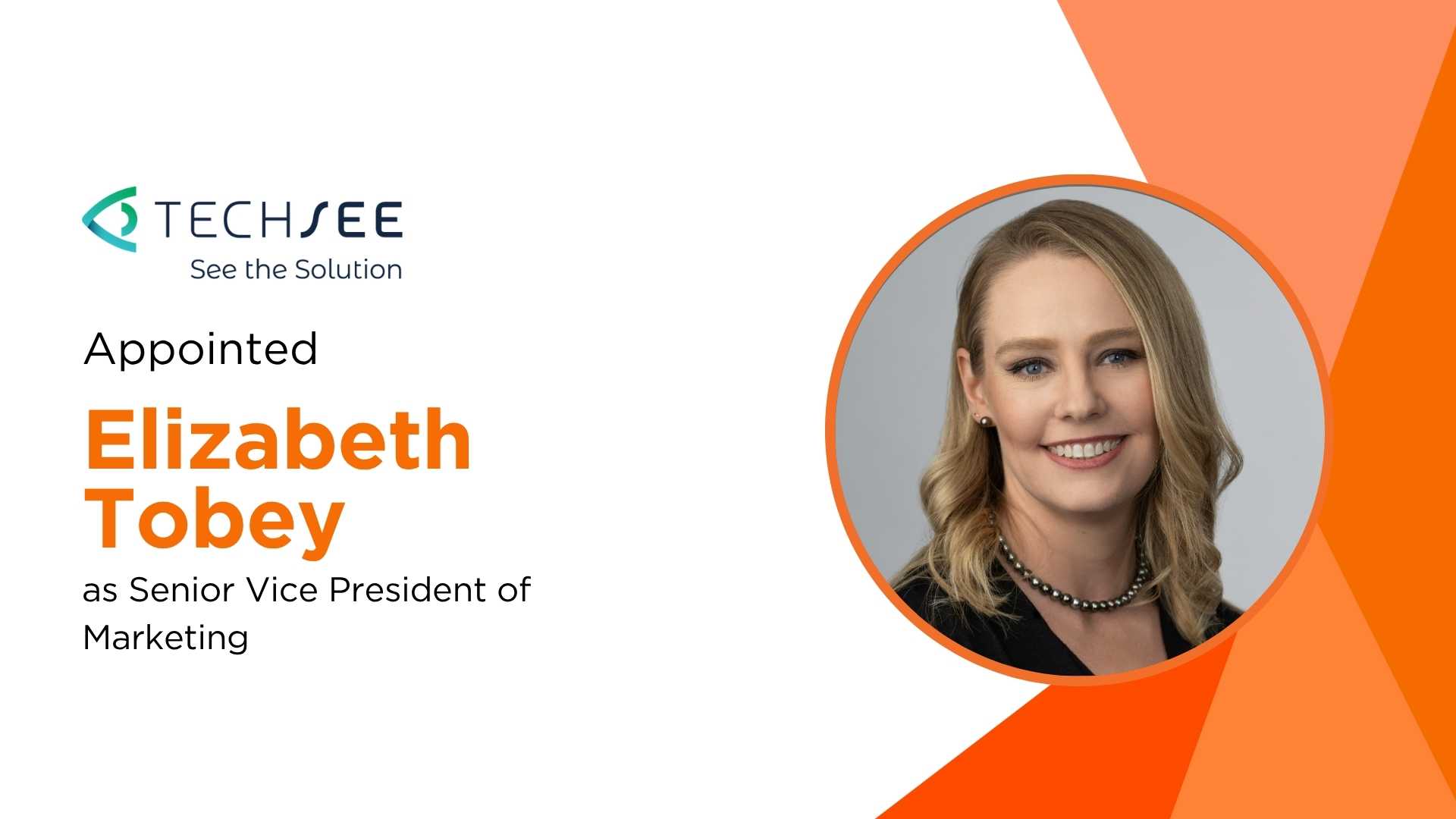
TechSee Appoints Elizabeth Tobey as SVP of Marketing to Drive Next Growth Phase in AI-Powered Customer Experience
artificial intelligence 5 Nov 2025
TechSee, the pioneer in multi-modal AI for customer service, has appointed Elizabeth Tobey as Senior Vice President of Marketing. The move marks a pivotal moment for the company as it accelerates growth in the contact center and CX technology markets, led by its breakthrough visual agentic AI platform.
Tobey brings more than two decades of experience in AI, SaaS, and customer experience marketing, having previously served as Vice President of Marketing at NiCE. There, she spearheaded global marketing strategies that established NiCE as a recognized leader in CX AI—driving double-digit annual growth and strong analyst visibility.
A Storyteller with a Growth Mindset
“Elizabeth is a rare combination of visionary storyteller and results-driven growth leader,” said Eitan Cohen, CEO of TechSee. “She has built and scaled iconic brands across both B2B and B2C industries. As TechSee expands its reach, her deep understanding of the market and instinct for shaping resonant narratives will be critical in accelerating our momentum.”
Known for bridging strategic insight with creative storytelling, Tobey’s appointment underscores TechSee’s intent to strengthen its market position as it scales operations globally.
AI That Sees What Others Can’t
The announcement follows the launch of Connectivity Guru 3.1, TechSee’s latest innovation designed to help contact center agents “see the invisible.” The solution uses real-time visual guidance to diagnose and resolve wireless connectivity issues—a step forward in the company’s broader Sophi Assist vision.
This multi-modal AI approach blends visual, verbal, and contextual intelligence, enabling support agents to resolve complex issues that traditional AI copilots often miss. It’s an evolution from reactive support to proactive, intelligent service delivery—where AI doesn’t replace agents but enhances their expertise.
Why Tobey Joined TechSee
Tobey’s decision to join was fueled by her conviction in TechSee’s unique technology.
“I’ve spent years in customer experience and always saw something missing, until I found TechSee,” said Elizabeth Tobey, the newly appointed SVP of Marketing. “In a world saturated with AI hype, TechSee’s technology delivers real, measurable impact. It doesn’t just deflect simple calls—it solves problems that other copilots can’t because they lack one of the most essential senses: vision.”
Her goal is to elevate TechSee’s story and amplify its message to enterprises seeking real-world, transformative AI solutions that combine empathy, intelligence, and efficiency.
A Proven Record of Scaling Global Brands
Before joining TechSee, Tobey held senior roles at NiCE, Altium, and Medium, leading high-performing global teams and orchestrating campaigns that redefined market positioning. At NiCE, her leadership fueled 40% year-over-year growth in AI product revenue, with AI features becoming part of every enterprise deal exceeding $1 million.
Redefining AI in Customer Service
With Tobey steering the marketing function, TechSee is poised to challenge how enterprises perceive AI in customer service. By advancing a multi-modal AI strategy across contact centers, field service, and self-service environments, the company aims to set a new standard for how humans and machines collaborate.
As organizations race to integrate AI into every customer touchpoint, TechSee’s approach—rooted in vision intelligence and real-time problem-solving—could become a benchmark for AI that works beyond words.
Get in touch with our MarTech Experts.

Jasper Unveils Jasper Grid: A New Era of Scalable AI-Driven Content Production
artificial intelligence 5 Nov 2025
Jasper, the world’s leading AI content automation platform, has introduced Jasper Grid, a sheet-like intelligent interface designed to help marketing teams scale content creation seamlessly across channels, audiences, and regions.
As customer expectations rise and search algorithms evolve, the demand for personalized, high-quality content has exploded. A recent Adobe study reports that marketers expect content demand to grow more than fivefold by 2027—an escalation that’s pushing traditional marketing operations to their limits.
While chat-based AI tools like ChatGPT have transformed one-off asset generation, Jasper Grid aims to solve a deeper problem: building structured, repeatable, AI-driven content systems that scale enterprise-wide.
From Chaos to Coordination: The Birth of Jasper Grid
Jasper Grid is part of a broader ecosystem that includes Jasper IQ and Jasper Studio, collectively powering Content Pipelines—a no-code system that turns AI from a tactical assistant into a strategic growth engine.
Instead of managing fragmented workflows and disconnected tools, teams can now automate the journey from idea to published campaign. Content Pipelines integrate briefs, brand guidelines, and performance data into structured workflows that allow AI agents to plan, produce, and optimize content collaboratively.
“Marketers today don’t have a content problem; they have a scale problem,” said Timothy Young, CEO of Jasper. “Content Pipelines, powered by the new Jasper Grid, bring the structure and intelligence needed not only to deliver more content but to deliver better content, at scale. This new system helps teams turn content production into a true growth engine instead of an operational hurdle.”
AI-Native Infrastructure for the Modern Marketer
Jasper’s latest release introduces what it calls the first AI-native marketing infrastructure—designed specifically to scale content operations across every channel and geography. With Jasper Grid, marketing teams gain both structure and agility to meet growing business needs.
Here’s how different marketers can leverage it:
-
ABM Marketers: Achieve 1:1 personalization automatically, delivering tailored content for accounts and segments without manual customization.
-
Retail Marketers: Streamline product content workflows, producing accurate and brand-aligned descriptions and visuals faster.
-
Product Marketers: Manage global launches from a centralized dashboard, ensuring consistency and regional relevance simultaneously.
-
Content Marketers: Scale SEO, GEO, and AEO initiatives while automating optimization for evergreen performance.
By combining structure, intelligence, and automation, Jasper Grid gives organizations the governance and scalability needed to transform how content is created and deployed.
Beyond Chat: Turning AI into a True Content Engine
Jasper’s new release reflects a broader shift in marketing technology: moving from reactive, chat-based AI tools to autonomous, workflow-driven systems that support end-to-end content operations.
This evolution comes on the heels of recent Jasper innovations, including integrations with Salesforce and Braze, and the rollout of Jasper MCP Server—all reinforcing the company’s mission to elevate all marketing and all marketers.
In an era where brands are judged by the speed, relevance, and quality of their storytelling, Jasper Grid could become the foundation for AI-first marketing operations—where creativity and efficiency finally scale together.
Get in touch with our MarTech Experts.

Thryv Launches AI-Powered Growth Marketing Platform for Home Services Businesses
automation 5 Nov 2025
Thryv® Holdings, Inc. (NASDAQ: THRY), the company behind one of the most popular small business marketing and sales software platforms, has launched a new AI-powered growth marketing solution tailored for home services businesses.
Built for contractors, HVAC specialists, landscapers, and other service pros, the platform automates marketing workflows, helping businesses reach high-intent prospects, convert leads faster, and drive repeat sales—all without hiring an agency or managing complex campaigns manually.
“We work with over 15,000 home services businesses, and most believe that scaling is the best way to fight rising operational costs,” said Rees Johnson, Chief Product Officer at Thryv. “With our prebuilt automations, they can skip writing content or testing timing. While they’re out on jobs, our system is already generating leads, scheduling estimates, and sending branded service reminders. It’s seamless.”
The Thryv 3-Step Growth Framework
Thryv’s latest release is built on a proprietary three-step framework designed to simplify marketing and accelerate growth for home services businesses.
-
Get Found Online – Boosts visibility across Google Search, AI-driven platforms, and top directories, improving local SEO and brand credibility.
-
Capture and Convert Leads – Uses Thryv’s integrated CRM and automation tools to capture new customers and automate follow-up for free estimates and appointments.
-
Drive Repeat Business – Keeps the pipeline active with automated review management, AI-generated responses, and seasonal email and text campaigns.
Together, these steps create an always-on marketing engine that nurtures customer relationships year-round—especially during slower shoulder seasons.
Key Features Powering the Platform
Enhanced Local Listings: Automatically updates business information across more than 50 directories to improve local search visibility on Google™ and ChatGPT.
AI Review Response: Generates brand-consistent replies to online reviews, strengthening trust and reputation management.
Automated Follow-Up: Sends personalized follow-ups to prospects and customers within seconds, keeping engagement continuous.
AI Content Generator: Creates and schedules professional-grade campaigns, from seasonal promotions to maintenance reminders, all aligned with brand tone and timing.
Integrations with Industry Tools: Seamlessly connects with platforms like ServiceTitan and Jobber, enabling synchronization with tools businesses already rely on.
Real Results from Small Business Users
For businesses already using the platform, the results speak for themselves.
“Since using Thryv, our online visibility has seen a noticeable boost,” said Tanner McGee, Co-owner and CFO of Harco Fence + Deck. “We now show up more consistently across Google, social media, and directory listings. The built-in reputation tools make it easy to collect and showcase reviews, helping us build trust with new prospects.”
Redefining Small Business Growth with AI
Thryv’s new solution reflects a broader shift in how AI is transforming small business marketing—from a manual, reactive effort into a proactive, automated growth engine.
By merging AI intelligence with local marketing strategy, Thryv is giving small business owners the tools to compete at enterprise scale without enterprise budgets. It’s not just about more marketing—it’s about smarter, self-sustaining marketing that works while business owners work.
Get in touch with our MarTech Experts.

Automation Anywhere Acquires Aisera to Build the Industry’s Most Comprehensive Agentic Automation Platform
artificial intelligence 5 Nov 2025
Automation Anywhere has announced its acquisition of Aisera, a leading provider of agentic AI solutions for autonomous IT. The deal combines Automation Anywhere’s Agentic Process Automation (APA) technology with Aisera’s self-service AI agents for IT, HR, and customer service—creating what the company calls the industry’s most comprehensive agentic automation portfolio.
The move underscores Automation Anywhere’s push toward the Autonomous Enterprise vision—a model where up to 80% of business processes are fully automated or AI-assisted. Together, the companies aim to help enterprises cut costs, speed up workflows, and elevate employee and customer experiences.
“We are in a unique position to help customers adopt agentic AI faster while reducing their ITSM costs,” said Mihir Shukla, CEO and Co-founder of Automation Anywhere. “With AI agents doing the work, up to 40% fewer ITSM seats are needed.”
Aisera’s CEO, Abhi Maheshwari, described the merger as “a defining moment” for enterprise AI. “Together with Automation Anywhere, we will continue to redefine how enterprises operate and deliver exponential value worldwide,” he said.
The acquisition is also backed by investors like Menlo Ventures, whose partner Venky Ganesan called the merger “a powerful force for autonomous enterprise transformation.”
What the Combined Stack Offers
The integration of the two companies brings together:
-
Conversational AI Agents for ITSM, HR, and customer experience
-
Agentic Process Automation (APA) that enables AI to take action, not just respond
-
Process Reasoning Engine (PRE) trained on 400 million automations for higher accuracy
-
Mozart Orchestrator for cross-platform workflow orchestration
-
Enterprise-grade security and governance, with open infrastructure options
Aisera’s team of 100+ AI engineers will join Automation Anywhere to drive the next generation of multi-sector agentic AI solutions.
Get in touch with our MarTech Experts.

Sitecore Unveils SitecoreAI: The Next-Gen Platform Powering AI-Driven Digital Experiences
technology 5 Nov 2025
As marketing shifts from static search to AI-driven discovery, Sitecore has unveiled SitecoreAI, a groundbreaking digital experience platform designed to redefine how brands engage with audiences. This next-generation platform places artificial intelligence at the core of marketing strategy — enabling personalized, dynamic, and contextually aware experiences that evolve in real-time.
The AI Heart of Modern Marketing
Built on the foundation of Sitecore XM Cloud, SitecoreAI unifies content, data, and personalization into a single, composable SaaS platform. The goal is simple yet transformative: empower marketers to launch campaigns faster, spend smarter, and continuously optimize performance through AI-driven workflows.
At the center of SitecoreAI lies the Agentic Studio — an intelligent workspace where humans and AI collaborate to plan, create, and personalize digital experiences. The studio launches with 20 AI-powered agents that automate complex workflows, from campaign planning to testing and migration. Marketers can also design custom agents and processes using intuitive, code-free visual tools.
Agentic Flows and Spaces: Collaboration Reimagined
Within the Agentic Studio, Agentic Flows orchestrate multi-step, personalized campaigns with complete visibility — aligning teams across campaign planning, experimentation, and optimization. The Spaces feature fosters real-time collaboration between human marketers and AI, transforming once-disconnected tools into a unified, intelligent ecosystem that improves continuously through feedback and insights.
Early Adopters Leading the Way
Several leading global brands are already harnessing SitecoreAI to accelerate growth and streamline operations.
-
Berkeley Homes and AFL leverage Contextually Aware Content Agents to generate hyper-targeted content tailored to specific audience segments.
-
Regal Rexnord and Hexagon rely on Migration Tooling Agents to automate content and schema conversion, drastically reducing project timelines from months to weeks.
According to Eric Stine, CEO at Sitecore, “Discovery is no longer driven by search; it’s powered by attention. Brands win when they deliver the right message at the right moment — and SitecoreAI gives marketers the intelligence to do exactly that.”
Seamless Integration and Proven ROI
Running on Microsoft Azure, SitecoreAI is the natural evolution of XM Cloud — merging content management, customer data, personalization, and search into one secure and scalable platform. For existing XM Cloud customers, the transition requires no migration, ensuring seamless access to all AI capabilities, including the Agentic Studio.
A Total Economic Impact™ study commissioned by Sitecore revealed that XM Cloud users achieved a 371% ROI and 50% higher digital conversions, driven by faster content delivery and AI-powered personalization. SitecoreAI builds on these results, extending them into a fully unified platform for the AI-first era.
Real-World Impact Across Industries
Tim Dickson, Chief Digital and Information Officer at Regal Rexnord, emphasized how SitecoreAI helps unify multiple brands under one digital ecosystem: “SitecoreAI allows us to deliver consistent, personalized communication to customers worldwide — scaling our digital experience with intelligence.”
Similarly, Mary Ellen Grom, Executive Director of Global Marketing and Corporate Communications at AFL, highlighted the platform’s efficiency: “SitecoreAI empowers our teams to produce content faster and smarter. By integrating our digital standards with AI-driven insights, we can deliver personalized, customer-centric experiences that truly engage.”
Trust, Governance, and the Future of AI Marketing
Built within Sitecore’s governed AI framework, SitecoreAI prioritizes security, transparency, and compliance with emerging enterprise and regulatory standards. This foundation ensures that marketers can confidently embrace AI without compromising ethical or operational integrity.
With SitecoreAI now available globally, marketers can launch campaigns in days, personalize content at scale, and maximize every marketing asset — transforming data-driven ambition into measurable results.
Get in touch with our MarTech Experts.

Oasis Security Launches Agentic Access Management Framework to Govern AI Identity Security
artificial intelligence 5 Nov 2025
As enterprises race to deploy artificial intelligence at scale, Oasis Security has introduced a groundbreaking governance model designed to keep pace with the machine-to-machine future. The company today launched its Agentic Access Management (AAM) Framework, a first-of-its-kind identity security model built specifically for the “Agentic Access” era — where AI agents and non-human identities (NHIs) now operate as digital employees within enterprise systems.
A New Era of Identity Governance
Developed in collaboration with Sequoia Capital and a network of leading CISOs, the AAM Framework provides clear, actionable guidance for managing AI-driven access across enterprise environments. Unlike traditional identity frameworks focused on human users, AAM addresses governance for the rapidly expanding layer of AI agents — offering a practitioner-built, vendor-neutral structure that can be implemented immediately.
“AI-agent adoption is rising exponentially,” said Danny Brickman, CEO and Co-founder of Oasis Security. “Our Fortune 500 customer data shows an 840× increase in AI agent use year-over-year, with Copilot agent creation up 1,767%. At this pace, AI agents will outnumber employees by the end of 2025. The AAM Framework was born from that urgency — it gives security teams the structure to manage this explosion responsibly.”
AI Growth Without Guardrails
Recent studies reveal a critical gap between AI innovation and governance:
-
83% of enterprise data entering AI tools goes to platforms labeled critical or high risk, with 34.8% of that data classified as sensitive.
-
Organizations without formal AI strategies have only a 37% success rate in adoption versus 80% for those with clear governance.
-
Despite a 14% annual increase in AI spending, just 30% of tech-forward enterprises have achieved full-scale deployment.
These figures underscore the need for structured, identity-first AI governance — a challenge Oasis Security aims to solve with AAM.
Built for Practitioners, Not Just Policy
The AAM Framework offers a practical, identity-first approach to AI security. It focuses on the machine-to-machine access layer, where most AI-related security risks are projected to emerge. By defining controls around access, credentials, and identity lifecycle management for AI agents, it helps enterprises establish trust, accountability, and visibility across thousands of autonomous systems.
“Agentic AI represents one of the most profound shifts since cloud computing,” said Caleb Tennis, CISO at Sequoia Capital. “Oasis is enabling enterprises to get ahead of that shift — not just adopting AI faster, but governing it responsibly. The AAM Framework brings vital structure to a rapidly evolving space.”
From Shadow AI to Secure Autonomy
As organizations move from AI experimentation to enterprise-scale deployment, many face credential sprawl, shadow AI, and compliance blind spots. The AAM Framework provides tools and governance maturity models that help companies secure agentic access before these issues spiral out of control.
“The Maturity Assessment tool has been instrumental in pinpointing where to strengthen our program and how to engage leadership on next steps,” said Todd Dufour, SVP of Identity and Access Management. “It aligns perfectly with our goal of adopting AI responsibly and building long-term resilience.”
Coalition-Ready for the Future of AI Security
To accelerate adoption, Oasis Security has also launched an AAM Maturity Assessment — allowing organizations to benchmark current practices, identify governance gaps, and prioritize remediation. The framework is coalition-ready, designed for endorsement by CISOs, security associations, and vendors seeking to establish a shared foundation for secure AI adoption.
With the Agentic Access Management Framework, Oasis Security is positioning itself as a pioneer in the emerging discipline of AI identity governance — offering enterprises the tools they need to balance AI innovation with accountability in a rapidly evolving digital landscape.
Get in touch with our MarTech Experts.
Page 159 of 1501