News

Aurora Mobile Brings Thai Voice AI to GPTBots via Tellvoice Partnership
artificial intelligence 29 Sep 2025
China’s Aurora Mobile (NASDAQ: JG) is turning up the volume on its AI ambitions. The customer engagement and martech provider today announced a strategic partnership between its AI agent platform, GPTBots.ai, and Thailand’s Tellvoice Technology Ltd., the country’s premier speech recognition company. The move equips GPTBots with industry-grade Thai voice recognition, enabling local businesses to build conversational AI agents that finally sound—and think—like natives.
What’s New
Unlike cookie-cutter voice bots, the integration combines Tellvoice’s decade-long expertise in Thai speech recognition with GPTBots.ai’s no-code platform, Retrieval-Augmented Generation (RAG), and multi-agent capabilities. The result: AI agents that don’t just transcribe words, but grasp context, navigate complex queries, and execute tasks autonomously.
In practice, that means smoother multi-party customer service calls, smarter business inquiry handling, and faster delivery of contextually relevant answers. For Thai businesses wrestling with the nuances of tone, dialect, and cultural phrasing, that’s a leap forward.
Why It Matters
Voice AI has become table stakes in markets like the U.S. and China, but Southeast Asia has lagged due to linguistic complexity. Thai, with its tonal system and regional dialects, poses particular challenges. By baking in Tellvoice’s local expertise, Aurora Mobile is sidestepping the common pitfall of “universal” voice tech that doesn’t translate well in practice.
As Chris Lo, Founder and CEO of GPTBots.ai, put it: “We’re not simply entering the Thai market—we’re empowering local innovators to drive digital transformation across Thailand and Southeast Asia.” In other words, this is less about global expansion and more about tailoring AI to fit regional realities.
Industry Impact
The collaboration is zeroing in on industries where natural conversation is business-critical:
-
Financial services – Automated yet compliant customer interactions.
-
Tourism & hospitality – AI concierges that actually understand local dialects.
-
Retail & e-commerce – Smarter voice-driven shopping and customer support.
For Thailand—where tourism represents nearly 20% of GDP—the promise of frictionless, AI-powered service could be transformative. And for Aurora Mobile, it’s a beachhead in Southeast Asia, one of the fastest-growing digital economies in the world.
The Bigger Picture
As global martech vendors race to localize AI, Aurora Mobile’s Tellvoice tie-up underscores a larger trend: the shift from one-size-fits-all chatbots to regionally tuned voice agents. Rivals like Google and Microsoft have rolled out multilingual speech services, but few go as deep into market-specific nuances. Aurora’s bet is that authenticity—and accuracy—will win.
Get in touch with our MarTech Experts.

EU Pharma Gets a Crash Course: New Training on Marketing Authorisation Variations
business 29 Sep 2025
When it comes to getting medicines to market—and keeping them there—regulatory red tape can be as challenging as drug development itself. ResearchAndMarkets.com has just added a new training course, “Variations to Marketing Authorisations” (Oct 15–16, 2025), designed to help pharma professionals navigate one of the industry’s most complex post-approval hurdles.
Why It Matters
For marketing authorisation holders (MAHs), filing and maintaining dossiers isn’t optional—it’s a legal responsibility. Every tweak, whether it’s a formulation change or a new safety restriction, must be filed as a “variation” with European regulators. And in a field where time is money, knowing how to classify, prepare, and submit the right type of variation can shave weeks off approval timelines.
The upcoming course provides a structured overview of the EU’s system for variations under Regulations 1234/2008 and 712/2012. More importantly, it promises practical, scenario-based training to help regulatory teams file smarter, not harder.
Inside the Course
Across two packed days, participants will dig into:
-
Variation Types – Demystifying Type IA, IB, and II variations, along with foreseen vs. unforeseen changes.
-
Filing Strategy – Tips for creating global dossiers and managing gold/silver/bronze versions.
-
Grouping & Work-Sharing – When it makes sense to combine submissions and how to execute them.
-
Module 3 Impact – How quality data (QbD, CQA pyramids) shape dossier decisions.
-
Advanced Compliance – From urgent safety restrictions to SUPAC guidance.
Interactive case studies will let attendees apply concepts to real-world scenarios, from managing national vs. centralised procedures to handling linguistic reviews in mutual recognition processes.
The Expert
The course will be led by Andrew Willis, an independent regulatory consultant with nearly three decades of pharmaceutical experience. Formerly VP of Regulatory Affairs at Catalent, Willis has overseen major EU and US filings, including mutual recognition approvals across 26 countries. His background spans everything from biotech cancer treatments to sterile manufacturing—credentials that make him well-placed to decode regulatory complexity.
Beyond the Lecture
The event isn’t just about theory. Participants can expect hands-on discussions, peer exchanges, and 12 hours of Continuing Professional Development (CPD) credits. A certificate of completion will also be provided—useful currency for regulatory professionals looking to validate expertise in a competitive field.
Why Now?
The EU regulatory landscape continues to evolve, and pharma companies face mounting pressure to accelerate post-marketing changes without tripping over compliance hurdles. With new therapeutic classes—from cell therapies to mRNA vaccines—coming to market, regulatory affairs teams are dealing with an unprecedented mix of traditional and novel requirements. Training like this aims to close that knowledge gap, helping companies avoid costly delays.
Get in touch with our MarTech Experts.

Liferaft iQ Brings AI Muscle to Threat Intelligence
artificial intelligence 29 Sep 2025
Threat data is everywhere—and that’s exactly the problem. Security teams are drowning in alerts, chatter, and false positives. Liferaft, best known for its open-source threat intelligence (OSINT) platform, thinks it has the fix: Liferaft iQ, a new AI-powered solution designed to cut through the noise and deliver only what matters.
The platform, unveiled this week, plugs directly into Liferaft’s existing OSINT suite and adds a layer of AI-driven automation. The goal is to surface high-priority alerts faster, letting security and intelligence teams spend more time making decisions—and less time chasing data.
Why It Matters
The digital threat landscape has ballooned, with everything from ransomware chatter on the dark web to disinformation campaigns on social platforms. Fortune 500 companies already rely on Liferaft for visibility across the surface, deep, and dark web. With iQ, Liferaft is pitching a way to manage that firehose of signals without overwhelming human analysts.
“Organizations are overwhelmed by the volume of signals across the digital landscape,” said Jonathan Graff, CEO of Liferaft. “Liferaft iQ uses AI to transform how teams detect and act on threats, enabling them to focus on decision-making rather than data chasing.”
What’s New in iQ
-
AI-Driven Summaries: Condenses thousands of posts into clear, actionable insights.
-
AI-Enhanced Search: Semantic, context-aware search results help analysts find the signal in the noise.
-
Live Insights: Real-time flagging of suspect activity before it escalates.
-
AI-Powered Reporting: Automated reports that answer key security questions instantly.
Taken together, these features aim to replace the reactive, alert-fatigue model with proactive intelligence.
The Bigger Picture
AI-powered threat detection isn’t a brand-new idea—rivals like Recorded Future and ThreatConnect are also layering AI into their platforms. But Liferaft’s move stands out because it integrates AI directly into a mature OSINT system already trusted by Fortune 100 clients. That gives it a head start in terms of data quality, customer trust, and operational integration.
The pitch is simple: better intelligence, less noise, and faster responses. Whether Liferaft iQ can hold its edge in an increasingly crowded market will depend on how well it continues to scale against the rising tide of global threats.
Get in touch with our MarTech Experts.

Ok.com Takes Aim at Craigslist and eBay With Free Global Classifieds
artificial intelligence 29 Sep 2025
Online marketplaces are about to get a shake-up. Ok.com, a platform owned by Servanan International, is rolling out a global, AI-powered classifieds service at the end of October—and it’s completely free.
The site launches across nine countries, including the U.S., U.K., Canada, Australia, and New Zealand, and covers the usual suspects: jobs, secondhand goods, housing, and vehicles. But unlike Craigslist, eBay, or Indeed, there are no posting fees, no commissions, and no hidden charges. For consumers navigating inflationary times, that’s a bold pitch.
The Free Model
Traditional platforms have long squeezed users with pay-to-post barriers and high commissions. Legacy job boards, for example, can charge $500 per hire. Major resale sites often take 12–15% per transaction. Ok.com ditches all of it. Sellers keep 100% of their earnings, while businesses get unlimited free job listings.
“The irony is that the platforms designed to help people save money are actually costing them thousands,” said Ok.com’s CEO. “In an economy where every dollar counts, keeping 100% of your sale proceeds or saving on a job posting shouldn’t be a luxury—it should be the standard.”
Where It Competes
-
Jobs: Employers post for free, while AI-powered matching links candidates with relevant roles—from warehouse staff to finance pros.
-
Goods: Sellers list without commission, supported by an escrow system for secure transactions.
-
Vehicles: Buyers get transparency through integrated history reports, seller verification, and personalized AI recommendations.
-
Housing: Renters skip costly broker fees with direct landlord connections, video tours, and remote property evaluations.
In short, Ok.com wants to undercut Craigslist, eBay, Indeed, and Zillow all at once.
The Market Context
Ok.com is launching at a time when consumers are cutting back. A recent survey found more than half of Americans have reduced essential spending. Free listings aren’t just a perk—they’re a survival strategy. If Ok.com can scale, it could force incumbents to rethink their fee-heavy models.
Of course, disruption is easier said than done. Craigslist has decades of user loyalty. eBay has global reach. And job boards like Indeed and LinkedIn thrive on network effects. Ok.com’s bet is that a fee-free, AI-augmented alternative will draw frustrated users looking for affordability and trust.
“When fees disappear, opportunity democratizes,” the CEO added. “Ok.com empowers smarter living by making daily transactions more affordable and convenient.”
The question now: will this model lure enough users to make a dent in the entrenched giants of classifieds—or will the incumbents just absorb the shock and keep cashing in?
Get in touch with our MarTech Experts.
Saison and Vectara Team Up to Reinvent Conversational AI for the Enterprise
artificial intelligence 29 Sep 2025
If you’ve ever been trapped in an endless loop with a chatbot that can’t grasp your intent, you know the problem: AI-powered support has been long on hype but short on results. Saison Technology International and Vectara think they’ve cracked the code.
The two companies announced a strategic partnership to bring conversational AI that feels more human, less robotic, and—most importantly—more accurate to enterprises worldwide. Their pitch: combine Saison’s muscle in global data integration with Vectara’s agentic retrieval augmented generation (RAG) platform to deliver AI agents that understand context, ground responses in real-time enterprise data, and don’t drift into hallucination territory.
Why This Matters
First-generation AI tools—rules-based chatbots or “co-pilot” assistants—often frustrated customers with rigid scripts and wrong answers. The result: slow adoption, poor user trust, and plenty of “let me speak to a human” moments. Vectara claims its end-to-end RAG platform solves this by delivering precision retrieval, advanced re-ranking, and real-time hallucination correction.
Layer that with Saison’s data integration expertise—connecting everything from dusty mainframes to modern pipelines—and enterprises get conversational AI that can actually pull from relevant, trusted sources.
A Powerful Pairing
-
Saison Technology: Trusted by 10,000+ customers worldwide, with deep expertise in regulated industries, Saison specializes in unifying fragmented data across on-prem, cloud, and hybrid environments.
-
Vectara: Language-agnostic RAG service with Guardian Agent enforcement, enterprise-grade security, and granular access controls. Designed to give enterprises explainable, accurate, and scalable conversational AI.
Together, they promise:
-
Scalable customer support operations
-
Faster issue resolution with higher case deflection rates
-
Seamless multi-channel engagement
-
Anticipatory user experiences grounded in real-time data
In short: fewer tickets clogging support desks, better KPIs, and AI agents that don’t leave customers yelling into the void.
The Bigger Picture
The partnership comes as enterprises wrestle with how to scale AI responsibly. While hyperscalers like Microsoft and Google have embedded AI copilots into their ecosystems, many organizations still struggle with fragmented data, compliance, and the unpredictability of generative AI. Saison and Vectara are betting their combined solution can bridge that gap—providing explainable, governed, and trustworthy AI at scale.
As Eva Nahari, Chief Product Officer at Vectara, bluntly put it: “Most modern AI chatbots hallucinate on a regular basis, negatively impacting brands and customer experiences.” Saison’s CEO Masa Maruyama echoed the sentiment, adding that enterprises need flexibility and control—not AI toys that can’t handle intent.
For enterprises, the message is simple: if you’re going to roll out AI agents, make sure they can actually solve problems, not create new ones. Saison and Vectara think they’ve built just that.
Get in touch with our MarTech Experts.

Optimizely’s SaaS CMS Lands First Major EMEA Deployment with CFM International
technology 29 Sep 2025
When one of the world’s largest aircraft engine makers decides to overhaul its digital front door, the industry takes notice. CFM International has just launched its redesigned website on the SaaS version of Optimizely’s Content Management System (CMS)—a first for the EMEA region. The move signals not just a web refresh but a deeper embrace of cloud-first, marketer-friendly digital experience platforms.
Delivered in partnership with digital product agency Candyspace (an Optimizely Gold Partner), the project positions CFM as an early adopter in aerospace manufacturing’s ongoing digital transformation. The upgrade replaces legacy systems that were creaking under modern demands, offering faster performance, more flexibility, and a workflow that marketers can actually enjoy using.
Why It Matters
Optimizely has long pitched itself as a digital experience powerhouse, but until now, its SaaS CMS hadn’t broken ground in EMEA. With CFM as the launchpad, the company gains a marquee customer that can put its scalability and speed to the test. Aerospace firms aren’t exactly known for nimble digital operations—so CFM’s move could nudge others in the sector toward cloud-first platforms.
Features at a Glance
-
Headless but human-friendly: Powered by Optimizely’s CMS and hosted on Vercel, the site delivers near-instant load times and modern, modular experiences. Unlike many headless CMS tools, this one doubles down on marketer usability with a Visual Builder and live previews.
-
Marketer-first editing: No more queuing up developers for every text tweak. CFM’s marketing team can now publish updates on the fly, shaving days off content cycles.
-
Built to scale securely: Optimizely Graph enables fast omnichannel content delivery while the SaaS model handles automatic scaling and security updates—meaning developers can stop babysitting servers.
The new site isn’t just a backend upgrade. Visitors—over 250,000 annually—will see richer content, smoother navigation, and handy features like event booking and integrated news feeds. For CFM, that means a better way to connect with partners, clients, and stakeholders.
The Bigger Picture
Optimizely is betting its SaaS CMS can differentiate itself from crowded rivals like Contentful or Adobe Experience Manager by striking a balance between developer freedom and marketer autonomy. By securing CFM as its first SaaS CMS customer in EMEA, the company is planting a flag in an enterprise-heavy region where digital transformation has often lagged.
Tom Thorne, CEO of Candyspace, called the rollout a “major milestone” for Optimizely in Europe, while Optimizely VP of Product Nazanin Ramezani emphasized its marketer-first approach: “This platform gives marketers the freedom to move fast with tools like Visual Builder and AI-assisted workflows, without compromising enterprise scale.”
For the aerospace sector, the message is clear: speed isn’t just for jet engines anymore—it’s for websites too.
Get in touch with our MarTech Experts.

5WPR Named Agency of Record for Yourgi to Boost Pet Services Platform
digital marketing 26 Sep 2025
5WPR, a top-ranked independent integrated communications agency, has been named Agency of Record (AOR) for Yourgi, Inc., a U.S.-wide pet services marketplace connecting pet parents with trusted local providers—from grooming and training to walking, sitting, and boarding.
Yourgi’s platform streamlines access to pet services, bringing together resources, expert insights, and booking tools for modern pet owners while helping local businesses grow. The agency partnership will combine PR, thought leadership, paid media, and strategic reporting to amplify the brand’s visibility and market position.
Integrated Approach to Pet Marketing
5WPR’s scope covers:
-
Public Relations & Media Relations: Developing key messages, securing earned media, local market outreach, and executive thought leadership.
-
Paid Media Campaigns: Leveraging social, search, programmatic, CTV, and other channels to reach priority audiences.
-
Strategic Reporting & Counsel: Ongoing account management, performance tracking, and identification of new growth opportunities.
“This partnership lets us elevate Yourgi’s mission through a fully integrated communications strategy,” said Marijana Gucunski, Senior VP at 5WPR. “We’re excited to drive awareness, establish thought leadership, and showcase the value the brand brings to pet parents and providers alike.”
Dr. Jennifer Strickland Fowler, CEO of Yourgi, added: “5WPR shares our commitment to excellence and innovation. Their expertise will be instrumental in advancing our mission and shaping the next chapter of our growth.”
Why It Matters
The collaboration builds on 5WPR’s experience in pet care and lifestyle sectors, combining traditional and digital PR with paid media to increase visibility, engagement, and long-term growth. For pet tech brands like Yourgi, integrated communications strategies are key to standing out in an increasingly competitive market.
Get in touch with our MarTech Experts.
StackAdapt Strengthens Leadership with Two Senior Hires
advertising 26 Sep 2025
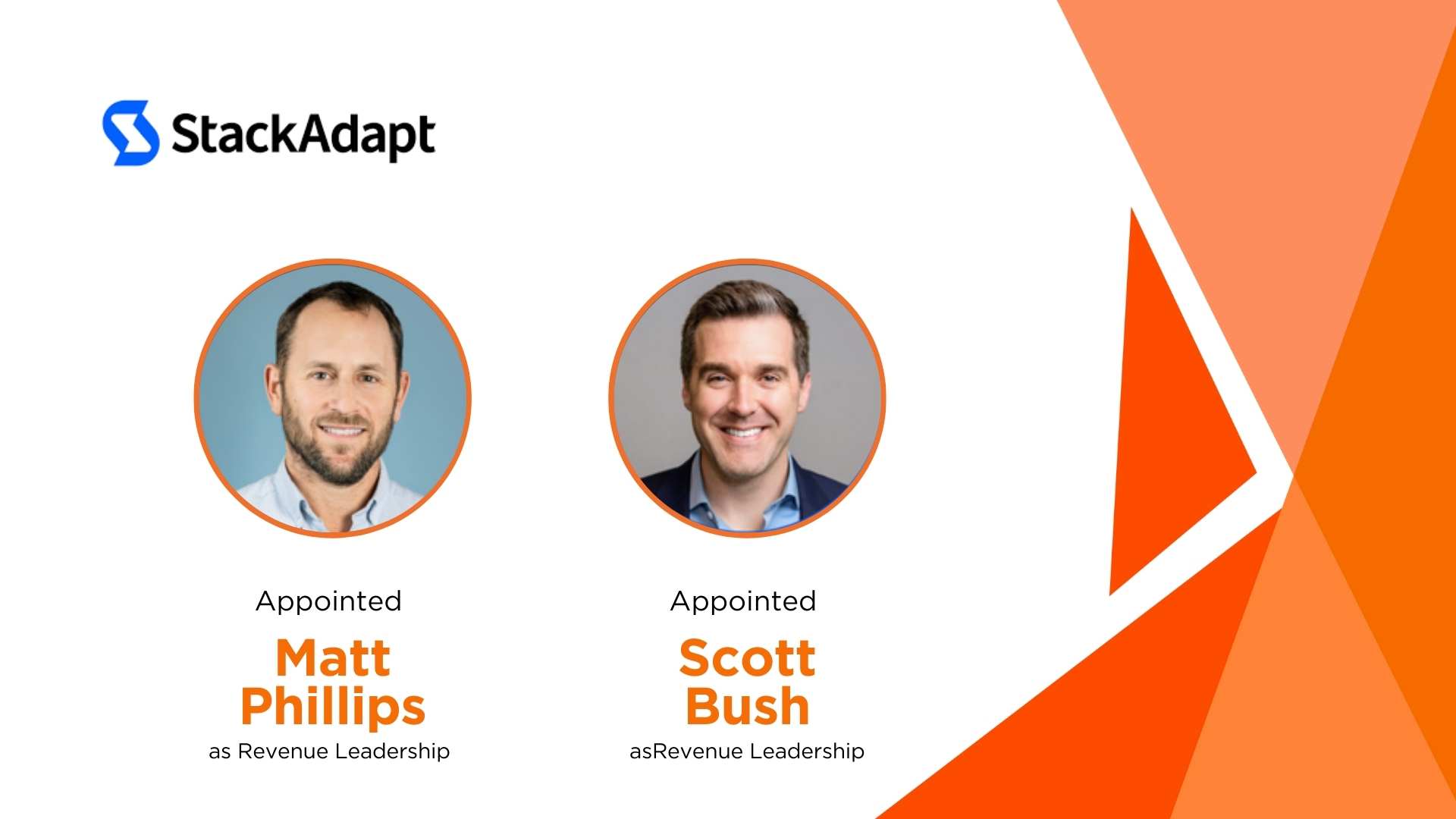
StackAdapt, a leading advertising and marketing technology company, has expanded its revenue leadership team with the addition of Matt Phillips as SVP of Sales and Scott Bush as Head of Americas Client Services. Both executives bring experience from global heavyweights including Google, Amazon, Waze, Groupon, and Provi, signaling StackAdapt’s commitment to scaling client partnerships and accelerating growth across the Americas.
Driving Revenue with Experience
Phillips, with nearly two decades in revenue leadership, most recently served as Chief Revenue Officer at ShipSticks and spent nearly ten years at Google and Waze, where he led the global SMB Ads business. At StackAdapt, he will oversee brand-direct sales and vertical expansion, helping agencies and brands leverage the platform’s AI-powered, first-party data-driven solutions to drive measurable outcomes.
Bush brings deep experience in sales, account management, and go-to-market strategy, with previous leadership roles at Amazon Ads and Provi. At StackAdapt, he will lead the Americas Client Services organization, focusing on strengthening partnerships with agencies and brands across the US, Canada, and Latin America.
A Strategic Move in MarTech + AdTech
These hires come as StackAdapt continues to unify its martech and adtech capabilities under one platform. The company’s solutions span programmatic advertising, data activation, and dynamic creative optimization, enabling brands to connect first-party data with automated email and programmatic channels to deliver measurable results at scale.
“With Matt and Scott joining the team, we’re doubling down on our ability to drive impact for agencies and brands across the Americas,” said StackAdapt leadership. “Their expertise in revenue growth, client services, and data-driven marketing will help us accelerate adoption of our AI-powered platform.”
As advertisers demand tighter integration between first-party data, programmatic campaigns, and automated marketing tools, StackAdapt’s leadership expansion positions the company to compete more aggressively with other programmatic and martech platforms, including The Trade Desk, MediaMath, and Innovid.
Get in touch with our MarTech Experts.
Page 296 of 645
Most Recent



Website Architecture Emerges as a Core SEO and UX Lever
EIN Presswire

Fresha Expands DACH Push With New Germany GM
Business Wire


Influ2 Launches MCP to Connect Contact-Level ABM With AI
Business Wire