Interview
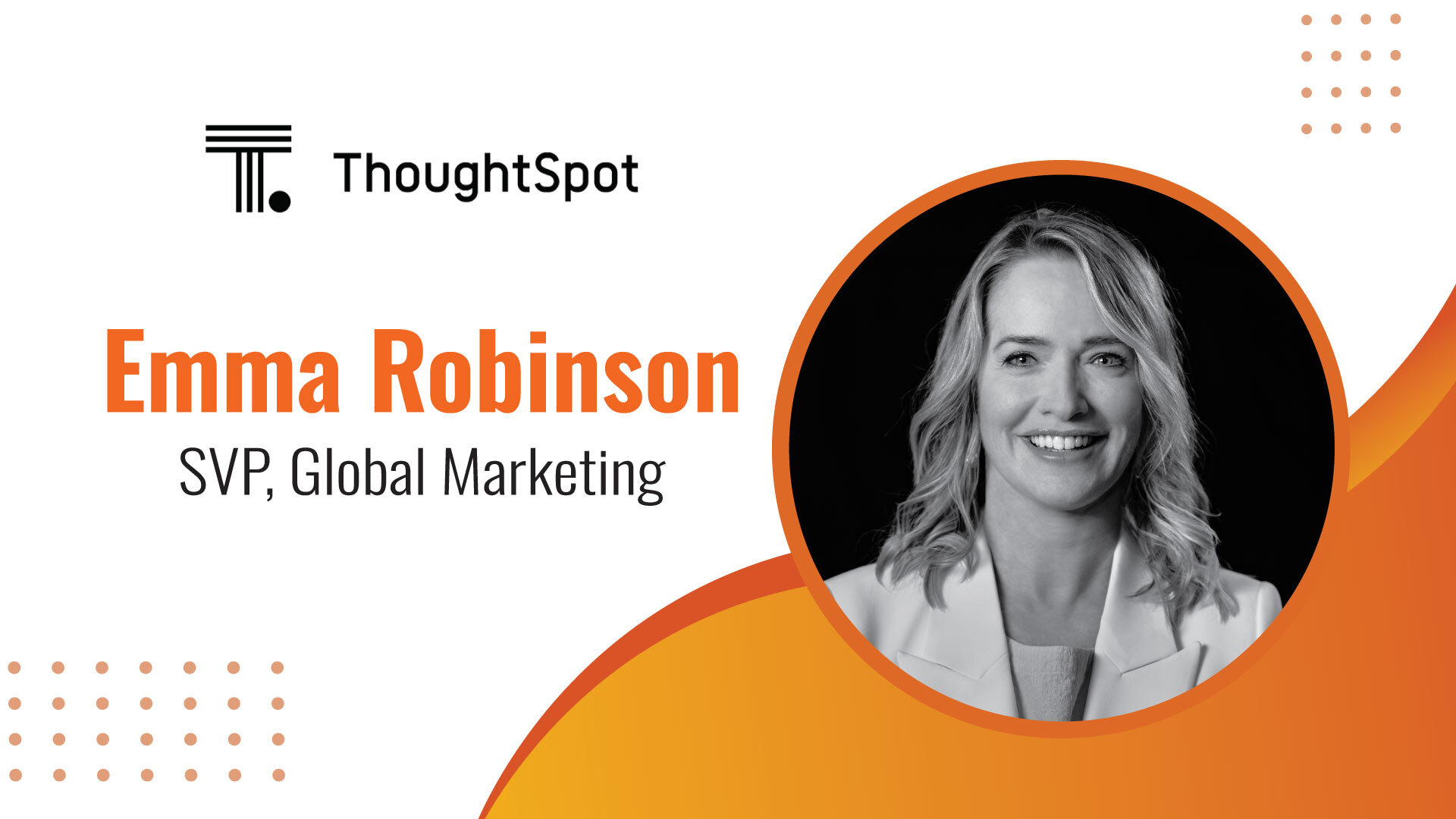
MarTech Edge Interview with Emma Robinson, SVP, Global Marketing, ThoughtSpot
analytics 7 Dec 2023
Welcome, Emma!
Can you share the key milestones and experiences that have shaped your professional journey leading up to your current role as the SVP, Global Marketing at ThoughtSpot?
I actually started my career as a systems developer, which allowed me to cut my teeth around coding early on. At that point in time, Y2K was bringing a dramatic change to the technology market as we were trying to prepare our systems for a new era. It was through this lens I found my love for technology.
From there, I joined the early ranks of Salesforce – and this was at the rise of a movement called “no-software” as a way to position the power of cloud computing. We were creating a new model for SaaS and CRM that was unheard of at the time. From a marketing perspective, it was a true category creation and education exercise that included ‘consumerizing’ the cloud. Users wanted to have the same experience at work as they did at home with the consumer tools they came to love, such as Gmail, YouTube, and Amazon. The mission of Salesforce to own cloud computing gave me an appreciation of how important community is in brand building.
This experience led me to join Google Cloud in the very early days. My job there was the inverse – making consumer applications like Gmail and Google Maps more applicable to enterprises. This was a fascinating time to be there as Google was synonymous with its ads business and it was a new monetization path for them. The challenge for me as a marketer was to enter and compete in an existing productivity tools market where incumbents like Microsoft have been the primary email service, with Outlook for over 35 years. We had to build premium features for businesses, find change agents, and convince them to move to Google Apps for Work. It was a fun time!
Looking back, I see two key threads woven through my professional journey. First, from a strategic perspective, is the importance of data and analytics. As marketers, we have to be grounded in insights derived from data to determine the next best actions to take, for example, the right time to monetize products or features and when to sunset products. Second, from a creative perspective, I’ve worked in vast, competitive landscapes where the product I have marketed is the “underdog,” and the competitive stack is strong and difficult to penetrate. This presents the best opportunity for creative and fun marketing.
That’s what brought me to ThoughtSpot – we’re a disruptor, coming in with a new point of view and way of doing analytics, ready to transform the legacy business intelligence market. Lorraine Twohill, Google’s CMO, says, “to know the product, know the magic, and connect the two.” It helps to think about that philosophy in competitive marketing. Once I understood ThoughtSpot’s product and brand experience, I ‘knew the magic’ and could not look away.
What are some significant challenges marketing professionals have faced in 2023, and how have you effectively addressed and overcome those as a marketing leader?
The first, unsurprisingly, was economic volatility. As marketers, we have to be very clear about the problem we solve for customers and quickly quantify the value of what we’re providing. This is increasingly important in today’s market, where budgets are being reduced and tools are being consolidated. Many marketers understand that data provides a competitive advantage, but those insights are typically hard to get their hands on. We are happy to help our customers keep pace with compressed modernization by giving them the ability to make decisions based on data. Not only that, but marketers need data-driven tools to convince the CFO or financial decision-makers at their company of the right campaigns and resourcing. Tools like business value assessments and calculators are especially important to drive business decisions during these economic headwinds.
In line with the economy, cost reduction challenges and reductions in force can be very disruptive and unsettling – everyone feels it, directly or indirectly. In these cases, working on team morale and change management is important. Regroup teams, foster communication and teamwork, give people a sense of purpose (for example, through employee resource communities), and build and reform so nobody is left behind. Such a big part of our business today centers around bringing people together and rallying around the new normal. It’s crucial to encourage investments in well-being, both physical and mental health.
Third, we cannot ignore the generative AI wave. It’s not only impacting how we bring new features to life in our product but also the marketing investments we’re making to help customers. It’s helping us personalize at scale and appeal to some of our buyers in different ways – whether through understanding impactful tonality in email communications or supporting SEO at scale with writing assistance.
Finally, the changing nature of customer needs is always a challenge – albeit an exciting one. It is vital to keep engagement with our customers high. Luckily, at ThoughtSpot, all of our teams are encouraged to connect with our customers, at least on a monthly basis, to help us adapt to their changing needs and anticipate what’s next. We have programs in place to really understand the voice of our customers – from inviting them to our all-hands and company kick-offs to creating our customer advisory board.
What unique attributes differentiate ThoughtSpot from other vendors in the realm of AI-powered analytics platforms?
Since our founding, ThoughtSpot has worked toward a mission of creating a more fact-driven world; in doing so, we’ve pioneered AI-powered search for data. We recognize that generative AI and foundational language models have redefined how machines and humans interact and, in the process, unleashed a new era for the world of data. However, this also means that organizations face a new challenge in ensuring this ease of interaction doesn’t sacrifice specificity or accuracy in analytics.
Companies need a unique foundational background to make generative AI and large language models work in a real-world business context. In this new era of business intelligence, legacy analytics players like Tableau are way behind the starting line because they were never built with this kind of foundational structure. Large language models promise to make interacting and conversing with data easier than ever before, but doing so in a trustworthy and actionable way will require the kind of analytics platform we’ve spent a decade building.
On its own, GPT is unable to handle the complexity of real-world business data because it works by taking input from the search bar in natural language and generating a simple SQL statement. But by harnessing large language models like GPT and building machinery around it to make it work with enterprise data and analytics, ThoughtSpot Sage allows organizations to intuitively search analytical content and create charts and visualizations based on natural language search – all without sacrificing accuracy, reliability, governance, or security in the process.
Which sources do you rely on to stay up to date with current marketing and business trends?
I’m an avid podcast listener, and my favorite is Marketing Against the Grain, hosted by HubSpot CMO Kipp Bodnar and Zapier CMO Kieran Flanagan. It’s a weekly podcast that covers everything from AI to cloud to market innovation to trends and what growth levers you can pull as a marketer to differentiate and stand out.
I’d be remiss not to mention The Data Chief, another pod on my download list hosted by Cindi Howson, ThoughtSpot’s chief data strategy officer. There, she interviews modern leaders and change agents from organizations such as Netflix and Mastercard. Her 30-minute interviews delve into all sorts of topics related to using data and analytics to solve business challenges and drive business results.
And generally, to stay ahead of trends as a marketer, we have to be culturally savvy and in tune with the latest zeitgeist. Being a curious consumer of content, especially on social media, allows me to have a finger on the pulse of the current market and be aware of trends we could tie into our marketing campaigns. Despite being a B2B brand, there are valuable lessons to learn from the consumer world on showing up as a brand in a fun and unexpected way.
How does ThoughtSpot Sage harness the full potential of business data with its advanced search-driven analytics?
Too often, companies struggle to equip their workforce with data insights, leaving powerful decision-making tools siloed within analytics and IT teams. Companies have copious amounts of data, and while storing it has become more affordable in the cloud, allowing non-data experts to make use of that data continues to prove difficult. ThoughtSpot’s mission has been to democratize data so that anyone can ask their business questions and get answers from data like they would from a Google search.
Every kind of user – business user, data professional, or product builder – can use ThoughtSpot. We help get the right facts to the right people through AI-powered analytics via natural language search. Search enables users to formulate their data queries in plain language and immediately get insights they can take action on. Whereas it would have traditionally taken hours, days, or even weeks for data analyst teams to examine vast amounts of data and share actionable answers, it can now take minutes. At the same time, this reduces the burden on data teams and frees them up to drive more strategic business initiatives.
What’s more, ThoughtSpot delivers a complete platform spanning the entire spectrum of business intelligence needs, from ad hoc novel analysis with a code-first approach to code-free self-service exploration and AI-driven monitoring powered by natural language. With ThoughtSpot’s low-code developer-friendly platform, ThoughtSpot Everywhere, customers can embed AI-Powered Analytics into their products and services, monetizing their data and engaging users to keep them coming back for more.
Thanks to AI-driven search analytics, ThoughtSpot enables businesses to tap into the value of their data and deliver customized experiences for customers, optimize operations, and drive revenue, which is key in this economic climate.
How do you adapt your marketing strategies based on varied market needs and conditions of different countries and regions while maintaining a consistent brand message?
As we’ve grown our global presence, we’ve been cognizant of the complexities of establishing ourselves in a new market. My philosophy is - Think global and act local. 70% of your content investments and strategy can be applicable on a global stage, but 30% must be adapted to the local market. Having boots on the ground in new markets makes a big difference, and we’ve had a valuable opportunity to hire locally, which gives us firsthand knowledge of nuances. Even if we don’t have employees or a sales team on the ground, we make sure to work with partners in each local market to provide counsel and review creative work. As a growing business, we cannot translate everything, so the key assets we can create are critical to be able to show up locally and resonate in new markets in Asia Pacific & Japan, and EMEA.
As an example, we recently held a ThoughtSpot Beyond event in Japan. For that, we went beyond translation to create a truly localized event. Our product managers ensured that our AI-powered analytics product, ThoughtSpot Sage, was built out in Japanese (despite the LLM being trained in English), to show the adaptability of this product in different markets. And the local audience really appreciated that – our Japanese business thrived because of that extra mile despite lacking a sales team on the ground. It’s a great instance of product and marketing teams coming together to land an audience and make an impact.
How will the acquisition of Mode Analytics by ThoughtSpot usher in a new era in the field of Business Intelligence?
The joining of ThoughtSpot and Mode boils down to what our customers have been asking us for a while: bridging the gap between data teams and business users – giving data analysts a tool they can write their own queries on and perform ad-hoc analysis while also serving the needs of the business with the ability to build their own reporting by using natural language search. And we’re doing so in a unified, dependable, governed, and safe analytics platform that is built for the modern data stack. This allows us to put reliable, meaningful insights into the hands of all users through natural language search, generative AI, or using a code-first approach with languages like Python.
For any acquisition, you have to have patience – not everything can happen overnight. So many systems and processes need to come together in addition to the people and culture of the two companies. Beyond that, it’s about aligning the two unique values that ThoughtSpot and Mode bring to the market. It’s an important exercise to understand both audiences and bring them together.
What is exciting about Mode’s product is that it sits on the opposite end of the spectrum with data analysts. That brings a nice synergy, message, and value proposition for our data, product, and business teams as we look to define our joint customer voice. Together, ThoughtSpot and Mode offer a comprehensive solution that empowers both data analysts and business users to extract maximum value from their data. This union allows ThoughtSpot to provide increased value to new and existing customers while expanding its market reach and capabilities for data teams as they look to adopt AI-first analytics.
What do you anticipate will be the next significant breakthrough in marketing analytics?
Marketers generally want easy-to-use, frictionless ways to extract value and show impact on investments. Every part of the B2B customer journey is changing dramatically and growing more complex – from brand awareness and selling to the continued relationship with the customer. Finding the right attribution for marketing given the challenges we are seeing with channel diversification and ad platform consolidation, predictive analytics will be crucial to plan and test user journey mapping and performance. I am sure we will see use cases like customer churn prediction and lead scoring increase in importance here, too.
As a result, marketers need web and mobile tools that allow them to look across data sources to spot pattern abnormalities and conduct a multi-channel ‘what-if analysis.’ It’s not just about making informed decisions on the data you have access to within your company’s walled garden but about bringing datasets together from different sources to make more reliable predictions.
MarTech Edge Interview with Adam Malone, President & Co-Founder, Screenverse
advertising 5 Dec 2023
Welcome, Adam! What was the initial inspiration that led to the creation of Screenverse?
My co-founder, David Weinfeld, came to me with a very compelling idea for a business. He was then working at Vistar Media - a leading programmatic exchange for digital OOH media - and was responsible for the supply-side of the business. He was working with dozens of digital OOH media owners, many of whom were doing well in the exchange, but they were not actively marketing, selling, and optimizing their inventory to drive revenues within the Vistar marketplace.
David asked the pivotal question that would become our mission statement: “What if every Digital OOH network had a dedicated team who would actively manage, market, sell, and optimize for programmatic sales? How much better would they do?”
The success of Screenverse is inextricably linked to the growth and success of our media owner partners, and we are working every day to answer our founding question!
What main challenges and opportunities do you face in the DOOH advertising market?
As core digital media faces challenges from changing consumer appetites around privacy, app-tracking, and sentiment around the tradeoffs in social media, the market is opening to us. DOOH networks offer contextual and relevant access to both mass and targeted audiences. Our mission is to enhance planning and measurement, positioning our media partners as the go-to alternative for digital advertisers aiming to engage audiences in the physical world.
As the President of Screenverse, which business factions do you oversee, and how do you facilitate unity among various stakeholders?
Lead our finance, marketing, and supply-side partnerships. Alignment is paramount. The cornerstone of our cohesion lies in our core values:
- Our customer’s success is our own.
- Promise only what we can deliver.
- The right thing is the right thing.
- Build for the long term.
Viewing opportunities and decisions through the prism of these values makes even the toughest decisions a lot easier.
I’m also very focused on developing a strong company culture. As a close-knit team of 21, accessibility is a priority. Beyond our regular team meetings, I offer weekly Office Hours, where I lead discussions and answer questions about high-level business strategy, specific challenges or opportunities in the business, and we also make room to discuss human topics such as parenthood, our inspirations, our insomnias, and many other things.
How do Screenverse’s DOOH solutions help brands connect with their customers anywhere they go? What are the main features that make them stand out?
Firstly, every partner network we collaborate with brings a distinct value for brands aiming to engage audiences at pivotal moments in relevant places. At Screenverse, we present marketers with a constellation of touchpoints across these networks. Our strength lies in crafting integrated campaigns elevating brand prominence, as well as honing in on tactics near the point of purchase.
We have worked hard over the years to curate a network of venue-types and market coverage so that advertisers can engage their audiences in many places and points of time throughout the day. Top-of-funnel, mid-, and lower-funnel opportunities exist all throughout Screenverse, and we love working with brands who see DOOH as an extension of their digital engagement strategy.
How do you leverage technology and data to optimize and measure the performance of your campaigns?
In our niche, our distinction lies in being programmatic-first. Our essence revolves around harnessing systems and data effectively.
We employ top-tier programmatic SSPs for media planning, packaging, and optimization. Complementing this, our dedicated five-member engineering team has developed inventory management, reporting, and pricing optimization tools to ensure our peak performance.
Data is pivotal for us. Our initial business investment was in licensing a dataset from Placer.ai, enhancing our grasp of traffic patterns and the audiences within our retail media network.
From the outset, our conviction has been that advertisers should trust the data underscoring the quality and value of our service. Upholding rigorous data standards is integral to embodying our four core values.
What are some of the best and most creative campaigns you have executed for or witnessed on Screenverse?
There’s a particular satisfaction when advertisers instantly “get it.” Case in point: our interaction with a top pharmaceutical firm aiming to market an allergy medicine transitioning from prescription to over-the-counter (OTC). Witnessing Pursuant Health’s dual display screens – one broadcast, one touch-screen – in over 4,600 Walmart pharmacies, the client was visibly astounded.
More than mere visibility, the brand could strategically reach its audience right on the cusp of purchasing. Plus, we had the agility to release ads regionally, syncing with the progressive onset of the “allergy season” from east to west.
After implementing a four-question survey – with inputs from over 11,000 Walmart visitors – the data highlighted a striking 31.7% surge in brand awareness and an 18% spike in purchase intent among exposed groups compared to controls.
The most rewarding campaigns? Those where clients not only discover fresh strategies to connect with audiences tangibly but also invest earnestly in crafting contextually rich ads, capitalizing on proximity to purchase points or other distinctive attributes. And, of course, when the outcomes surpass all anticipations!
What type of organizational culture do you promote within Screenverse, and how does it contribute to the company’s overall success?
At our core, we see ourselves as a startup: agile, driven, collaborative, and immensely proud of what we are building. Our primary aspiration is fostering individual growth, knowing full well that when our team thrives, so does the business. Our culture is based on mutual respect, empathy, and support for one another. Whether celebrating small milestones or major achievements, every victory counts.
Operating as a remote-first enterprise has its challenges and demands strategic planning to maintain cohesion and enthusiasm. We had a full-team retreat and strategic planning week in Montego Bay, Jamaica, this year. We celebrated our accomplishments in 2022 and set the tone for continued expansion this year. We encourage regular in-person check-ins for each department and regional outings for folks living in NYC and Chicago, where we have a nexus of employees. We do virtual holiday parties and other team-building events remotely as well.
Last year, we actually bought the whole team Meta Quest 2 VR goggles and hosted a company party in the metaverse. Many of our teams will regularly meet in the metaverse to play minigolf, bowl, or challenge each other to a game in beat-saber!
What is the next big thing that Screenverse is developing? How will it change the game for DOOH advertising?
We’re thrilled to launch one of the US’s most expansive digital billboard networks, thanks to our alliance with the top-tier billboard software provider Apparatix. For the very first time, over 1,000 independently owned digital billboards nationwide are at advertisers’ fingertips. With an independent audit underway by PerView, we’re on the brink of revolutionizing the advertiser experience — enabling a one-click, uniform-priced access to digital billboards and their vast audiences.
What are your dreams and plans for Screenverse in the long run? How do you intend to grow and evolve your business?
We’re on a mission to become the leading programmatic DOOH sales business in the US and beyond! Our laser focus is on honing our sales machinery, encompassing the growth of our people, fortifying our systems, refining our data, and strengthening our partnerships.
We’ll know we are on the right track if each of our partners grows to become the leader in their category of media. We want our retail networks to be in the top echelon, our residential network to extend its category lead, and our urban panel networks to saturate every market they are in. We’ll know we are successful when our partners are successful.
We believe in the power and value of digital-out-of-home media. It is the only media where you can’t turn us off with an ad blocker or a subscription. It’s also the only media I’m aware of that has a high favorability rating among consumers. It’s beautiful. It’s impactful. Digital OOH is just scratching the surface of its potential, and the same goes for Screenverse!
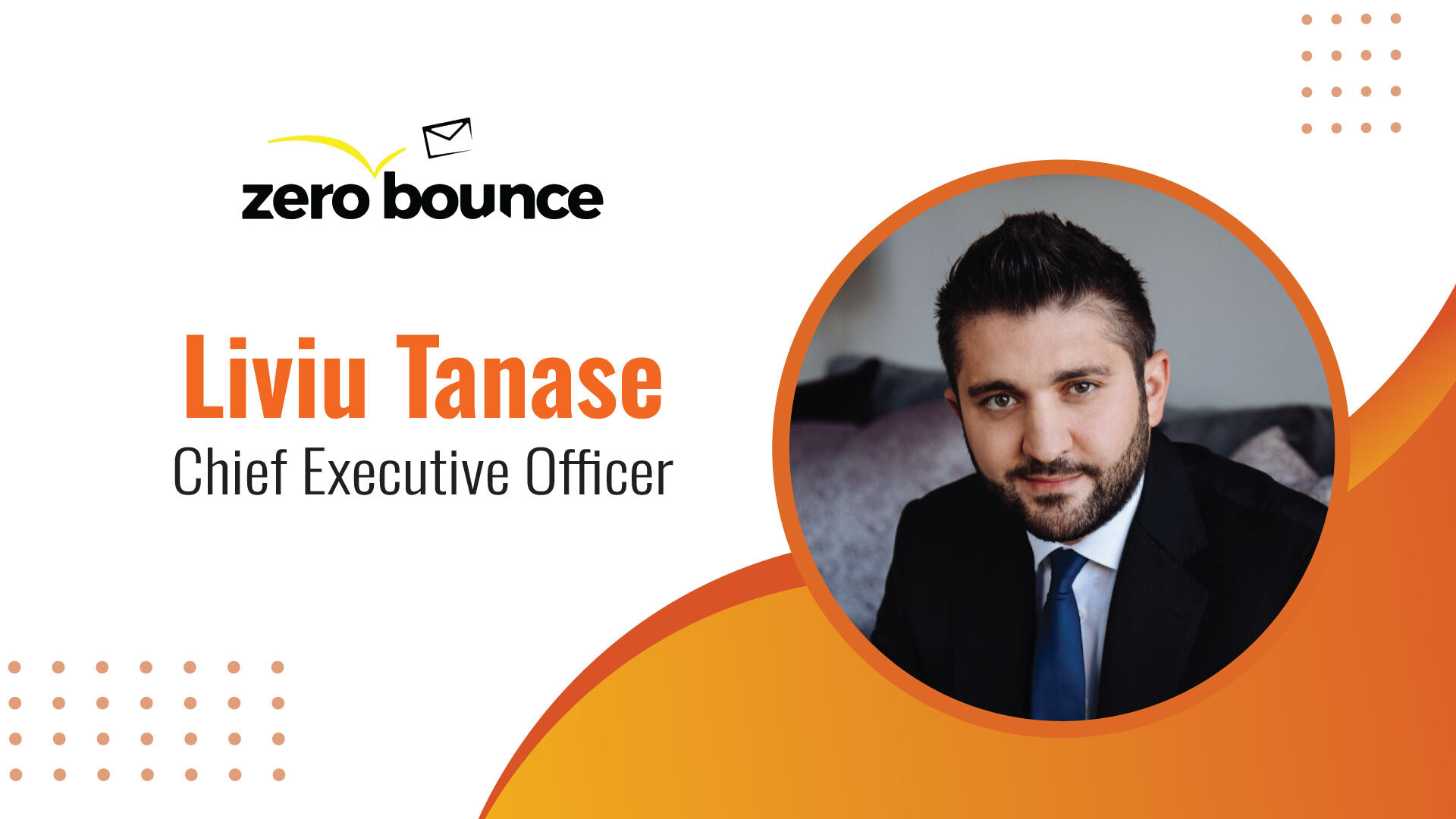
MarTech Edge Interview with Liviu Tanase, Chief Executive Officer, ZeroBounce
email marketing 30 Nov 2023
Welcome, Liviu! What inspired you to start ZeroBounce, and could you provide an overview of the company's evolution from its inception to its present standing?
Thank you very much for your interest and for allowing me to tell you the ZeroBounce story.
Inspired is the word for how I felt during and after the initial brainstorming for developing an enhanced email list scrubbing software. Like so many big ideas, the catalyst was a personal need for an email validation program that could identify invalid email addresses for removal.
At the same time, I started hearing about email-related pains from all kinds of business people, from solopreneurs to CEOs – everything from emails landing in spam to no delivery at all. I could see that the problem was primarily inadequate email hygiene. Instead of making an email validation platform just for me, it became clear this could help people in all kinds of industries to an unbelievable extent.
Our core product became email validation, and because it was accurate and easy to use, it helped ZeroBounce stand out among competitors. We listened intently to our customers and heard what their email struggles were. So, we started adding more tools designed to help you reach the inbox. We now offer an email scoring tool, email deliverability testing, blocklist monitoring, and DMARC monitoring.
We recently released our Email Finder tool. After using so many email-finding services that would provide invalid email addresses, it was clear that there must be a better way. So, we developed an email finder that identifies the email address while ensuring it has yet to be abandoned or has some other problem.
We can help pretty much anyone who wants a more significant number of the emails they send to land in their recipients' inbox. From promotional to transactional emails, we've checked them all.
Having an Entrepreneurship and Business Administration foundation, how has your educational background influenced your strategy in establishing five companies?
When I think back to my educational foundation, it needs to be specific facts or algebraic formulas that come to mind. Learning and self-teaching are the most important things I've picked up from educators.
I can't remember the teacher who introduced me to qualitative learning, but it's stayed with me more than anything. Instead of learning many things, qualitative learning focuses on the quality of what you learn. It was a real paradigm shift: focusing on the quality of the material you're trying to retain creates a superior outcome over stockpiling tons of information and concepts of varying worth.
So, when I began establishing my companies, I thought back to these concepts and realized that I needed to find a fun and engaging way to pass them along to my team. Furthermore, I wanted to ensure that everyone who wanted to go on the journey with us had the same understanding of the importance of education. We push the quality of learning and teaching to this day and are always happy to assist in everyone's continuing education, from new hires to the corporate boardroom.
I'm also continuing my education and am currently enrolled in Harvard Business School's Owner/President Management program. The day-to-day practice of running a business ultimately makes you an entrepreneur. But getting continuous education – in every career stage – is invaluable.
How does ZeroBounce's email scoring system work, and how does it benefit clients in improving their email campaigns?
The greatest benefit of using an email scoring service is that you filter out potentially invalid leads to focus on the most valuable ones.
Frequently, administrators set up catch-all email accounts to collect all of the emails sent to a domain. That way, there are no bounces. They do this with the intent that, hopefully, no emails will "slip through the cracks." However, some catch-all emails will bounce – the challenge is knowing which ones.
ZeroBounce's email scoring system uses artificial intelligence to assess how the email addresses on your list are likely to interact with you based on overall activity. It uses a score from 0 to 100 to indicate activity levels so you can better gauge potential validity. We recommend senders use only high-score contacts of 8 to 10.
Some catch-all email addresses are risky, while others are likely valuable for marketing or other purposes. ZeroBounce's email scoring software helps you discern between the two.
ZeroBounce specializes in email validation and deliverability. What sets ZeroBounce apart from its competitors in the field, and how do you maintain a 99% accuracy rate?
It's our 99% accuracy that helps ZeroBounce stand out in its space, and we maintain it by constantly advancing our email validation algorithms. Getting that kind of accuracy rate would only be possible with our team of experts continually fine-tuning and testing our software.
ZeroBounce uses a proprietary system that checks the validity, activity, and overall quality of email addresses in real-time. It performs multiple validations, such as syntax, domain, MX record, SMTP, catch-all, abuse, disposable, and spam trap checks.
The email scoring and Activity Data tools add more confidence for senders in helping them target their campaigns toward the right prospects.
But it's not enough to build the most accurate email validation service – you also have to do it in the most secure manner possible. As a data processor, ZeroBounce is hypersensitive to potential security threats. So, since day one, we set out to achieve the highest security standards.
ZeroBounce is GDPR and CCPA-compliant and seeks every reasonable certification to remain as secure as possible. We've achieved SOC 2 Type 2, ISO 27001, and HIPAA compliance. This quest is ongoing, too.
When we hear of new professional benchmarks or credentials, we work fastidiously to achieve them. It's probably why we've also become known as the most secure email verification service.
Could you share some key achievements or milestones that ZeroBounce has reached in email deliverability?
Occasionally, an email validation service will boast 100% accuracy. It would help to look suspiciously at anyone who makes a claim like that because it's actually unobtainable. It was a long road to get us from 98% accuracy to 99%, but our goal to achieve the most remarkable accuracy possible is neverending.
Other milestones would be every time we surpass another billion email validations. Cleaning email lists to eliminate spam is our bailiwick, and it's a source of satisfaction to know how much insufficient data we've helped our customers eliminate. We've validated over 22 billion email addresses – and that ticker never pauses. It'll be another billion emails before you know it.
Could you please outline your organization's future strategies in terms of growth and diversification?
No part of your business is worthy of scrutiny. We look critically at everything, and that's served us well. Our product, benefits, and company culture have earned us a lot of compliments from partners, but more importantly, from within. We will continue to excel in every possible way.
Our growth stems from fostering an environment where people want to be. You're going to find that creating a workplace where everyone is respected and no point of view is brushed off will result in many people who want to work for you. Our team is small, yet there are 11 languages among us. As you can imagine, this can come in handy.
If your company grows as quickly as ours, you'll naturally serve and bring on many individuals. Our goals moving forward are to serve even more businesses from different nationalities around the globe.
For a company to grow, you need competent people and motivation with a guiding vision and mission. This applies to everyone, from new hires to the leadership. If any part of this falters in any way, your growth will be stunted.
You've talked about your passion for chess. Can you draw parallels between the skills and strategies used in chess and their applicability to decision-making and problem-solving in the business realm?
Can I ever!
Chess is a game where you almost always have more than one option, but there's one that reigns supreme. You must develop a strategy, but you can be flexible because a skilled opponent may occasionally knock you for a loop. Problem-solving and strategy aren't "like chess" in my book – they are chess!
The feeling I get playing chess is the same when strategizing and executing in business. The biggest takeaway: Keep your cool and never get overwhelmed. It's how to get better with business pursuits and is critical in chess.
When I play chess, although it's an intense game, it's something I enjoy every moment of, and that's what I strive for in business as well.
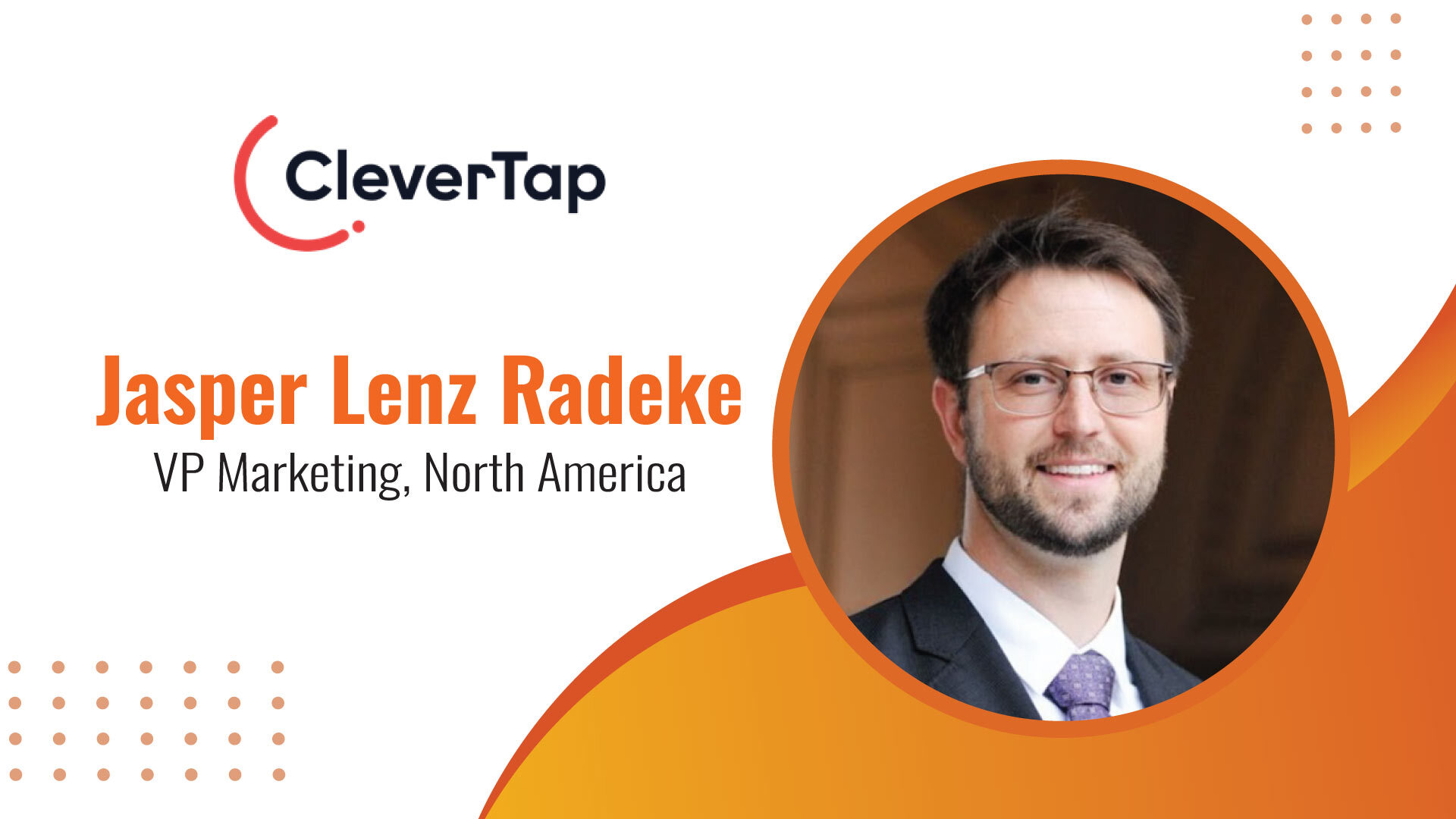
MarTech Edge Interview with Jasper Lenz Radeke, VP Marketing, North America, CleverTap
customer engagement 28 Nov 2023
Hello, Jasper! Could you share some key insights you’ve gained throughout your marketing career?
In the 12+ years I’ve spent in B2B SaaS Marketing, I’ve seen time and again that building relationships with your audience over time is the only viable way to long-term success. No one wakes up in the morning and decides to switch a critical component of their MarTech stack on a whim. Growth “hacks” and pure conversion-focused plays only take you so far. Instead, the main role of our marketing function is to create opportunities for our teams to build personal relationships with our audience at scale. In other words, as the leading Customer Engagement Platform, we need to practice what we preach to our customers.
What marketing challenges are specific to the North American market, and how do you address them as the VP Marketing, NA of CleverTap?
North America tends to be a focus area for many companies, so the competition for share of mind is quite high. Audiences are inundated with messages and have learned to become skeptical, sophisticated buyers. More often than not, they look for the best, not the cheapest, solution. But once a decision has been made, they can move quite quickly – and expect much more agility than, for example, buyers in Europe. Ultimately, it comes down to breaking through the clutter, building trust, and then providing exceptional service. Marketing plays a central role in all these three functions.
What sets CleverTap apart as the preferred customer engagement platform for companies aiming to optimize their customer lifetime value?
At CleverTap, we believe that disparate point solutions create disparate customer journeys. That’s why we built an all-in-one platform that combines the intelligence a business needs with powerful tools to put this insight into action. By providing an integrated solution for analytics, product experiences, and lifecycle marketing, we create an environment that encourages synergies between marketing and product teams. The results are not only improvements in operational and cost efficiency but also in the resulting customer experience.
The second major competitive advantage we have comes down to the granularity and volume of customer data we can store and process. Our proprietary data layer powered by TesseractDB™ lets CleverTap customers build truly personalized customer engagement strategies and user journeys that span their entire life cycle.
In your three months with CleverTap, what notable changes have you introduced to the marketing strategies?
A lot of our effort has been focused on building better relationships with our customers and potential customers. Face-to-face interactions are a key component of this strategy. To execute this well with a globally distributed team, we have introduced new processes and concepts – we want to be known as the experts in building better experiences. We are also working on our approach to providing meaningful content. Our audience is sophisticated buyers, and it’s important to show that we value their attention by providing interesting, relevant insights.
Can you share instances of how you’ve applied your strong analytical skills to resolve complex marketing challenges?
An analytical mindset is critical to many aspects of marketing decision-making, from determining the right metrics to define and track success consistently to effectively running digital campaigns to making informed choices on positioning and messaging. But the most interesting cases are those where analytical thinking only gets you half the way, and you have to mix it with intuition. Marketing is full of gray areas and unknowns – you rarely have clear “wrong” or “right” approaches to solve a given challenge. For example, the usual B2B SaaS customer journey includes multiple touch points that may include a mix of events, content, paid media, and other channels. Each can be independently measured to a certain degree, but it is often hard to prove the aggregate impact of integrated campaigns that combine all channels. Making decisions in the face of this uncertainty means that you have to look at data where it is available while ensuring that it doesn’t obscure the big picture.
How do you plan to navigate your role at CleverTap going forward?
“We are the largest Customer Engagement Platform globally and have a distinct technological advantage, thanks to innovations like TesseractDB™, RenderMax, and most recently, Scribe. Within North America, our market position as challengers aligns us with digital thought leaders who need to outsmart and not outspend their established competition. We need to stay hungry, flexible, and smart when it comes to positioning our products, reaching our audiences, and building relationships with them. To succeed, we need to rally our global team and provide focus, set a high bar for our marketing output, especially content and experiences, and embrace new technologies like AI. In this context, I see myself as a contributor who provides guidance, facilitates conversations between different internal and external stakeholders, and helps create alignment between them.

MarTech Edge Interview with Jan-Henrik Behrens, VP Online Marketing, IONOS
technology 21 Nov 2023
Welcome, Jan! Could you share how your background in economics enables you as the VP of online marketing at IONOS?
My education in business administration and e-commerce helps me daily in making marketing decisions. Online marketing has a high impact on the economic future of the company. Having internalized business processes here is an important factor in thinking entrepreneurially.
In what ways does IONOS serve as a 'one-stop shop' for all digitalization requirements?
We are a one-stop shop for SMEs in particular. Our new structure allows us to grow with our customers while meeting the needs of professional web users. This starts with a domain name and a professional email address, continues with entry-level products such as website builders and collaboration tools, and can be extended to an enterprise platform, depending on individual needs.
Small and medium-sized businesses are a significant focus for IONOS. How do you tailor your online marketing strategies to cater to the specific needs of SMBs?
Yes, that’s right. Small and medium-sized enterprises (SMEs) are the backbone of many economies, which is precisely why we are passionate about supporting local entrepreneurs through our products. This is reflected in our online marketing communications, where we emphasize these very qualities. Understanding the specific problems or challenges that an SME faces is crucial as a starting point. After we’ve truly understood these issues, we approach our communications with the intent to solve them. We also fine-tune our marketing strategies to specifically target these small businesses to reduce inefficiency. Our aim is to engage in sharp, clear communication that provides a solution to the exact problems they face, directly addressing the needs of our intended audience.
Can you share a few examples of online marketing campaigns under your leadership that garnered unprecedented positive results? What distinct approaches did you employ for each of these campaigns?
Our products are generally not purchased impulsively. We can see this in the data. Users often visit our pages several times to gather information, perhaps comparing them with other providers or collecting information before deciding to make a purchase. This initial phase, the beginning of a customer journey, is very important for convincing a potential customer about us.
At IONOS, we’re currently in a dynamic phase, heavily investing in our brand. This investment is having a significant impact on our online marketing strategy. We’re supporting this branding phase with a comprehensive 360-degree approach to digital marketing. In every marketing channel, we aim to guide the user through every stage of the customer journey with targeted communication. This starts from the brand-driven awareness phase and extends all the way to the conversion-focused purchase phase. We’re leveraging all the tracking technologies available to us. Our goal is to achieve maximum brand penetration in the market while also attracting a lot of new customers. We’ve successfully managed this balance in several European countries over the past few years. As a result, we’ve been able to build our brand very profitably, which is why we plan to continue investing in our brand in the future.
Can you provide insights into the latest offering from IONOS, the AI website generator, and how it enables professional website development in no time?
AI is rapidly redefining the way websites are built. With the new Website generator for IONOS MyWebsite Now, SMBs can now create a complete website with a homepage and up to four subpages. All they need to do is enter their company name, industry, and a short description, and it will generate three design options for businesses to choose from. They select their preferred option and simply edit & expand it. Here again, we use AI tools to automatically generate images from a simple text command. SMBs can also choose from 12 different tones to find the perfect tone for their website content. In addition, the IONOS MyWebsite Now offers an AI SEO text generator to generate search engine-optimized headlines and text.
What criteria do you consider when evaluating marketing technology software?
Aside from the obvious factors such as features and price, we also place a strong emphasis on data security and the location of data storage. At IONOS, we are very conscientious about data security, and this is reflected in our choice of software.
The digital marketing landscape is constantly evolving. What recent trends or innovations in online marketing do you find particularly relevant to IONOS?
One of the biggest trends is TikTok. It’s not exactly new, but the consistent increase in reach is quite impressive. What is interesting here is that it operates very differently from other video platforms. One has to adapt to it, and then it is possible to reach any target group on TikTok. Furthermore, the development of internet privacy is a major issue. Google aims to improve internet privacy by phasing out third-party cookies from its websites. Firefox and Safari no longer support them either. These changes will have a significant impact on banner ads.
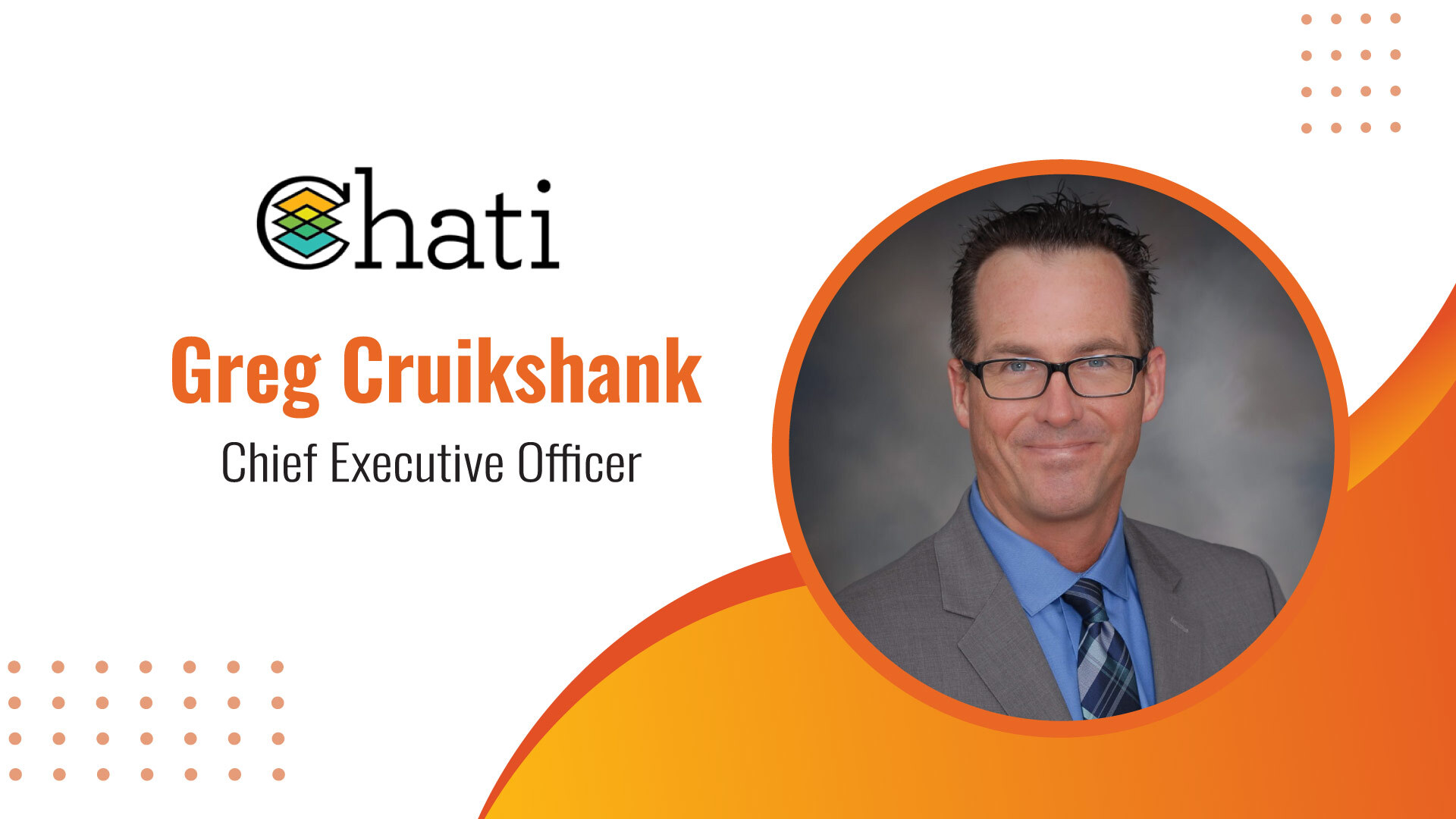
MarTech Edge Interview with Greg Cruikshank, Chief Executive Officer, Chati
events 14 Nov 2023
Welcome, Greg! How does your extensive 20-year experience empower your role as the CEO at Chati?
Having spent two decades in the webinar and virtual event business, using many different virtual event platforms, I’ve gained an intricate understanding of what features make a virtual event platform unique, top-tier audience engagement and the tools to increase it, evolving market needs, and technological trends. This experience naturally informed my decisions when creating the team to develop Chati, ensuring we deliver solutions that resonate with our clients, are technologically advanced, and are always a step ahead.
What are some of the biggest challenges and opportunities you face as the CEO of a virtual event platform in the post-pandemic era?
In the post-pandemic landscape, while many are keen to return to in-person events, there’s a recognized value in virtual platforms. The challenge is in striking the right balance between virtual and physical experiences. The opportunity, however, lies in refining and innovating our hybrid offerings to ensure they offer the intimacy of in-person events while retaining the accessibility and convenience of virtual platforms.
How do you foster a culture of innovation and collaboration among your team members at Chati?
At Chati, we prioritize open communication and celebrate diverse perspectives. We also value the “virtual” aspect, and all have worked remotely since Chati’s inception. We have an open-door policy to ensure that every voice is heard and every idea is added to the drawing board. We encourage team collaboration across marketing, design, and development teams, which provides unique perspectives, broadening the creative pool.
What are some unique features and benefits that Chati offers its clients and partners?
Chati provides a high-quality video chat feature called ChatiConnect, which allows event hosts to include video breakout sessions within the event environment, mimicking the face-to-face feel of physical events. Chati also has many interactive tools to keep attendees engaged as they navigate the virtual event and watch presentations, responsive templates with 3D customizable options, and, finally, advanced analytics tools to empower clients to make informed decisions, enhancing their event outcomes. Chati supports multi-format content, from webinars to workshops to interactive remote team building.
How does Chati differentiate itself from other virtual event builders in the market?
Chati’s uniqueness lies in its deep-rooted understanding of audience engagement and building virtual environments to optimize it, backed by two decades of industry insight. Our platform goes beyond just hosting an event; we provide an experience that’s immersive, intuitive, and insightful, ensuring both hosts and attendees derive maximum value.
What are the key values and principles that guide your leadership style at Chati?
Transparency, integrity, and adaptability are my guiding principles. I encourage the team to consistently push creative boundaries and think outside the box, whether it be for the platform development itself or for creative and marketing campaigns. Although we do have a chain of managerial structure, I encourage project ownership and make sure that individuals are heard, valued, and empowered to contribute.
How does Chati help organizations with their marketing and sales purposes through its event technology?
Chati’s event technology is designed to provide actionable insights. From attendee behavior analytics to feedback mechanisms, organizations can gauge audience interest, tailor their marketing strategies, identify potential leads, and nurture relationships more effectively.
What primary factors contributed to Chati’s rapid growth and success in the event tech industry?
Chati’s success can be attributed to our commitment to innovation, deep understanding of market needs, and relentless focus on client satisfaction. Our robust platform, coupled with exceptional customer support and unique features like ChatiConnect, has made us a preferred choice in the industry.
What are the current trends and challenges that you see in the event tech space?
The event tech space is evolving rapidly with a growing emphasis on hybrid events, AI-driven personalization, and sustainability. Challenges include navigating the changing attendee expectations, integrating new technologies, and ensuring the human touch isn’t lost amidst the digital transformation.
Tell us more about your passion for reptiles and how you started Snake Country.
I’ve been fascinated with reptiles (primarily snakes) since I was a little kid. My parents didn’t allow me to have snakes in the house, so as soon as I moved out and went to college, I bought my first boa constrictor. Over the following number of years, I was able to collect a few more reptiles I always wanted as a child. A couple of years later, life got in the way of my reptile passion; I fell in love, got married, and had three sons. Years down the road, one of my boys became interested in snakes. We went out and bought a king snake, which turned into two, then three more snakes over the next few months. That quickly ignited my passion for reptiles all over again. It snowballed from there. I began purchasing some high-end genetics of both boa constrictors and ball pythons. We went from five snakes to over 100 within the next year. We had snake racks in almost every room in our house, so I decided to make a breeding business out of it, then moved our snakes into a facility and created the company Snake Country LLC.
Snake Country now has over 1,000 animals; we breed over 100 females and have roughly 400-500 babies every year. We have four employees and are now turning a profit. After working all day at Labroots and Chati, I go down to our facility and spend another 2-3 hours there every night of the week. I love it!
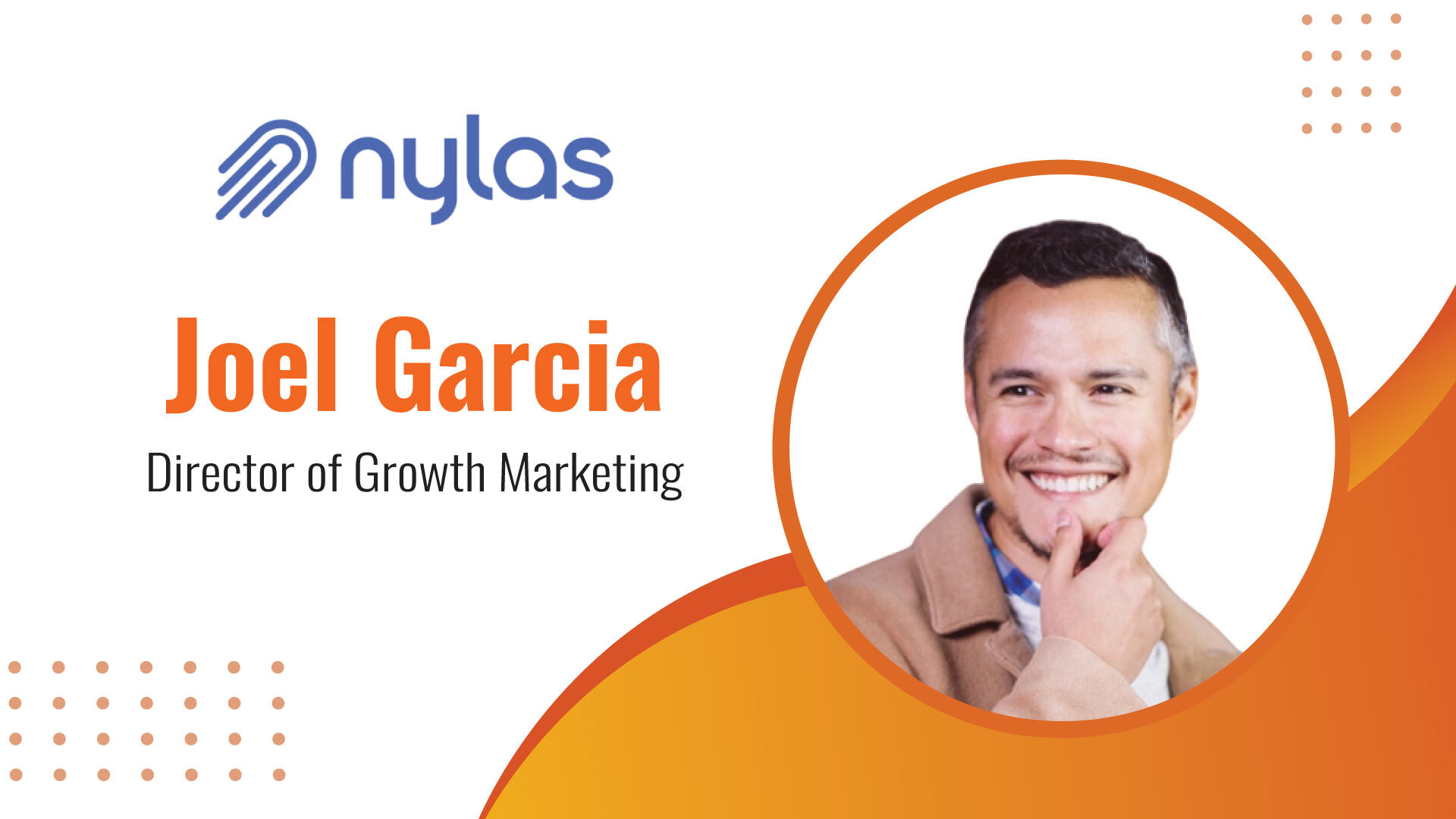
MarTech Edge Interview with Joel Garcia, Director of Growth Marketing, Nylas
technology 9 Nov 2023
Welcome Joel! Could you recount your first marketing role in your career? Also, can you draw parallels and distinctions between that early experience and your current position as the Director of Growth Marketing at Nylas?
My first marketing role was at ReachLocal as a marketing ad editor. I was a rookie, mastering the nuances of paid search; now, at Nylas, I guide the broader marketing narrative. It’s a testament to the idea that from humble beginnings come great journeys. Each step, each challenge, has been a lesson propelling us forward.
How do Nylas’ email and scheduling APIs empower developers to enhance business productivity through improved communication and workplace capabilities?
Countless hours of productivity are lost due to things such as context switching, broken workflows, or tracking down relevant data points or information. Nylas aims to solve this and much more by making it simple, fast, and easy for developers to integrate data-rich communication channels such as email, calendars, and contact lists into their applications. Through these integrations, users can bridge the gap between their own applications and workflows and some of the most frequently used communication channels. This lets users have all their data, channels, and communications within a single interface, enabling business productivity and more simplistic workflows.
How has Nylas been differentiating its suite of API solutions from other vendors in the market?
Nylas is the only API solution specializing in both email and calendars. Rather than building integrations into every single service provider, Nylas makes it easy for organizations to securely connect their application to their users’ email, calendar, and contacts through a single point of integration. This allows companies to build these integrations significantly faster, meaning they are able to go-to-market faster as well.
Could you elaborate on the significant changes you’ve implemented in Nylas’ marketing strategy that have led to notable improvements for the company?
We’ve done a lot of work on our SEO strategy, created lots of content, and built a lot of campaigns through an SEO lens. This has allowed us to not only create meaningful content but has also made it easy to find and get in front of the right people.
How do Nylas’ solutions simplify the day-to-day tasks of marketers, ultimately resulting in streamlined and optimized marketing efforts?
Nylas allows marketers to send large-scale email interactions based on email service provider rate limits. Since these emails are able to come from a user account rather than a third-party IP, these emails tend to receive higher open rates, higher deliverability, and more. Nylas also arms marketers with up-to-date communications data, which can help marketers better understand their customers and curate more personalized workflows and experiences for them.
What specific criteria do you utilize when evaluating martech technologies for your organization?
One key criterion that I look for in martech solutions is how easily we can integrate it into our existing systems. Martech tools can be great, but if it is a challenge to connect it to what we already have, then it can create lots of short- and long-term challenges.
How will the partnership with Master of Code pave the way for innovative advancements in conversational AI chat solutions?
The combination of Nylas and Master of Code means businesses can more effectively meet their customers in some of the most frequently used communication channels, email, and chat. Additionally, this partnership will help companies combine innovative technologies like communications APIs and conversational AI without the complexity or time needed to build these solutions on their own.
Could you elaborate on the groundbreaking integration solution Nylas is developing and its potential to set new industry standards?
In a world where development hours are incredibly important, our APIs are helping developers and their teams save countless hours of development time. This not only allows organizations to ship products and features faster, but it also helps companies deliver a better experience for their developers, something that is becoming increasingly critical as a measure of success for companies of all sizes and industries.

MarTech Edge Interview with Jamshed Mughal, SVP, Global Head of Strategy & Services, Marigold
marketing 7 Nov 2023
Welcome, Jamshed! How did your experience in some of the world’s leading companies shape your current role as the SVP, Global Head of Strategy & Services at Marigold?
I started my career on the agency side at Wunderman/Thompson and Havas, working in the services team and directly engaging with customers. As we all know, the agency world can be a bit frenetic. Fast velocity. Extremely intense. High energy. It was a great learning experience. Those early experiences provided me with a deep understanding of customer needs and challenges and the creativity needed to meet their urgency and innovate on their behalf. Transitioning from the agency world to the vendor side with time at Salesforce and Microsoft, I had the opportunity to work with renowned global brands in diverse industries. There are many similarities and differences between the agency world and the tech vendor world. This exposure broadened my perspective and taught me that, regardless of the industry, similar challenges exist. Clients need partners to help them succeed in a competitive marketplace.
What primary responsibilities does your position at Marigold entail? What changes have you implemented in six months of your role that have propelled the company’s growth?
When I came to Marigold a few years ago, the organization had acquired a number of outstanding technology companies and was in the beginning stages of bringing those capabilities together in a way that would create a competitive advantage for our clients and our company. As we sit here today, that transformation has occurred, and Marigold is now positioned as a market leader for Relationship Marketing. One of our superpowers is that not only do we now offer amazing technology, but we also wrap world-class services around the tech to help our clients improve their time to value, maximize their investments, and, most importantly, engage with their customers in more meaningful ways. This transformation has been incredibly satisfying to be part of.
In alignment with this transformation, as Senior Vice President, Global Head of Strategy & Services, my goal has been to help Marigold unite our various services teams across our global company with one unified leadership team. In the past six months, we have initiated significant changes to how we work with our customers to provide white-glove support by unifying our services team, including:
- Strategic Focus: We have shifted our approach from primarily emphasizing technology to leading with strategy. This change involves asking the right questions, focusing on problem-solving and delivering value and outcomes that matter to our customers.
- Global Leadership: I lead the division across Marigold’s global business, which means overseeing our operations on a worldwide scale. We’ve expanded our presence to touch every continent, making us a truly global team capable of serving clients in numerous countries.
- Team Integration: We have set out to align our approach, methodologies, and customer engagement strategies. By doing so, we aimed to elevate the quality of our services and set higher standards for customer satisfaction.
These changes have not only improved our internal operations but have also positioned us for significant growth and enhanced customer satisfaction. In essence, it has created a competitive advantage for Marigold. Many of our competitors can not, do not, or will not offer these services. At a time when clients need to do more with less within their own teams, the availability of these services is critical for their success. It’s exciting to see all of this come to fruition. I feel like an ‘agency’ kid again.
In what ways does Marigold’s Relationship Marketing technology enable businesses to deliver highly personalized experiences, helping acquire new customers and grow existing ones?
Today, clients need help figuring out what it takes to win the customers’ hearts, not just their transactions. They need to work harder to know more about their customers and to help them along their path to purchase in a contextually relevant way over time. This is the foundation of relationship marketing. And it is, in fact, what we do here at Marigold.
Since joining the company three years ago, I’ve witnessed how Marigold’s solutions empower marketers and, in turn, help our team acquire, nurture, and grow loyal customers all in one place. We’re one of the only firms who can tie together the full customer lifecycle across all of those customer life stages. Since Marigold’s technology is a comprehensive solution that allows businesses to engage with consumers at every stage of their journey, the unified approach simplifies the process and ensures a consistent and personalized experience. Coupled with our white glove services, it’s a winning combination. Additionally, all of our products are scalable, so we can serve a wide range of clients, large and small, across many verticals. Whether a customer starts with one component of our technology or the entire suite, they have the flexibility to expand and leverage additional features from our portfolio as their needs evolve. Finally, our data-driven approach in our relationship marketing technology enables marketers to not only acquire new customers but also to foster long-term loyalty. Data-informed personalization means that businesses can create meaningful connections with their customer base, turning them into loyal advocates.
What key KPIs do you prioritize in precise tracking and measuring the success of your strategic initiatives?
We use an OKR framework (Objectives & Key Results) to track various initiatives across teams and ensure alignment with the overall vision. Since our customer size is scalable, so are outcomes. We are always asking ourselves - ‘did we achieve the outcome that we set out to deliver?’ This starts by making sure we are aligned on the overall goal of a campaign so we can develop the strategy and tactics across our solutions that are going to be deliverable and achievable within a reasonable timeframe.
In terms of the marketing KPIs we focus on with our clients, it varies depending on the specific engagement. If we’re supporting a loyalty program, the metrics will relate to member growth, profitability and revenue contribution of the program, program engagement, repeat purchase, CLTV, member satisfaction, etc. The metrics for a CRM program will be similar, of course, but the specific measures will relate to the activities and behaviors supported by the program.
Can you recall any instance when you had to pivot a strategic plan due to unexpected circumstances? How did you still manage to successfully attain the initially set goals?
Over the past few years, consumer behavior has changed dramatically. In fact, during the pandemic, almost 90% of people changed what they buy, how they buy, and where they buy. Even if they wanted to be loyal, most consumers couldn’t remain loyal to their favorite brands due to supply chain issues or limited access during the pandemic. And while some pre-pandemic buying behaviors have returned, many have not. It’s clear that the buyer journey today is much different and more complex. It is also constantly evolving. And it happens over time. Add to that the increase in data volume and velocity, the rapidly evolving marketing technology landscape, and a challenging economy, and you have the perfect storm for most marketers. They have been dealing with unprecedented changes in consumer behaviors. As a technology and service provider, we’ve had to pivot to help our clients deal with the significance of these unexpected market conditions and continue to thrive despite the headwinds.
Additionally, being flexible in this kind of work is essential, particularly when taking on new teams and exploring new opportunities. For instance, when we had to adapt to remote work due to the COVID-19 pandemic, we transitioned from in-person workshops to online whiteboard engagement. Later, we pivoted again to a hybrid model. Throughout these transitions, our focus remained on aligning with customer objectives and ensuring momentum was not lost. What I took away from that period of time is that you have to stay vigilant and be brave enough to pivot. Effective and constant communication was vital to ensure that everyone moved in the same direction despite the change in plans. While the path to achieving our goals may have changed, our commitment to achieving the desired outcome remained unwavering.
Marigold was recently named the “Best Overall Email Marketing Company”? What exceptional characteristics of Marigold’s solution have contributed to achieving this recognition?
We are both humbled by and proud of this recognition. Our dedication to innovation has really set us apart in the marketplace and helped us earn this recognition. Additionally, I think leaning in on strategy and service has also helped and created a competitive advantage. We continuously strive to enhance our platform by bringing together various components to provide an exceptional customer experience. An example is our use of live content within the messaging platform, which has enriched the engagement and interaction with our customers. We have also distinguished ourselves by bringing together messaging and loyalty into one platform. This integration allows us to leverage loyalty use cases and incorporate them into messaging strategies, ultimately delivering outcomes that promote customer advocacy. I guess you could say that it’s a combination of our people, strategic focus, and technology innovation that is helping us stand out in a crowded field.
How is Marigold positioned to disrupt the martech space with more advanced marketing solutions over the next five years? What would be your role in shaping this pathway?
Marigold’s strategy for the next five years centers around enhancing marketing solutions by combining loyalty strategies with cutting-edge AI/ML technologies. We aim to double down on loyalty within CRM and leverage AI/ML to supercharge our offerings. From a services perspective, my role involves helping our customers understand how market changes can be translated into effective tactics and executed through our platform. We encourage experimentation and innovation, challenging conventional approaches and differentiating ourselves from competitors. Our commitment to continuous innovation in collaboration with our customers will be pivotal in achieving our goals. It’s an exciting time to be in the marketing business. And it’s the perfect time to be a leader in the discipline of relationship marketing.
Page 43 of 48
Most Recent
How AI Is Reshaping Ecommerce Discovery, SEO and Marketing Attribution
Interview Of : Daniel Reid

How AI-Powered Clienteling Helps Retailers Turn Holiday Shoppers Into Loyal Customers
Interview Of : Leigh Sevin

Why Human Judgment Still Matters in AI-Powered Biopharma Marketing
Interview Of : Lauren Boyer

Why Continuous Customer Feedback Matters to Marketers
Interview Of : Katie Miserany

Why Clean Data Is Critical to AI-Ready Sales Operations
Interview Of : Heather Rinke

AI-Driven Fraud Is Reshaping Security in Private Markets, Says 6lock CEO
Interview Of : Todd Sorrel