News

ProStar SEO Bets Big on AI With Launch of LLM-Powered SEO Services
artificial intelligence 27 Aug 2025
The world of search is shifting fast—and ProStar SEO wants to make sure businesses don’t get left behind. The Canadian SEO firm has launched what it calls its most advanced offering yet: LLM SEO services, designed to optimize content not just for Google, but for the new wave of AI-driven search engines like ChatGPT, Perplexity, and beyond.
Why This Matters: AI Search Is Eating Traditional SEO Alive
Search is no longer just about rankings on Google. Consumers are increasingly asking AI assistants what to buy, where to go, and which brands to trust. That shift is happening at breakneck speed:
-
AI traffic converts 4.4x better than traditional organic visitors, according to Semrush.
-
AI-driven search traffic is growing 165x faster than organic search.
-
By 2027, LLM-driven traffic is projected to overtake Google Search entirely.
-
ChatGPT alone now claims 800 million weekly active users.
ProStar SEO sees this as a massive inflection point for digital marketing. “The launch of our LLM SEO services marks a significant milestone in our commitment to providing innovative solutions that empower businesses to succeed in the digital age,” said Eric St-Cyr, CEO of ProStar SEO.
The Play: Marrying AI With Proven SEO Tactics
At its core, LLM SEO is about preparing content to be discoverable, relevant, and engaging within AI-driven ecosystems. ProStar’s service integrates:
-
AI-powered content analysis to surface high-value opportunities.
-
Technical SEO and link building to strengthen authority.
-
Content marketing tuned to how large language models (LLMs) parse and present answers.
The company argues this hybrid approach delivers both traditional search visibility and readiness for the AI-first era.
Context: A Market Ripe for Disruption
The timing couldn’t be sharper. Industry data points to a tidal wave of AI adoption:
-
The AI search market is projected to hit $108.8 billion by 2032, up from $43.6 billion this year.
-
During the 2024 holiday season, AI referrals to retail surged 1,300%.
-
On pages where Google’s AI Overviews appear, click-through rates on traditional organic results dropped 50%.
For businesses, the risk is clear: stay focused solely on traditional SEO and watch visibility decline. ProStar positions its LLM SEO services as a lifeline—ensuring brands surface in AI-driven recommendations while still holding their ground in organic search.
Who Stands to Benefit?
ProStar is targeting industries where AI-driven discovery is already reshaping customer journeys: e-commerce, healthcare, gaming, advertising, and blogging. In some cases, AI search platforms like Perplexity are already reporting 20–30% conversion rates on high-intent pages—numbers that make even seasoned marketers sit up straight.
The Bottom Line
If Google was the SEO battleground of the 2000s and mobile-first optimization defined the 2010s, the 2020s may well belong to AI-first SEO. ProStar SEO is betting early that the companies who adapt now will dominate when LLM-driven search becomes the default. The question is: will brands move fast enough?
Get in touch with our MarTech Experts.
8x8 Adds Native SMS Support to Its CX Platform in Australia
marketing 27 Aug 2025
If you’re running a business in Australia, chances are your customers still want to hear from you the old-fashioned way: a text message. Now, 8x8, Inc. (NASDAQ: EGHT), best known for its integrated customer experience (CX) platform, is making that easier by rolling out native SMS support in 8x8 Work for Australian businesses.
The update lets users send and receive one-to-one SMS directly from Australian mobile numbers (+61) via the 8x8 Work desktop or mobile app. For businesses, that means employees can manage calls and texts from the same number—no juggling multiple platforms or apps.
Why SMS Still Matters in 2025
Despite the rise of WhatsApp, Messenger, and endless chat apps, SMS remains sticky. According to the Australian Communications and Media Authority (ACMA), 96% of Australian adults still text regularly—a stat that hasn’t budged in two years. For companies, that makes SMS one of the most reliable and universally accessible channels for quick customer engagement.
8x8’s move also comes at a time when businesses are under pressure to cut friction in customer interactions. As David Land, senior manager of channel sales at 8x8, put it:
“SMS continues to be one of the most trusted and widely used communication tools in Australia, and our customers want it integrated directly into their workflows. By bringing SMS into 8x8 Work alongside calling, we’re giving businesses a simpler, more consistent way to connect—helping their teams respond faster, reduce missed opportunities, and deliver a better customer experience.”
Key Features at Launch
-
One number, all channels: Use the same local number for both calls and SMS.
-
No add-on required: Available across X Series X1–X8 licenses without extra cost.
-
Easy setup: Admins can configure via the self-service 8x8 Admin Console.
-
Compliant by default: Built to meet ACMA guidelines, the Spam Act 2003, and Australia’s Interception Act.
The new SMS functionality is live today for all Australian customers with eligible mobile numbers, whether headquartered in Australia or just operating local branches.
The Bigger Picture: UC Platforms Keep Doubling Down on Messaging
The launch highlights a broader industry trend: unified communications (UC) platforms are racing to integrate messaging directly into their CX stacks. With customer expectations for instant, cross-channel engagement higher than ever, SMS integration is less a “nice to have” than a baseline requirement.
Rivals like Zoom and RingCentral have been expanding their own messaging tools, but 8x8 is banking on simplicity: one app, one number, fewer headaches. For Australian businesses, especially SMBs looking for frictionless ways to reach customers, this could be a very welcome upgrade.
Get in touch with our MarTech Experts.
Zixi Powers OKAST’s Global FAST Expansion With Live Video Delivery at Scale
interactive content 27 Aug 2025
French media distribution platform OKAST is going global—and it’s bringing Zixi along for the ride. The company behind more than 180 FAST and linear channels has chosen Zixi’s Software-Defined Video Platform (SDVP) and ZEN Master orchestration tools to ensure reliable, scalable live streaming to more than 80 platforms worldwide.
The partnership is part of Zixi’s new Global Partner Program, which aims to build stronger alliances across the media ecosystem and help broadcasters, streamers, and distributors deploy next-gen live workflows.
Why the Switch? Scaling FAST Without Breaking Infrastructure
OKAST’s previous delivery stack had hit its limits. As the channel count climbed past 100 and demand spread from Europe to Latin America, the cracks showed: latency issues, blackouts, ballooning cloud costs, and too much manual overhead.
“Zixi gives us control, visibility, and the ability to scale. It’s a foundational part of our infrastructure moving forward,” said Cedric Monnier, CEO and Co-founder of OKAST.
Now, with Zixi’s SDVP and centralized monitoring through ZEN Master, OKAST can:
-
Deliver broadcast-grade live streams to any partner without rebuilding its architecture.
-
Gain real-time diagnostics and automated alerts to cut support tickets and manual fixes.
-
Reduce operational costs while improving reliability and uptime.
FAST Growth, Global Reach
The move is timely. FAST (Free Ad-Supported Television) is exploding as cord-cutters seek out free, ad-backed alternatives to subscription-heavy streaming. Analysts expect the FAST market to hit double-digit growth over the next five years, especially in emerging markets.
For OKAST, which already runs a diverse portfolio of FAST channels, Zixi provides the backbone to expand aggressively into APAC and Latin America while keeping delivery costs sustainable.
“Our previous stack worked for a handful of channels, but not for 100-plus,” Monnier admitted. “Zixi provides better reliability at a lower cost. It enables us to grow sustainably.”
Zixi’s Broader Play
For Zixi, the deal underscores its strategy of embedding itself deeper into the live-streaming supply chain. Through the Zixi Enabled Network Partner Program, the company is offering partners like OKAST access to enablement resources, joint marketing, and tighter integration support.
“As the global demand for FAST and live content delivery scales, companies like OKAST need flexible, intelligent, and cost-efficient infrastructure to stay ahead,” said Jonathan Low, VP Channel Sales and Partnerships at Zixi.
The Bottom Line
With this partnership, OKAST not only shores up its current operations but also sets the stage for global expansion at scale. For Zixi, it’s another proof point that its platform isn’t just a transport layer—it’s fast becoming the infrastructure of choice for next-gen broadcast-quality streaming.
The FAST arms race is heating up, and for OKAST, having Zixi as its backbone may be the difference between buffering and breaking out.
Get in touch with our MarTech Experts.

Hyland Pushes Beyond ECM With Content Innovation Cloud and Agentic Automation
technology 27 Aug 2025
A year ago, Hyland was best known as a long-standing name in enterprise content management (ECM). Fast-forward 12 months, and the company is positioning itself not just as a platform provider but as a global innovation leader. At the center of this pivot is the Content Innovation Cloud™, Hyland’s cloud-native, AI-powered platform designed to turn static documents into actionable intelligence.
The platform promises to do what traditional ECM struggled with: streamline workflows, automate processes, and unify data across sprawling enterprise systems. And early signs suggest businesses are buying in—hard.
Adoption Surge: 280% Growth in 6 Months
According to Hyland, customer adoption of the Content Innovation Cloud has jumped 280% in just six months, reflecting not only pent-up demand but also the industry’s shift toward cloud-native, AI-ready content platforms.
“We set out to redefine intelligent content management, and we’ve done just that,” said Jitesh S. Ghai, CEO of Hyland. “Through agentic automation, AI-ready data, and frictionless integrations, our innovations are reshaping not just enterprises but the entire industry.”
What’s New in the Content Innovation Cloud
Hyland’s latest rollout brings several notable capabilities that move beyond classic ECM playbooks:
-
Agentic automation & decisioning: With Knowledge Enrichment and agent-driven document processing, enterprises can make more autonomous, intelligent decisions—think less manual review, more AI-driven action.
-
Seamless connectivity: Tools like Agent Builder and Content Federation Service allow organizations to unify content across silos, making it accessible and AI-ready.
-
Continuous updates: The Cloud Update Service automates monthly OnBase updates, removing the upgrade headaches that used to bog down IT teams.
-
Cloud-native integrations: Hyland is embedding the platform directly into widely used systems like CRM, healthcare, and insurance platforms, enabling users to manage content without ever leaving their primary applications.
Global Push, Local Relevance
Hyland isn’t just expanding its product—it’s expanding its footprint. The company is scaling operations across Europe, the Middle East, Latin America, and other emerging markets, betting that enterprises outside the U.S. are just as hungry for cloud-native ECM solutions that marry compliance with agility.
The Bigger Picture: ECM Is Dead, Long Live Intelligent Content
The ECM market has been undergoing a quiet identity crisis for years, with legacy players facing pressure from cloud-first competitors and AI upstarts. By reframing itself around “content innovation” rather than document management, Hyland is staking its claim in the next phase of the industry.
The pivot aligns with broader enterprise trends: a move from document storage to data activation, from workflow tools to automation platforms, and from content silos to cross-platform intelligence. If Hyland’s adoption numbers hold, it suggests enterprises are ready for that shift.
Bottom Line
Hyland’s Content Innovation Cloud may not be the only AI-driven content platform in the market, but with a year of rapid traction and a global expansion strategy underway, it’s one of the most ambitious. The company is betting big that the future of ECM isn’t managing content—it’s making it work for you.
Get in touch with our MarTech Experts.
FLEX MARKETING Marks Six Months With New Leadership Hires, Rapid Client Growth
business 27 Aug 2025
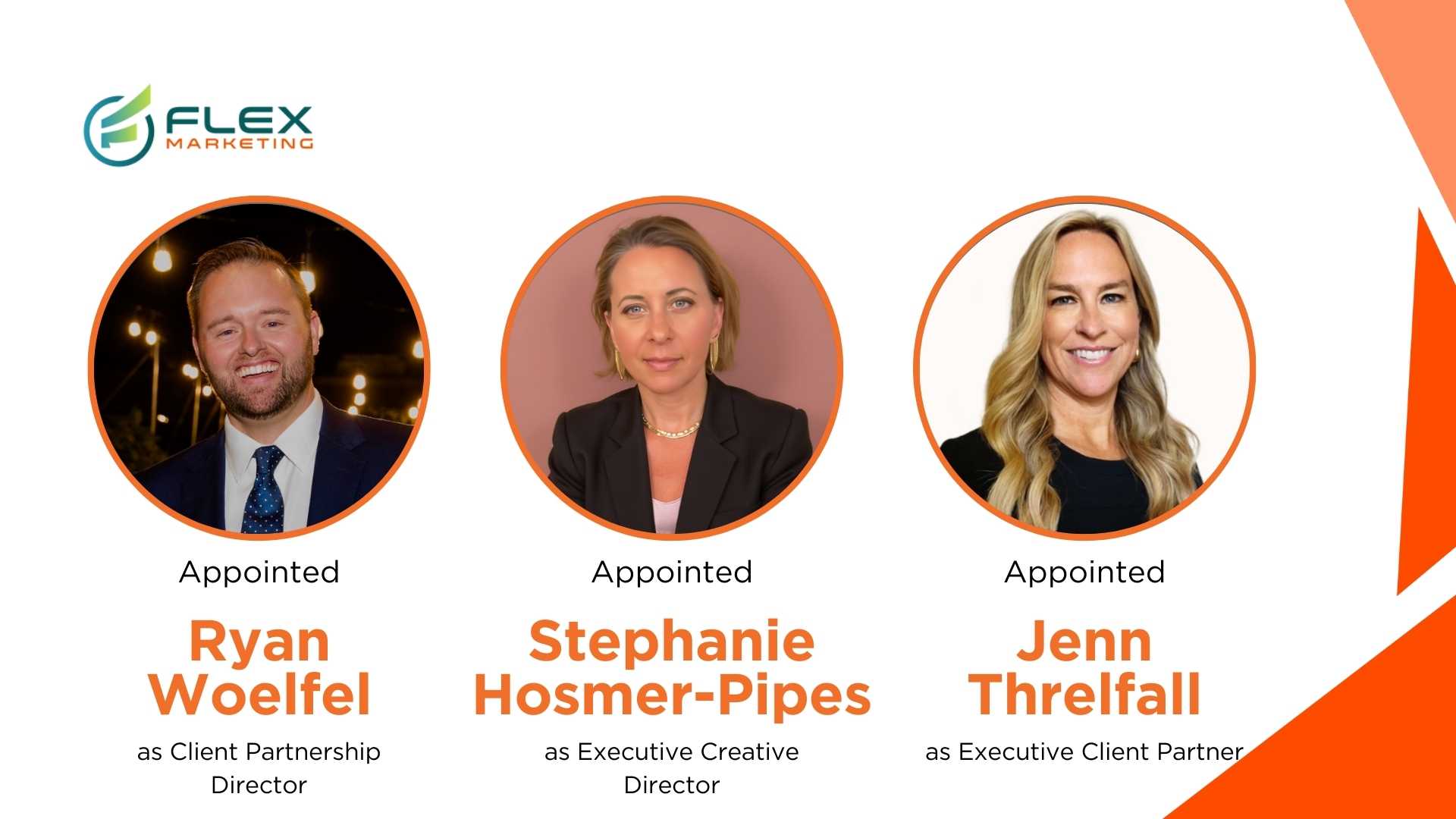
Six months in, FLEX MARKETING is moving fast. The independent agency, built to modernize healthcare marketing, has not only secured six new client partnerships across biotech and medical device sectors but also grown its staff by more than 75%. Now, it’s bringing on three senior leaders to strengthen its client-first model:
-
Ryan Woelfel, Client Partnership Director
-
Stephanie Hosmer-Pipes, Executive Creative Director
-
Jenn Threlfall, Executive Client Partner
The hires arrive as FLEX celebrates being certified as a California Small Business, giving clients the added benefit of aligning with supplier diversity and procurement goals.
Rethinking the Healthcare Agency Model
FLEX was founded by veterans of healthcare marketing who wanted to strip out the inefficiencies of traditional agencies—think fewer layers, no hourly rate billing, and judicious use of tech. Instead, FLEX leans on senior leadership, a curated FLEX Hive of execution partners, and an operating model that promises faster decisions, smarter execution, and cost savings without cutting strategy or creativity.
“Clients want experienced leadership, quality work, and faster, more cost-efficient delivery without sacrificing strategy or creativity. Our model delivers all three, and these new leaders strengthen that promise,” said Amber Rogers, Partner, Brand Strategy at FLEX.
The New Leaders at a Glance
-
Ryan Woelfel will oversee day-to-day client partnerships, drawing from more than a decade in healthcare marketing, most recently as VP, Group Account Director at Propel Health Communications.
-
Stephanie Hosmer-Pipes brings two decades of creative leadership, formerly SVP, Group Creative Director at Inizio Evoke. She’ll ensure creative work stays strategically aligned and human-centered.
-
Jenn Threlfall adds 25+ years of agency and client-side experience in product launches, most recently with Avalere Health and Inizio Evoke. She’ll focus on senior client relationships and growth initiatives.
Why It Matters
Healthcare marketing is under pressure to deliver results faster, at lower cost, and across increasingly complex therapeutic landscapes. FLEX’s early traction suggests its streamlined model resonates with clients tired of big-agency overhead.
“Clients are getting the strategic depth and creative quality they need, without the overhead they don’t—and top talent is excited to be part of an agency that values expertise, collaboration, and results over allocations and utilization,” added Adam Gelling, Partner, Client Engagement.
What’s Next
With momentum building, FLEX plans to expand further in 2025—deepening partnerships with U.S. and global healthcare brands while continuing to scale its team. If the first six months are any indication, FLEX is carving out a place as the agency built for healthcare marketing’s new realities.
Get in touch with our MarTech Experts.

REMAX Rolls Out AI-Powered Marketing-as-a-Service for Agents Across U.S. and Canada
automation 27 Aug 2025
REMAX® is putting marketing on autopilot—literally. The world’s No. 1 real estate brand has announced the launch of Marketing as a Service (MaaS), a new AI-powered platform designed to help its 145,000+ agents across the U.S. and Canada create smarter campaigns, connect with clients, and win more listings.
Powered by Realforce, MaaS combines automation, customization, and performance tracking into a single interface. Think of it as a one-stop marketing engine for real estate pros, offering everything from instant listing packages to targeted ad programs—without requiring agents to wrestle with multiple tools or steep learning curves.
“This is about giving REMAX affiliates every advantage in this highly competitive industry,” said Abby Lee, EVP of Marketing, Communications and Events at RE/MAX Holdings, Inc. “Marketing as a Service is designed to run in the background while REMAX agents stay front and center with their clients.”
What MaaS Brings to the Table
Key highlights include:
-
Simplified tools: Automated listing assets and campaigns accessible via one intuitive dashboard.
-
Smart automation: Pre-set campaign preferences let the system auto-launch tailored outreach across digital and social channels.
-
Performance reporting: Real-time, shareable dashboards agents can pass along to sellers and teams.
-
Quarterly market emails: Delivered via MAXTech® powered by BoldTrail, keeping clients in the loop with branded, local insights.
-
Brand consistency: Every campaign reflects REMAX’s refreshed, digital-forward branding.
The base MaaS package—free to all REMAX affiliates—includes flyers, digital/social content, and campaign tracking. Premium add-ons such as lead-gen tools, print mailers, video, and recruiting campaigns will roll out later this year.
Part of a Bigger Innovation Push
MaaS is only the latest in a string of digital investments by REMAX. Earlier this year, the company introduced:
-
MAXReferSM, a global AI-driven referral platform.
-
MAXEngageSM, a rewards-based app that motivates agents to amplify their social presence.
-
AspireSM, a next-gen onboarding program aimed at grooming top-producing agents.
Together, these initiatives underscore REMAX’s strategy: make marketing easier, keep agents front and center, and maintain the brand’s edge in an increasingly digital-first real estate market.
Why It Matters
The real estate industry has been reshaped by digital platforms, with buyers starting their home search on social and mobile channels long before they call an agent. By consolidating advanced marketing into a plug-and-play system, MaaS arms REMAX agents with what amounts to an always-on marketing department—without adding cost or complexity.
Lee put it more bluntly: “We’re being very aggressive in providing REMAX affiliates with difference-making competitive advantages that help them stand out—especially on social and digital platforms where most people begin their home search.”
For agents, that means less time in marketing dashboards and more time closing deals. For REMAX, it’s another step toward ensuring that, as competitors pile into AI and automation, its agents remain the most visible—and trusted—brand in real estate.
Get in touch with our MarTech Experts.

C5i Expands Databricks Partnership, Launches AI-Powered Marketing Data Cloud
artificial intelligence 27 Aug 2025
C5i, the pure-play AI and analytics company, has deepened its partnership with Databricks with the launch of the Marketing Data Cloud (MDC)—a validated Built on Databricks solution designed to unify fragmented marketing data and measure outcomes across channels with AI at the core.
For businesses, fragmented data has long been a barrier to understanding customers and proving ROI. MDC addresses this challenge by consolidating marketing data from every channel and touchpoint, then applying AI-driven ingestion, harmonization, predictive insights, and real-time activation. The result: marketers can achieve a 360° customer view, smarter segmentation, and hyper-personalized engagement at scale—while accelerating time-to-value.
“The Marketing Data Cloud combines C5i's expertise in data, AI, and marketing with Databricks' scalability to drive precision and impact in a complex marketing landscape,” said Ashwin Mittal, Executive Chairman of C5i. “This expanded partnership marks a significant milestone in unifying data and AI for advanced intelligence.”
Built on Databricks’ Open Lakehouse Foundation
At the core of MDC is the Databricks Data Intelligence Platform, which democratizes access to analytics and AI applications by unifying all marketing data into a single environment. With open formats and governance, enterprises maintain full control of their data while tapping into AI models tuned to their specific business needs.
“C5i is a pioneer in applying advanced analytics and AI to real marketing outcomes,” said Sarah Branfman, Global Vice President, Databricks ISV. “Their Marketing Data Cloud empowers enterprises to transform raw data into actionable intelligence. Together, we’re setting a new standard for performance-driven marketing across industries.”
Advanced Analytics for Smarter Marketing
The MDC doesn’t stop at unification—it provides Performance Analytics including:
-
Marketing Mix Modeling – optimize spend allocation across channels.
-
Brand Measurement – track brand equity and market impact.
-
Campaign Analytics – assess effectiveness across paid, owned, and earned media.
-
Multitouch Attribution – evaluate how every customer touchpoint contributes to conversions.
Industry-agnostic and scalable, MDC is designed to serve enterprises of all sizes, helping marketing leaders refine strategy, improve ROI, and gain a competitive edge.
Get in touch with our MarTech Experts.

Launch Accelerator Redefines Coaching Business Growth With Done-for-You Scaling System
business 27 Aug 2025
In a global coaching market projected to surpass $20 billion by 2030, competition and client expectations are intensifying. Yet, one of the biggest challenges for coaches remains the same: building sustainable, scalable businesses. Despite deep expertise, many coaches struggle with operations, visibility, and client acquisition.
The Launch Accelerator, developed by business strategist Sai C.N.G. Blackbyrn, addresses this gap with a done-for-you business growth system designed to help coaches establish fully operational practices within just 30 days.
Meeting a Growing Demand for Predictability
Industry observers note the rise of hybrid models in coaching, where practitioners seek predictability, credibility, and measurable outcomes over generic frameworks. By combining strategy and execution, Launch Accelerator is emerging as a blueprint for modern coaching businesses in a data-driven economy.
The impact is measurable:
-
80%+ of participants report significant growth within six months.
-
The program maintains a 92% satisfaction rate.
-
In just three years, it has supported 500+ coaches globally, generating 124,000+ leads.
A Turnkey Infrastructure for Growth
What sets Launch Accelerator apart is its infrastructure-first approach. Rather than offering abstract guidance, the program delivers:
-
A clearly defined niche and high-value offer.
-
Client acquisition funnels designed for conversion.
-
Automated email campaigns and tested sales copy.
-
A complete business framework coaches can launch immediately.
“Coaches are often deeply skilled in their fields, but building a scalable business requires infrastructure, not just inspiration,” said Sai C.N.G. Blackbyrn, Founder of Coach Foundation. “The Launch Accelerator was designed to provide that infrastructure, so coaches can focus on their work while building long-term credibility and impact.”
Hybrid Model: Execution + Skill Development
According to Edge360 Marketing’s review, the differentiator is the hybrid design. The program pairs done-for-you execution with advanced training in sales, positioning, PR, SEO, and publishing. This ensures participants not only launch a fully functional business model but also acquire the skills to sustain and scale.
With hundreds of success stories and rising demand in an increasingly crowded coaching landscape, Launch Accelerator is positioning itself as a market-defining solution for coaches seeking growth, efficiency, and long-term impact.
Get in touch with our MarTech Experts.
Page 218 of 1504