News

Neel Pandya Launches Climaty AI: The World’s First End-to-End CliMarTech Platform Powered by Agentic AI
technology 27 Aug 2025
Climaty AI, a global CliMarTech company powered by Agentic AI, has officially launched under the leadership of Founder & CEO Neel Pandya. With operations spanning APAC, GCC, EU, UK, and North America, Climaty AI is set to become the default climate layer for all media decisions—delivering a SaaS platform that integrates carbon responsibility with high-performing media campaigns.
Unlike point solutions or ESG add-ons, Climaty AI introduces the industry’s first end-to-end CliMarTech infrastructure, bringing together sustainability and performance at scale.
Key Differentiators of Climaty AI
-
Cross-Media Carbon Intelligence – The world’s first engine measuring ad emissions across all media touchpoints, recommending AI-driven strategies to cut CO₂ footprints substantially.
-
Agentic AI Suite – Autonomous AI agents that streamline workflows, personalize creatives, deliver real-time intelligence, and continuously optimize campaign performance.
-
Programmatic+ – Premium, MFA-free inventory powered by direct publisher deals and carbon-aware bidding.
-
Ad Net Zero Pathway – Full accountability with verified carbon credit offsets.
“Climaty AI is the answer to every CMO asking, ‘How do I grow responsibly?’” said Neel Pandya, Founder & CEO of Climaty AI. “With Agentic AI at the core and sustainability at the heart, we’re not just solving problems—we’re re-engineering the operating system of modern marketing.”
Leadership with Proven Global Impact
At the helm is Neel Pandya, a recognized Top Global Inspirational Leader and Most Powerful Influencer in the marketing industry. His career spans senior leadership roles at L'Oréal, Vodafone, and GroupM (Unilever), as well as serving as CEO of Pixis, where he helped scale the AI-driven marketing platform into a $225M-funded global brand.
Pandya has also headed the Society of Advertisers’ Media Forum, shaping industry-wide initiatives. Now, with Climaty AI, he is steering the dual wave of Agentic AI and Climate Tech to create solutions that align business growth with environmental responsibility.
“After years of working on performance optimization across global brands, agencies, and AI platforms, I felt a responsibility to lead the next critical shift where marketing intelligence integrates environmental impact,” Pandya added. “The future of marketing lies in AI-powered automation, measurable outcomes, and purpose.”
About Climaty AI
Climaty AI is a global CliMarTech (Climate + Marketing Technology) company, delivering the world’s first end-to-end AI-powered infrastructure that unites performance-driven marketing with measurable carbon responsibility. Built for CMOs, agencies, and enterprises, Climaty AI enables organizations to scale sustainably while optimizing growth outcomes.
Get in touch with our MarTech Experts.

Highspring Names Katie Strout CMO to Accelerate Brand and Demand Growth
marketing 26 Aug 2025
When a company promotes someone to Chief Marketing Officer just a year after joining, it usually means they’ve shaken things up—for the better. That’s the case at Highspring, which today announced Katie Strout as its new CMO, following her rapid ascent through the organization after spearheading a sweeping brand overhaul.
From Brand Transformation to Growth Engine
Strout didn’t waste her first year. She streamlined Highspring’s go-to-market identity, modernized its brand architecture, and aligned marketing operations with the company’s long-term strategy. The result: a marketing function no longer seen as a back-office service, but as a central growth driver.
As CMO, Strout will now oversee enterprise-wide marketing across Highspring and its talent solutions arm, Vaco by Highspring. Her mandate? Drive large-scale demand generation, build deeper market connections, and keep marketing firmly embedded in business strategy.
“Marketing has become a high-impact partner to our business units under Katie’s leadership,” said Highspring COO Steve Kass. “Her promotion is both well-earned and critical to our next chapter.”
A Track Record of Modernization
Strout isn’t new to high-stakes marketing. With nearly two decades of experience across professional services, gaming, and technology, she’s led teams where brand, digital, and demand intersect. Before Highspring, she served as VP of Performance Marketing at a Fortune 500 professional services firm, where she drove measurable results across brand campaigns and revenue-focused initiatives.
Her career also includes senior marketing roles in gaming and tech—industries where agility and customer engagement aren’t optional. That background seems to be informing her approach at Highspring, which emphasizes adaptability and data-driven execution.
Why It Matters
Highspring is betting big on marketing as a lever for growth—something not every professional services organization gets right. In an industry where marketing often plays second fiddle to sales, Strout’s elevation signals a shift: marketing isn’t just about polishing the brand anymore, it’s about fueling pipelines and scaling demand.
The move also reflects broader trends in B2B services. Firms are under pressure to modernize their marketing engines with digital-first strategies, brand clarity, and performance metrics to match. Rival organizations are making similar moves—EY recently restructured its global marketing leadership, and Accenture has doubled down on demand-generation functions in recent years. Highspring’s appointment fits neatly into this industry narrative.
Looking Ahead
For Strout, the new role is about maintaining momentum. “We’re building a brand and marketing approach that matches the scale and opportunity of this organization,” she said. That scale is significant: Highspring operates across 50+ countries, supporting more than 10,000 professionals worldwide.
The company’s challenge will be translating its brand transformation into measurable business impact—especially as professional services firms race to differentiate in a crowded, digital-first market. If Strout’s track record is any indication, Highspring’s next chapter could see marketing sitting at the head of the table, not just the sidelines.
Get in touch with our MarTech Experts.

Sappington Launches AI-Powered Expedite Platform to Accelerate Enterprise Marketing
content marketing 26 Aug 2025
When generic AI tools promise speed but deliver chaos, someone eventually builds a smarter alternative. For Sappington, a firm known for its enterprise technology marketing chops, that meant creating its own: the Sappington Expedite Platform, an AI-powered solution designed to slash production time and cost for essential marketing assets—without sacrificing brand standards or human-caliber quality.
Why Not Just Use ChatGPT?
That was CEO Tim Goggin’s exact question back in 2022, when AI hype was swelling and tools like ChatGPT began creeping into marketing workflows everywhere. His answer? Because off-the-shelf AI solutions rarely deliver what enterprise marketers actually need: secure, accurate, on-brand content that can scale across complex campaigns.
“We saw where the market was headed and knew our clients needed something purpose-built,” Goggin said. “Off-the-shelf AI solutions often promise speed but deliver chaos, lack quality, or don’t align with brand standards. We built a platform that does what marketers need—to move faster and spend less while retaining human-caliber quality.”
That distinction matters. While smaller businesses can experiment freely with open AI tools, enterprise brands are governed by compliance, data security, and the need for consistency across dozens of channels. A single rogue output can be costly.
Built for the Realities of B2B Marketing
The Expedite Platform is not just a “wrapper” for a public LLM. It combines custom-trained models, advanced prompt engineering, and secure infrastructure, all layered with Sappington’s two decades of B2B marketing expertise.
The result is an AI environment where Sappington’s strategists and writers can churn out polished eBooks, case studies, competitive analyses, blogs, solution sheets, and even full campaign Bills of Materials at a fraction of the usual time and cost. Importantly, the content isn’t shipped straight from an algorithm—it still runs through human editors, brand checks, and quality assurance.
That hybrid approach addresses one of the most common complaints about AI-generated content: robotic tone, factual inaccuracy, and endless revisions. “We’ve been able to dramatically cut timelines and costs,” Goggin noted. “And help our clients be AI-forward while they navigate AI tools within their companies.”
Differentiating from the Pack
In an AI-saturated market, differentiation is tough. Microsoft, Adobe, HubSpot, and Salesforce have already injected generative AI into their marketing suites. But Sappington’s bet is that enterprises don’t just want AI baked into existing tools—they want a controlled, secure, and branded environment that matches their specific workflows.
Think of Expedite as the opposite of the “move fast and break things” mantra. It’s more “move fast and still look professional.” That’s a subtle but critical nuance in B2B, where a poorly written whitepaper or misbranded case study can tank credibility overnight.
Human + AI, Not Human vs. AI
One thing Goggin stresses is that Expedite isn’t about replacing people—it’s about scaling them. High-touch services like keynote development, executive storytelling, sales presentations, video production, and experiential marketing remain untouched. Expedite instead handles the repeatable content layer: the essential assets that can slow down marketing teams but don’t always need to start from a blank page.
In other words, Sappington isn’t handing over the creative reins to AI. It’s using AI as a force multiplier.
Industry Implications
The launch taps into a broader trend across enterprise marketing: AI as a co-pilot, not an autopilot. Gartner predicts that by 2026, 80% of B2B marketing organizations will use AI to personalize and scale content production. But the challenge has always been balancing speed with control.
By building a proprietary platform instead of leaning on public tools, Sappington is positioning itself as both a service provider and a product innovator—something rival firms may have to consider as clients demand more AI-powered efficiency without losing the bespoke, brand-safe touch.
The Takeaway
Sappington’s Expedite Platform represents a middle path in the AI marketing arms race: faster, cheaper, but not reckless. It’s a move that could resonate strongly with enterprise clients who want to leverage AI without sacrificing brand trust.
For B2B marketers overwhelmed by the choice between generic AI tools and expensive, slow human-only processes, Expedite may just offer the “best of both worlds.”
Get in touch with our MarTech Experts.
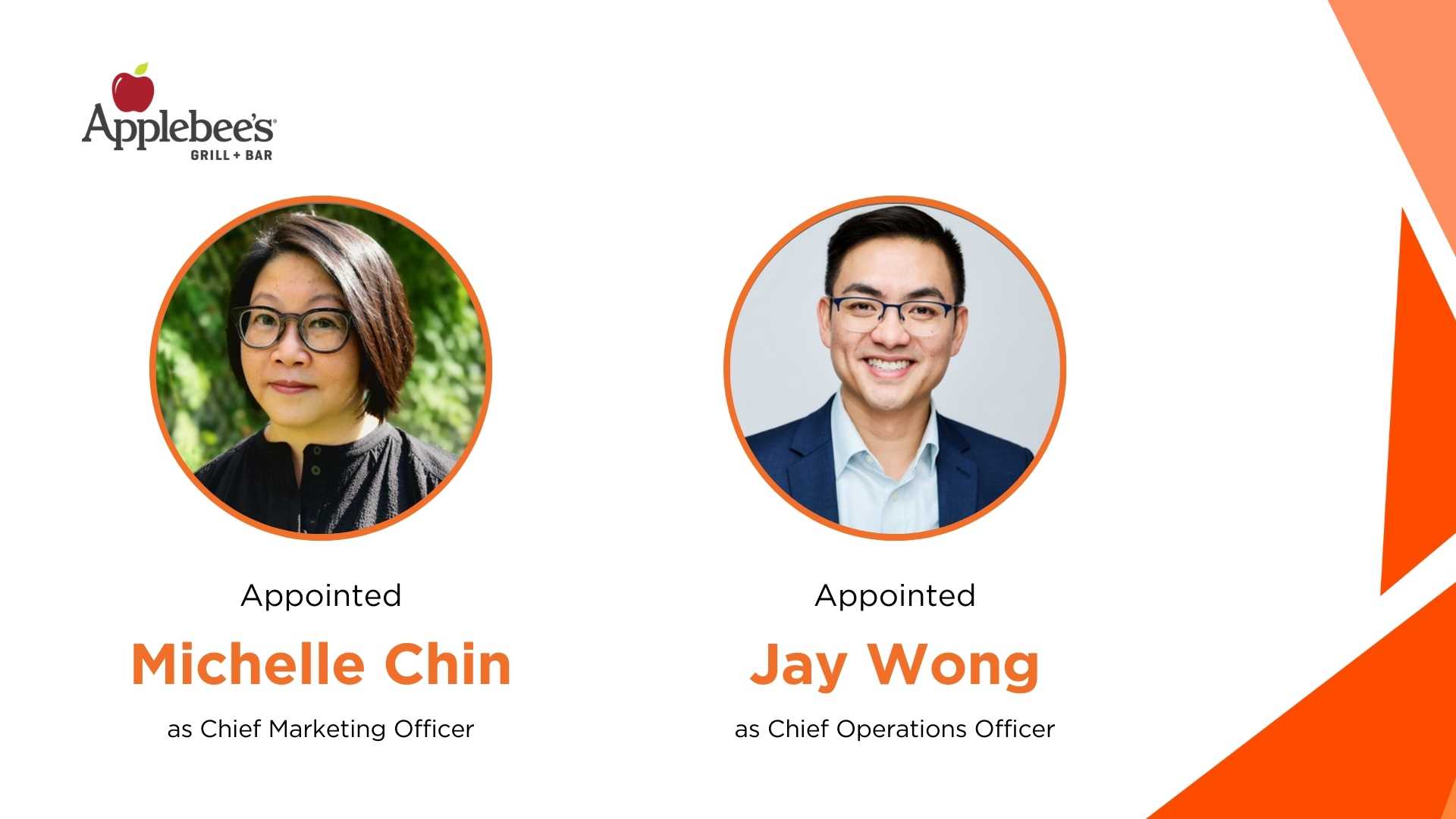
Applebee’s Taps Michelle Chin as CMO and Jay Wong as COO to Drive Growth and Innovation
business 26 Aug 2025
Applebee’s Neighborhood Grill + Bar is shaking up its leadership team with two high-profile hires aimed at accelerating marketing innovation and operational excellence. Michelle Chin joins as Chief Marketing Officer on Sept. 2, and Jerrold (Jay) Wong will start as Chief Operations Officer on Sept. 15.
The appointments come amid a period of momentum for the brand, which reported increased traffic and sales in Q2, signaling renewed growth potential in the casual dining segment.
Michelle Chin: Leading Marketing with Data and Creativity
Chin brings more than 20 years of marketing experience from global consumer brands like Starbucks, Godiva, and Unilever. At Applebee’s, she will oversee the brand’s entire marketing strategy, including national advertising, social media, digital campaigns, menu innovation, and integrated initiatives.
“Applebee’s has a unique place in American culture—welcoming, familiar, and full of heart,” Chin said. “I’m energized by the opportunity to deepen guest engagement, evolve our brand presence, and drive bold, creative marketing that keeps Applebee’s top of mind and top of table.”
Her mandate aligns with Applebee’s broader strategy: connecting with a new generation of guests while strengthening the emotional bonds with existing customers. Data-driven insights and storytelling will guide her approach, balancing bold creativity with measurable results.
Jay Wong: Operational Excellence Meets Hospitality Expertise
Wong joins with a strong background in hospitality leadership, having scaled teams and led transformations at Four Seasons, Starwood/Marriott Hotels, and Exclusive Resorts. As COO, he will focus on improving operational consistency, supporting franchisees, and driving system-wide performance to enhance the guest experience.
“Applebee’s is one of the most iconic names in American casual dining,” Wong said. “I’m thrilled to join this team and help move faster, serve guests better, and unlock new avenues for growth.”
Strategic Implications
The moves reflect Applebee’s commitment to innovation in an increasingly competitive casual dining landscape. By investing in marketing leadership and operational rigor, the brand aims to reimagine its restaurants, expand menu offerings, and create meaningful guest connections. Competitors like Chili’s and TGI Fridays are similarly focusing on experiential upgrades and digital engagement, making leadership with proven consumer-brand expertise critical.
With Chin and Wong at the helm, Applebee’s hopes to combine marketing sophistication with operational efficiency, leveraging both to sustain growth and maintain relevance in a crowded market.
Get in touch with our MarTech Experts.

MediaOne Names Adam Bridgeford VP of Brand Partnerships to Drive Midwest Growth
business 26 Aug 2025
MediaOne has strengthened its leadership team with the appointment of Adam Bridgeford as Vice President of Brand Partnerships, signaling a renewed focus on expanding client reach and integrated marketing solutions.
Bridgeford’s hire aligns with MediaOne’s strategy to deepen its presence in the tourism, healthcare, and financial services sectors, particularly across the Midwest. In his new role, he will identify growth opportunities, develop strategic client plans, and deliver creative digital media strategies that connect brands to the destinations and experiences people value most.
A Proven Track Record in Growth and Partnerships
“Adam’s proven track record of driving significant growth and his expertise in forging strategic partnerships perfectly align with our mission to help clients achieve meaningful impact,” said Jason Fulvi, MediaOne Chief Sales & Marketing Officer.
Bridgeford brings over a decade of experience in sales and marketing leadership, consistently delivering 10–15% revenue growth across global tourism, branding, and strategic marketing sectors. Most recently, he served as Vice President of Business Development at Herrmann Global, a tourism insights and marketing agency, where he led business development initiatives and forged strategic partnerships, primarily promoting international tourism into the U.S.
Strategic Implications
Bridgeford’s appointment reflects a broader trend in integrated marketing: agencies are increasingly emphasizing destination-based marketing and tailored client solutions to stand out in competitive verticals like tourism and healthcare. His experience building networks within destination marketing organizations positions MediaOne to deliver campaigns that resonate with both brands and consumers.
By combining data-driven strategies with creative media solutions, Bridgeford is expected to accelerate MediaOne’s growth trajectory and strengthen its footprint in the Midwest, ensuring clients receive strategic, outcome-focused marketing support.
Get in touch with our MarTech Experts.

Appian Named a Leader in IDC MarketScape for 2025 Business Automation Platforms
artificial intelligence 26 Aug 2025
Appian (NASDAQ: APPN) has been named a Leader in the IDC MarketScape Worldwide Business Automation Platforms (BAPs) 2025 Vendor Assessment, highlighting its growing influence in AI-driven process automation.
The IDC report notes Appian’s robust capabilities in AI agent development and its copilot functionality for enabling interactive collaboration between users and large language models (LLMs). These features reinforce Appian’s ongoing mission: embedding AI into business processes to make them faster, smarter, and more adaptable.
Innovations Driving AI Integration
Key Appian innovations cited by IDC include:
-
Agent Studio: A tool to create and manage AI agents within business workflows.
-
AI Document Center: Enterprise-grade intelligent document processing.
-
Smart Search: AI-driven semantic search across Appian’s unified data fabric.
These capabilities illustrate Appian’s commitment to integrating AI directly into business operations rather than treating it as a standalone tool, delivering measurable operational impact for enterprise users.
“The true power of AI lies in its integration within core business processes,” said Sanat Joshi, EVP of Product & Solutions at Appian. “Our recognition as a Leader underscores our focus on embedding AI with purpose and governance, empowering customers to accelerate operations and responsibly scale AI benefits.”
Why It Matters
As organizations across banking, insurance, government, and life sciences increasingly deploy AI, platforms like Appian provide a foundation for scalable, enterprise-wide automation. A recent Appian-sponsored IDC InfoBrief demonstrates how AI-enabled processes can amplify the value of existing automation initiatives, providing both agility and measurable business outcomes.
In a market crowded with process automation and AI vendors, Appian differentiates itself by embedding intelligence into every layer of workflow, enabling companies to orchestrate complex operations while maintaining governance, compliance, and insight-driven decision-making.
Bottom Line
Recognition by IDC MarketScape positions Appian as a go-to solution for enterprises looking to combine AI with process automation. Its approach emphasizes responsible AI adoption, process intelligence, and actionable outcomes—a model increasingly important as businesses aim to leverage AI without losing control over critical operations.
Get in touch with our MarTech Experts.

Edge Marketing Enhances Virtual Press Room with Agentic AI for Smarter Conference Coverage
technology 26 Aug 2025
Edge Marketing, an award-winning agency specializing in strategic marketing and PR for legal, accounting, and professional services, has upgraded The Edge Room with advanced agentic AI technology, revolutionizing how media professionals research exhibitors, sponsors, and conference content.
Since 2007, The Edge Room has been a go-to virtual press room for global industry conferences, offering journalists easy access to exhibitor and sponsor materials. With AI integration, it now acts as a research assistant, analyzing, synthesizing, and providing actionable insights from the wealth of conference data available on the platform.
AI-Powered Features Transforming Media Research
The agentic AI system goes far beyond traditional search, offering contextual conversational capabilities that enhance story development:
-
Intelligent Content Discovery: Ask natural-language questions about exhibitors, sponsors, and industry trends.
-
Automated Research Assistance: Receive comprehensive briefings on companies, announcements, and strategic positioning.
-
Story Angle Identification: Highlight unique narratives and connections across conference participants.
-
Trend Analysis: Identify emerging themes, technologies, and market shifts.
-
Interview Target Prioritization: Get AI-driven recommendations for the most newsworthy interview subjects.
-
Real-Time Updates: Continuously access insights as new exhibitor information and press materials are added.
“The integration of agentic AI represents a quantum leap forward in conference media relations,” said Amy Juers, CEO at Edge Marketing. “We’re creating an intelligent research partner that helps journalists uncover deeper stories and identify trends in ways that would take hours manually.”
Time-Saving Meets Story Quality
Vicki LaBrosse, Director of Global PR at Edge Marketing, emphasized the impact on media efficiency: “Our AI-enhanced Edge Room doesn’t just save time; it uncovers story opportunities that might otherwise be missed. Journalists can now ask, ‘What are the most innovative technologies among this conference’s sponsors?’ and get a comprehensive, sourced analysis in seconds.”
All AI-generated insights maintain proper sourcing and attribution, ensuring journalistic standards are preserved. Conference organizers and exhibitors also benefit, as the platform helps journalists discover stories more thoroughly, leading to more informed and comprehensive coverage.
Why It Matters
In an era where conference content is growing exponentially, Edge Marketing’s AI-enhanced press room addresses a critical challenge: helping media professionals cut through information overload while delivering higher-quality, timely reporting. By combining human editorial oversight with AI-driven insights, The Edge Room sets a new standard for media engagement in industry events.
Get in touch with our MarTech Experts.

Rhino Web Studios Pushes Hyperlocal Marketing to Boost Neighborhood Engagement
digital marketing 26 Aug 2025
Rhino Web Studios, a New Orleans-based full-service digital marketing agency, is turning its attention to hyperlocal marketing—helping businesses strengthen their presence in neighborhoods, increase walk-ins, and drive customer inquiries.
The approach leverages online platforms, community connections, and neighborhood-focused campaigns to ensure businesses are visible where it matters most: close to home.
Google Business Profiles: The Cornerstone of Local Visibility
For brick-and-mortar businesses, Google remains the starting point for most local searches. Rhino emphasizes fully optimized Google Business Profiles, including accurate hours, fresh photos, and strong customer reviews. Studies show these factors directly impact search rankings and influence consumer decision-making, making local search visibility critical for attracting nearby customers.
Yelp Optimization: Harnessing Review Culture
Yelp remains a key driver of local consumer decisions across restaurants, retail, and services. Rhino advises businesses to manage reviews, maintain up-to-date service descriptions, and showcase high-quality images. Active engagement on Yelp builds credibility and frequently results in higher local traffic.
Strategic Neighborhood Partnerships
Cross-promotions with nearby businesses multiply exposure and strengthen community ties. For instance, a coffee shop collaborating with a local bookstore can generate more foot traffic than each operating alone. These partnerships amplify word-of-mouth and reinforce a brand’s local presence.
Localized Social Media Advertising
Advanced geotargeting tools on social media allow businesses to serve ads to users within specific zip codes or walking distances. Campaigns tied to neighborhood events, seasonal activities, or local culture resonate strongly and minimize wasted ad spend. Hyperlocal ad strategies ensure businesses are top-of-mind when nearby customers are ready to act.
Why Hyperlocal Matters
According to Brett Thomas, founder of Rhino Web Studios, hyperlocal marketing is about becoming part of a neighborhood’s daily rhythm. “When businesses are visible on platforms people check most and engage directly with nearby businesses, they stop competing globally and start earning local trust,” he said.
Consumer behavior supports this strategy: many shoppers prioritize convenience and trust, often visiting local businesses within 24 hours of conducting “near me” searches. For service providers like medical clinics, law offices, and contractors, prominent local listings are now essential.
Community Engagement as a Growth Driver
Beyond tech and advertising, hyperlocal marketing involves cultural participation. Sponsoring events, supporting local causes, and posting on neighborhood topics strengthens emotional connections and loyalty. Customers who see businesses actively engaged in their communities are more likely to return.
Implementation and Expected Impact
Success requires consistent profile updates, review engagement, and timely localized campaigns. Businesses that commit to these practices often see measurable increases in calls, inquiries, and walk-ins. For small to midsize enterprises, focusing marketing efforts on a targeted geographic area can translate into sustainable growth.
Looking Ahead
As tools evolve, hyperlocal marketing will become even more precise. AI-driven ad placements, predictive analytics, and augmented reality search may enhance neighborhood-level engagement. Yet the fundamentals—visibility, reviews, local partnerships, and authentic communication—will remain the backbone of winning hyperlocal strategies.
Get in touch with our MarTech Experts.
Page 219 of 1504