News

TelevisaUnivision Returns to YouTube TV
digital marketing 27 Nov 2025
TelevisaUnivision is back on YouTube TV. The Spanish-language media giant has signed a new multi-year agreement that restores its flagship U.S. networks—Univision, UNIMÁS, TUDN, and Galavisión—to YouTube TV’s Base Plan and Spanish Plan. The renewed partnership expands access to some of the most-watched Hispanic news, sports, and entertainment programming in the U.S., closing a gap that had frustrated millions of viewers.
But the deal goes further than a simple return. ViX, TelevisaUnivision’s global streaming platform, will now be available through YouTube’s Primetime Channels. Even more notably, YouTube is extending its Primetime Channels product into Mexico for the first time, using ViX as its launch partner—a move that signals deeper competition in Spanish-language streaming.
A Win for Viewers Who Lost Access
Univision’s absence from YouTube TV in recent months left a sizable hole in Hispanic households, many of which rely on the network for nightly news, Liga MX matches, novelas, and award shows. Restoring access was a priority for TelevisaUnivision.
“We are pleased to have reached an agreement that restores Univision to YouTube TV, ensuring millions of Hispanics can access the news, sports, and entertainment they care about,” said Daniel Alegre, CEO of TelevisaUnivision. He emphasized the company’s long-standing mission to reflect the voice of Hispanic audiences—something the renewed distribution will help reinforce.
YouTube Expands Its Spanish-Language Bet
The broader collaboration reflects YouTube’s more aggressive push into curated streaming bundles and multilingual offerings. Primetime Channels, originally a U.S.-only product, extending into Mexico shows a strategic effort to meet demand in one of the world’s most active digital video markets.
ViX—now the largest Spanish-language streaming service—becomes a cornerstone of that expansion. By placing its vast library of novelas, live sports, originals, and news programming inside YouTube’s ecosystem, TelevisaUnivision opens a fresh funnel for reach. YouTube, meanwhile, gets a premium anchor partner with deep cultural resonance.
Strengthening a Growing Content Alliance
Beyond carriage rights, the two companies say the agreement sets the stage for new joint initiatives. While details remain under wraps, expect experiments around cross-platform promotion, live-event amplification, and deeper integration of Spanish-language content into YouTube’s recommendation and discovery layers.
The deal comes as Spanish-language media continues to surge across streaming and digital platforms. With competition mounting from Peacock’s Telemundo, Netflix’s Latin content expansion, and regional players like Claro Video, distribution breadth is becoming a defining advantage. TelevisaUnivision’s renewed pact with YouTube strengthens its footprint at a pivotal moment.
A Media Powerhouse With Global Reach
The partnership taps into TelevisaUnivision’s massive production engine. The company operates top-tier broadcast networks across the U.S. and Mexico, 38 cable channels, one of the region’s most prolific film studios, and a dominant Spanish-language radio footprint. ViX alone delivers thousands of hours of live sports and originals, giving YouTube a valuable catalog as it expands deeper into premium streaming.
For viewers—and especially Hispanic households in the U.S.—the return of Univision and its sister networks to YouTube TV marks a meaningful restoration. For YouTube, it’s a strategic upgrade. And for TelevisaUnivision, the pact ensures its content reaches audiences who increasingly prefer streaming-first experiences.

Vaudit Earns Google Certified Click Tracker Status
advertising 27 Nov 2025
Vaudit, the ad billing audit and recovery platform known for uncovering wasted spend, has officially earned Google Certified Click Tracker status—placing it among a select group of vendors trusted to measure clicks with full transparency and integrity. The certification arrives as Google tightens enforcement across its ad ecosystem, making approved tracking partners more critical than ever.
With advertisers demanding stronger verification and platforms facing intense scrutiny over opaque redirects and fraud, Vaudit’s certification signals a major step forward for performance accountability.
Google Validation Brings Hard Proof, Not Promises
Google’s certification process is far from routine. Providers must meet strict criteria on data accuracy, security, redirect transparency, and attribution consistency. Vaudit’s approval confirms that its click tracking operates cleanly within Google’s policies, without hidden manipulation or risk of campaign disruption.
In practical terms, advertisers using Vaudit now gain fully compliant, real-time, click-level insights directly aligned with Google’s standards—not reconstructed estimates or after-the-fact filtering. This upgrade lets brands rely on data that is both platform-approved and audit-ready.
A Safeguard Against Increasing Policy Enforcement
Google’s updated rules penalize non-certified trackers with rejected ads, lost tracking capabilities, and in some cases, account-level risk. As a certified partner, Vaudit shields advertisers from this tightening compliance landscape.
This is especially important as click fraud, shadow redirects, and unverifiable measurement continue to plague the industry. Certification ensures advertisers can track without worrying about invalidation, disapprovals, or missing attribution signals.
More Defensible Refund and Recovery Claims
Vaudit is known for helping brands recover roughly 10% of wasted ad spend through detailed audit logs. With Google certification, those claims gain more weight.
Because the data aligns with Google’s own transparency requirements, refund and credit requests become far harder for platforms to dispute. Every logged click, conversion, and redirect is backed by a certified audit trail, improving financial outcomes for advertisers seeking compensation for invalid traffic or billing discrepancies.
A Competitive Edge in an Industry Demanding Proof
As marketers push for measurable truth in advertising, Vaudit’s certified status becomes a strategic differentiator. Few audit platforms have earned the credential, and even fewer pair it with a model designed to expose waste and recover spend.
Michael Hahn, Founder and CEO of Vaudit, says the certification is more than an industry milestone: “Becoming a Google Certified Click Tracker is more than a badge. It’s a commitment to delivering audit-grade, transparently verifiable ad performance. Our clients now not only recover around 10% of wasted spend, they can prove it in a way that meets Google’s own standards.”
Certification That Raises the Bar for the Audit Category
Vaudit’s approval highlights a larger shift in ad measurement—one where independent verification is no longer optional. Advertisers want transparent billing, platforms favor certified partners, and regulators continue pushing for clearer attribution frameworks.
In that environment, Vaudit now sits in a stronger position. Its certification brings peace of mind for compliance teams, more reliable logs for finance teams, and cleaner performance visibility for growth teams. It also sets a new benchmark for the billing audit category, where trust is becoming a competitive currency.

MMG Acquires London Lites, Expands Premium DOOH Footprint With Backlite UK Launch
marketing 27 Nov 2025
Multiply Media Group (MMG), part of the newly rebranded 2PointZero Group PJSC, has completed its full acquisition of London Lites—one of the UK’s most recognisable premium DOOH operators. The deal gives MMG immediate scale in one of the world’s most valuable outdoor advertising markets and formalizes the launch of Backlite UK as the company’s new brand presence across the region.
The acquisition marks a major step forward in MMG’s international strategy as the DOOH landscape evolves through premium inventory, automation, and data-driven buying. With advertisers demanding more measurable, high-impact formats, this move positions MMG to compete more aggressively with established UK players.
A Powerful DOOH Portfolio From Day One
London Lites brings more than 65 digital screens to the table, including flagship sites like The Cube @ Flannels on Oxford Street—a highly sought-after location for global brands. These assets immediately strengthen MMG’s existing network of 11 ultra-premium UK sites.
The combined portfolio delivers instant synergies: deeper market coverage, shared infrastructure, operational efficiency, and access to London Lites’ established sales expertise. It also positions MMG to accelerate programmatic DOOH initiatives, an area gaining traction as brands shift budgets into automated outdoor buying.
Jawad Hassan, who leads the Media and Communications Vertical at 2PointZero Group, called the acquisition a foundation for rapid expansion in a market undergoing “high-impact digital evolution.” He noted that integrating London Lites creates a scalable platform with strong long-term potential.
Backlite UK Enters the Market
Following the completion of the acquisition, MMG has formally introduced Backlite UK—a brand that aims to bring increased value, scale, and service to advertisers. The move consolidates London Lites’ reputation for high-quality assets under a unified commercial strategy.
James Bicknell, Group CEO at MMG, emphasized that London Lites’ legacy and premium inventory gave the company a compelling launchpad. Operating as Backlite UK, MMG plans to elevate the brand experience for advertisers seeking maximum visibility in a fast-moving market.
A Legacy Continued Under a Larger Vision
London Lites Founder Sam Dayeh highlighted the significance of the transition, noting that the company’s success was shaped by the talent and dedication of its team. Joining MMG ensures wider opportunities and sustained investment in growth.
With DOOH demand rising, London Lites’ integration gives MMG strategic momentum. The DOOH sector continues to be driven by richer creative formats, evolving measurement standards, and increased programmatic adoption. MMG’s move underscores the competitive importance of scale and premium placement as global brands seek out high-impact environments.
Strengthening MMG’s Global DOOH Strategy
By expanding into the UK with a substantial portfolio, MMG deepens its position in a high-growth category that blends creativity with advanced technology. The acquisition strengthens its global footprint and aligns with its broader goal of building a diversified premium OOH network powered by innovation.
As advertisers push for smarter, data-enhanced outdoor capabilities, MMG’s move puts it in a strong position to meet rising expectations and shape the next phase of DOOH evolution.

AI Agents, Super Apps, and Privacy-First Models: Infobip Predicts a Reinvented 2026
marketing 27 Nov 2025
Customer engagement is about to enter its most disruptive era yet. Global cloud communications provider Infobip has released its 2026 outlook, and the message is clear: AI-driven automation, super apps, and privacy-first models will overhaul how businesses interact with customers across every major sector.
The forecast points to a year where AI agents take center stage, messaging platforms behave like full-service ecosystems, and data strategy becomes the deciding factor in whether enterprises sink or scale. While many players talk about customer experience transformation, Infobip’s predictions outline how those shifts will manifest across industries already racing toward AI maturity.
AI Agents Take Over Customer Interactions
Infobip expects AI agents to handle up to 95% of customer engagements by 2026. These won’t be the clunky chatbots users love to hate. Instead, they will operate as advanced, agentic models capable of understanding context, navigating complex queries, and delivering real-time, personalized support.
Sectors like banking and eCommerce already lean heavily on AI chatbots for simple tasks. Voice bots are gaining ground too, automating conversations once thought too nuanced for machines. Yet Infobip stresses the importance of the “human-in-the-loop” model. While AI handles volume and routine interactions, trained experts step in when empathy, judgment, or strategic thinking is required. The result is faster resolution without sacrificing humanity.
Super Apps Push Customer Journeys Into a Single Channel
Messaging platforms are evolving into powerful end-to-end ecosystems. WhatsApp, for example, is no longer just a communication app. It now supports payments, appointment scheduling, product discovery, and customer service—often in one seamless thread.
RCS is gaining similar traction. Retailers use interactive carousels to let users browse and buy inside the chat window. Healthcare providers enable appointment booking and invoice payments without forcing patients to navigate external portals. This movement toward all-in-one messaging experiences reflects a broader trend: customers want fewer steps, fewer apps, and faster interactions.
Businesses adopting these rich messaging features are already seeing higher conversion rates, fewer drop-offs, and more cohesive customer journeys.
Data Strategy Becomes the Battlefield for AI Innovation
Despite AI’s acceleration, one fundamental issue remains: data. Infobip highlights that fragmented systems and isolated databases are crippling companies trying to scale AI-driven experiences.
While many organizations rely on large, generic models, interest is rising in smaller, domain-specific LLMs that can run securely on local or on-premises hardware. These models offer better data privacy, tighter control, and more accurate industry-specific responses.
Yet even the smartest model is ineffective without the right data. Businesses face challenges in collecting, unifying, cleansing, and activating their internal datasets. Infobip’s stance is pragmatic—focus on compliance, security, and trust before chasing flashy AI deployments. Leaders across sectors now prioritize regulation and customer protection over speed, especially in finance and healthcare.
A Digital Future That Requires Collaboration
Looking toward 2026, Infobip’s message is both ambitious and grounded. AI will stretch far beyond automation. Messaging will evolve into commerce and service hubs. Data frameworks will define competitive advantage. But the company insists that true transformation will require shared effort among vendors, developers, partners, and enterprises.
The digital landscape is shifting fast, and Infobip positions itself as a co-creator rather than a mere platform provider. That collaborative approach may be essential as businesses work to balance innovation, compliance, and customer trust.

8x8 Wins Gold for UX Design as 8x8 Engage Sets a New Standard for Customer-Facing Teams
digital marketing 26 Nov 2025
8x8 has added another award to its shelf. The business communications provider has earned Gold in the User Experience Design – Business category at the 2025 London Design Awards for 8x8 Engage, its mobile-first workspace built for customer-facing teams. The win highlights a broader industry shift: CX tools are finally being re-engineered for the way modern teams actually work.
Solving the Fragmented CX Tool Problem
Most service teams operate across chaotic workflows. They bounce between channels, switch devices, and loop in subject-matter experts across billing, HR, IT, and finance. Yet their tools rarely keep up. Disconnected apps slow reaction times, fracture context, and create the kind of inconsistency customers notice immediately.
8x8 Engage tackles that pain head-on. The platform unifies voice, video, SMS, RCS, WhatsApp, Messenger, and Viber into a single, intelligent workflow supported by AI. The design centers on mobility and collaboration, two needs that frontline workers can’t compromise on. The result is a workspace built around speed, clarity, and continuity rather than patchwork communication.
Why the Award Matters
The London User Experience Design Awards prioritizes products that reduce friction and elevate accessibility. Winning Gold in this category signals that 8x8 Engage is not only functional, but also built on thoughtful design decisions that reflect how frontline and expert teams behave in real conditions.
“User experience is a business differentiator,” said Dhwani Soni, Global Vice President of Product Design and User Experience at 8x8. She emphasized that the solution was shaped for both mobile field teams and the experts behind the scenes. By reducing cognitive load and simplifying information flow, 8x8 Engage improves resolution times, strengthens collaboration, and boosts customer satisfaction. In CX, those improvements translate quickly into measurable performance gains.
A Core Pillar of the 8x8 Platform for CX
8x8 Engage sits inside the broader 8x8 Platform for CX, which merges contact centre capabilities, unified communications, and APIs into one scalable ecosystem. This architecture allows organisations to standardise their communication stack, accelerate adoption, and eliminate the operational drag that comes with juggling multiple vendors.
More importantly, it extends consistent workflows to every customer-facing role, even those outside the traditional contact centre. That’s a notable contrast to legacy platforms that often limit advanced tools to agents alone. As industries confront rising customer expectations and shrinking patience, aligning every team around the same communication backbone becomes a strategic advantage.
The Bigger Picture
The recognition for 8x8 Engage arrives at a moment when CX software is being reshaped by user-centric design, AI-powered context, and mobile-native workflows. Competitors across unified communications and contact center software are racing to deliver similar experiences, yet few platforms unify such a wide range of channels without adding operational complexity.
For organisations facing higher service demands with fewer resources, solutions like 8x8 Engage point to a future where UX isn’t a cosmetic feature but a performance driver. When communication flows without friction, teams spend less time hunting for information and more time resolving issues. In today’s market, that efficiency is what customers remember.

TDI Appoints Vanessa Sussman as CMO to Accelerate Global Growth and Brand Expansion
digital marketing 26 Nov 2025
TDI is strengthening its leadership bench as geopolitical risk and regulatory complexity push demand for sharper intelligence. The advisory and risk insights firm has appointed Vanessa Sussman as Managing Director and Chief Marketing Officer, reporting directly to the CEO. Her mandate: elevate TDI’s global brand and align marketing with the firm’s commercial ambitions as it expands into new markets.
The appointment comes at a moment when risk intelligence firms are racing to differentiate amid rising demand for due diligence, investigations and geopolitical analysis. TDI aims to use marketing as a strategic lever, not a support function, as it broadens its mix of advisory services and software-driven solutions.
A CMO Built for Complex Markets
CEO Jay Truesdale said Sussman’s background makes her a natural fit. “She brings a strategic mindset and a unique background at the intersection of global affairs, marketing, and communications,” he noted. “Her ability to distill complex issues into clear, compelling narratives will be essential as we grow and continue to help clients navigate an increasingly challenging geopolitical and regulatory landscape.”
Sussman’s résumé spans more than 25 years across corporations, advisory firms, media organizations and nonprofits. Most recently, she served as Chief Marketing and Communications Officer at Eurasia Group and GZERO Media, where she helped the brands cut through noise in a crowded geopolitical insights market. Before that, she led private markets communications at Nuveen, following senior roles at Morningstar. Her earlier experience includes Group SJR, Council of the Americas, Foreign Policy, and the U.S. Mission to the United Nations.
Her track record reflects fluency in translating global complexity into digestible stories—an increasingly valuable skill as companies across industries confront political volatility, fragmented regulation and heightened operational risk.
Strengthening TDI’s Global Position
At TDI, Sussman will oversee global brand strategy with a focus on scaling visibility among decision-makers in corporate, financial, and government sectors. She will also align messaging and go-to-market initiatives with the firm’s expanding portfolio, which now includes software tools designed to streamline due diligence and risk monitoring.
The firm’s growth ambitions extend across regions and sectors where geopolitical intelligence is becoming a competitive advantage. Sussman’s role will be central in sharpening how TDI communicates that value.
Beyond her professional background, Sussman remains active in civic and educational communities. She serves on the board of City Year New York and sits on the communications advisory board for the Museum of American Finance. She holds degrees from Johns Hopkins SAIS and the University of Wisconsin–Madison.
With Sussman joining the leadership team, TDI signals a more assertive go-to-market stance—one built on clarity, credibility, and sharper global storytelling.
Labuan IBFC Names Ben Quah CEO as It Sharpens Its Regional Financial Ambitions
digital marketing 26 Nov 2025
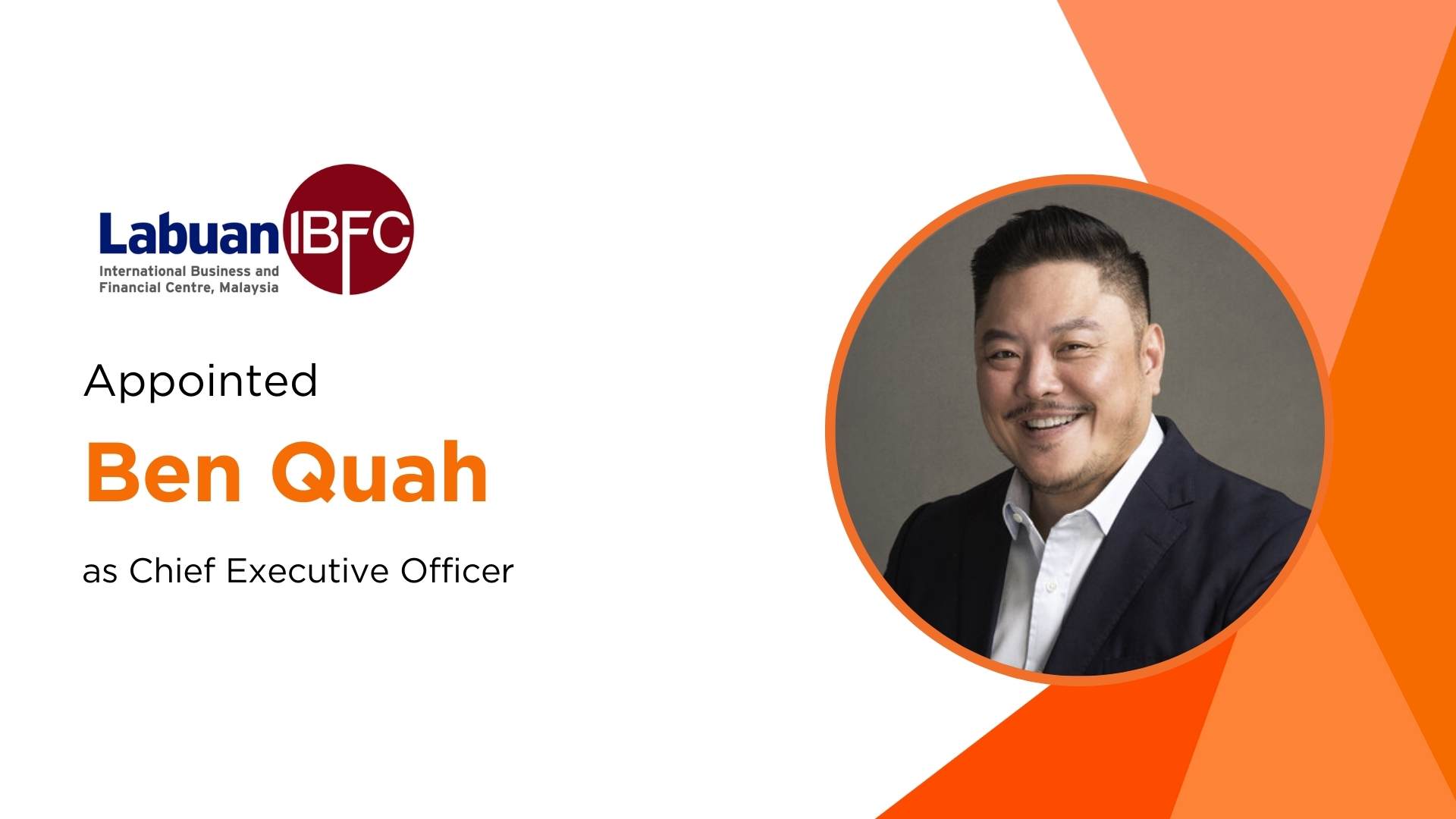
Labuan IBFC has a new leader at the helm. The jurisdiction’s marketing and promotional arm, Labuan IBFC Inc., has appointed Ben Quah as Chief Executive Officer, marking a strategic move as the financial centre steps up its regional ambitions in cross-border finance, fintech, and wealth management.
The appointment arrives at a time when Asian financial hubs are racing to define their value propositions amid shifting global standards, tighter regulatory expectations, and growing demand for seamless, multi-jurisdictional financial infrastructure.
A Leader Built for Regional Expansion
Quah brings more than twenty years of experience across fintech, digital marketing, and regional business development. His track record spans Malaysia, Mainland China, Hong Kong SAR, and Singapore, reflecting a career shaped around scaling businesses in high-growth markets.
He has built and launched multi-jurisdictional platforms, structured cross-border partnerships, and worked closely with regulators and financial institutions. His experience across both traditional finance and fast-moving tech ventures positions him well for a jurisdiction that must now balance innovation with regulatory discipline.
Recognised for what industry observers describe as “strategic clarity,” Quah is known for converting vision into practical execution. His work often centres on ecosystem building—connecting regulators, banks, and technology providers to unlock long-term, sustainable growth.
Strengthening Labuan IBFC’s Position
As CEO, Quah will steer efforts to reinforce Labuan IBFC’s status as a premier international business and financial centre. His mandate includes:
-
Deepening collaboration across priority markets
-
Enhancing engagement with regulators and industry bodies
-
Expanding Labuan IBFC’s reach in wealth management, captive insurance, fintech, and Islamic finance
-
Elevating the jurisdiction’s competitiveness as global standards evolve
These focus areas reflect broader industry trends. Wealth flows across Asia continue to rise. Demand for alternative risk structures is increasing. Fintech innovation requires regulatory frameworks that balance agility with oversight. And Islamic finance remains a high-growth pillar across several Asian economies. Labuan IBFC aims to sit at the centre of these intersecting opportunities.
A Relationship-Driven Leadership Approach
Quah’s early months in the role have been marked by active engagement with partners across the region. His leadership philosophy, which he describes as “inside-out living,” emphasises authenticity, clarity of purpose, and values-driven decision-making. These principles guide his ecosystem-first approach to building long-term, collaborative growth.
“Collaboration is fundamental to Labuan IBFC’s future,” Quah noted. “By aligning closely with partners in our key markets, we can further enhance our role as Asia's leading cross-border financial hub. I am committed to cultivating the relationships that will unlock long-term, sustainable growth for the region.”
Why This Appointment Matters
Labuan IBFC sits in a competitive landscape among regional financial centres, each vying for capital, regulatory trust, and digital-finance relevance. Quah’s blend of fintech expertise, regional understanding, and cross-border execution could help sharpen Labuan’s positioning as global financial flows continue to diversify beyond traditional hubs.
If the centre can align innovation with regulatory confidence—while deepening ties across Asia—it may strengthen its role as a preferred jurisdiction for international business, asset structuring, and digital financial services.
For now, the appointment signals Labuan IBFC’s intention to accelerate those ambitions with a leader comfortable operating at the intersection of finance, technology, and regional strategy.

Bluestar Alliance Taps Atomic Fashion Marketing to Drive Dickies’ Growth in Australia and New Zealand
marketing 26 Nov 2025
Bluestar Alliance is moving quickly to scale its newest acquisition. The brand management company has signed a licensing agreement with Atomic Fashion Marketing for Dickies across Australia and New Zealand—a region where the workwear icon already enjoys deep cultural relevance.
The deal marks a strategic step in Bluestar Alliance’s global expansion roadmap for Dickies. The brand is best known for its roots in workwear, yet its influence spans far beyond utility apparel. For decades, Dickies has been embraced by craftsmen, skateboarders, musicians and subcultures worldwide. Australia, in particular, has evolved into one of its strongest global communities.
A Longstanding Partnership with Regional Impact
Atomic Fashion Marketing isn’t new to the Dickies story. The company has championed the brand for nearly 15 years, reshaping its regional presence through focused product direction, sharp trend alignment and culturally aware campaigns that resonated with a diverse audience.
After securing the Dickies license directly from the founding family years ago, Atomic set out to reposition the brand. That strategy paid off. Its sustained approach to regional storytelling and product curation significantly broadened Dickies' reach and helped the label cement a strong cultural footprint across Australia and New Zealand.
Perhaps most notably, Atomic helped expand the brand’s category mix. Historically known for pants, Dickies saw tops and womenswear emerge as major growth drivers—together accounting for nearly half of sales in the region. For a global heritage brand, this shift represents a meaningful milestone.
Strengthening Global Strategy with Proven Local Execution
Bluestar Alliance sees this existing momentum as the ideal foundation for the next phase of global expansion.
“Partnering with licensees who have demonstrated success in their markets is central to our global strategy for Dickies,” said Ralph Gindi, COO of Bluestar Alliance. “Atomic has played a defining role in establishing Dickies as a cultural staple across Australia and New Zealand, and we look forward to building on this strong foundation together.”
For Bluestar, the decision aligns with a broader pattern: investing in licensees with deep local insight and a strong track record of amplifying heritage and lifestyle brands.
What’s Next for Dickies in the Region
Under the renewed partnership, Atomic will continue to deliver apparel built on Dickies’ workwear DNA while tailoring collections specifically for Australian and New Zealand consumers. As global appetite for workwear and utility-inspired fashion continues to rise, the company aims to strengthen the brand’s presence across new categories and cultural touchpoints.
Atomic’s ability to interpret and revitalize iconic brands remains a core advantage. With Dickies now officially part of Bluestar Alliance’s global portfolio—and with Atomic steering regional execution—the brand enters a new chapter positioned for accelerated growth, expanded relevance and renewed cultural momentum across ANZ.
Page 247 of 645
Most Recent


Website Architecture Emerges as a Core SEO and UX Lever
EIN Presswire

Fresha Expands DACH Push With New Germany GM
Business Wire


Influ2 Launches MCP to Connect Contact-Level ABM With AI
Business Wire