News

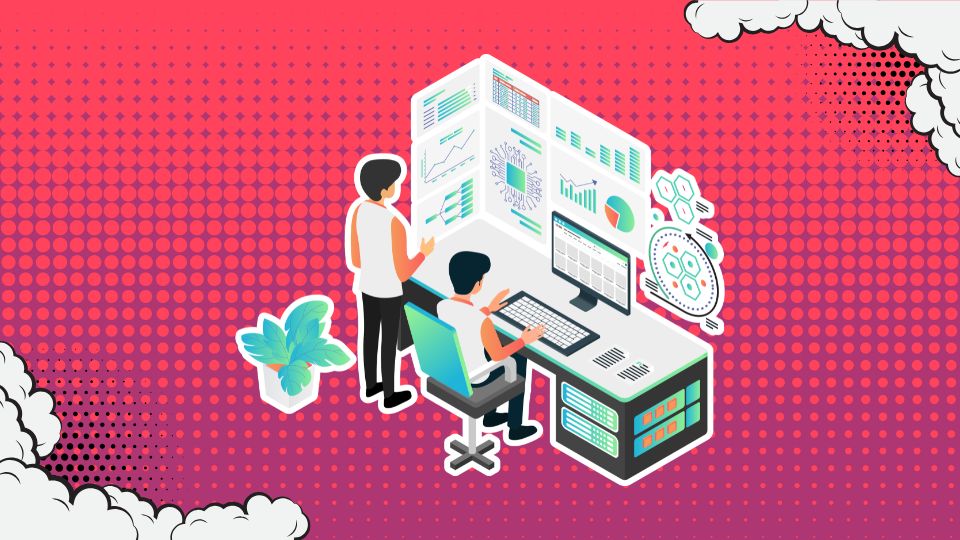
Persistent, NVIDIA Partner to Fast-Track AI Drug Discovery With Agentic Workflows
artificial intelligence 18 Mar 2026
AI is moving from lab experiments to life-saving outcomes—and Persistent Systems wants to accelerate that shift.
The digital engineering firm has announced a new collaboration with NVIDIA to bring AI-powered drug discovery into real-world production for the healthcare and life sciences (HLS) sector. The partnership focuses on applying generative AI, simulation, and agentic workflows to speed up research cycles that traditionally take months—or years.
From Wet Labs to Digital Labs
Drug discovery has long been constrained by time, cost, and complexity. Traditional R&D relies heavily on physical (wet lab) experimentation, which is resource-intensive and slow to iterate.
Persistent’s approach flips that model.
By combining its domain expertise with NVIDIA’s full-stack AI platform, the company aims to simulate biological and chemical interactions digitally—before they’re tested in the lab. That includes high-fidelity molecular modeling and large-scale virtual screening, allowing researchers to evaluate thousands of potential compounds in a fraction of the time.
The goal isn’t to replace lab work—but to make it smarter, faster, and more targeted.
Agentic AI Enters Drug Discovery
At the center of this push is Persistent’s new solution: Generative Molecules and Virtual Screening (GenMolVS).
Built on NVIDIA BioNeMo and the NVIDIA NeMo Agent Toolkit, GenMolVS uses domain-specific AI models to simulate molecular properties and generate new compounds. But the more interesting layer is what Persistent calls “agentic workflows.”
These AI agents don’t just generate data—they actively participate in the research process, continuously making decisions across stages like:
-
Virtual screening of compounds
-
Candidate prioritization
-
Experimental planning
This creates a closed-loop system where AI models refine hypotheses in real time, helping researchers move from simulation to actionable lab experiments faster.
In practical terms, that could compress early-stage discovery timelines from months to days.
Infrastructure Built for Regulated AI
Healthcare AI isn’t just about performance—it’s about compliance, traceability, and reliability.
To support production-grade deployments, Persistent is tapping into NVIDIA’s enterprise stack, including AI Enterprise software, accelerated compute, and NIM microservices. The infrastructure is designed to handle large-scale simulations while meeting the strict regulatory requirements of life sciences environments.
The company also plans to integrate NVIDIA Nemotron models to further enhance simulation accuracy and scalability.
That combination—AI models, infrastructure, and governance—is critical for moving beyond proof-of-concepts into regulated, mission-critical workflows.
Industry Context: AI’s Growing Role in Pharma R&D
Persistent and NVIDIA aren’t alone in targeting this space.
Pharma giants and tech players alike are investing heavily in AI-driven drug discovery, with platforms from companies like Google DeepMind and Microsoft pushing advances in protein modeling, genomics, and clinical research.
What sets this collaboration apart is its focus on operationalizing these capabilities—bringing them into enterprise workflows rather than keeping them in research silos.
That’s a key shift. As the industry matures, the competitive edge will come not just from better models, but from the ability to integrate AI into end-to-end R&D pipelines.
Why This Matters Now
The pressure on healthcare and life sciences organizations is intensifying. They’re expected to deliver new therapies faster, reduce costs, and navigate increasingly complex regulatory landscapes—all while dealing with massive datasets.
AI offers a way forward—but only if it can scale.
By focusing on production-grade systems, Persistent and NVIDIA are targeting a critical gap: turning promising AI experiments into reliable, repeatable processes that can support real-world drug development.
Beyond Technology: Building AI Talent
The partnership also includes a talent component, with Persistent planning to expand its AI and LLM engineering capabilities through NVIDIA’s training and certification programs.
That’s a strategic move. As demand for AI in life sciences grows, the shortage of skilled practitioners could become as much of a bottleneck as the technology itself.
Bottom Line
AI-driven drug discovery has been a promise for years. What’s changing now is the push toward making it operational.
Persistent and NVIDIA’s collaboration signals a broader industry transition—from experimental AI models to production-ready systems that can meaningfully impact how therapies are discovered.
If successful, that shift won’t just speed up research—it could reshape the economics and timelines of bringing new drugs to market.
Get in touch with our MarTech Experts.

Ping Identity Study: ‘Verified Trust’ Drives 51% Higher Conversions, Slashes Fraud in AI Era
marketing 18 Mar 2026
As enterprises scale AI, identity is quickly becoming the new control layer—and most companies aren’t ready.
New research from Ping Identity, conducted by International Data Corporation, reveals that organizations adopting continuous, contextual identity verification—what the report calls “verified trust”—are significantly outperforming their peers across key business metrics.
The catch? Very few have actually implemented it at scale.
The Performance Gap Is Real—and Measurable
Based on a global survey of 794 organizations, the IDC study shows a clear correlation between identity maturity and business outcomes. Companies classified as “verified trust leaders” report:
-
51% higher customer registration conversion
-
44% stronger compliance readiness
-
43% lower fraud losses
-
47% faster workforce onboarding
These aren’t marginal gains. They point to identity infrastructure as a direct driver of revenue, efficiency, and risk reduction—especially as AI-driven interactions multiply.
Identity Is No Longer a Login—It’s a System
The report reframes identity from a one-time authentication event to a continuous process.
IDC defines “verified trust” as ongoing assurance that every interaction—whether human or AI agent—is tied to a verified identity and remains trustworthy over time. That includes real-time signals like biometrics, device posture, behavioral data, and AI-driven risk analysis.
In practice, this shifts identity from a front-door security check to a full-time control plane governing every access and authorization decision.
That’s a big leap from traditional IAM (identity and access management) systems, which were designed for static, perimeter-based environments—not dynamic, AI-mediated ecosystems.
The Maturity Gap: Confidence vs. Reality
Perhaps the most striking finding is the disconnect between perception and execution.
-
51% of organizations believe they lead in digital trust
-
Only 9% actually meet IDC’s criteria for “verified trust” maturity
That gap shows up across multiple dimensions:
-
Verification coverage: 69% of leaders verify most trust flows vs. under 20% for early adopters
-
Scale: 94% of leaders operate enterprise-wide; others remain stuck in pilot mode
-
Passwordless adoption: 80%+ among leaders vs. below 30% for laggards
In other words, many companies think they’re secure—but aren’t operating at the level required for AI-scale environments.
Why AI Is Raising the Stakes
This shift is being accelerated by AI.
As enterprises deploy autonomous agents, copilots, and machine-to-machine interactions, the number of identity-sensitive events is exploding. Each one requires validation—not just at login, but continuously.
That’s forcing a rethink of identity architecture.
According to the report, identity is becoming the backbone for accountability, governance, and trust in AI systems. Without it, organizations risk increased fraud, compliance failures, and operational friction.
Industry Context: Identity Becomes Strategic Infrastructure
The findings align with a broader trend across cybersecurity and enterprise IT.
Vendors like Okta, Microsoft, and Cisco are all pushing toward passwordless, continuous authentication models. Meanwhile, zero-trust architectures are gaining traction as organizations abandon perimeter-based security.
Ping Identity’s positioning of “verified trust” fits squarely into this evolution—but adds a layer of real-time intelligence tailored for AI-driven environments.
From Security Cost Center to Business Driver
One of the more notable implications of the report is how identity is being repositioned internally.
Traditionally seen as a compliance or security function, identity is now directly tied to growth metrics like conversion rates and customer experience.
Faster onboarding, fewer friction points, and better fraud prevention all translate into measurable business impact.
That’s a compelling argument for CIOs and CMOs alike—especially as digital experiences become more complex and competitive.
Closing the Trust Gap
The report ultimately frames “verified trust” as a prerequisite, not a differentiator.
Organizations that operationalize continuous identity verification early can scale AI faster, with less risk. Those that don’t may face increasing costs, regulatory pressure, and degraded user experiences.
The message is clear: in an AI-first world, trust isn’t assumed—it’s continuously verified.
Bottom Line
As AI reshapes enterprise interactions, identity is emerging as the new foundation layer.
Ping Identity’s research suggests that companies treating identity as dynamic infrastructure—not a static checkpoint—are already pulling ahead.
The rest of the market has work to do.
Get in touch with our MarTech Experts.
IBM, NVIDIA Expand Alliance to Push Enterprise AI From Pilot to Production
artificial intelligence 18 Mar 2026
At NVIDIA GTC 2026, IBM and NVIDIA unveiled an expanded partnership aimed squarely at one of enterprise tech’s biggest bottlenecks: turning AI pilots into production-grade systems.
Despite billions in AI investment, most enterprises are still stuck in experimentation mode. The two companies are betting that the fix isn’t better models—but better data pipelines, infrastructure, and orchestration layers to support them.
The Real AI Problem: It’s Not the Models
For all the hype around large language models, enterprise AI adoption has lagged. The reasons are familiar: fragmented data, legacy infrastructure, regulatory constraints, and a shortage of implementation expertise.
IBM CEO Arvind Krishna framed it bluntly: the next wave of AI will be defined not by models, but by how well companies integrate data and infrastructure to run them at scale.
NVIDIA CEO Jensen Huang echoed that view, emphasizing data as the “ground truth” that gives AI meaning—while positioning GPUs as the engine that turns that data into real-time intelligence.
In short, this isn’t about building smarter AI. It’s about making AI actually usable.
GPU-Native Data Analytics: Turning Bottlenecks Into Engines
One of the headline announcements is deeper integration between IBM’s watsonx.data platform and NVIDIA’s GPU stack.
By accelerating the Presto SQL engine with NVIDIA’s cuDF libraries, the companies claim significant performance gains for large-scale analytics workloads—long a pain point for enterprises dealing with massive datasets.
A real-world test case with Nestlé offers a glimpse of what that looks like in practice. Its global order-to-cash data system—spanning 186 countries and terabytes of data—saw query times drop from 15 minutes to just three minutes.
The result:
-
83% cost savings
-
30x price-performance improvement
That’s not just incremental optimization—it’s the kind of leap that could make real-time decisioning viable in complex global operations.
From Unstructured Chaos to AI-Ready Data
If structured data is one challenge, unstructured data is an even bigger one.
Enterprise knowledge—buried in documents, PDFs, CMS platforms, and internal systems—remains largely inaccessible to AI systems. IBM and NVIDIA are tackling this with a combination of IBM’s Docling and NVIDIA’s Nemotron models.
The goal: convert messy, multi-modal content into structured, AI-ready data with traceability.
This is a critical piece of the puzzle. As generative AI use cases expand, the ability to ingest and trust enterprise data—rather than public web data—will determine whether deployments deliver real business value or just flashy demos.
Infrastructure for the Real World (Not Just the Cloud)
While hyperscalers dominate AI headlines, many enterprises—especially in regulated industries—can’t rely solely on public cloud.
That’s where this partnership gets more pragmatic.
NVIDIA has selected IBM’s Storage Scale System 6000 to support high-performance, GPU-native workloads, including deployments on NVIDIA DGX systems. The setup is designed to handle massive data volumes while maintaining speed and accessibility.
More notably, the companies are exploring integrations between IBM’s Sovereign Core and NVIDIA infrastructure to support region-specific AI deployments. That means organizations could run GPU-intensive workloads within strict geographic and regulatory boundaries—a must-have for sectors like finance, healthcare, and government.
Cloud, Red Hat, and the Full AI Stack
The collaboration extends beyond hardware and data into cloud and services.
IBM plans to bring NVIDIA’s Blackwell Ultra GPUs to IBM Cloud in 2026, targeting high-performance training, inference, and AI reasoning workloads. These capabilities will also feed into Red Hat AI Factory offerings, which aim to standardize how enterprises build and deploy AI.
On the services side, IBM Consulting is packaging these capabilities into its AI platform to help clients move faster from experimentation to deployment—addressing the persistent skills gap that has slowed adoption.
Industry Context: The Shift to “Operational AI”
This announcement reflects a broader industry shift.
Competitors like Microsoft, Google Cloud, and Amazon Web Services are all racing to build end-to-end AI stacks. But many still focus heavily on model access and developer tools.
IBM and NVIDIA are taking a slightly different angle: operationalizing AI across the full stack—from data ingestion to infrastructure to governance.
It’s a less flashy approach, but arguably more aligned with enterprise reality.
Why This Matters Now
The AI hype cycle is entering a more pragmatic phase.
Enterprises are no longer asking, “What can AI do?” They’re asking, “How do we make it work—securely, reliably, and at scale?”
That shift favors vendors who can integrate across layers rather than specialize in just one.
By tightening their partnership, IBM and NVIDIA are positioning themselves as that integrator—offering not just tools, but a blueprint for production-grade AI.
Bottom Line
AI’s biggest challenge isn’t intelligence—it’s implementation.
IBM and NVIDIA’s expanded alliance is a clear signal that the next phase of AI competition will be won not by who builds the best models, but by who makes them usable at scale.
For enterprises still stuck in pilot mode, that could be the difference between experimentation and transformation.
Get in touch with our MarTech Experts.

Brandwatch Report: Data Up, Understanding Down—The Marketer of 2026 Will Be the “Insight Engine”
marketing 18 Mar 2026
Marketing has more data than ever—but less understanding.
Brandwatch (a Cision company)'s new report, "The Marketer of 2026," reveals an uncomfortable truth: only 25% of marketers say they understand their audiences "very well." This is happening at a time when data, tools, and AI are more available than ever.
The report is based on a survey of 1,028 marketing professionals and an analysis of 750,000 online conversations—and its key conclusion is clear: marketing’s real crisis isn’t a lack of data, but a lack of insight.
Lots of data, but I don't understand the "why"
Today's marketers know what people are doing—clicks, views, engagement—but understanding "why" they're doing it is still difficult.
According to the report, the biggest challenges are:
-
Anticipating future behavior (60%)
-
Understanding changing behavior (48%)
-
Turning data into actionable insights (46%)
-
Understanding the “why” behind decisions (40%)
-
Combining data from disparate sources (40%)
This “insight gap” has become the biggest problem of today's marketing.
This problem isn’t new, but AI and multi-channel customer journeys have made it more complex.
The customer journey is no longer linear
The customer journey used to be straightforward—ad → website → purchase. Now it's a complex network:
social media, search engines, AI-driven discovery tools, and even conversational interfaces.
This fragmentation means that customer signals are scattered all over the place—and connecting them is the real challenge.
This is why there's a growing demand for unified consumer intelligence platforms. These platforms combine data from different channels to identify patterns and derive strategic insights.
AI is necessary—but not sufficient
AI has now become a core part of marketing:
-
AI and automation are the most important skills according to 84% of marketers
-
81% consider it the most essential technology
-
79% are now spending more time managing AI workflows
But there's an important twist here.
AI speeds up work—not thinking.
According to Amy Jones , “AI will not replace marketers, but will expose those who are operating without strategy.”
That is, AI optimizes execution—but differentiation will still come from human judgment, creativity, and cultural awareness.
Shift from Campaign to Strategy
The biggest takeaway from the report is that the role of the marketer is changing.
Success will no longer be measured by how many campaigns you launch, but by how many deep insights you extract—and their business impact.
Reasons for this change:
-
Marketers are spending less time on traditional tasks like advertising and email.
-
79% of the time is going to AI workflows
-
51% are focused on data analysis
This change makes it clear that the “execution-heavy marketer” is being replaced by the “insight-driven strategist.”
Industry Context: Everyone is in the race for “signal decoding”
This trend isn't limited to Brandwatch.
Companies like Salesforce , Adobe , and Google are also transforming their platforms into “customer intelligence engines”—where the focus shifts from data collection to insight generation.
This means that in the future, competition will be on interpretation, not on tools.
What will the marketer of 2026 be like?
The report also provides a clear roadmap:
-
Junior marketers: Focus on “audience literacy”
-
Mid-level: Develop cross-channel interpretation skills
-
Leaders: Invest in tools and processes that promote insight generation
This hierarchy makes one thing clear – the demand for “thinking” is increasing at every level.
Bottom Line
The next era of marketing will be insight-driven, not data-driven.
Everyone has the data. What matters is who understands it—and how quickly they act on it.
Brandwatch's report is both a warning and an opportunity:
In this age of AI and data, victory will rest with those who can turn signals into stories and stories into strategies.
Get in touch with our MarTech Experts.

Apply Digital Names AI Veteran Ali Alkhafaji as CEO to Double Down on Transformation Strategy
artificial intelligence 18 Mar 2026
Apply Digital is making a calculated bet on AI—and it’s putting seasoned leadership behind it.
The global digital transformation firm has appointed Ali Alkhafaji as its new Chief Executive Officer, replacing founder Gautam Lohia, who steps into the role of Chairman after a decade of steady expansion. The move underscores a broader shift across the professional services sector, where AI is quickly becoming the centerpiece of growth strategies rather than a supporting capability.
A Leadership Shift Timed for an AI Inflection Point
Apply Digital isn’t coming into this transition from a position of weakness. Under Lohia’s leadership, the company posted an average 35% year-over-year growth over ten years—an impressive run in a crowded transformation market dominated by consultancies, agencies, and cloud integrators.
But the timing of this CEO change is telling.
Alkhafaji arrives with a mandate to accelerate the company’s AI ambitions at a moment when enterprises are demanding more than just digital transformation—they want measurable, AI-driven outcomes. His recent role as Chief AI and Technology Officer at Omnicom Precision Marketing positions him squarely in that evolution. There, he led the development of Omni AI, a platform aimed at embedding intelligence across marketing and customer experience workflows.
In other words, he’s not just an operator—he’s an architect of AI-first business models.
Why This Move Matters
Professional services firms—from Accenture to Deloitte to smaller boutique consultancies—are racing to redefine their value in an AI-native world. Traditional delivery models built on billable hours and large teams are being challenged by automation, generative AI, and outcome-based pricing.
Apply Digital’s pitch is different: combine the speed of a boutique with the scale of a global consultancy.
That positioning could resonate, especially as enterprises grow frustrated with slow, expensive transformation projects that fail to deliver ROI. Alkhafaji’s comments hint at a more aggressive approach—one that aims to “rewrite the blueprint” for professional services by embedding AI deeply into both strategy and execution.
AI as the Growth Engine
Apply Digital has already been investing in AI across industries like retail, food and beverage, sports, and entertainment. The company claims these early bets are producing measurable client outcomes, though specifics remain under wraps.
Still, the direction is clear: AI isn’t a feature—it’s the product.
Alkhafaji’s track record supports that vision. Before his Omnicom role, he served as CEO of TA Digital, scaling it into a global player before its acquisition in 2022. His inclusion in AI Magazine’s Top 100 AI Leaders of 2026 adds further credibility, though rankings aside, execution will be the real test.
Growth, Clients, and Competitive Pressure
The leadership change comes amid a string of new business wins for Apply Digital, including partnerships with a major sports league, an entertainment company, and a U.S.-based airline. These sectors are increasingly leaning on AI to personalize experiences, optimize operations, and unlock new revenue streams.
But competition is intensifying.
Holding companies, cloud providers, and even niche AI startups are encroaching on traditional transformation territory. Firms like Accenture are investing billions into generative AI, while marketing giants like Omnicom are embedding AI into their core offerings.
Apply Digital’s challenge—and opportunity—is to stay nimble while scaling its capabilities.
The Bigger Picture
This CEO transition reflects a broader industry reality: AI leadership is becoming CEO-level responsibility, not just a technical function.
By elevating an AI specialist to the top role, Apply Digital is signaling that the future of transformation isn’t just digital—it’s intelligent, automated, and deeply integrated into business strategy.
Whether that vision translates into sustained growth will depend on execution. But one thing is clear: the race to define AI-powered professional services is heating up, and Apply Digital just made a bold move to stay in it.
Get in touch with our MarTech Experts.
Adobe, NVIDIA Partner to Power Next-Gen AI Content Creation and Marketing Workflows
artificial intelligence 17 Mar 2026
As generative AI reshapes how brands create and deliver content, scale is quickly becoming the next bottleneck. Adobe and NVIDIA are stepping in with a deeper partnership aimed at solving exactly that—bringing together creative tools, AI models, and high-performance infrastructure to power the next wave of content production.
The companies announced an expanded strategic collaboration focused on next-generation Firefly models, agentic AI workflows, and cloud-native 3D content systems—all designed to help enterprises move from experimentation to industrial-scale content operations.
From Generative AI to “Agentic” Creative Systems
Adobe and NVIDIA aren’t just refining generative AI—they’re pushing toward agentic workflows, where AI systems can autonomously execute multi-step creative and marketing tasks.
This includes:
-
Automating content creation pipelines
-
Orchestrating campaign production across channels
-
Enabling persistent AI agents to manage workflows over time
Adobe plans to integrate NVIDIA’s Agent Toolkit and Nemotron models into its ecosystem, allowing AI agents to operate within tools like Adobe Experience Platform and Adobe Firefly.
The goal: move from AI-assisted creation to AI-operated production environments.
Firefly Gets a Performance Boost
At the core of the partnership is the next generation of Adobe Firefly—its commercially safe generative AI model suite.
These updated models will be built on NVIDIA’s stack, including:
-
CUDA-X acceleration libraries
-
NeMo AI frameworks
-
Cosmos open models
That infrastructure is designed to deliver higher-quality outputs, more control, and faster generation speeds—key requirements for enterprise use cases where brand consistency and compliance matter as much as creativity.
3D Digital Twins Enter the Marketing Stack
One of the more forward-looking elements of the partnership is Adobe’s push into 3D digital twins for marketing.
Using NVIDIA Omniverse and OpenUSD standards, Adobe is launching a cloud-native system that creates persistent digital replicas of products. These “digital twins” act as a single source of truth for generating:
-
Product images and pack shots
-
Lifestyle visuals
-
Interactive 3D experiences
-
Virtual try-ons
For marketers, this could significantly reduce the cost and time of content production—especially for global campaigns that require consistent assets across regions and formats.
AI Across the Entire Adobe Ecosystem
The partnership extends beyond Firefly into Adobe’s broader product suite, including:
-
Adobe Photoshop
-
Adobe Premiere Pro
-
Adobe Acrobat
-
Frame.io
-
Adobe GenStudio
By embedding NVIDIA’s AI infrastructure across these tools, Adobe is aiming to accelerate everything from document intelligence to video production and collaborative workflows.
For example, Acrobat will incorporate NVIDIA Nemotron capabilities to enhance document analysis, while Frame.io will leverage GPU acceleration for faster media processing and AI-driven insights.
Why This Matters for MarTech and Creative Ops
This partnership reflects a larger shift in the industry: content creation is becoming a systems problem, not just a creative one.
Key pressures driving this change include:
-
Exploding demand for personalized content
-
Increasing complexity of omnichannel campaigns
-
Rising expectations for speed and consistency
-
The need for brand-safe, enterprise-grade AI
By combining Adobe’s creative ecosystem with NVIDIA’s AI and compute stack, the companies are positioning themselves as a full-stack solution for AI-driven content operations.
Competing in the AI Content Arms Race
Adobe and NVIDIA aren’t alone. Competitors like OpenAI, Google, and Microsoft are also investing heavily in generative AI for creative and marketing workflows.
What sets this partnership apart is its end-to-end approach:
-
Model development (Firefly)
-
Infrastructure (NVIDIA GPUs and AI frameworks)
-
Workflow integration (Adobe apps and platforms)
-
Emerging formats (3D digital twins, agentic systems)
It’s a strategy that aims to lock in enterprise customers by offering both the tools and the underlying engine.
The Bottom Line
Adobe and NVIDIA’s expanded partnership signals the next phase of generative AI: moving beyond isolated tools toward integrated, autonomous creative systems.
For enterprises, the promise is compelling—faster production, scalable personalization, and tighter control over brand and compliance. The challenge, as always, will be execution.
But one thing is clear: the future of marketing content isn’t just AI-generated—it’s AI-orchestrated.
Get in touch with our MarTech Experts.
SentinelOne, Cloudflare Deepen Partnership to Deliver Unified, AI-Driven Threat Detection
artificial intelligence 17 Mar 2026
As cyber threats grow more distributed—and more automated—security teams are struggling to keep up with fragmented data and siloed tools. SentinelOne and Cloudflare are betting that tighter integration, not more tooling, is the answer.
The two companies have announced an expanded partnership that combines Cloudflare’s global edge network telemetry with SentinelOne’s Singularity AI SIEM, aiming to deliver real-time, AI-driven threat detection and response from a single platform.
The pitch: unify signals across edge, endpoint, cloud, and identity—and let AI handle the correlation and response.
From Siloed Signals to a Single Security View
Modern security operations are drowning in data. Logs stream in from firewalls, endpoints, cloud services, and identity systems—but rarely connect in a meaningful way.
This integration tackles that problem head-on by feeding Cloudflare telemetry—via Logpush—directly into SentinelOne’s Singularity Platform.
That includes data from:
-
Zero Trust services like Gateway and Access
-
Web Application Firewall (WAF) logs
-
Edge network activity across Cloudflare’s infrastructure
Once ingested, SentinelOne’s AI SIEM correlates this data with its own signals across endpoints, cloud workloads, and identities.
The result is a unified command center where security teams can detect, investigate, and respond to threats without jumping between tools.
Why This Matters: The Rise of the “Autonomous SOC”
Security operations centers (SOCs) are under pressure to evolve.
Traditional models—built around manual triage and static log analysis—are increasingly unsustainable. Attack surfaces are expanding, and adversaries are moving faster, often leveraging automation themselves.
SentinelOne’s answer is what it calls an Autonomous SOC:
-
AI analyzes streaming telemetry in real time
-
Threats are identified earlier in the attack lifecycle
-
Investigation and remediation are automated end-to-end
By integrating Cloudflare’s edge intelligence, that model extends beyond internal systems to the internet edge, where many attacks now originate.
AI Correlation Across the Entire Attack Surface
The standout feature of the partnership is AI-driven correlation across multiple layers:
-
Edge (Cloudflare network telemetry)
-
Endpoint (device-level signals)
-
Cloud (workloads and infrastructure)
-
Identity (access and authentication data)
This cross-domain visibility is critical. Modern attacks rarely stay in one layer—they move laterally, exploiting gaps between systems.
By correlating signals automatically, the platform can:
-
Detect threats earlier
-
Reduce false positives (“alert fatigue”)
-
Trigger automated responses without human intervention
In theory, that frees analysts to focus on high-priority threats rather than chasing noise.
Faster Time-to-Value, Less Integration Pain
One of the more practical benefits is deployment simplicity.
Customers can configure the integration in just a few clicks, making SentinelOne a native Logpush destination within the Cloudflare dashboard. That eliminates the need for complex, custom integrations—a common bottleneck in security deployments.
It’s a small detail, but an important one. In cybersecurity, time-to-value often determines whether a tool is actually used effectively.
A Broader Industry Shift
This partnership reflects a larger trend in cybersecurity: the move toward platform consolidation.
Organizations are increasingly replacing:
-
Disjointed point solutions
-
Manual correlation processes
-
Static, log-based SIEM systems
With:
-
Integrated platforms
-
Real-time telemetry pipelines
-
AI-driven automation
Vendors like Palo Alto Networks, CrowdStrike, and Microsoft are all pushing similar visions. SentinelOne and Cloudflare’s approach stands out by tightly linking edge intelligence with endpoint and SIEM capabilities.
The Bottom Line
SentinelOne and Cloudflare aren’t just integrating products—they’re aligning around a shared vision of autonomous, AI-driven security operations.
By combining edge telemetry with real-time AI correlation and automated response, the partnership aims to reduce complexity while improving detection speed and accuracy.
For security teams overwhelmed by data and alerts, that shift—from reactive analysis to proactive automation—could be the difference between keeping up and falling behind.
Get in touch with our MarTech Experts.

Mindbreeze Targets Enterprise AI Chaos With Governed “Touchpoints” and Workflow Automation
artificial intelligence 17 Mar 2026
Enterprise AI has a consistency problem. Outputs vary, prompts are unreliable, and decision-making often depends on fragmented data. Mindbreeze is taking aim at that gap with a major update to its Insight Workplace platform.
The company has rolled out new capabilities—Insight Touchpoints and Insight Journeys—designed to help organizations move from ad hoc AI experimentation to structured, governed, and repeatable execution at scale.
In a market flooded with copilots and chat interfaces, Mindbreeze is pushing a different idea: AI should follow business workflows, not the other way around.
From Prompt Chaos to Structured AI Workflows
One of the biggest challenges in enterprise AI adoption isn’t access—it’s control.
Teams often rely on:
-
Inconsistent prompts across users
-
Disconnected data sources
-
Outputs that lack verification or auditability
The result? AI that’s useful in pockets but unreliable at scale.
Mindbreeze’s approach is to standardize how AI is used inside the enterprise, embedding governance directly into workflows. The Insight Workplace acts as a central control plane where AI interactions are predefined, monitored, and repeatable.
Meet “Touchpoints”: AI Apps With a Job Description
At the core of the update are Insight Touchpoints—pre-built, role-specific AI applications.
Instead of asking employees to craft prompts from scratch, Touchpoints are designed by subject-matter experts and configured with:
-
Defined data sources
-
Retrieval logic
-
Governance and permission rules
Think of them less like chatbots and more like purpose-built enterprise apps.
For example, a Touchpoint might handle:
-
Responding to RFPs or questionnaires
-
Generating project updates
-
Identifying the right internal expert
-
Pulling context-specific documentation
The key advantage is consistency. Every user gets the same structured, validated output—reducing variability and risk.
“Journeys” Connect the Dots
If Touchpoints are individual apps, Insight Journeys are the workflows that tie them together.
Journeys connect multiple Touchpoints into end-to-end processes, mirroring how work actually happens across departments. These workflows:
-
Guide users through multi-step tasks
-
Pull real-time data from trusted sources
-
Maintain audit trails and governance controls
A customer support scenario illustrates the idea: instead of jumping between systems, an employee can follow a Journey that pulls product documentation, customer history, and prior resolutions—all within a single structured flow.
It’s a shift from searching for answers to orchestrating decisions.
A Centralized Control Plane for AI
All of this sits within the Insight Workplace, which acts as a governed hub for enterprise AI.
The platform allows organizations to:
-
Capture expert knowledge once and reuse it across teams
-
Standardize AI-driven processes across departments
-
Maintain full auditability and permission control
-
Reduce reliance on individual expertise or tribal knowledge
In effect, Mindbreeze is turning AI into a managed system of record for knowledge and decision-making, rather than a collection of loosely connected tools.
Why This Matters Now
As enterprises scale AI, the conversation is shifting from capability to control.
Key challenges include:
-
Ensuring consistent outputs across teams
-
Managing data access and compliance
-
Reducing risk in AI-assisted decisions
-
Scaling usage without losing oversight
Mindbreeze’s update directly targets these issues, aligning with a broader trend toward governed, enterprise-grade AI systems—especially as agentic AI and automation become more prevalent.
Competing With a Different Model
While many vendors are doubling down on open-ended AI assistants, Mindbreeze is taking a more structured approach.
That puts it in contrast with:
-
General-purpose copilots that rely heavily on user input
-
Standalone AI tools that lack workflow integration
-
Data platforms that don’t enforce governance at the interaction level
Instead, Mindbreeze is positioning itself around repeatability and trust—two qualities that become critical as AI moves deeper into operational decision-making.
The Bottom Line
Mindbreeze’s latest update is a reminder that scaling AI isn’t just about better models—it’s about better systems.
By introducing structured Touchpoints and workflow-driven Journeys, the company is aiming to turn AI from a flexible tool into a reliable, governed layer of enterprise operations.
For organizations struggling to move beyond experimentation, that shift—from prompts to processes—could make all the difference.
Get in touch with our MarTech Experts.
Page 168 of 642