News

MarketFully Launches AI-Powered Adaptive Creation for Multilingual Marketing
content marketing 3 Oct 2025
Marketing teams struggling to deliver high-performing content across multiple languages just got a boost. Key Content, a MarketFully company, today unveiled Adaptive Creation, an AI-powered tool within the MarketFully.AI platform that accelerates multilingual content production without sacrificing quality.
The technology blends AI efficiency with human-in-the-loop editorial oversight, enabling marketers to produce blogs, ads, press releases, SEO articles, and more—natively optimized for different languages and cultural contexts.
Scaling Content Without Sacrificing Quality
“CMOs are under pressure to deliver more content across more markets than ever,” said Evan Kramer, CEO of MarketFully. “Adaptive Creation helps marketers scale multilingual campaigns while maintaining brand voice, cultural relevance, and SEO performance—all faster and more cost-effectively than traditional agency models.”
The platform focuses on four core pillars:
-
Brand Voice Consistency: Maintains identity, tone, and author style across markets.
-
SEO Optimization: Generates briefs optimized for discoverability and search performance.
-
Cultural Fluency: Leverages native editorial review for nuanced, resonant messaging.
-
Collaborative Workflows: Enables co-editing, commenting, glossaries, and structured team collaboration.
“Marketing teams need to move fast, but they can’t compromise on quality or cultural credibility,” said Kaj Malinowski, VP of Product Management at MarketFully. “Adaptive Creation empowers marketers to create content for all channels, markets, and formats at scale.”
Part of a Broader Adaptive Suite
Adaptive Creation complements MotionPoint’s Adaptive Translation and Adaptive Transcreation technologies, forming the MarketFully InContent Marketing™ solution. Together, the suite allows marketers to manage every stage of content adaptation—from translation and transcreation to fully native content creation—ensuring campaigns are InLanguage, InCulture, and InMarket.
With globalization and content volume pressures showing no signs of slowing, tools like Adaptive Creation could become a critical component of enterprise marketing stacks, giving brands the ability to reach global audiences faster and more effectively than ever.
Get in touch with our MarTech Experts.

BlueOcean Unveils AI Platform That Turns Brand Data Into Instant Marketing Insights
marketing 3 Oct 2025
Marketers often drown in data—but now BlueOcean aims to turn that flood into a fast-flowing river of insights. The company today announced a marketing-specific, agentic AI platform designed to deliver contextual, actionable intelligence for brand leaders, from the C-suite to on-the-ground practitioners.
Early adopters, including AWS, Cisco, Databricks, Intel, Microsoft, Roche, and SAP, report up to a 97% improvement in operational efficiency, freeing teams to focus on strategy and creativity rather than manual reporting.
Built by Marketers, for Marketers
The platform combines five years of proprietary data drawn from over 3,000 sources, including Nielsen, Shopify, and Yelp!, with purpose-built AI agents. The goal: deliver clarity where generic AI tools often fall short.
BlueOcean’s Spark™ engine enables marketers to instantly answer strategic questions like:
-
How did ad spend last quarter impact brand awareness relative to competitors?
-
What tactics are competitors using to drive growth?
-
When and why did my brand experience reputation dips last year?
Results are presented in enterprise-ready dashboards, including the BlueScore™, a cumulative measure of five brand reputation factors: awareness, distinctiveness, consistency, impact, and trust. Teams can benchmark their performance against competitors in real time.
From Efficiency to Creativity
“When clients see the platform in action, they immediately recognize the impact: weeks of work reduced to minutes and insights ready to fuel creativity,” said Liza Nebel, Co-founder and COO of BlueOcean. “Our agents act like a team of creative strategists, always on and ready to go.”
The platform doesn’t just provide raw numbers—it delivers context-aware, actionable insights that marketers can act on immediately, whether for strategic planning or crafting social media content.
Beyond Generic AI
Unlike broad GPT-style solutions with a marketing wrapper, BlueOcean’s platform leverages a proprietary dataset spanning thousands of brands and market dynamics, continuously updated to provide a 360-degree view of brand performance. By integrating financial, SEO, news, and brand-owned content, it ensures near-instant, relevant insights that fuel bold, informed decisions.
“Only 13% of brands say their insights support bold creativity, and over half struggle to make timely decisions,” said Grant McDougall, Co-founder and CEO of BlueOcean. “We built a system that puts key insights at marketers’ fingertips and turns them into action—from high-level strategy to day-to-day content creation.”
As CMOs and marketing teams face increasing pressure to deliver measurable results across multiple channels, BlueOcean’s platform promises to bridge the gap between data and decision-making, offering a combination of speed, depth, and creative guidance that generic AI tools can’t match.
Get in touch with our MarTech Experts.

Digital Realty Teams With Dell and DXC to Accelerate Enterprise AI Deployments
cloud technology 3 Oct 2025
Enterprise AI just got a turnkey upgrade. Digital Realty (NYSE: DLR), a global leader in carrier-neutral data centers and interconnection solutions, has announced a strategic collaboration with Dell Technologies and DXC Technology aimed at helping organizations deploy AI at scale—securely, efficiently, and directly where their data lives.
The partnership combines Digital Realty’s PlatformDIGITAL® colocation and interconnection platform, Dell AI Factory infrastructure, and DXC’s end-to-end implementation and operational expertise to provide enterprises with a complete AI-ready environment.
A Blueprint for Private AI at Scale
The integrated solution allows companies to deploy AI infrastructure closer to their data, minimizing latency and operational complexity while maintaining security and hybrid cloud flexibility. Key offerings include:
-
Dell AI Factory on PlatformDIGITAL®: Secure, scalable environments for private AI deployment, combining Dell’s AI hardware and networking with Digital Realty’s high-density colocation.
-
Validated AI Use Cases: Pre-built, enterprise-ready examples that accelerate AI adoption and deliver measurable business outcomes.
-
End-to-End Integration: DXC handles planning, implementation, and ongoing operationalization, offering a full deployment toolkit to simplify AI infrastructure projects.
-
Expert-Led Enablement: DXC provides training, frameworks, and transformation services to ensure teams can operationalize AI effectively.
“AI success requires more than infrastructure; it demands the right people, processes, and technology,” said Holland Barry, Global Field CTO at DXC Technology. “Together with Dell’s validated designs and Digital Realty’s infrastructure, DXC helps enterprises turn AI ambition into tangible business outcomes—faster and with greater impact.”
From Concept to Production, Faster
With this collaboration, companies can rapidly configure and scale repeatable AI architectures hosted in Digital Realty’s PlatformDIGITAL® data centers, powered by Dell and operationalized by DXC. The approach combines high-density colocation, validated designs, and integrated interconnection via Digital Realty’s ServiceFabric®, helping enterprises reduce deployment friction while maintaining secure proximity to their hybrid IT environments.
“AI is transforming how organizations operate and innovate, but realizing its full potential requires infrastructure, strategy, and operational expertise to work seamlessly together,” said Colin McLean, Chief Revenue Officer, Digital Realty. “Our collaboration with Dell and DXC helps customers solve real problems, move faster, and scale AI initiatives more securely—bringing actionable intelligence directly to their data and operations.”
Industry Perspective
“The collaboration between Digital Realty, Dell, and DXC highlights how strategic ecosystem alliances can drive faster adoption of AI-enabled, data-centric hybrid IT infrastructure,” said Courtney Munroe, Research VP at IDC. “By merging global infrastructure with practical solutions, real-world use cases, and deep technical expertise, this partnership enables enterprises to simplify operations, accelerate deployment, and unlock the full potential of their data as a strategic asset.”
As AI adoption accelerates, such multi-vendor, end-to-end approaches may become the new standard for enterprises looking to balance speed, scale, and operational reliability while deploying AI initiatives.
Get in touch with our MarTech Experts.

Rumble Partners With Perplexity to Boost AI-Powered Video Discovery
artificial intelligence 3 Oct 2025
Rumble (NASDAQ: RUM), the video-sharing platform and cloud services provider, is doubling down on AI with a new strategic partnership with Perplexity, the AI-powered answer engine. The collaboration is aimed at enhancing content discoverability, driving subscriptions, and introducing Perplexity’s AI browser, Comet, to Rumble’s audience.
Tackling Video Discoverability
In an era of exploding digital content, connecting viewers to the right video remains a core challenge for platforms like Rumble. By integrating Perplexity’s AI search technology, Rumble aims to make it easier for users to find content tailored to their interests, while helping creators reach new audiences.
“Every video platform faces the challenge of connecting viewers with content that matches their interests,” said Dmitry Shevelenko, Chief Business Officer at Perplexity. “Our search technology understands user intent and surfaces relevant results efficiently. We’re excited to bring these capabilities to Rumble’s platform.”
Subscription Bundle and Comet Browser
Beyond search, the partnership includes a subscription bundle combining Rumble Premium with Perplexity Pro, giving users enhanced access to both platforms. The collaboration also promotes Comet, Perplexity’s AI-powered browser that acts as a personal assistant, providing contextual assistance and intelligent search across the web.
“We are thrilled to partner with Perplexity as we dive deeper into the AI space across our customer base,” said Chris Pavlovski, founder and CEO of Rumble. “Perplexity’s AI technologies will drive substantial improvements to content discoverability on our platform, while introducing new opportunities for subscription engagement.”
AI-Enhanced Media Experiences
The integration of Perplexity’s AI search into Rumble.com will roll out gradually, alongside the launch of the subscription bundle and Comet promotion. The partnership reflects a broader trend in digital media: leveraging AI to improve user experience, connect audiences with relevant content, and create new monetization pathways.
As video libraries grow exponentially, AI-driven discovery and engagement tools like this are increasingly critical for platforms looking to retain users, empower creators, and stand out in a crowded marketplace.
Get in touch with our MarTech Experts.

Precoro Launches AI Assistant to Deliver Instant Procurement Insights
technology 3 Oct 2025
Procurement teams no longer need to wade through dashboards or wait on analysts for critical insights. Precoro, the procurement centralization and automation platform, today launched its AI Assistant, a native AI chatbot designed to give finance, procurement, and accounts payable teams instant, actionable insights from purchasing data.
By consolidating all procurement data in one platform, the AI Assistant lets teams ask natural-language questions—like “Which suppliers are overdue?” or “What did we spend on marketing this quarter?”—and receive clear answers in seconds.
Real-Time Insights Without the Hassle
“We noticed that procurement teams were investing too much time in analyzing data,” said Andrew Zhyvolovych, CEO of Precoro. “So we built the AI Assistant to give every finance and procurement leader the power to act in real time, without waiting on reports or analysts.”
The AI Assistant requires no coding, SQL, or extra setup. Users simply open it in their Precoro account, apply filters like supplier or period, and type their questions. Sample queries include:
-
“How much cash outflow should we expect in the next 30 days?”
-
“If current spending trends continue, will we exceed the annual budget?”
-
“Where do approvals get stuck most often?”
Answers are delivered instantly, with follow-up capabilities for deeper analysis. All queries are saved, enabling teams to track trends, refine reporting, and make more informed decisions.
Driving Smarter Procurement
The AI Assistant is part of Precoro’s broader mission to embed intelligence across procurement operations. By giving teams real-time visibility into spend patterns, supplier performance, and approval bottlenecks, the platform helps reduce risk, control costs, and optimize supplier relationships.
“The AI Assistant isn’t the latest step in Precoro’s journey to embed intelligence across procurement operations,” added Zyvolovych. “Our upcoming innovations will further support businesses in consolidating purchasing data, improving spend control, and enhancing supplier relationships.”
With this launch, Precoro positions itself at the forefront of AI-powered procurement, giving organizations a faster, smarter way to manage purchasing operations while keeping teams aligned with business goals.
Get in touch with our MarTech Experts.

Braze Bets Big on AI Agents to Redefine Customer Engagement
artificial intelligence 2 Oct 2025
Braze is doubling down on AI. At its annual Forge 2025 conference, the customer engagement platform rolled out a sweeping new suite of tools under the banner BrazeAI™, designed to help marketers hand off more work to intelligent agents—without losing the creative spark that drives customer loyalty.
The pitch? Smarter, faster, and more personalized campaigns at scale.
From Campaign Tactics to AI Conductors
Braze wants to push marketers out of the campaign-weary trenches and into a more strategic role: conducting a digital orchestra of AI agents that anticipate, optimize, and execute across every touchpoint. Think less manual list segmentation, more autonomous decision-making.
The launch includes three headliners:
-
BrazeAI Decisioning Studio™ – Configurable AI agents trained to make individualized marketing decisions using first-party data, from message frequency to offer targeting. It integrates OfferFit’s AI engine, which Braze acquired earlier this year.
-
BrazeAI Agent Console™ – A control hub for building custom generative AI agents that handle everything from content creation to real-time sentiment analysis. Brands can use Braze’s own models powered by Google Gemini or plug in LLMs from OpenAI, Anthropic, or Amazon Bedrock.
-
BrazeAI Operator™ – A marketer-friendly console for running analysis, automating workflows, and generating campaign assets with minimal fuss. Integration with Snowflake Cortex AI even allows teams to “talk to their data,” querying campaign performance in plain English.
Why It Matters
AI-driven marketing isn’t exactly new—Adobe, Salesforce, and HubSpot are all chasing the same playbook—but Braze is leaning hard into agentic AI, the idea that autonomous agents can run continuous, adaptive engagement at scale. That’s a step beyond basic generative AI copywriting or predictive analytics.
For marketers, the promise is clear: fewer repetitive tasks, more time spent on strategy and creative direction. Or, as Braze CEO Bill Magnuson framed it, “uniting human imagination with AI intelligence.”
Agents That Learn (and Earn)
One standout is the Content Optimizer Agent, spun out of Braze’s “Project Catalyst.” It can automatically test, tweak, and optimize creative within Braze’s campaign builder, potentially cutting down weeks of A/B testing into hours.
Another highlight: integration with the BrazeAI Model Context Protocol (MCP) Server, which connects Braze data to external AI tools like Claude Desktop. That makes it easier for teams to pull insights into the platforms where they already work.
The Bigger Picture
The move comes as enterprise marketing stacks brace for the AI wave. With generative AI and reinforcement learning reshaping customer engagement, platforms are racing to embed deeper intelligence without overwhelming marketers with complexity.
Braze’s bet is that composable AI agents—not monolithic AI “assistants”—will win out. That flexibility could prove a differentiator as brands demand tools tailored to their own data and customer journeys.
The company also brings credibility to the table, having recently been named a Leader in Gartner’s Magic Quadrant for Multichannel Marketing Hubs for the third straight year.
The Bottom Line
If mobile and cloud defined the last two decades of marketing tech, Braze wants to make the case that AI agents are the next great shift. For brands struggling to personalize at scale, it’s a tempting pitch: let the machines sweat the small stuff, while marketers focus on ideas that actually move the needle.
Whether Braze’s agent-driven approach sets the industry standard—or just adds more complexity to already overloaded stacks—remains to be seen. But one thing’s clear: customer engagement is entering a very different era.
Get in touch with our MarTech Experts.
Simpli.fi Bolsters C-Suite With Neustar and Epsilon Veterans
advertising 2 Oct 2025
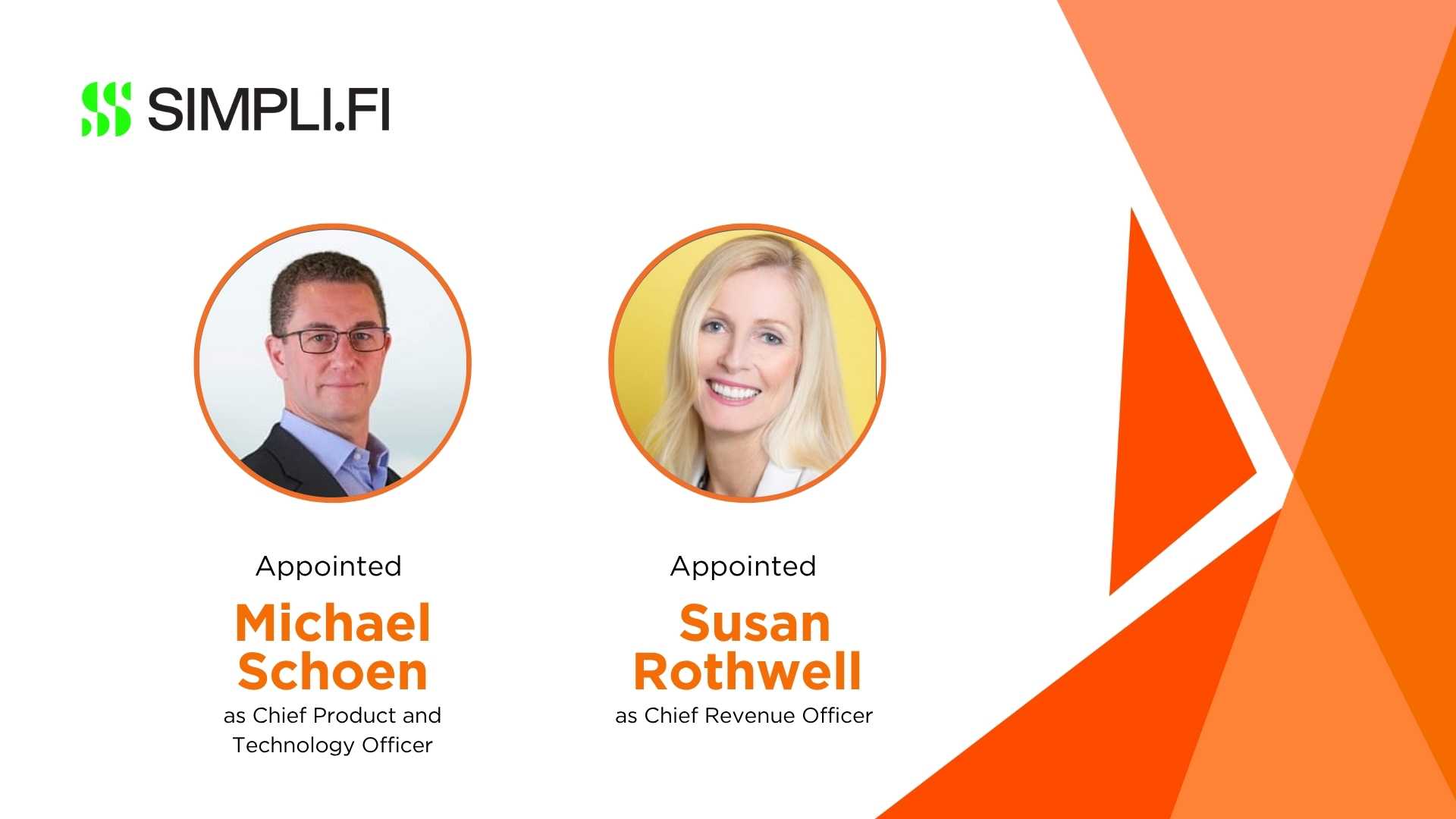
Adtech firm Simpli.fi is beefing up its executive bench as competition in programmatic advertising heats up. The company announced the appointments of Michael Schoen as Chief Product and Technology Officer (CPTO) and Susan Rothwell as Chief Revenue Officer (CRO)—two seasoned industry leaders with resumes that read like a who’s who of modern advertising tech. Both will report directly to CEO Cali Tran.
The hires aren’t just about filling roles—they signal Simpli.fi’s intent to double down on innovation, revenue growth, and large-scale advertiser solutions as brands demand more precision and accountability from programmatic platforms.
Neustar to Simpli.fi: Schoen’s Next Act
Schoen brings serious credentials to the table. At Neustar, he was instrumental in expanding the company’s ad tech and identity capabilities, a move that ultimately helped set up its $3.1 billion acquisition by TransUnion in 2021. His career also spans leadership roles at IPG’s Cadreon and early digital player LookSmart.
Beyond the corporate titles, Schoen is plugged into the industry’s forward-looking conversations—he sits on boards for MMA Global and AI 2030. For Simpli.fi, that means a leader with both operational chops and a voice in shaping the future of adtech.
From Epsilon to Efficacy: Rothwell Joins as CRO
On the revenue side, Rothwell’s track record is equally strong. At Epsilon, she managed a massive $1 billion revenue portfolio, while at Vericast she helped steer a $2.5 billion global operation to double-digit growth. Her specialty: helping brands, agencies, and publishers maximize programmatic impact at scale.
In her own words, Rothwell is laser-focused on helping Simpli.fi clients “reach new audiences, expand their impact, and deliver authentic, effective campaigns.” Translation: she knows how to keep the revenue flowing while programmatic undergoes its next round of upheavals—privacy restrictions, AI-driven targeting, and the cookieless future.
Why This Matters
The timing isn’t accidental. With programmatic spend expected to keep climbing, adtech vendors are under pressure to prove measurable impact and ROI in a noisy, privacy-first market. Rivals like The Trade Desk, Magnite, and MediaMath have all made executive moves in recent years to sharpen their positioning.
By adding Schoen and Rothwell, Simpli.fi is signaling it intends not just to keep pace but to set the pace in proximity-based and precision-driven advertising. If the hires pan out, expect the company to push further into territory where performance marketing, workflow automation, and data-driven media buying converge.
The Bottom Line
Simpli.fi’s new C-suite duo brings a combined four decades of adtech experience—and more than a few billion in managed revenue—to the table. It’s a bet that seasoned leadership will translate into sharper products, smarter strategy, and stronger client growth.
For agencies and brands navigating programmatic’s shifting terrain, that could be a welcome sign that Simpli.fi isn’t just staying in the game—it’s aiming to play offense.
Get in touch with our MarTech Experts.

Evofem Targets MENA Market With SOLOSEC Filing in UAE
business 2 Oct 2025
Evofem Biosciences is taking a big step toward expanding its footprint outside the U.S. The company’s MENA partner, Pharma 1, has filed for regulatory approval in the United Arab Emirates (UAE) to commercialize SOLOSEC® (secnidazole) 2 g oral granules, a single-dose treatment for bacterial vaginosis (BV) and trichomoniasis.
If approved, the launch would mark Evofem’s first commercialization of SOLOSEC in the Middle East, a region where prevalence of both conditions is strikingly high.
Why It Matters
Sexual health remains underserved in much of the Gulf Cooperation Council (GCC). Studies show that between 25% and 41% of women in MENA suffer from BV, while a recent meta-analysis found 4.7% of women in the region carry trichomoniasis—rates that spike significantly in higher-risk groups. For the UAE alone, that translates to roughly 1 to 1.7 million women affected by BV.
Unlike multi-day regimens that risk poor adherence, SOLOSEC delivers a complete course of therapy in a single oral dose, making it attractive to both physicians and patients navigating compliance challenges.
Pharma 1 Takes the Lead
Pharma 1, an Emirati healthcare company founded in 2019, holds exclusive commercialization rights for both SOLOSEC and Evofem’s PHEXXI®, a hormone-free contraceptive gel, across the Middle East. That includes the UAE, Saudi Arabia, Kuwait, and Qatar.
The company is responsible for distribution, sales, pharmacovigilance, and marketing, with Evofem positioned to benefit from an expanded revenue stream once approvals land.
“SOLOSEC treats both conditions with just one oral dose,” said Abdulwahab Atfah, CEO of Pharma 1. “We expect SOLOSEC will be extremely well received in the medical community, among women with BV, and by men and women afflicted with trichomoniasis.”
Global Context
While antibiotics for trichomoniasis exist, adherence remains a global problem. The World Health Organization estimates 156.3 million new cases worldwide every year—nearly half of them in men. Non-compliance and undiagnosed infections fuel continued spread, underscoring the need for simpler, more effective options like single-dose therapy.
Evofem CEO Saundra Pelletier called the UAE filing “an important milestone toward commercialization outside the U.S.” and confirmed the company expects Pharma 1’s first order “shortly after approval.”
The Bottom Line
If greenlit, SOLOSEC could become a valuable tool for physicians in the UAE and broader GCC, where sexual health awareness is growing but treatment compliance remains a persistent challenge. For Evofem, the move represents both geographic expansion and a potential new revenue channel as it looks beyond the U.S. market.
Get in touch with our MarTech Experts.
Page 186 of 1502