News

Ryff’s Scene Intelligence Redefines How Brands Measure Visual Impact
artificial intelligence 8 Oct 2025
At Advertising Week, Ryff unveiled what could become one of the most transformative analytics tools for advertisers and creators alike: Scene Intelligence™, a new AI-powered framework designed to understand how humans actually respond to visual content—beyond surface-level metrics like views and impressions.
Developed over three years and trained on hundreds of thousands of entertainment records, Scene Intelligence promises to bridge a long-standing blind spot in media measurement—helping marketers answer why content drives engagement and how it influences decisions like brand consideration or purchase intent.
“Scene Intelligence doesn’t just measure how many people watch or how they feel,” said Roy Taylor, Founder of Ryff. “It helps us understand why—and what kind of content drives action. This moves creative and marketing decisions away from guesswork and grounds them in science.”
Beyond Views: The Science of the Scene
For decades, the $600 billion entertainment and advertising ecosystem has relied on metrics that show reach—but not reaction. Scene Intelligence shifts that paradigm by analyzing over 2,000 visual attributes per scene, from object placement and composition to character interaction and pacing.
Using its proprietary Behavioral Environmental Descriptors (BEDs), the system generates four new metrics:
-
Scene Prominence Score (SPS) – measures visibility and impact of on-screen elements.
-
Scene Weighted Impact Score (SWIS) – evaluates overall influence across a full program.
-
Scene Consideration Potential (SCP) – predicts likelihood of brand consideration after viewing.
-
Purchase Pathway Score (PPS) – forecasts consumer actions post-exposure.
In early pilots, Ryff reports results that would make any brand strategist take notice:
-
95% model accuracy across platforms
-
45% boost in brand integration effectiveness
-
3.2x increase in purchase intent when content is optimized through Scene Intelligence insights
AI on the Cloud, Analytics in Real Time
Built on Oracle Cloud Infrastructure, the system leverages Ryff’s ALGO-C (content classification) and ALGO-D (behavioral prediction) models to process massive entertainment datasets in real time. Its ViewStream Intelligence™ module adds live viewership analytics across streaming and broadcast platforms—allowing brands to tweak campaigns mid-flight through a single, unified dashboard.
The tool will be available in three formats:
-
Enterprise API for studios and streaming platforms
-
Brand Intelligence Suite for agencies and advertisers
-
Creator Analytics for production companies and individual creators
Early adopters will also gain access to historical content analysis, predictive modeling for new releases, and competitive intelligence tailored to their industry.
Why It Matters
As the streaming market races toward $1.2 trillion by 2027 and video ad spend nears $450 billion, the ability to decode why audiences connect with certain scenes—and how that translates into commercial action—could redefine entertainment marketing strategy.
Scene Intelligence positions Ryff at the intersection of AI, psychology, and creative optimization. In an age when brands are fighting to hold viewer attention across fragmented channels, this kind of visibility into the emotional mechanics of content could become the new metric that matters.
At Advertising Week, Ryff unveiled what could become one of the most transformative analytics tools for advertisers and creators alike: Scene Intelligence™, a new AI-powered framework designed to understand how humans actually respond to visual content—beyond surface-level metrics like views and impressions.
Developed over three years and trained on hundreds of thousands of entertainment records, Scene Intelligence promises to bridge a long-standing blind spot in media measurement—helping marketers answer why content drives engagement and how it influences decisions like brand consideration or purchase intent.
“Scene Intelligence doesn’t just measure how many people watch or how they feel,” said Roy Taylor, Founder of Ryff. “It helps us understand why—and what kind of content drives action. This moves creative and marketing decisions away from guesswork and grounds them in science.”
Beyond Views: The Science of the Scene
For decades, the $600 billion entertainment and advertising ecosystem has relied on metrics that show reach—but not reaction. Scene Intelligence shifts that paradigm by analyzing over 2,000 visual attributes per scene, from object placement and composition to character interaction and pacing.
Using its proprietary Behavioral Environmental Descriptors (BEDs), the system generates four new metrics:
-
Scene Prominence Score (SPS) – measures visibility and impact of on-screen elements.
-
Scene Weighted Impact Score (SWIS) – evaluates overall influence across a full program.
-
Scene Consideration Potential (SCP) – predicts likelihood of brand consideration after viewing.
-
Purchase Pathway Score (PPS) – forecasts consumer actions post-exposure.
In early pilots, Ryff reports results that would make any brand strategist take notice:
-
95% model accuracy across platforms
-
45% boost in brand integration effectiveness
-
3.2x increase in purchase intent when content is optimized through Scene Intelligence insights
AI on the Cloud, Analytics in Real Time
Built on Oracle Cloud Infrastructure, the system leverages Ryff’s ALGO-C (content classification) and ALGO-D (behavioral prediction) models to process massive entertainment datasets in real time. Its ViewStream Intelligence™ module adds live viewership analytics across streaming and broadcast platforms—allowing brands to tweak campaigns mid-flight through a single, unified dashboard.
The tool will be available in three formats:
-
Enterprise API for studios and streaming platforms
-
Brand Intelligence Suite for agencies and advertisers
-
Creator Analytics for production companies and individual creators
Early adopters will also gain access to historical content analysis, predictive modeling for new releases, and competitive intelligence tailored to their industry.
Why It Matters
As the streaming market races toward $1.2 trillion by 2027 and video ad spend nears $450 billion, the ability to decode why audiences connect with certain scenes—and how that translates into commercial action—could redefine entertainment marketing strategy.
Scene Intelligence positions Ryff at the intersection of AI, psychology, and creative optimization. In an age when brands are fighting to hold viewer attention across fragmented channels, this kind of visibility into the emotional mechanics of content could become the new metric that matters.
Get in touch with our MarTech Experts.

Persona Earns FedRAMP Authorization, Expanding Secure ID Verification to U.S. Federal Agencies
security 8 Oct 2025
When it comes to digital identity verification, trust is everything—and Persona just earned a major badge of it. The San Francisco-based verified identity platform has officially achieved FedRAMP® Authorized status, joining the ranks of cloud service providers cleared to work with U.S. federal agencies.
This milestone, now listed on the FedRAMP Marketplace, validates that Persona’s platform meets the U.S. government’s strict security and privacy standards after an in-depth third-party assessment. The company’s authorization at the Low Impact level allows it to support agencies where data risks are limited, while its FedRAMP Ready designation at the Moderate Impact level signals plans to expand further into higher-sensitivity operations.
Meeting the Public Sector’s Identity Challenge
Fraud prevention and identity management remain persistent headaches for federal and state agencies—especially as more services go digital. Persona’s authorization arrives as government organizations ramp up modernization efforts to cut waste, reduce fraud, and improve access to critical services.
“There aren’t many identity verification providers that offer the public sector a comprehensive and adaptable identity platform,” said Robert Kozyra, Public Sector GTM Lead at Persona. “Persona’s FedRAMP statuses position us to support federal agencies’ digital transformations while maintaining the security and privacy standards that government operations demand.”
Persona’s modular identity framework is designed to be flexible—agencies can deploy the exact tools they need today and add more later. Its suite covers document verification, biometric checks, fraud detection, and case management—all while integrating with major enterprise systems like Microsoft Entra ID, Cisco Duo, and Okta.
Four Core Government Use Cases
-
Automating onboarding – Persona’s Dynamic Flow system auto-approves or flags user verifications using signals from IDs, selfies, and databases.
-
Stopping fraud before it scales – AI-powered fraud detection models and device/network analysis help detect deepfakes and identify bad actors.
-
Verifying employees and contractors – Persona’s “Know Your Employee” (KYE) process ensures secure onboarding and compliance across systems.
-
Streamlining investigations – Custom case management dashboards integrate with Salesforce, Zendesk, and others for centralized oversight.
Security-First Design
Security and compliance are at the heart of Persona’s pitch. The company employs multi-layered encryption, continuous vulnerability scanning, and third-party audits to protect sensitive government data. Its security stack aligns with federal and global standards like FIPS 140-2, NIST SP 800-53, SOC 2 Type II, and ISO 27001.
Additionally, Persona offers granular data residency controls, giving agencies more oversight into where and how citizen data is stored, accessed, and redacted—an increasingly vital requirement for public-sector modernization.
The Bigger Picture
With governments accelerating digital transformation and the U.S. identity verification market projected to surpass $30 billion by 2030, Persona’s FedRAMP Authorization plants it firmly in the mix of trusted providers shaping the next era of secure government digital identity.
For the public sector, the win goes beyond compliance—it signals a move toward a more frictionless, fraud-resistant digital future.
Get in touch with our MarTech Experts.

JWP Connatix Taps CTO David LaPalomento to Lead Streaming & CTV Growth
advertising 8 Oct 2025
JWP Connatix is doubling down on streaming and connected TV (CTV) — and it’s putting one of its most trusted leaders in charge. The company announced that David LaPalomento, its longtime Chief Technology Officer, has been promoted to General Manager of Streaming & CTV, a newly created role designed to accelerate growth in one of the company’s most strategic business areas.
LaPalomento, a key figure in JWP Connatix’s evolution from a video tech platform to a major force in digital media infrastructure, will now lead product strategy, go-to-market execution, and commercial outcomes for the streaming and CTV division.
“David has been instrumental in building the technology foundation of JWP Connatix,” said John Nardone, CEO of JWP Connatix. “He’s trusted by our engineers, respected by our customers, and uniquely skilled at translating complex technical challenges into business opportunities. Streaming and CTV represent one of the biggest growth opportunities in front of us, and David is the perfect leader to deepen our engagement in this space.”
Bridging Engineering and Business
LaPalomento’s promotion underscores JWP Connatix’s commitment to blending technical depth with market agility. As CTO, he helped steer the company through years of rapid expansion and platform modernization, strengthening its capabilities in video monetization, AI-driven content optimization, and cross-platform analytics.
Now, in his new role, he will focus on expanding partnerships with broadcasters, OTT platforms, and streaming services—segments driving the most aggressive ad spend and innovation across digital media.
“I’m excited to take on this new role at such a pivotal moment for both JWP Connatix and our industry,” said LaPalomento. “Streaming and CTV are evolving rapidly, and our combination of technology and expertise puts us in a position to help customers solve their toughest challenges.”
Strengthening the Leadership Bench
LaPalomento will continue collaborating closely with the engineering organization and newly appointed CTO Pat DeAngelis, ensuring product and technical continuity as JWP Connatix scales.
His appointment also follows a series of high-profile executive hires, including Dr. Kenneth Rona as Chief AI Officer, Chris Maccaro as Chief Revenue Officer, and John Mruz as Chief Marketing Officer—moves that reflect the company’s push toward its next growth chapter at the intersection of AI, CTV, and monetization technology.
As streaming platforms face mounting pressure to optimize ad performance and user experience, JWP Connatix’s reshaped leadership lineup signals a clear strategy: double down on technology-driven innovation to capture the next wave of growth in connected TV.
Get in touch with our MarTech Experts.

UK B2B Marketers Bet on AI and Data to Power 2026 Growth, Finds Anteriad
artificial intelligence 8 Oct 2025
B2B marketing in the UK is having a moment. According to Anteriad’s latest research, 87% of UK B2B marketers reported revenue growth in the past year, and 89% met or exceeded their pipeline and growth goals. Even more striking, 70% said marketing directly drove that growth, signaling a shift in how organizations view marketing’s role in business performance.
The report, titled “UK B2B Marketing Edge: 5 Opportunities to Drive Growth in 2026,” offers a snapshot of what’s working—and what’s next—for marketers across the UK and EMEA. The takeaway? AI and data are no longer optional—they’re essential to staying competitive.
Five Opportunities Defining 2026 Strategy
Anteriad’s report highlights five areas where leading marketers are focusing their energy:
-
Balancing short- and long-term growth – 39% of UK marketers say pressure for immediate results remains their biggest challenge.
-
Improving data quality – Poor-quality data continues to be the top barrier to effective marketing performance.
-
Putting AI to work – 40% credit AI with helping them meet role expectations, while nearly half (48%) say it’s advanced their careers.
-
Personalizing at scale – Demand is rising for AI-driven personalization that feels human and seamless across channels.
-
Forging strategic partnerships – High-growth companies are increasingly outsourcing to specialist partners to gain speed and precision.
The AI and Data Imperative
“B2B marketers are proving their impact, and those embracing data and AI are leading the way,” said Lynn Tornabene, Chief Marketing and Product Officer at Anteriad. “As we move into 2026, the opportunity is clear: integrate these elements to accelerate growth and sharpen competitive advantage.”
That message hits home at a time when many marketing teams are rethinking their tech stacks. With generative AI reshaping content workflows and predictive analytics driving more informed pipeline decisions, marketers who can operationalize AI and clean data are setting the performance benchmark.
Anteriad, whose clients include Indeed, ServiceNow, and Qlik, says its goal is to help marketers go beyond campaign-level success and link marketing performance directly to business outcomes—a metric that’s quickly becoming the new standard in B2B growth strategy.
B2B marketing in the UK is having a moment. According to Anteriad’s latest research, 87% of UK B2B marketers reported revenue growth in the past year, and 89% met or exceeded their pipeline and growth goals. Even more striking, 70% said marketing directly drove that growth, signaling a shift in how organizations view marketing’s role in business performance.
The report, titled “UK B2B Marketing Edge: 5 Opportunities to Drive Growth in 2026,” offers a snapshot of what’s working—and what’s next—for marketers across the UK and EMEA. The takeaway? AI and data are no longer optional—they’re essential to staying competitive.
Five Opportunities Defining 2026 Strategy
Anteriad’s report highlights five areas where leading marketers are focusing their energy:
-
Balancing short- and long-term growth – 39% of UK marketers say pressure for immediate results remains their biggest challenge.
-
Improving data quality – Poor-quality data continues to be the top barrier to effective marketing performance.
-
Putting AI to work – 40% credit AI with helping them meet role expectations, while nearly half (48%) say it’s advanced their careers.
-
Personalizing at scale – Demand is rising for AI-driven personalization that feels human and seamless across channels.
-
Forging strategic partnerships – High-growth companies are increasingly outsourcing to specialist partners to gain speed and precision.
The AI and Data Imperative
“B2B marketers are proving their impact, and those embracing data and AI are leading the way,” said Lynn Tornabene, Chief Marketing and Product Officer at Anteriad. “As we move into 2026, the opportunity is clear: integrate these elements to accelerate growth and sharpen competitive advantage.”
That message hits home at a time when many marketing teams are rethinking their tech stacks. With generative AI reshaping content workflows and predictive analytics driving more informed pipeline decisions, marketers who can operationalize AI and clean data are setting the performance benchmark.
Anteriad, whose clients include Indeed, ServiceNow, and Qlik, says its goal is to help marketers go beyond campaign-level success and link marketing performance directly to business outcomes—a metric that’s quickly becoming the new standard in B2B growth strategy.
Get in touch with our MarTech Experts.

Northbeam Unveils Clicks + Deterministic Views Model to Transform Attribution
digital marketing 8 Oct 2025
Northbeam, a leader in marketing attribution, today introduced its Clicks + Deterministic Views model—a first-of-its-kind solution that gives marketers a complete view of how campaigns drive purchases. Developed in partnership with Meta, TikTok, Snapchat, Pinterest, Axon, MNTN, and Vibe, the model ties verified ad views and clicks directly to first-party transaction data, eliminating the guesswork of traditional attribution.
Alongside the launch, Northbeam announced a strategic growth investment led by HighPost Capital and Silversmith Capital Partners, aimed at expanding platform integrations, scaling go-to-market efforts, and driving further innovation.
Closing the Attribution Blind Spot
Traditional click-only attribution models have long overlooked the impact of upper-funnel awareness and prospecting campaigns. Northbeam’s approach captures both clicks and verified views, allowing marketers to:
-
See beyond clicks with full campaign visibility
-
Quantify how awareness campaigns influence purchases
-
Achieve deterministic accuracy—every conversion is backed by verified data
-
Optimize budget allocation with confidence
-
Gain cross-platform clarity with integrated pixel and order data
-
Preserve privacy with clean room data processing
-
Reduce wasted spend by avoiding over-crediting last clicks
“Awareness ads are often undervalued because traditional attribution favors last-click interactions,” said Stas Goldobin, VP of Product at Northbeam. “Every conversion in our model is verified—marketers finally get a full picture from view to click to purchase, so they can move faster and invest smarter.”
Proven Results for Early Adopters
In early tests with leading direct-to-consumer brands, Northbeam’s new model delivered dramatic lifts:
-
283% increase in attributed transactions for a luggage brand
-
175% lift in attributed revenue for a top CPG company
-
550%+ lift in attributed transactions for a cosmetics brand
By providing a single source of truth, marketers can now measure the true impact of upper-funnel campaigns, optimize spend across channels, and confidently scale programs that drive revenue.
Strategic Investment Supports Growth
The accompanying strategic investment from HighPost Capital and Silversmith Capital Partners positions Northbeam to accelerate its product innovation and expand platform integrations.
“Northbeam isn’t just improving attribution—they’re rewriting the rules of performance marketing,” said David Moross, Co-Founder and CEO of HighPost Capital. “Marketers want truth over guesswork, and Northbeam delivers unmatched clarity, speed, and scale.”
“With HighPost joining as a new partner and Silversmith deepening their commitment, we’re positioned to help more businesses grow with confidence,” added Austin Harrison, CEO of Northbeam. “Our mission is to give marketers speed and certainty to act on what works—driving real results.”
Get in touch with our MarTech Experts.
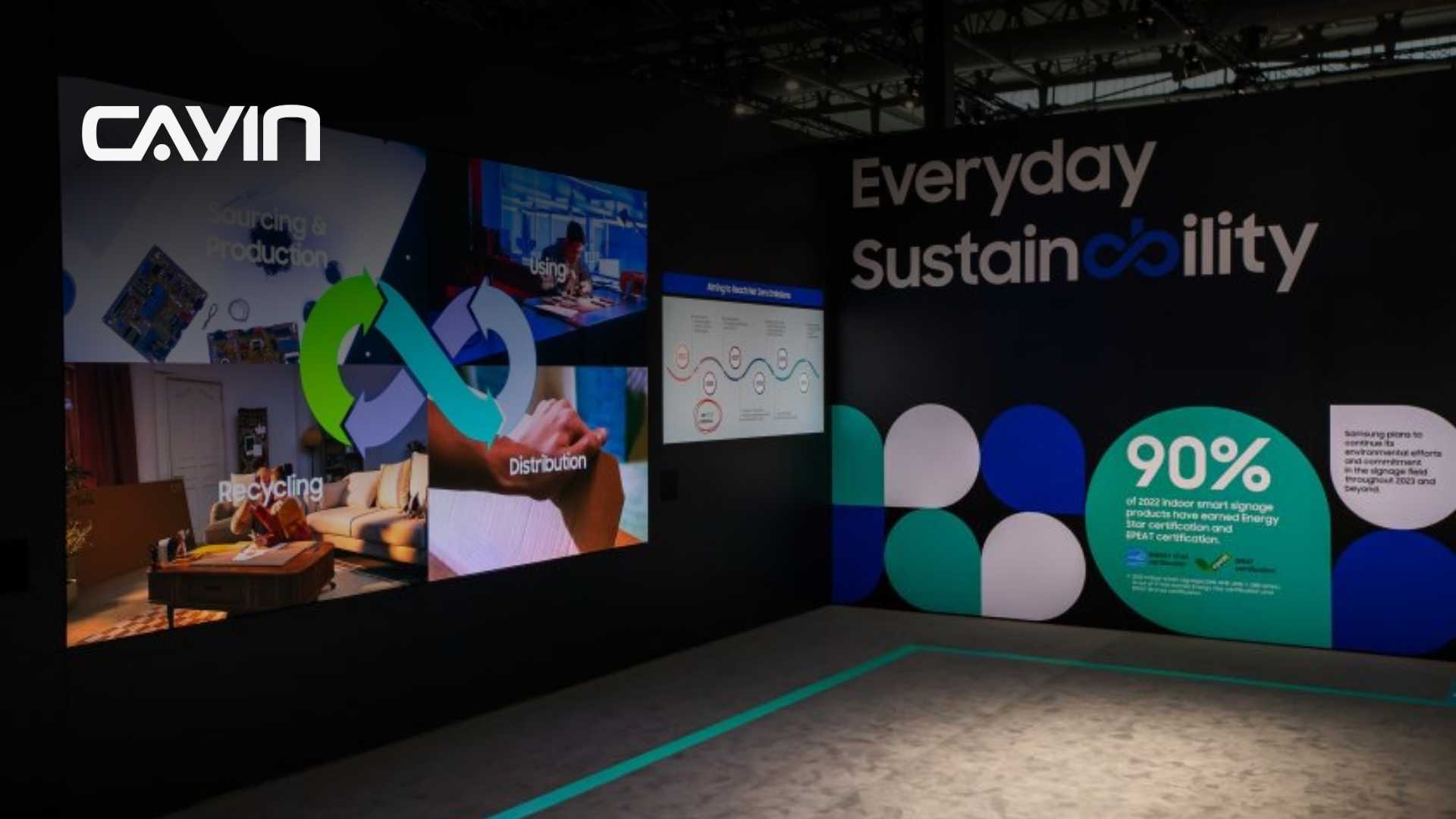
CAYIN Launches Universal e-Paper Integration for Real-Time Displays
technology 8 Oct 2025
CAYIN Technology is stepping up the digital signage game with its new universal e-Paper integration, designed to bring real-time data to any e-Paper device across industries. The solution targets efficiency, sustainability, and brand visibility, offering ultra-low power consumption, sunlight readability, wide viewing angles, and automated content updates.
Universal Compatibility for Any Device
CAYIN’s e-Paper solution works seamlessly with any e-Paper device, regardless of brand, model, or size. Businesses can integrate data from ERP, POS, transportation, hospital systems, and other databases—eliminating manual updates and ensuring displays always show the latest information.
Key features include:
-
Support for schedules, price lists, inventory, room statuses, and more
-
Customizable layouts with corporate branding and multilingual content
-
Automated updates for accurate, consistent displays
Driving ESG and Sustainability Goals
The integration helps organizations meet environmental, social, and governance (ESG) objectives. Its paperless approach and low energy use significantly reduce carbon footprint while extending device lifespan. Benefits include:
-
Energy savings and reduced environmental impact
-
Elimination of printed materials
-
Long-lasting displays with minimal maintenance
Superior Readability and Practicality
CAYIN’s e-Paper displays offer crisp, high-contrast visuals, even under direct sunlight, with a 180° viewing angle, making them ideal for:
-
Outdoor signage and public spaces
-
Transportation schedules and wayfinding
-
Environments with varying light conditions
Multi-Industry Applications
The solution caters to a wide range of sectors, enhancing operational efficiency and brand image. Typical use cases include:
-
Corporate offices and classrooms: meeting and class schedules
-
Retail: promotions, product pricing, and inventory updates
-
Healthcare: patient and room status boards
-
Factories and logistics: production and operations displays
With its universal compatibility and focus on sustainability, CAYIN’s e-Paper integration promises to streamline communication, reduce costs, and deliver consistent, real-time information across multiple industries.
Get in touch with our MarTech Experts.

Gladius Communications Acquires Kylee Social to Boost Digital & Social Capabilities
digital marketing 8 Oct 2025
Gladius Communications, a leader in strategic and transformation communications, has acquired Kylee Social, a boutique digital and social media agency, to strengthen its data-driven creative and digital engagement capabilities.
As part of the acquisition, Kylee Social founder Paige Knapp joins Gladius as Vice President, leading the firm’s new digital and social media practice. This move positions Gladius to deliver fully integrated communications programs, combining high-level strategy with measurable digital activation and community management.
“Combining forces with Gladius gives our team the scale and strategic breadth to amplify the impact we've built for clients since our inception in 2020,” said Paige Knapp, CEO of Kylee Social. “By integrating a data-driven approach and social-first expertise with Gladius’ strategic depth, we can help clients create greater business impact, stay ahead of trends, and tell richer stories than ever before.”
The acquisition expands Gladius’ capabilities across change communications, transformation, public relations, thought leadership, employee engagement, digital content, social media management, analytics, and paid social advisory services. Clients of both firms benefit from integrated planning and execution with measurable outcomes.
“Paige and the team at Kylee Social are absolute experts in the digital and social media space,” said B.J. Talley, Founder & President of Gladius Communications. “Together, we are better positioned to help clients accelerate growth, build stronger audience communities, and measure clear, meaningful business outcomes.”
This marks Gladius’ second strategic acquisition since October 2024, following its purchase of Marcoux Strategies, which strengthened its corporate communications solutions for the defense technology sector.
By combining strategic counsel with robust digital execution, Gladius aims to offer modern, comprehensive communications solutions that drive measurable business results in an increasingly digital-first world.
Get in touch with our MarTech Experts.

Oracle Puts AI Agents to Work Inside Fusion Apps to Supercharge CX
artificial intelligence 7 Oct 2025
Oracle is giving customer experience (CX) leaders a new set of AI-powered teammates. The company today rolled out role-based AI agents within Oracle Fusion Cloud Applications, designed to help marketing, sales, and service teams automate grunt work, connect data, and unlock new revenue opportunities—all without leaving their existing workflows.
The move expands Oracle’s ongoing AI-first push across its cloud ecosystem, reinforcing its strategy to bake intelligence directly into business processes rather than layering it on top.
“AI agents are transforming customer engagements from reactive, manual, and cumbersome processes into proactive strategies that enable organizations to scale quality experiences,” said Chris Leone, EVP of Applications Development at Oracle. “The new agents in Oracle Fusion Applications help CX leaders deliver personalized support, deepen loyalty, and unlock new revenue opportunities.”
Automating CX—Without the Add-Ons
Unlike standalone AI tools that require third-party integrations, Oracle’s new agents come prebuilt and embedded within Fusion Applications at no extra cost, running natively on Oracle Cloud Infrastructure (OCI).
That means users can deploy AI-driven recommendations, automations, and insights without toggling between platforms—a notable differentiator as enterprises wrestle with tool sprawl across their CX tech stacks.
Marketing Gets Smarter
For marketers, Oracle has introduced several agents focused on precision targeting and personalization.
-
Account Product Fit Agent: Prioritizes customers most likely to buy using predictive scoring and engagement data.
-
Buying Group Definition Agent: Maps roles and personas across industries using title algorithms for sharper campaign focus.
-
Model Qualification Agent: Identifies high-fit audiences and flags data gaps to improve campaign performance.
Together, these tools give marketers a data-driven way to home in on accounts most ready to convert—something B2B teams often spend months trying to do manually.
Sales Teams Get a Digital Wingman
Sales reps get their own AI assistants that act like digital wingmen during deal cycles:
-
Deal Advisor Agent surfaces expert insights from internal documentation and case studies.
-
Quote Assistant and Product Recommendations Agent streamline quoting and upsell suggestions.
-
Lead Advisor Agent condenses lead activity and recommends next-best actions.
-
Contract and Quote Summary Agents summarize legal and deal data for quick decision-making.
This constellation of sales-focused AI tools aims to reduce friction in deal management—an area where Oracle competes directly with Salesforce’s Einstein GPT and Microsoft’s Copilot for Dynamics 365.
Service Gets Predictive Intelligence
Customer service, long the toughest nut to crack in CX, is also getting smarter automation.
-
Triage and Escalation Prediction Agents analyze service requests to predict and prevent escalation risks.
-
Self-Service and Request Creation Agents automate ticket generation and guide customers through DIY resolutions.
-
Work Order Agent pre-fills technician dispatch details to ensure first-time resolution.
-
Service Request Clustering Agent identifies recurring issues to reduce duplicate work.
These capabilities put Oracle in the same league as Zendesk’s AI for CX and ServiceNow’s workflow automation, but with the advantage of deep native integration across the entire Fusion ecosystem.
Why It Matters
AI agents are becoming the backbone of enterprise software, redefining how customer-facing teams operate. Oracle’s approach stands out for embedding AI directly into its applications—no separate subscription, no retraining required.
It’s a bold statement in the broader AI arms race among enterprise SaaS vendors, where differentiation increasingly hinges on native intelligence rather than bolt-on features.
With these role-based AI agents, Oracle isn’t just promising efficiency—it’s positioning Fusion Cloud as a fully automated operating system for customer experience.
Get in touch with our MarTech Experts.
Page 182 of 1502