News
MANSCAPED Enters Middle East Retail Market Through MME Partnership
digital marketing 27 Nov 2025
MANSCAPED is expanding its global retail ambitions with a major push into the Middle East. The men’s grooming company has appointed Monster Middle East (MME) as its regional distributor, marking its first official retail entry into the UAE and opening the door to broader GCC expansion.
The move comes after four years of consistent demand through MANSCAPED’s Amazon channel, which established a strong consumer base even without physical retail presence. With an addressable male population of 11.5 million in the UAE alone, the region offers fertile ground for MANSCAPED’s premium grooming products and lifestyle-first brand positioning.
Expanding From Online Demand to Physical Retail
The UAE will be MANSCAPED’s seventh global retail market, reinforcing its strategy to scale in high-growth regions. Catherine Cronin, VP of Retail at MANSCAPED, said the Middle East represents a strong opportunity for premium consumer goods, particularly in grooming and lifestyle segments.
“Entering the UAE as our seventh global retail market marks a significant milestone,” Cronin said. “Through our partnership with MME, we are uniquely positioned to win across critical channels. The travel retail ecosystem, particularly major hubs like Dubai International Airport, will enable us to reach today’s dynamic, global luxury consumer.”
A Full Grooming Ecosystem Arrives in the GCC
MANSCAPED is introducing its most advanced lineup yet, covering beard, body, and personal grooming tools. The portfolio includes:
-
The Lawn Mower 5.0 Ultra – A dual-head groin and body trimmer equipped with SkinSafe® technology.
-
The Beard Hedger – A high-torque beard grooming machine built for precision sculpting.
-
The Handyman – A compact dual-action face shaver for quick grooming needs.
-
The Dome Shaver Pro – Designed for head shaving with FlexAdjust control and a five-blade system.
-
The Chairman Pro – A premium electric foil face shaver with interchangeable heads.
-
The Weed Whacker 3.0 Pro – A nose, ear, and eyebrow trimmer built for detail work.
The breadth of the lineup signals MANSCAPED’s evolution from a niche disruptor to a global grooming platform serving multiple use cases.
MME Brings Regional Scale and Market Access
MME, a key distributor known for scaling premium consumer brands, will support MANSCAPED’s entry into both retail and travel retail channels. The company’s award-winning distribution network will place MANSCAPED products across major lifestyle and electronics retailers, as well as duty-free stores in key airports—including Dubai International Airport, one of the world’s busiest hubs for international travelers.
“We’re proud to bring MANSCAPED to the Middle East, a region that celebrates innovation, grooming, and confidence,” said Jehangir Khan, Regional Director at Monster Middle East. “Our partnership reflects a shared commitment to performance, design, and premium experiences.”
Setting the Stage for Regional Growth
With rising demand for personal grooming and luxury self-care products in the GCC, MANSCAPED’s partnership with MME positions it to capture both local consumers and international travelers passing through the region’s major airports. The strategy blends premium retail presence with lifestyle-driven brand messaging—an approach well-suited for a market where personal care, quality, and presentation carry significant cultural importance.
MANSCAPED’s entry underscores a broader shift in the region’s grooming market: from basic hygiene toward technology-enabled, design-forward grooming ecosystems.

Lincah Acquires Orderfaz to Accelerate Southeast Asia’s Social Commerce Infrastructure Push
digital marketing 26 Nov 2025
Lincah is tightening its grip on Southeast Asia’s booming social commerce market. The Indonesia-based commerce infrastructure platform has acquired Orderfaz, bringing its technology, platform, and customer base under the Lincah umbrella. The deal signals Lincah’s intent to build a unified, multi-market infrastructure for social and creator-led commerce—an industry expected to surpass $100 billion in the region by 2028.
The acquisition also comes at a moment when merchants across Southeast Asia are shifting aggressively toward social platforms as their primary sales channels. With over 23,000 merchants already onboard and 8.3 million buyers served, Lincah now processes more than half a million transactions each month across Facebook, Instagram, WhatsApp, YouTube and Google Ads. Orderfaz’s integration expands those capabilities, with improved platform reliability and a more streamlined seller experience.
Indonesia: The Engine of Regional Social Commerce
Indonesia has become the anchor of Southeast Asia’s social commerce landscape. The country contributes more than 52 percent of the region’s GMV, fueled by millions of MSMEs who rely on social platforms for their primary sales activity. With the market growing at an annual rate between 17 and 25 percent, infrastructure providers capable of scaling quickly are gaining a competitive edge.
“Indonesia is emerging as the anchor market for social commerce in Southeast Asia,” said Juan Lesmana, president of the group at Lincah. He noted that integrating Orderfaz would help create a more stable and scalable foundation, giving sellers a uniform experience as they expand across markets.
Strengthening Community Influence and Market Insight
Lincah’s broader ecosystem is fortified by community leaders Yudha Trisna and Muhamad Azis Rifai, who add deep knowledge of seller needs, market behavior and grassroots community dynamics. Their experience helps ensure that product development and strategy mirror the realities of Indonesia’s fast-evolving commerce environment.
Leadership experience also runs deep at the group level. Lesmana, who previously held roles at TikTok (Bytedance) and Tokopedia, joined Lincah in early 2025 as both angel investor and senior advisor. His expanded executive role now focuses on strategic alignment, organisational expansion and the long-term vision for a multi-market commerce infrastructure.
A Unified Platform for Regional Scale
The company has also named Mohamad Iqbal as group CEO. He will oversee platform integration, operational cohesion, and the push into new Southeast Asian markets. The combination of leadership expertise, community insight, and scalable platform design positions Lincah to compete more aggressively across the region.
As Lincah prepares to extend its footprint into Malaysia, the company is leaning heavily into infrastructure investments. These include enhancing platform resilience and boosting long-term scalability to support rising demand from sellers and partners. Orderfaz’s full absorption strengthens that roadmap, allowing Lincah to offer greater value along with stronger multi-country readiness.
Entering the Region’s Next Growth Phase
The acquisition underscores a pivotal moment for social and creator-led commerce in Southeast Asia. With sellers demanding unified tools, real-time visibility, and cross-platform reach, the race to build modern infrastructure is accelerating. Lincah’s move positions it as a credible regional challenger capable of delivering end-to-end support to merchants navigating fragmented social ecosystems.
Backed by a roadmap that prioritizes long-term capital alignment and strategic investment, Lincah is now entering its next growth phase. If the company executes on its unified platform vision, it could emerge as a dominant force in a market that continues to scale at breakneck speed.

Bluestar Alliance Taps Atomic Fashion Marketing to Drive Dickies’ Growth in Australia and New Zealand
marketing 26 Nov 2025
Bluestar Alliance is moving quickly to scale its newest acquisition. The brand management company has signed a licensing agreement with Atomic Fashion Marketing for Dickies across Australia and New Zealand—a region where the workwear icon already enjoys deep cultural relevance.
The deal marks a strategic step in Bluestar Alliance’s global expansion roadmap for Dickies. The brand is best known for its roots in workwear, yet its influence spans far beyond utility apparel. For decades, Dickies has been embraced by craftsmen, skateboarders, musicians and subcultures worldwide. Australia, in particular, has evolved into one of its strongest global communities.
A Longstanding Partnership with Regional Impact
Atomic Fashion Marketing isn’t new to the Dickies story. The company has championed the brand for nearly 15 years, reshaping its regional presence through focused product direction, sharp trend alignment and culturally aware campaigns that resonated with a diverse audience.
After securing the Dickies license directly from the founding family years ago, Atomic set out to reposition the brand. That strategy paid off. Its sustained approach to regional storytelling and product curation significantly broadened Dickies' reach and helped the label cement a strong cultural footprint across Australia and New Zealand.
Perhaps most notably, Atomic helped expand the brand’s category mix. Historically known for pants, Dickies saw tops and womenswear emerge as major growth drivers—together accounting for nearly half of sales in the region. For a global heritage brand, this shift represents a meaningful milestone.
Strengthening Global Strategy with Proven Local Execution
Bluestar Alliance sees this existing momentum as the ideal foundation for the next phase of global expansion.
“Partnering with licensees who have demonstrated success in their markets is central to our global strategy for Dickies,” said Ralph Gindi, COO of Bluestar Alliance. “Atomic has played a defining role in establishing Dickies as a cultural staple across Australia and New Zealand, and we look forward to building on this strong foundation together.”
For Bluestar, the decision aligns with a broader pattern: investing in licensees with deep local insight and a strong track record of amplifying heritage and lifestyle brands.
What’s Next for Dickies in the Region
Under the renewed partnership, Atomic will continue to deliver apparel built on Dickies’ workwear DNA while tailoring collections specifically for Australian and New Zealand consumers. As global appetite for workwear and utility-inspired fashion continues to rise, the company aims to strengthen the brand’s presence across new categories and cultural touchpoints.
Atomic’s ability to interpret and revitalize iconic brands remains a core advantage. With Dickies now officially part of Bluestar Alliance’s global portfolio—and with Atomic steering regional execution—the brand enters a new chapter positioned for accelerated growth, expanded relevance and renewed cultural momentum across ANZ.
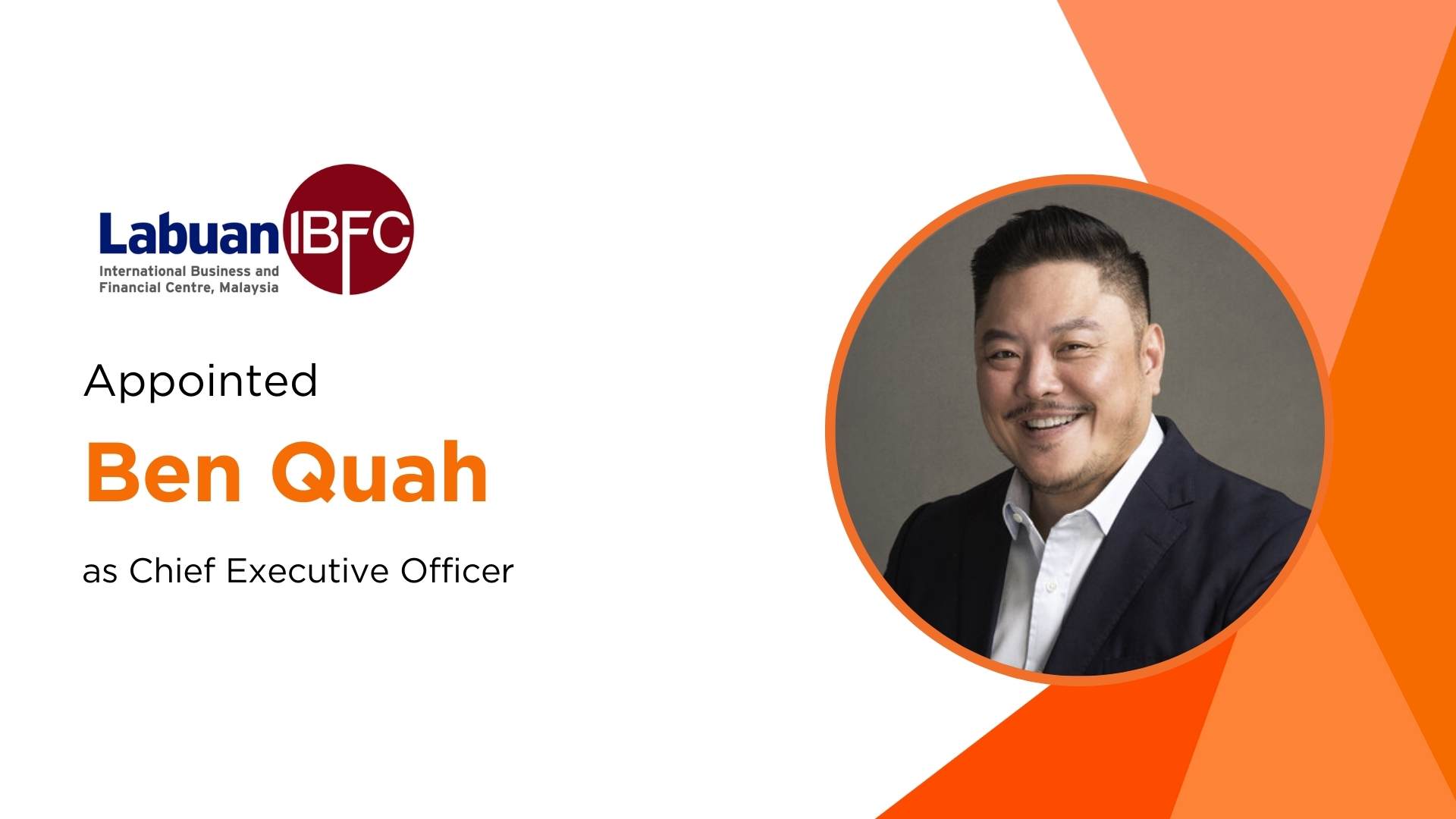
Labuan IBFC Names Ben Quah CEO as It Sharpens Its Regional Financial Ambitions
digital marketing 26 Nov 2025
Labuan IBFC has a new leader at the helm. The jurisdiction’s marketing and promotional arm, Labuan IBFC Inc., has appointed Ben Quah as Chief Executive Officer, marking a strategic move as the financial centre steps up its regional ambitions in cross-border finance, fintech, and wealth management.
The appointment arrives at a time when Asian financial hubs are racing to define their value propositions amid shifting global standards, tighter regulatory expectations, and growing demand for seamless, multi-jurisdictional financial infrastructure.
A Leader Built for Regional Expansion
Quah brings more than twenty years of experience across fintech, digital marketing, and regional business development. His track record spans Malaysia, Mainland China, Hong Kong SAR, and Singapore, reflecting a career shaped around scaling businesses in high-growth markets.
He has built and launched multi-jurisdictional platforms, structured cross-border partnerships, and worked closely with regulators and financial institutions. His experience across both traditional finance and fast-moving tech ventures positions him well for a jurisdiction that must now balance innovation with regulatory discipline.
Recognised for what industry observers describe as “strategic clarity,” Quah is known for converting vision into practical execution. His work often centres on ecosystem building—connecting regulators, banks, and technology providers to unlock long-term, sustainable growth.
Strengthening Labuan IBFC’s Position
As CEO, Quah will steer efforts to reinforce Labuan IBFC’s status as a premier international business and financial centre. His mandate includes:
-
Deepening collaboration across priority markets
-
Enhancing engagement with regulators and industry bodies
-
Expanding Labuan IBFC’s reach in wealth management, captive insurance, fintech, and Islamic finance
-
Elevating the jurisdiction’s competitiveness as global standards evolve
These focus areas reflect broader industry trends. Wealth flows across Asia continue to rise. Demand for alternative risk structures is increasing. Fintech innovation requires regulatory frameworks that balance agility with oversight. And Islamic finance remains a high-growth pillar across several Asian economies. Labuan IBFC aims to sit at the centre of these intersecting opportunities.
A Relationship-Driven Leadership Approach
Quah’s early months in the role have been marked by active engagement with partners across the region. His leadership philosophy, which he describes as “inside-out living,” emphasises authenticity, clarity of purpose, and values-driven decision-making. These principles guide his ecosystem-first approach to building long-term, collaborative growth.
“Collaboration is fundamental to Labuan IBFC’s future,” Quah noted. “By aligning closely with partners in our key markets, we can further enhance our role as Asia's leading cross-border financial hub. I am committed to cultivating the relationships that will unlock long-term, sustainable growth for the region.”
Why This Appointment Matters
Labuan IBFC sits in a competitive landscape among regional financial centres, each vying for capital, regulatory trust, and digital-finance relevance. Quah’s blend of fintech expertise, regional understanding, and cross-border execution could help sharpen Labuan’s positioning as global financial flows continue to diversify beyond traditional hubs.
If the centre can align innovation with regulatory confidence—while deepening ties across Asia—it may strengthen its role as a preferred jurisdiction for international business, asset structuring, and digital financial services.
For now, the appointment signals Labuan IBFC’s intention to accelerate those ambitions with a leader comfortable operating at the intersection of finance, technology, and regional strategy.

TDI Appoints Vanessa Sussman as CMO to Accelerate Global Growth and Brand Expansion
digital marketing 26 Nov 2025
TDI is strengthening its leadership bench as geopolitical risk and regulatory complexity push demand for sharper intelligence. The advisory and risk insights firm has appointed Vanessa Sussman as Managing Director and Chief Marketing Officer, reporting directly to the CEO. Her mandate: elevate TDI’s global brand and align marketing with the firm’s commercial ambitions as it expands into new markets.
The appointment comes at a moment when risk intelligence firms are racing to differentiate amid rising demand for due diligence, investigations and geopolitical analysis. TDI aims to use marketing as a strategic lever, not a support function, as it broadens its mix of advisory services and software-driven solutions.
A CMO Built for Complex Markets
CEO Jay Truesdale said Sussman’s background makes her a natural fit. “She brings a strategic mindset and a unique background at the intersection of global affairs, marketing, and communications,” he noted. “Her ability to distill complex issues into clear, compelling narratives will be essential as we grow and continue to help clients navigate an increasingly challenging geopolitical and regulatory landscape.”
Sussman’s résumé spans more than 25 years across corporations, advisory firms, media organizations and nonprofits. Most recently, she served as Chief Marketing and Communications Officer at Eurasia Group and GZERO Media, where she helped the brands cut through noise in a crowded geopolitical insights market. Before that, she led private markets communications at Nuveen, following senior roles at Morningstar. Her earlier experience includes Group SJR, Council of the Americas, Foreign Policy, and the U.S. Mission to the United Nations.
Her track record reflects fluency in translating global complexity into digestible stories—an increasingly valuable skill as companies across industries confront political volatility, fragmented regulation and heightened operational risk.
Strengthening TDI’s Global Position
At TDI, Sussman will oversee global brand strategy with a focus on scaling visibility among decision-makers in corporate, financial, and government sectors. She will also align messaging and go-to-market initiatives with the firm’s expanding portfolio, which now includes software tools designed to streamline due diligence and risk monitoring.
The firm’s growth ambitions extend across regions and sectors where geopolitical intelligence is becoming a competitive advantage. Sussman’s role will be central in sharpening how TDI communicates that value.
Beyond her professional background, Sussman remains active in civic and educational communities. She serves on the board of City Year New York and sits on the communications advisory board for the Museum of American Finance. She holds degrees from Johns Hopkins SAIS and the University of Wisconsin–Madison.
With Sussman joining the leadership team, TDI signals a more assertive go-to-market stance—one built on clarity, credibility, and sharper global storytelling.

8x8 Wins Gold for UX Design as 8x8 Engage Sets a New Standard for Customer-Facing Teams
digital marketing 26 Nov 2025
8x8 has added another award to its shelf. The business communications provider has earned Gold in the User Experience Design – Business category at the 2025 London Design Awards for 8x8 Engage, its mobile-first workspace built for customer-facing teams. The win highlights a broader industry shift: CX tools are finally being re-engineered for the way modern teams actually work.
Solving the Fragmented CX Tool Problem
Most service teams operate across chaotic workflows. They bounce between channels, switch devices, and loop in subject-matter experts across billing, HR, IT, and finance. Yet their tools rarely keep up. Disconnected apps slow reaction times, fracture context, and create the kind of inconsistency customers notice immediately.
8x8 Engage tackles that pain head-on. The platform unifies voice, video, SMS, RCS, WhatsApp, Messenger, and Viber into a single, intelligent workflow supported by AI. The design centers on mobility and collaboration, two needs that frontline workers can’t compromise on. The result is a workspace built around speed, clarity, and continuity rather than patchwork communication.
Why the Award Matters
The London User Experience Design Awards prioritizes products that reduce friction and elevate accessibility. Winning Gold in this category signals that 8x8 Engage is not only functional, but also built on thoughtful design decisions that reflect how frontline and expert teams behave in real conditions.
“User experience is a business differentiator,” said Dhwani Soni, Global Vice President of Product Design and User Experience at 8x8. She emphasized that the solution was shaped for both mobile field teams and the experts behind the scenes. By reducing cognitive load and simplifying information flow, 8x8 Engage improves resolution times, strengthens collaboration, and boosts customer satisfaction. In CX, those improvements translate quickly into measurable performance gains.
A Core Pillar of the 8x8 Platform for CX
8x8 Engage sits inside the broader 8x8 Platform for CX, which merges contact centre capabilities, unified communications, and APIs into one scalable ecosystem. This architecture allows organisations to standardise their communication stack, accelerate adoption, and eliminate the operational drag that comes with juggling multiple vendors.
More importantly, it extends consistent workflows to every customer-facing role, even those outside the traditional contact centre. That’s a notable contrast to legacy platforms that often limit advanced tools to agents alone. As industries confront rising customer expectations and shrinking patience, aligning every team around the same communication backbone becomes a strategic advantage.
The Bigger Picture
The recognition for 8x8 Engage arrives at a moment when CX software is being reshaped by user-centric design, AI-powered context, and mobile-native workflows. Competitors across unified communications and contact center software are racing to deliver similar experiences, yet few platforms unify such a wide range of channels without adding operational complexity.
For organisations facing higher service demands with fewer resources, solutions like 8x8 Engage point to a future where UX isn’t a cosmetic feature but a performance driver. When communication flows without friction, teams spend less time hunting for information and more time resolving issues. In today’s market, that efficiency is what customers remember.

Comviva Launches GenAI-Powered MobiLytix RTM to Push Marketing Toward Full Autonomy
marketing 25 Nov 2025
Comviva is pushing enterprise marketing into its next major upgrade. The company has introduced a GenAI-powered version of MobiLytix Real Time Marketing (RTM), a platform built to help marketers move faster, personalize better, and edge closer to autonomous campaign orchestration. In a market racing toward AI-first tools, this launch signals an aggressive step beyond traditional marketing automation.
The revamped MobiLytix RTM aims to reduce manual work across the entire campaign lifecycle. Marketers can generate content variations, tailor messages to different audiences, and turn analytics into actionable insights using conversational prompts. This shift transforms complex reporting into straightforward guidance, sparing teams from spreadsheet acrobatics and accelerating campaign deployment.
Comviva also highlights speed as a core advantage. With AI-driven decisioning and a library of pre-built templates for high-impact use cases, teams can take campaigns from concept to launch in a fraction of the time. The platform’s flexibility gives marketing teams greater independence, reducing reliance on slow-moving operational cycles.
The most compelling addition, however, may be what comes next. Comviva has laid the groundwork for autonomous AI agents—systems designed to learn from performance data, optimize creative and offers in real time, and operate within marketer-defined governance. It’s a glimpse at the industry’s emerging direction: intelligent agents that don’t simply automate tasks, but continuously optimize the entire marketing engine.
Manish Singhal, Head of MarTech Solutions at Comviva, framed it bluntly: marketing is shifting from automation to autonomy. “Tomorrow’s marketing teams won’t just run campaigns; they will command an intelligent ecosystem of AI agents that plan, optimize and execute in real time,” he said. According to Singhal, the new MobiLytix RTM gives marketers the tools to increase conversions, lift retention, and sustain long-term growth—without losing control over strategy or brand governance.
Under the hood, MobiLytix RTM brings scale. The platform integrates more than 120 predictive and prescriptive AI models, tied together with a modern decisioning engine and a live, 360-degree customer profile. It supports multiple business lines and channels simultaneously, enabling granular personalization at enterprise velocity.
A redesigned UI and modular architecture round out the update. Marketers gain an improved journey-building workspace, faster collaboration tools, and real-time optimization capabilities. The platform’s design reflects the needs of digital-first businesses where campaign cycles are short, data volumes high, and customer expectations unforgiving.
Comviva’s credentials back the launch. MobiLytix already serves more than 300 million customers globally, supported by two decades of Customer Value Management expertise. With GenAI woven through the latest release, the company is positioning itself against modern marketing clouds and next-gen AI orchestration platforms that are rapidly entering the market.
The real story here is the shift in marketing operations. As enterprise marketers face rising pressure to personalize at scale, reduce costs, and prove revenue impact, tools like MobiLytix RTM are becoming less optional and more foundational. Comviva’s latest release suggests that autonomous marketing—once a buzzword—is starting to take shape in real deployments.

Digital Silk CEO Featured in Forbes Panel on What Clients Want Most From Agencies
marketing 25 Nov 2025
Digital Silk is ending the year with a visibility boost. The award-winning digital agency announced that its Founder and CEO, Gabriel Shaoolian, has been featured in a Forbes Agency Council Expert Panel exploring the services clients value most heading into 2026. The article, published on November 5, 2025, draws insights from 20 agency leaders across the U.S., reflecting the shifting priorities of brands navigating an increasingly competitive digital landscape.
The Forbes piece highlights a clear trend: clients aren’t just looking for incremental improvements—they want foundational shifts. Shaoolian’s contribution centers on website redesign, a service he believes plays a defining role in shaping user experience, site speed, conversion journeys, and long-term digital performance. In an era where digital channels drive the bulk of revenue, a site refresh can influence everything from paid visibility to organic search strength.
Industry Recognition That Signals a Broader Shift
Forbes’ Expert Panels are curated to surface perspectives from verified members of the Forbes Agency Council. They offer a concise view of what agencies are prioritizing and where brands are placing their budgets. In this case, topics ranged from digital strategy and branding to analytics and media performance, underscoring how multidimensional digital operations have become.
Shaoolian’s insight aligns with a growing reality: a modern website is no longer a static asset. It operates as the central hub of an organization’s digital ecosystem. Improvements to structure, messaging, navigation, or checkout flows ripple outward—enhancing campaign performance, strengthening SEO outcomes, and improving return on ad spend.
His commentary appears alongside leaders specializing in branding, creative development, and integrated strategy, supporting a broader narrative: brands want partners who can connect creativity, data, and performance.
Expert Panels as a Foundation for Deeper Thought Leadership
Forbes notes that Expert Panels often serve as a starting point for extended editorial contributions. Digital Silk plans to publish additional pieces that dive deeper into web performance strategy, experience design, and the rising expectations enterprise brands now place on digital platforms.
These upcoming articles aim to build on the themes introduced in the panel, offering more detailed guidance for organizations evaluating their digital priorities for 2026.
Verified Trends From Across the Agency Landscape
The panel surfaces several themes shaping client demand:
-
Website redesign as a performance lever
-
Clearer brand positioning for competitive markets
-
Improvements in user experience and conversion flow
-
Data accuracy, analytics hygiene, and attribution modeling
-
Digital channel trends reported across agencies
Together, these focus areas form a roadmap for brands looking to strengthen their digital operations while responding to new consumer expectations.
Leadership Perspective
“We appreciate the opportunity to contribute to discussions that reflect the evolving needs of today’s brands,” Shaoolian said. “Expert Panels offer a collective view of what clients are prioritizing and where agencies can support them. We look forward to expanding on these topics in future editorial contributions.”
The Forbes Expert Panel featuring Shaoolian is now live on Forbes.com, offering a snapshot of how agencies are realigning service offerings to meet client needs. Readers can explore the full article or visit Digital Silk’s website for insight into the agency’s approach to strategy, design, and performance.
Page 141 of 1501