News
EDO Data Finds Retail Ads During Thanksgiving and Black Friday NFL Games Outperform Primetime by 29%
video advertising 6 Dec 2023
New ad formats help live sports dominate Convergent TV ad engagement, driving business outcomes for retail brand advertisers
EDO, the TV outcomes company, reports new data detailing ad performance across live Thanksgiving weekend football matchups, including Amazon’s first-ever Black Friday game. EDO found that ads during live Thanksgiving and Black Friday NFL matchups outperform retail primetime ads by an average of 29%, and are 45% more effective than ad performance so far this NFL season.
The NFL’s first-ever Black Friday game served a strong start to the holiday shopping season thanks to new, innovative ad formats not previously seen in NFL broadcasts, especially for retailers. Consumers who saw a retail ad during the Black Friday game were 127% more likely to drive engagement than the retail primetime average.
Retail advertisers also saw success in live College Football matches. Ohio State vs. Michigan was the most effective Saturday College Football game for driving brand engagement for retail brands, with consumers 177% more likely to engage with brands compared to the retail primetime average, making it the top-performing game of the weekend at driving engagement for advertisers.
According to EDO’s TV outcomes data, the top brand advertisers, as measured by total TV-driven ad engagement indexed against the average brand’s ad impact during Thanksgiving and Black Friday NFL football broadcasts, were:
- Walmart (49.4x*).
- Dick’s Sporting Goods (42.7x*)
- Toyota (19.7x*)
- Meta (17.1x*)
- Kohl’s (14.3x*)
- Taco Bell (11.2x*)
- Lowe’s (11.0x*)
- Apple iPhone (10.7x*)
- Target (10.5x*)
- Verizon Wireless (10.5x*)
- Acura (10.4x*)
*Brand drove “##” as much engagement as the average advertising brand during Thanksgiving and Black Friday NFL football broadcasts.
On CNBC Squawk Box, EDO President & CEO Kevin Krim spoke about the impact of Black Friday football. “The NFL owns Thanksgiving,” said Krim. “Now, with a partner like Amazon, it owns Black Friday, too. What’s most fascinating is the ad innovation Amazon has introduced to the NFL. While I think it’s taken longer than anticipated to come to life, I can’t wait to see where it goes next.”
Top creatives, as measured by total TV-driven ad engagement indexed against the average creative’s ad impact during Thanksgiving and Black Friday NFL football broadcasts, were:
- Dick's Sporting Goods, Black Friday Starts Now ft. Kay Adams :15 (24.2x**)
- Walmart, New Black Friday Deals :15 (22.1x**)
- Acura, All-Electric ZDX - Unlock the Energy :30 (19.6x**)
- Solo Stove, Giving Up Smoke ft. Snoop Dogg :30 (16.3x**)
- Gillette, Gillette Labs with Exfoliating Bar :30 (15.9x**)
- Old Navy, Toboggan Full of Buckaroonies ft. Natasha Lyonne :15 (15.6x**)
- Porsche, The All Electric Taycan :15 (15.5x**)
- Target, Holiday Deals Black Friday Bullseye :30 (14.2x**)
- Walmart, 2023 Holidays - Find Your Thing V2 :30 (13.8x**)
- Ray-Ban, Next-Gen Smart Glasses :15 (13.6x**)
**Creative drove “##” as much engagement as the average advertising brand during Thanksgiving and Black Friday NFL football broadcasts.
Live sports inventory is more valuable than ever. Hollywood strikes have driven more eyes to unscripted TV and live sports — the latter consistently ranking as TV’s most effective programming for advertisers. Last year, the NFL accounted for five of the top 10 TV broadcasts most likely to drive consumers to engage with advertising brands. Even the league’s pregame shows were 68% more likely to generate engagement than the broadcast primetime average.
Measuring this highly impactful programming is a must for results-driven advertisers, and EDO’s real-time engagement data empowers brand, agency, and network marketers to connect consumer behavior to business outcomes across their Convergent TV campaigns.
Krim continued, “NFL week 12 matchups highlighted the strength of retailers and automakers heading into the last weeks of 2023. Ads with discount messaging generated bigger engagement spikes than their typical promos in past years. Retailers Target, Walmart, Amazon, and Old Navy had the most innovative campaigns, while automakers such as Hyundai and BMW also experienced strong ad performance with Holiday Sales Event campaigns. And though it wasn’t a holiday-themed ad, Kia’s new three-row, all-electric SUV, the EV9, was electrifying as the second most impactful ad on Black Friday.”

Resemble AI Launches Deepfake Detection Dashboard, Exposing Deepfake Audio in Real-Time
artificial intelligence 6 Dec 2023
Resemble AI, a leader in generative voice artificial intelligence, announced the release of its Deepfake Detection Dashboard, which uses Resemble AI's Detect technology to identify fakes from real audio in real-time.
Resemble AI, a leader in generative voice artificial intelligence, announced the release of its Deepfake Detection Dashboard, which uses Resemble AI's Detect technology to identify fakes from real audio in real-time.
With more than 1.5 million users and 35 years' worth of audio generated in the last 12 months, Resemble AI is leveraging its advanced knowledge and deep generative AI expertise to address AI fraud and safety concerns.
"Since our inception, Resemble AI has always prioritized safety and ethics when building generative AI and this year we have released several safeguards like our neural speech PerTh Watermarker and Resemble Detect," said Zohaib Ahmed, Co-Founder and CEO of Resemble AI. "This new real-time deepfake detection dashboard is another way we can empower our customers when it comes to combating AI-based fraud effectively and ensuring legitimacy."
This new Deepfake Detection Dashboard will give customers an comprehensive enterprise-grade solution to recognize deepfake audio across all forms of media just by simply uploading an audio file and letting the Resemble Detect solution do the work. Once the audio is uploaded, the data is then processed and run through a Deep Learning Model which is shared in an easy-to-read chart that provides a prediction score on the likelihood of it being a fake.
By leveraging Resemble's Detect solution, customers get benefits like:
- Scalability and Performance: Detect is able to handle large volumes of data and requests without significant delays. This scalability ensures uninterrupted performance even under the most demanding loads, vital for enterprise operations.
- Unparalleled Accuracy and Reliability: At the core of Resemble Detect is our advanced neural model, rigorously trained to distinguish between genuine and counterfeit audio with exceptional precision. Our continuous innovation in AI ensures that our model evolves alongside deepfake technology, maintaining high accuracy and minimizing false detections.
- Audio Upload: Users can upload their audio files directly onto the platform, supporting common formats such as WAV or MP3, making it accessible for a variety of audio content.
- Isolate Voice: The ability to isolate the voice while processing detect workloads improves accuracy and stability of the system. Voice Isolation is baked into Resemble Detect.

New Quark White Paper Analyzes Three Technology Strategy Options for Enterprise Content Lifecycle Management (ECLM) Success
automation 6 Dec 2023
Explains why a platform & ecosystem approach is the answer to supporting an evolving, complex enterprise content ecosystem
Quark Software, the global provider of content automation, intelligence and design software, today announced an essential resource to help enterprises create the right content operations infrastructure to support their future content strategy. A new white paper, “The New Era of Enterprise Content Lifecycle Management Strategies,” assesses three technology operations approaches often considered: In-House Development, Hybrid Vendor / Best-of-Breed and Platform & Ecosystem. It peels back the layers to share how enterprises evaluate these options to support their current and emerging content strategies.
The paper elaborates on the benefits of using a centralized, single-vendor automation platform that supports both current and future low-code technologies. This approach is emerging as the most secure and efficient way to facilitate an organization's ability to build a global, customized ecosystem to meet the emerging content needs of internal and external stakeholders.
“Content is the lifeblood of an organization, and this white paper discusses the common operations infrastructure choices so businesses can make smart content Ops decisions that will scale to support their content strategies,” said Emerson Welch, Global Vice President of Marketing at Quark. “We’ve helped hundreds of global organizations across multiple industries address their complex content challenges, particularly when regulation, automation and compliance are critical. Our ECLM platform Quark Publishing Platform NextGen, which integrates with the Microsoft ecosystem, carries the heavy lift, automating each stage of the content lifecycle and providing scalability to simplify specific enterprise use cases that have board-level significance.”
A Forrester Research Trend Report noted that “digitization at scale is necessary for true resilience and converting manual business and tools into flexible software applications is absolutely crucial – and this means custom development on the underlying platform.”
The Platform & Ecosystem approach transforms the landscape for content automation processes and workflows, opening the door for future innovation and process unification. It supports cloud deployment and low-code development with APIs while allowing the platform vendor to future-proof and maintain the core system. Developer portals and configuration tools are available to tailor the solution to meet personalized needs.
Enterprises reap the long-term benefits of an automation platform at the operations core as it makes it simple to build an ecosystem and customize it to meet the unique needs of the business. It simplifies content complexities, streamlines processes, fosters collaboration, and supports an omnichannel output to meet customer content needs and digital preferences.
Quark has utilized its 40+ years of content experience to speak to customers and assess the market requirements when developing our ECLM tool. We have taken the time to consider the three strategic options and have aligned to invest and innovate in the platform & ecosystem strategy, with Microsoft integration playing a key factor in this decision. Quark Publishing Platform (QPP) NextGen is the platform at the core, offering the most extensible, scalable technology solution for today’s enterprises to digitally transform and achieve content maturity and return on investment on a global scale.

Veriff Annual Identity Fraud Report Reveals 20% Rise in Fraud
identity management 6 Dec 2023
Payments, eCommerce, and video gaming platforms worst hit by alarming growth in fraud rates
Veriff, a global identity verification (IDV) provider, today announced the release of the Veriff Identity Fraud Report 2024. This analysis of global customer data presents a clear picture of the state of global identity fraud, including that overall fraud incidents are up 20% compared to last year's findings. This overall increase is a result of the rise in impersonation fraud and the availability of more advanced attack methodologies and tools.
As more advanced technology becomes available to fraudsters, detecting and defending against attacks and infiltration attempts becomes more difficult. This is particularly true in the gaming, payments, and eCommerce industries, which each saw respective fraud increases over the past year of 47.5%, 54%, and 40.3% compared to data from 2022.
"Fraudsters have more tools than ever, such as generative AI and deepfakes-as-a-service platforms, readily accessible to manipulate and steal someone's identity," said David Divitt, Senior Director of Fraud Prevention and Experience, Veriff. "Our defenses are advancing as well. By combining robust IDV technology with human expertise, we can beat fraudsters and build a secure, yet convenient, user experience. In fact, biometric authentication is one of the most vital tools available to us in this fight against fraud."
Identity fraud has been the most common type of fraud in 2023. According to Veriff's report, essentially 1 in 15 verification attempts (approximately 6%) was a person pretending to be someone else). Veriff's data also revealed that 85% of fraud was categorized as impersonation fraud, which includes the use of someone else's document or the person or document not being present for verification. The remaining 15% consisted of document fraud (13%) and digital and physical man-in-the-middle fraud (MITM) (2%). MITM involves coercing the victim to access accounts, make transactions, or even tech support scams.
Fraudsters are opportunistic and take advantage of the variety of tools at their disposal. They test out several methods on a target until they find a vulnerability, and then exploit that vulnerability until they are stopped. Therefore, it is impossible to adopt a one-size-fits-all approach or to imagine that a growing company can deploy just one tool to tackle every type of fraud it faces across a complex global and sectoral landscape. Instead, holistic fraud prevention strategies featuring a flexible, multi-faceted approach that employs biometrics, IDV, crosslinking and more are required to successfully combat fraudsters.
The Retail Media Divide Between Brands and Retailers: New Survey Reveals Nearly Half of Brands Do Not Plan to Work with Additional Retail Media Networks
reports 6 Dec 2023
Survey data reveals that the rise of retail media has caused a growing frustration between brands and retailers
Turbyne, the first solution built for retailers and designed to simplify retail media, today released a state of retail media industry report, “Retail Media Mirage: How the growing divide between retailers and brands threatens retail media’s potential.” The big takeaway: an in-depth survey of stakeholders on both sides shows a major disconnect between retailers and brands that needs to be resolved to ensure the channel meets the potential being forecast. The survey consists of over 300 retail media decision makers among brands and retailers.
“The cracks in retail media’s foundation have begun to show in a big way,” said Greg Stevens, Founder and President of Turbyne. “78% of brands surveyed said it is difficult or very difficult to justify increasing their investment. That’s a troubling statistic given that most brands work with just a handful of retail media networks; 40% of brands work with less than three retail media networks and another 42% work with four to six. The channel’s forecasted growth is dependent in part on brands expanding their spending to other retail media networks.”
Among a wide range of insights across multiple categories, the survey reveals that:
There’s a massive gap between retailers’ perceptions of the value their retail media networks (RMNs) deliver and brands’ actual satisfaction with those same RMNs.
- Underwhelming Experience: Only 6% of larger brands ($500m+) would give their retail media experience an A, despite 65% of retailers stating they expected their clients would grade it an A.
- Exhaustive Partner Proliferation: Brands, on average, worked with 25 media partners, 22 media agencies and 23 ad tech platforms over the previous three months.
- Complex Buying Process: 40% of brands cited having to execute individual buys across each RMN as one of the top three barriers to increasing their retail media spend.
- Subpar Value Proposition: The net result is that 44% of brands do not see it as worthwhile to work with any new RMNs in the next 24 months.
Brands and retailers agree on the solution: Simplifying the buying and selling process is critical.
- Both brands and retailers individually said that the key to growth was the ability to buy (or sell) and execute retail media across multiple channels/tactics in a single location.
- 47% of brands surveyed would spend budget with midsize retailers if they had the ability to buy and execute across multiple channels/tactics in a single location and 26% would do so if the platform offered an automated buying process.
- 70% of brands would invest more in retail media if in-store tactics were able to be combined with digital into a single retail media offering.

Alteryx Research Outlines the Challenges Facing the Enterprise of the Future
cloud technology 6 Dec 2023
Businesses overwhelmingly state the pervasive use of generative AI-driven automation will have the most impact on their organizations, and are responding to an AI world with increased focus on regulation and humanity
Alteryx, Inc., the Analytics Cloud Platform company, released independent research titled Defining the Enterprise of the Future. Using data from 2,800 IT and business decision-makers globally, the study reveals the three-year roadmap for how enterprises will operate in an era of AI-delivered intelligence.
As businesses prepare to navigate future challenges, embracing the power of accessible AI technology (and regulations) will help enterprises reinfuse transformations that shape the future, take the lead, and never look back. Results show that organizations have a strong appetite for policies and governance that regulate the use of responsible AI for this increasingly complex, data-driven future.
- 82% say that AI is already impacting what their organization can achieve, while 52% state they will invest in advanced technologies such as AI to respond to the changing market environment.
- 57% cite that AI uptake will become pervasive across all sectors and business functions, and 48% are excited about the combination of automation and AI in data analysis.
- 89% believe that regulations and standards around AI usage (including the use of generative AI) should be developed within their sector as it transforms the business landscape.
- 91% say that such policies would help businesses implement AI responsibly, and 49% cite the possibility of legal and ethical consequences from not having an ethical AI framework in place.
While the current AI landscape may fill the present employment market with fear and uncertainty, a ray of optimism emerges when envisioning the skills and talent needed to create the future workforce. There is a growing appreciation for prioritizing skills that are seen as distinctly human.
- 72% state that it is more important for their employees to be multi-skilled than specialized in a specific area. 61% named "creativity" the skill humans will contribute in a market environment shaped by AI, followed by "emotion" and "critical thinking".
- No singular technical skill emerged as the most important for the future workforce, but expertise in emerging technologies such as AI (28%) followed by computer software knowledge, data analysis and data mining top the list. Creativity and digital literacy are considered essential future professional skills.
- Surprisingly, 62% believe the advanced tech talent landscape will be characterized by a talent surplus over the next three years.
When envisioning the future, most organizations advocate for the pervasive use of AI to predict and react to change, but longer-term risks stemming from the evolving business landscape loom. While many identify AI as a key potential tool for success, it requires a combined approach of people, policies, and culture rather than technology alone to enable enterprises to plan, navigate, and overcome the unknown to thrive in an ever-changing business landscape.
- 51% list cybersecurity and data privacy threats, 43% globalization challenges, 41% high inflation and interest rates, and 35% changing consumer behavior as the market factors expected to most impact businesses.
- Ultimately, technology alone will not drive future success. 42% will invest more in understanding customer needs to make relevant offers, while 34% cite their organizations' need to demonstrate better ethical practices and environmental responsibility.
"While the future tech stack will require many emerging technologies, it will only be as good as your workforce's ability to use and benefit from it," said Trevor Schulze, CIO at Alteryx. "There is no one-size-fits-all solution to help businesses understand customer needs, drive efficiencies, and find their competitive edge. Only by empowering the entire workforce to take full advantage of the technologies to harness the data, compute, and automation resources available will you unlock full ROI potential and business value."
To be prepared for this increasingly complex, data-driven future, companies need to establish three key characteristics: ensure their journey to digital transformation strategies surrounding AI is successful, build a multi-skilled workforce capable of delivering business value from technology, and be able to leverage customer and market insights to pivot business strategies and operations to respond to external factors.
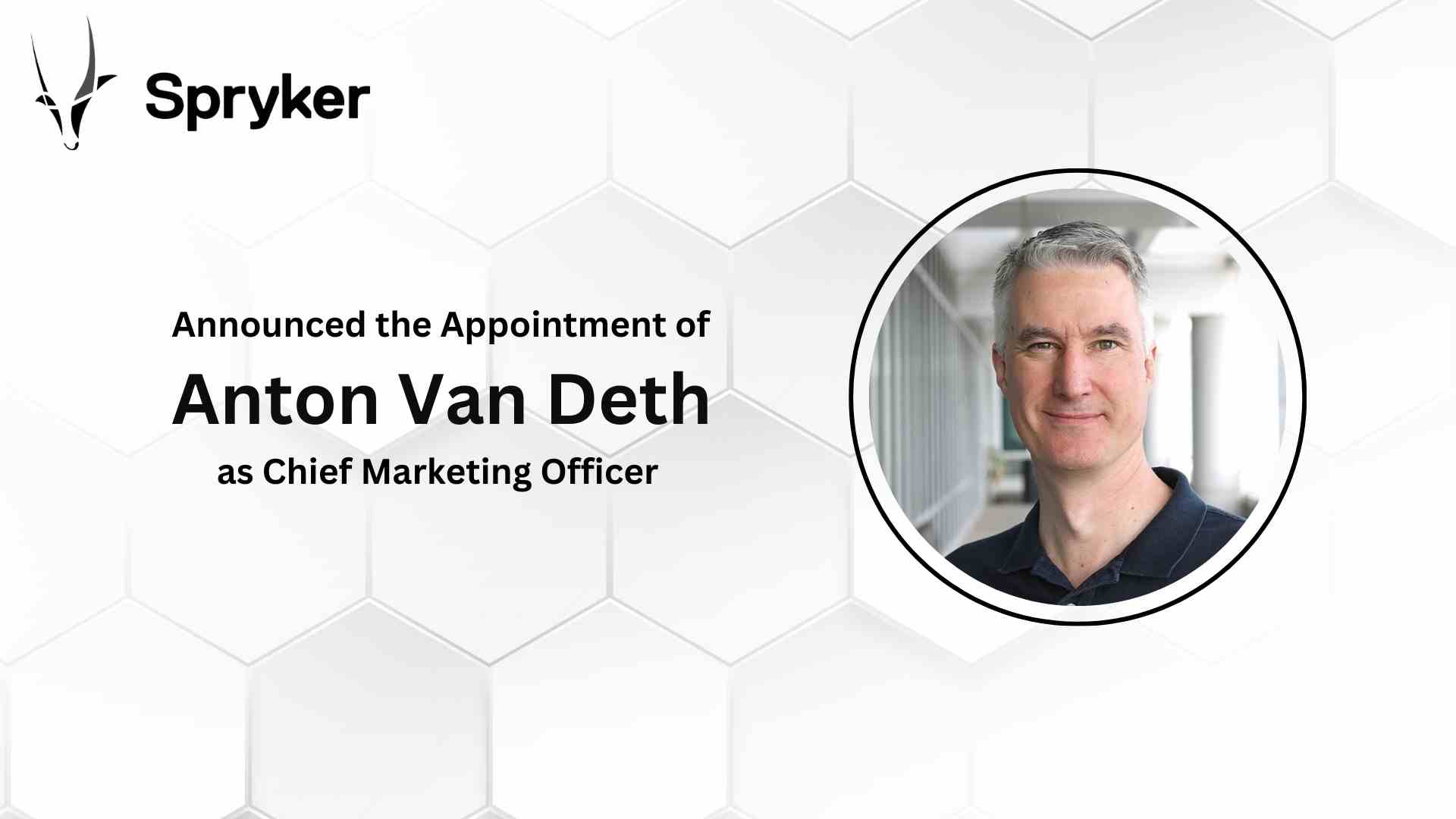
Spryker Appoints New CMO
digital transformation 6 Dec 2023
U.S.-based Anton van Deth joins with over 30 years of B2B marketing experience driving sustained growth and innovation
Spryker, the leading composable commerce platform for sophisticated use cases in B2B Commerce, Enterprise Marketplaces, and IoT Commerce, today announced that Anton van Deth will join the Spryker executive team as Chief Marketing Officer (CMO). Anton’s strong product and revenue marketing background, experience connecting with an international audience, passion for partner marketing, and deep interest in AI will enable Spryker to continue to grow their global presence and increase efficiency.
“I’m very excited to announce that I’m joining the Spryker Herd,” said Anton van Deth, CMO at Spryker. “Customers are being pushed to respond faster to an increasing range of challenges created by today's dynamic markets. Marketing must support this decision agility by leveraging the power of AI at every stage of the process. This means reducing the noise from promotion pollution and focusing on what's essential and relevant. This is where I believe marketing must go to be successful.”
Anton’s focus will be transforming marketing from a communications function to a revenue and decision engine that enables customers to quickly recognize the impact Spryker and its partners can have on their business and make the buying journey the best in the world. His global experience running demand generation, product, partner, and operations teams will enable him to best identify what will move the needle with efficient global campaigns.
“I am thrilled to share the news that Anton will join us as Spryker’s new CMO,” said Boris Lokschin, Co-founder and CEO at Spryker. “Anton is a highly experienced, future-oriented, world-class marketing expert, as well as an inspiring leader and human being. His expertise will propel our global marketing efforts to new heights by doubling down on the initiatives and ecosystem led growth approach we have underway and strategically designing new ones. He will strengthen our U.S. footprint and help us grow in this important and strategic core market.”
Having lived and worked in the U.S., Australia, Japan, and France, Anton brings a wide perspective to the business well aligned with Spryker’s global customer base. Anton previously worked at Symantec, Red Hat, Informatica, Apptio, and Protegrity. In these roles he helped to grow and transform teams while increasing efficiency as well as build solutions that drove significant and continued business results even years later.
Outside of work, Anton can be found exploring the world with his wife, flying planes, building and racing cars, woodworking, playing chess, and anything that teaches him something new.
Spryker recently announced efficiency-enabling product updates including new additions to the Spryker App Composition Platform as well as a new middleware that slashes development time, enables more personalized customer experiences, and shortens time-to-value.

Vade Announces Integration Capabilities with ConnectWise and Autotask through New Partnership with ApplicationLink
cybersecurity 6 Dec 2023
Vade, global leader in email security with more than 1.4 billion mailboxes protected, today announces a new partnership with Dutch company ApplicationLink to expand the integration capabilities of the Vade Partner Portal.
Managed Service Providers (MSPs) can now utilize the ConnectWise or Autotask integration to reconcile invoices from the Vade Partner Portal platform directly in their Professional Services Automation (PSA) system. This simplified reconciliation process allows growing MSPs to better scale their operations by leveraging crucial PSA capabilities. It also enables more MSPs to utilize Vade for M365's ability to block destructive phishing, business email compromise (BEC), ransomware, and more.
"These integrations make Vade's email security platform even more accessible to MSPs," said Adrien Gendre, Chief Technology & Product Officer and cofounder of Vade. "Billing can be easily configured with various degrees of automation, giving MSPs the flexibility to choose from automated license reconciliation to requiring manual checks for maximum control over final costs. Now, any MSP leveraging PSA integrations to manage their billing can easily integrate Vade's industry-leading email security into their existing services and workflows."
This partnership follows on the heels of the recently announced Remote Browser Isolation add-on, which expands Vade's powerful anti-phishing capabilities to protect users from mailbox to browser. The RBI add-on guards users from zero-day threats, hidden malware downloads, and other cyberthreats that originate from email-based links.
"With the game-changing Vade & PSA integrations, significant benefits are delivered to MSPs. This synergy allows MSPs to operate smarter, more efficiently, saving crucial time, and optimizing profitability," said Jeroen Faassen, Commercial Director of ApplicationLink. "Our gratitude extends to Vade for a partnership that propels us, Vade and MSPs forward. At ApplicationLink, our commitment to providing MSPs with a leading edge in process automation is the driving force behind our dedication to innovation."
Page 918 of 1491