News

Horizon Media Supercharges AI Ambitions With Trio of Strategic Tech Hires
artificial intelligence 2 Jul 2025
Horizon Media just made a heavyweight move in the media tech arms race. The largest independent media agency in the U.S.—and the world—is beefing up its AI and data muscle with a trio of seasoned tech execs, all aimed at accelerating development of its AI-native marketing platform, Blu.
This isn't about playing catch-up. It's Horizon planting a flag: the traditional agency model isn’t just outdated—it’s being dismantled in real time.
Meet the New Architects of AI-Led Media
To reshape how marketers navigate the increasingly complex media landscape, Horizon has appointed:
-
Krish Kuruppath as EVP, Head of Tech
-
Jeremy Flynn as EVP, Head of Product
-
Allan Johnston as SVP, Head of Program Management
All three report to Domenic Venuto, Chief Product & Data Officer, and their collective brief is clear: reimagine Horizon’s tech stack for a media world driven by AI, first-party data, and high-performance marketing intelligence.
A Platform Built for Marketers, Not Just Media Buyers
At the center of this push is Blu, Horizon’s AI-native integrated marketing platform—open, extensible, and designed to simplify what’s become a tangle of martech complexity. With this leadership team in place, Horizon is turning Blu into more than a platform; it's shaping it into the nerve center of next-gen media orchestration.
President Bob Lord didn’t mince words: “The marketing landscape demands more than incremental improvements… we’re helping clients simplify their martech stack with unprecedented confidence and transparency.” Translation: The agency-client dynamic is overdue for a rewrite—and AI is holding the pen.
Who’s Who in Horizon’s AI Power Play
Krish Kuruppath, formerly of Epsilon, brings deep expertise in identity resolution, clean rooms, and machine learning at scale—experience vital to Blu’s ambitions. At Epsilon, he helped architect platforms that married big data with high-touch personalization, a combination now considered table stakes in customer engagement.
Jeremy Flynn, best known for launching Clear Channel Outdoor’s RADAR analytics platform, knows how to build product roadmaps that actually land. Under his leadership, RADAR didn’t just measure OOH campaigns—it redefined what attribution could look like in physical media.
Allan Johnston rounds out the trio with a boots-on-the-ground operations mindset, forged at DEPT, Razorfish, and tech disruptors like WeWork. His knack for scaling agile teams and delivering in high-stakes environments makes him the program manager every product org wishes it had.
Why This Move Matters
Horizon’s strategy reflects a larger shift happening across media agencies: data-driven creativity is no longer optional—it’s the battlefield. While holding companies are consolidating and reshuffling their stacks (looking at you, WPP and Publicis), independents like Horizon are building from the ground up with AI at the core.
That’s a bold bet, but one that might pay off as marketers demand simpler, smarter tools that free them from vendor sprawl. With Blu, Horizon is trying to be the one ring to rule them all—at least when it comes to media intelligence, campaign execution, and measurable outcomes.
As AI transforms what’s possible in personalization and performance marketing, the firms that invest in engineering-led leadership now will likely set the pace. Horizon’s hires signal it's not just watching this trend—it wants to define it.
Get in touch with our MarTech Experts.

PharmaForceIQ Pushes Past Omnichannel, Pioneers Optichannel in Life Sciences Marketing
marketing 2 Jul 2025
In an industry where "omnichannel" has been the gold standard, PharmaForceIQ is flipping the script. The fast-rising player in life sciences marketing technology is betting big on something bolder—and smarter: optichannel engagement, where the focus shifts from being everywhere to being exactly where it matters.
And so far? That bet’s paying off.
From Pilot to Portfolio in 7 Months
PharmaForceIQ is currently the fastest-growing independent provider of precision customer engagement tech for the life sciences sector. Over the past year, it’s not only grown contract values multifold, but also pulled off rare feats—like expanding a pilot campaign with a major client from a single specialty brand to the entire specialty pharmaceutical portfolio in just seven months.
It helps that their client renewal rate sits at a clean 100%, which is practically unheard of in this corner of martech. But it’s the results-first strategy—data-driven, optimized in real-time—that keeps clients doubling down.
Optichannel: Smarter, Not Just More
While the term omnichannel has become marketing table stakes, optichannel is the emerging upgrade—a model where campaigns are continuously optimized to use only the most relevant channels for each target, in real time. The goal? Hyper-personalization that trims fat (and budget waste) while boosting campaign precision.
“PharmaForceIQ is transforming how the life sciences industry engages with customers by enabling rapid applications of real-world data,” said Stephen Onikoro, Chief Operating Officer. “Technology now empowers teams to leverage data in new ways, and optichannel maximizes personalization, effectiveness, and cost savings.”
Translation: Stop broadcasting. Start engaging—with actual relevance.
The Strategist Behind the Shift
At the helm of this strategic evolution is Hemal Somaiya, Chief Strategy Officer, whose approach to marketing disruption has earned serious recognition. In 2025 alone, Somaiya was named both a Women of Distinction honoree by MM+M and a 'Disrupter' in the PM360 ELITE 100—no small feat in a sector known for its regulatory complexity and glacial change cycles.
“I’m passionate about creating more meaningful value for HCPs and patients, not more noise,” said Somaiya. “PharmaForceIQ empowers commercial leaders to personalize outreach with advanced analytics, machine learning, and AI—not someday, but today.”
The life sciences space is under pressure to show ROI, reduce wasted ad spend, and—most importantly—engage prescribers and patients in ways that actually improve outcomes. Optichannel marketing helps brands move from mass repetition to micro-relevance, using data signals to make every campaign smarter and more human.
While larger legacy players are still wrestling with disconnected stacks and rigid workflows, PharmaForceIQ’s nimble, AI-first model is proving there’s a faster way to future-proof. Real-time optimization isn’t a pipe dream; it’s platform-native.
With a 100% renewal rate, rapid contract growth, and expanding client footprints, PharmaForceIQ seems positioned to challenge—and possibly leapfrog—some entrenched incumbents in the life sciences marketing tech world.
As the industry pivots toward value-based care and greater transparency, tools that actually deliver results (instead of dashboards full of lagging metrics) will define the winners.
PharmaForceIQ’s optichannel pivot might just be the wake-up call marketers didn’t know they needed.
Get in touch with our MarTech Experts.

Hennessey Digital Publishes List of Fastest-Responding Personal Injury Firms in the U.S.
marketing 1 Jul 2025
If you’ve ever filled out a “Contact Us” form on a law firm’s website and waited days for a response—if one ever came—you’re not alone. But according to Hennessey Digital’s 2025 Lead Form Response Time Study, things are changing. Slowly.
The digital marketing agency, well known for its laser focus on law firm SEO and understanding of Google’s evolving algorithm, just dropped its fifth annual report. It’s a data-heavy, no-fluff benchmark tracking how quickly U.S. law firms respond to online leads—and it offers a telling snapshot of how the legal industry is (and isn’t) adapting to digital-age client expectations.
After analyzing over 150,000 data points from more than 1,300 law firm websites nationwide, the verdict is clear: response times are improving, but not nearly fast—or consistently—enough.
Speed Is Winning the Race, but Many Firms Are Still at the Starting Line
Highlights from the 2025 study:
-
74% of personal injury firms now respond to online leads within a week, up from 59% in 2021.
-
25% reply in under 5 minutes—nearly doubling the 13% recorded four years ago.
-
But 26% of firms still don’t respond at all, leaving potential clients (and revenue) hanging.
That last stat is especially brutal. In an era where response time is directly tied to lead conversion—and when technology has made instant engagement almost effortless—a quarter of law firms are still ghosting potential clients.
Calls and Texts Surge as Email Takes a Backseat
Email may still be the fallback for legal comms, but the study shows that phone calls and texts are now the fastest-growing response methods. It's a sign that firms are starting to meet clients where they are: on mobile and expecting immediacy.
And while automation and AI are increasingly being adopted in intake processes, human connection is still king, according to Hennessey Digital CEO Jason Hennessey.
“Even with everything AI can do today, the data still points to one clear truth: in the legal space, personalization and real human connection still matter most,” Hennessey said.
Hard to argue with that—especially when clients are often reaching out during one of the most stressful times in their lives.
The Good, the Bad, and the Opportunity
The report doesn't just benchmark speed. It calls out the 423 fastest law firms in the U.S., each responding to leads in under 10 minutes, and ranks the top (and bottom) cities based on average response times.
Also included:
-
National and local lead response benchmarks
-
Emerging trends in website and lead form behavior
-
Common intake mistakes firms can avoid (hint: not responding is mistake #1)
-
Strategic advice on how to boost conversions using automation and AI—without losing the human touch
Notably, cities showing standout performance are leveraging personalized automation and quicker hand-offs from intake teams to attorneys, blending speed with substance.
Why It Matters for Legal Marketing—and Beyond
This isn’t just about speeding up email replies. It’s a wake-up call for an industry that’s historically been slow to digitize. Fast response time isn’t a nice-to-have anymore—it’s a competitive edge. Especially as client expectations, search behavior, and Google's local ranking factors continue to evolve.
“Firms can spend thousands on SEO and PPC,” said Cindy Kerber Spellman, Senior Director of Marketing at Hennessey Digital, “but if they’re not responding quickly to leads, that marketing investment is wasted.”
The study itself was born out of that disconnect—when one client’s digital visibility skyrocketed, but conversions didn’t. Hennessey’s team dug deeper and found the real issue: no one was answering the (virtual) phone.
Since then, the annual benchmark has become a go-to industry resource for firms looking to tighten intake, convert more clients, and boost marketing ROI.

Captello Dominates Event Lead Capture Market with 62% Traffic Share and 100% Positive Sentiment
marketing 1 Jul 2025
Captello Surges Ahead in Event Tech, Clinches Market Leader Status in Independent Audit
When it comes to event lead capture, Captello isn’t just playing the game—it’s owning the field. A recent independent audit by Soarion Digital, an AI-powered SaaS marketing agency, has placed Captello miles ahead of competitors like Mobly, iCapture, and Zuant in critical metrics like web traffic, audience engagement, and user sentiment.
With over 62% of market traffic, Captello is now the dominant force in the event lead capture and engagement space—a position built not just on reach, but on resonance. The audit highlights what many in the industry are already noticing: Captello is getting the clicks, keeping the attention, and converting the interest.
Traffic, Reach, and Rave Reviews
Soarion’s audit compared major players in the lead capture space, examining everything from site traffic to sentiment trends. Captello didn’t just win—it swept the leaderboard. The platform earned:
-
62% of total market traffic share
-
Top engagement scores across site and social channels
-
100% positive sentiment from users
That last point is especially rare in SaaS circles. While rivals posted mixed reviews, Captello's spotless score speaks volumes. According to Soarion's analysis, the positive buzz stems from both the product’s user-friendly features and Captello’s responsive support team—a one-two punch that’s building serious brand loyalty in a competitive space.
“The results not only speak to our strong market presence but also reflect the positive experiences our users have with our solutions,” said Brad Froese, VP of Marketing at Captello. “At Captello, we are committed to providing world-class support and a seamless user experience.”
Why It Matters
Event marketers are under more pressure than ever to prove ROI and generate measurable engagement. Lead capture isn’t just a trade show form anymore—it’s a high-stakes, tech-powered conversion funnel. Captello’s growth reflects a wider trend: the shift toward smarter, more interactive event experiences that prioritize data, user intent, and follow-through.
The fact that Captello leads not just in visibility but in sentiment suggests it’s not just winning traffic—it’s winning trust.
While platforms like Mobly and Zuant offer comparable core features, Soarion’s audit indicates they’re trailing in both user engagement and brand resonance. Captello’s edge? A combination of product usability, robust analytics, and fast-evolving gamification tools that keep attendees—and marketers—hooked.
A Wider Play in Event Tech
This recognition from Soarion Digital isn’t Captello’s first headline moment, but it’s a timely one. As the events industry rebounds post-COVID, hybrid and in-person experiences are demanding better lead capture strategies that integrate seamlessly with CRMs, automate follow-ups, and offer richer attendee data.
Captello’s platform checks all the boxes—and now it has third-party validation to prove it.

800.com Supercharges Ad Attribution with New Call Tracking for Google, Meta, and Bing
digital marketing 1 Jul 2025
800.com Launches Game-Changing Call Tracking Integrations for Google, Meta, and Bing Ads
In today’s performance-driven marketing world, tracking clicks isn’t enough—tracking calls is where the real ROI lives. Now, 800.com, the cloud-based business phone system trusted by thousands, is raising the attribution bar with new integrations that plug directly into Google Ads, Meta Ads (Facebook and Instagram), and Microsoft Bing Ads.
The move puts 800.com squarely in the must-have toolkit for digital marketers who want more than vanity metrics. With seamless call tracking across the top three ad platforms, businesses can now pinpoint which campaigns are actually driving high-intent leads—and which ones are quietly burning budget.
“Today’s businesses can’t afford to waste budget on underperforming campaigns,” said Tom English, VP of Marketing at 800.com. “By integrating with Google, Meta, and Bing, we’re giving customers the tools to attribute leads accurately and make smarter marketing decisions.”
Full-Funnel Attribution Just Got a Lot Smarter
800.com’s new features are aimed directly at solving a long-standing problem in digital advertising: offline conversion blindness. Until now, marketers could see impressions, clicks, and web form fills—but calls? Those were often lost in the fog.
With the latest integrations, users can:
-
Assign unique phone numbers to campaigns or ad groups
-
Use Dynamic Number Insertion (DNI) to link inbound calls to specific ads or keywords
-
Track call volume, duration, recordings, and lead quality
-
Analyze performance directly within the 800.com dashboard
It’s a marketer’s dream: real-time campaign-level call attribution, without needing a developer or third-party middleware.
Why This Matters in a Multichannel World
As businesses spread budgets across search, display, and social, attribution becomes harder—and more important. Especially in industries like legal, home services, healthcare, and automotive, where phone calls are the lifeblood of sales.
With omnichannel ad strategies now the norm, understanding what truly drives conversions is crucial. 800.com is making it easier to cut waste and scale what works, based on data from actual customer interactions—not just clicks.
And let’s not overlook the impact on agencies and consultants.
“It’s hands-down one of the most powerful tools I’ve used to manage my marketing clients,” said one G2 reviewer. “This has not only improved transparency with my clients but also allowed me to optimize ad spend with data-driven decisions.”
That’s the kind of reporting clients actually care about.
Setup in Minutes, Not Hours
No IT tickets required. 800.com promises a quick setup—you can activate integrations right from the dashboard and start capturing call data instantly. That ease of use is another selling point in a market where call tracking tools often come with clunky interfaces and steep learning curves.

Postmedia Launches ‘Lives Told’—A New Digital Memorial Platform Turning Everyday Legacies Into Lasting Stories
marketing 1 Jul 2025
Postmedia Debuts ‘Lives Told’—A Digital Tribute Service for Everyday Legends
Obituaries just got a thoughtful digital upgrade. Postmedia Network has launched Lives Told, a new memorial product designed to help families honor loved ones through professionally written, lasting life stories—no journalism degree or writing skills required.
While traditional obituaries often feel formulaic or fleeting, Lives Told aims for something more timeless: elevated storytelling, rich personalization, and permanent digital presence, all backed by Postmedia’s editorial know-how and trusted publishing platforms.
“When someone passes, memories and anecdotes are often scattered, incomplete, and hard to preserve,” said Aleya MacFayden, Senior Director of Product at Postmedia. “Lives Told makes it easy... turning memories into a lasting family legacy.”
More Than Just a Tribute, It’s Legacy-as-a-Service
Lives Told isn’t just another obituary service. It’s a full editorial production, rooted in narrative craftsmanship and designed for the many families who either didn’t publish an obituary or want to honor a loved one long after their passing.
The process is both personal and tech-driven:
-
Users are guided through a simple interview experience designed to spark rich memories.
-
Postmedia’s proprietary StoryCraft Tool adds local color, historical context, and narrative structure.
-
Professional editors then shape the story into a cohesive, beautifully written narrative, suitable for publication.
Each story lives online indefinitely—with no subscription fees—and includes photo galleries, memory collection tools, and shareable links for friends and family. Select stories will also be published in print editions of local newspapers in Canada and the U.S.
A Cultural Shift in Commemoration
As more families move away from traditional, high-cost funeral services, demand is rising for meaningful, personal, and digital-first alternatives. Lives Told taps into that shift—offering something both deeply human and editorially refined.
Unlike genealogy sites that focus on data or family trees, Lives Told zooms in on the emotional narrative: who they were, what they meant, and how they should be remembered.
It’s not a social media post, and it’s not a static obituary. It’s a life story—professionally written, preserved forever, and accessible to everyone.
Available Now in Canada, Expanding in the U.S.
Lives Told is now live across Canada through Postmedia’s network of trusted news brands. The service is also being introduced in select U.S. cities, with more partners and regions coming soon. American families can access it directly at LivesTold.com.
And this is just the beginning—Postmedia says additional partnerships with major North American and global media outlets are in the works.
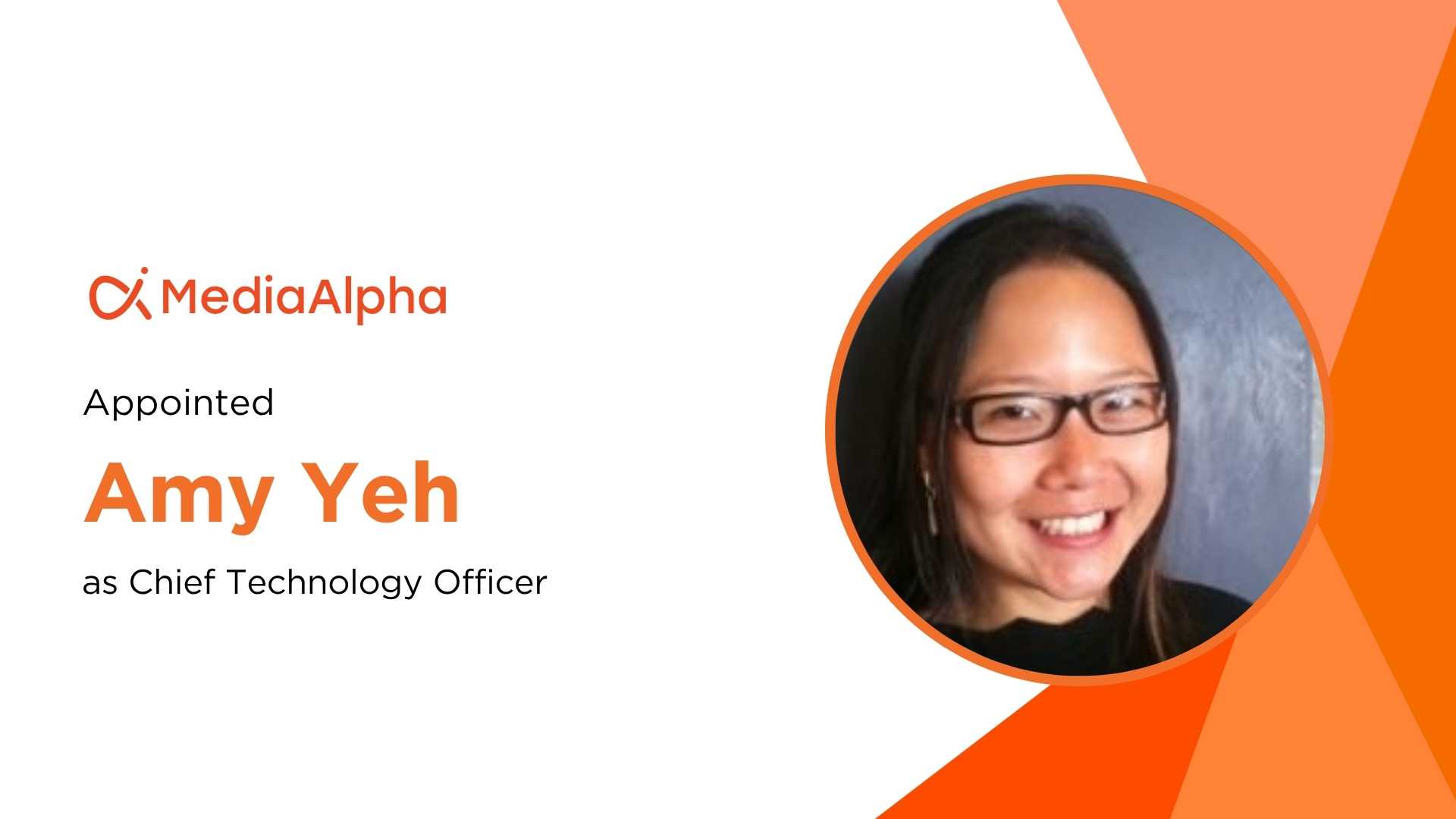
MediaAlpha Names Amy Yeh as CTO in Strategic Tech Leadership Shift
customer acquisition 1 Jul 2025
MediaAlpha Promotes Amy Yeh to CTO as Co-Founder Shifts to Chief Architect Role
In a calculated leadership transition aimed at future-proofing its technology roadmap, MediaAlpha (NYSE: MAX), a leading real-time customer acquisition platform for the insurance sector, has named Amy Yeh as its new Chief Technology Officer, effective immediately. Yeh succeeds co-founder Eugene Nonko, who will now serve as the company’s Chief Architect.
This move is more than a title swap—it reflects a strategic pivot for a company that has become a crucial behind-the-scenes player in the insurance marketing ecosystem.
“Amy has been a force multiplier across every dimension of our engineering team,” said Steve Yi, MediaAlpha’s Co-Founder and CEO.
Yeh, who joined MediaAlpha in 2015 and most recently served as SVP of Technology, has led key initiatives that scaled the company’s engineering operations and infrastructure, enabling MediaAlpha to stay ahead in a hyper-competitive, data-driven marketplace. Her fingerprints are on everything from platform reliability and data architecture to product innovation and engineering culture.
From Builder to Visionary
The transition comes as MediaAlpha sharpens its focus on long-term architectural strategy and platform evolution. Nonko, who co-founded the company in 2011 and served as CTO since its inception, is stepping into the newly created role of Chief Architect, where he’ll oversee technical vision, architecture design, and innovation initiatives.
“In my next chapter at MediaAlpha, I’m excited to focus on long-term architecture and innovation,” said Nonko. “Amy is the right leader to drive the next era of platform growth.”
It’s a passing of the torch that doubles as a scaling strategy—dividing tactical execution and long-horizon thinking between two seasoned leaders.
Why This Matters in the Insurance Martech Arena
For those unfamiliar, MediaAlpha operates at the intersection of martech and insurtech, helping major insurance carriers and agents acquire high-intent customers in real time. In an industry where milliseconds matter and algorithmic matching is mission-critical, platform efficiency and data intelligence are not just advantages—they're requirements.
Amy Yeh’s elevation signals a continued investment in platform velocity, data scalability, and engineering excellence at a time when insurers are under pressure to optimize marketing spend, reduce acquisition friction, and respond faster to customer needs.
And with customer acquisition increasingly influenced by AI, data interoperability, and automation, Yeh’s role as CTO positions MediaAlpha to compete not just with traditional lead-gen platforms, but with a new wave of performance marketing engines and embedded insurance ecosystems.
What’s Next for MediaAlpha?
MediaAlpha has kept a relatively low public profile compared to more consumer-facing insurtechs, but its behind-the-scenes influence is significant. This leadership change could sharpen its competitive edge as the market matures.
For investors and industry watchers, the split between operational leadership (Yeh) and architectural vision (Nonko) could be a sign that MediaAlpha is laying groundwork for faster iteration, deeper partner integrations, and scalable growth—without losing technical depth.
“My priority is to carry forward our culture of openness, technical excellence, and continuous learning,” Yeh said in a statement.

Snapchat Ads Get Smarter: IAS and Lumen Debut Attention Measurement Tool for Real Engagement Insights
digital marketing 1 Jul 2025
IAS Partners with Snap and Lumen to Launch Industry-First Attention Metric for Snapchat Ads
In a bold move to redefine how advertisers measure engagement, Integral Ad Science (Nasdaq: IAS) has announced a first-of-its-kind partnership with Snap Inc. and Lumen Research, bringing custom attention measurement to Snapchat ads via the IAS Signal platform.
This new tool goes well beyond traditional viewability metrics, combining Lumen’s eye-tracking data with IAS’s AI-powered media quality signals to deliver a Snapchat-specific “Attention Score”—giving advertisers unprecedented insight into how users actually engage with content on one of the world’s most visually immersive social platforms.
Why It Matters
The digital ad world is rapidly shifting from click-through rates and impressions to attention metrics, the new gold standard for campaign performance. Why? Because in a saturated media landscape, eyeballs don’t equal engagement. What advertisers really want to know is: Did the user actually pay attention—and did it influence behavior?
This partnership makes Snapchat the first social platform to offer third-party attention measurement, giving advertisers tools to:
-
Move beyond viewability and access predictive attention scores based on real eye-tracking data.
-
Compare performance across platforms, thanks to integrated reporting in IAS Signal.
-
Get third-party verification, bringing transparency and credibility to campaign metrics in a notoriously opaque social media environment.
The Tech Behind the Score
Lumen’s contribution is no small feat. The company boasts the world’s largest opt-in eye-tracking dataset, which powers its predictive attention model. By layering that on top of IAS’s existing media quality insights—like brand safety, fraud detection, and ad placement—the Snap Attention Score offers a holistic, actionable view of how ads are consumed.
“It’s what people pay attention to that truly shapes behavior,” said Mike Follett, CEO of Lumen Research. “This partnership gives advertisers on Snap the clarity and confidence to measure how attention drives action.”
Context: The Rise of the Attention Economy
This launch isn’t happening in a vacuum. Marketers are increasingly focused on attention as a KPI, especially as cookies crumble and measurement transparency becomes a competitive advantage. Snapchat, with its full-screen, vertical video format, is ripe for attention-based analysis—especially among Gen Z, who are more ad-skeptical and swipe-happy than ever.
IAS is capitalizing on this trend. In late 2024, the company rolled out its Quality Attention™ Optimization product in beta—using the same Lumen eye-tracking model now applied to Snap—to help advertisers activate attention insights in programmatic campaigns.
Snap’s inclusion means advertisers can now evaluate social, open web, and programmatic channels side by side in IAS Signal. It's a notable leap for a platform that’s traditionally guarded about third-party metrics.
Page 267 of 1505