News
LivePerson Named a Niche Player in 2025 Gartner Magic Quadrant for Conversational AI Platforms
customer experience management 19 Aug 2025
LivePerson (Nasdaq: LPSN), best known for powering enterprise-grade conversational AI, has landed on the 2025 Gartner Magic Quadrant for Conversational AI Platforms for the first time. Gartner recognized the company as a Niche Player, a designation that marks LivePerson’s debut in the highly competitive analyst report.
“In a rapidly evolving market, enterprise decision-makers rely on Gartner to help guide them toward trusted, innovative partners,” said John Sabino, CEO of LivePerson. “Being named in the Magic Quadrant reinforces that LivePerson is among the key players shaping this important category.”
Why This Matters
Gartner’s Magic Quadrant is one of the most closely watched reports in enterprise tech. Vendors are evaluated on two axes: Ability to Execute and Completeness of Vision. Being included—even as a Niche Player—signals to enterprise buyers that LivePerson has met strict criteria around platform capabilities, scalability, and innovation.
For LivePerson, which has long positioned itself as a trusted provider of conversational AI for digital-first brands, this recognition boosts credibility at a time when CIOs and CX leaders are aggressively evaluating AI solutions for contact centers, customer support, and digital commerce.
LivePerson’s Pitch: Conversations as a Growth Engine
LivePerson’s Connected Experience Platform lets enterprises manage AI-powered conversations across digital and voice channels. The company emphasizes a responsible AI approach—important for heavily regulated industries—and serves more than 1,000 enterprise brands in over 100 countries.
The platform isn’t just about reducing call volumes; LivePerson argues that well-orchestrated, AI-driven conversations can become a growth engine, improving both customer experience and digital sales.
The Bigger Picture: A Crowded AI Race
The Conversational AI market is crowded with players ranging from cloud hyperscalers to niche startups. Leaders like Microsoft, Google, and OpenAI partners tend to dominate the “Leaders” quadrant, while specialist vendors often carve out positions as “Visionaries” or “Niche Players.”
LivePerson’s inclusion shows that despite being in business for years, it continues to evolve and prove relevance in the modern AI stack. The recognition also follows a string of accolades—Fast Company recently named LivePerson the #1 Most Innovative AI Company in the world.
Get in touch with our MarTech Experts.

Johns Hopkins Taps Talkdesk to Modernize Patient Experience
automation 19 Aug 2025
The Johns Hopkins Health System is upgrading its contact center operations with Talkdesk’s Healthcare Experience Cloud, part of a broader push to streamline patient communications and service delivery.
The cloud platform, powered by Talkdesk’s Customer Experience Automation (CXA), will bring AI-driven self-service, intelligent call routing, and omnichannel engagement to the health system’s contact centers. Crucially, it integrates directly with Epic, Johns Hopkins’ electronic health record (EHR) system, embedding agent tools within clinical workflows for greater efficiency. Talkdesk is part of Epic’s Workshop co-development program, which ensures alignment between the two systems.
“Talkdesk Healthcare Experience Cloud is purpose-built for healthcare and designed to help organizations improve operational efficiency and service quality,” said Tiago Paiva, CEO and founder of Talkdesk.
At the heart of the platform is the Talkdesk Data Cloud, which converts call transcripts, recordings, and case notes into actionable insights for AI agents. This allows for more automated, context-aware service, reducing costs while improving patient experience.
Talkdesk has positioned its CXA as a cross-industry automation platform, but healthcare remains a key vertical. With Johns Hopkins on board, the company is underscoring its role in bringing AI-driven, scalable automation to one of the most demanding service environments.
Get in touch with our MarTech Experts.

Sinch Brings Rich Business Messaging to All Major U.S. Carriers
customer engagement 19 Aug 2025
Rich Communication Services (RCS) has long been pitched as the heir to SMS, and Sinch just made a decisive move to bring it mainstream in the U.S. The Swedish cloud communications provider announced that its RCS for Business platform is now live across all major Tier-1 U.S. mobile operators—a milestone that could reshape how brands interact with their customers.
For businesses, this means verified, conversational, media-rich messaging that goes well beyond plain text. Think promotions with tappable buttons, branded notifications, and interactive experiences that blur the line between chat and commerce. And with Black Friday and Cyber Monday looming, Sinch is positioning RCS as the weapon of choice for retailers vying for consumer attention in an oversaturated inbox economy.
From SMS to RCS: Why It Matters
While SMS remains ubiquitous, it’s a blunt instrument compared to RCS. The latter supports high-res images, carousels, suggested replies, and verified sender IDs—a safer and more engaging environment for consumers weary of phishing scams. With Apple now warming up to RCS, adoption in the U.S. is accelerating, with Sinch reporting up to 75% coverage across its customer base.
That timing is crucial. According to Sinch’s own State of Customer Communications report, 87% of enterprise leaders are already familiar with RCS and 76% of consumers expect brands to engage across multiple channels during high-stakes shopping events. In other words, SMS-only strategies are looking increasingly outdated.
Brands Already on Board
Sinch isn’t just promising potential; it’s delivering at scale. The company cites U.S. deployments where RCS is already driving measurable impact:
-
A global delivery firm uses branded notifications to build trust.
-
A gig-economy leader boosts engagement with driver communities.
-
A financial services provider enhances secure interactions.
-
Enfamil uses RCS to connect with new parents through personalized, interactive campaigns.
Brian Truss, Director of Consumer Engagement at Enfamil’s parent company Mead Johnson Nutrition, put it bluntly: “Our ability to use RCS to create personalized, rich, interactive messaging has dramatically improved our engagement with parents.”
Sinch’s Edge
What sets Sinch apart is scale and reliability. The company processes over 900 billion customer engagements annually and counts eight of the 10 largest U.S. tech companies as clients. It has also been recognized as a Leader in Gartner’s 2025 CPaaS Magic Quadrant for the third consecutive year—a nod to its ability to navigate tricky carrier relationships and regulatory hurdles.
With the Americas driving more than 60% of Sinch’s revenue, RCS isn’t just another product launch—it’s a bet on the future of mobile customer engagement. If consumer adoption continues at pace, RCS could become the default for business messaging in the U.S., pushing SMS closer to retirement age.
For now, the big test will come during the retail calendar’s busiest days. If RCS campaigns can cut through the Black Friday noise with higher click-throughs and conversions, Sinch may prove that the next era of business messaging has officially arrived.
Get in touch with our MarTech Experts.

Apollo Silver Bets on $1.6M Marketing Blitz to Woo Investors
marketing 19 Aug 2025
Apollo Silver Corp. is turning to an old-school marketing weapon—direct mail—paired with digital outreach in a $1.62 million campaign designed to raise its profile among investors.
The Canadian silver exploration company (TSX.V: APGO) has signed Nashville-based Creative Direct Marketing Group (CDMG) to lead the push. CDMG, best known for its hybrid mix of digital and physical advertising, will roll out the campaign from September through November 2025.
The deal, approved under TSX Venture Exchange rules, isn’t performance-based. In plain English: CDMG gets paid regardless of the results. Apollo was quick to clarify that CDMG won’t be receiving stock or any equity stakes—just a hefty marketing check.
For junior miners like Apollo, visibility often matters as much as drill results. Raising capital depends on keeping investors engaged, and in a market flooded with AI, green energy, and crypto hype, traditional mining companies are increasingly adopting marketing playbooks from the startup world.
Apollo’s bet on CDMG signals a broader trend: resource companies are leaning on aggressive, consumer-style marketing campaigns to stand out in a crowded capital market. Direct mail, a channel often dismissed as outdated, is making a quiet comeback in investor relations—especially when paired with digital targeting.
Context and Comparisons
It’s not the first time mining outfits have looked beyond geological reports to build hype. In recent years, rivals in the gold and lithium sectors have launched similar multimillion-dollar awareness drives to capture investor attention. The difference here? Apollo is doubling down on CDMG’s hybrid approach, aiming to blend physical touchpoints with digital reach in a bid to cut through market noise.
Whether the campaign sparks serious investor interest—or just burns cash—will be closely watched. For Apollo, it’s less about short-term stock bumps and more about carving out mindshare in a competitive exploration landscape.
Get in touch with our MarTech Experts.

Pasley Commercial Interiors Launches Podcast on Strategic Design for Business Growth
b2b data 19 Aug 2025
Pasley Commercial Interiors, a woman-owned leader in B2B interior design, is taking its expertise to the airwaves. The firm has launched a new podcast series—“Design to Help Your Business Grow”—to help companies understand how physical spaces can be a direct driver of profitability, brand cohesion, and long-term success.
The series is hosted by Randi Lynn Johnson and features insights from Robin Pasley, NCIDQ-certified designer and founder of Pasley Commercial Interiors. The podcast explores how workspace design communicates brand values in under seven seconds, shaping both client perception and employee engagement.
A video version, launched on January 15, 2025, adds interviews with industry professionals to expand on the audio and transcription formats already available. The episodes highlight how strategic space planning can fuel growth without disrupting daily operations—going far beyond aesthetics like carpet and art.
“Your space is always talking,” said Pasley. “If you haven’t paid attention to what it’s saying, it could be telling the wrong story about your business.”
Pasley’s team uses discovery-driven design workshops to align interiors with a company’s identity and business goals. By taking a narrative-first approach, they help clients transform their offices into brand-building assets that inspire employees and leave lasting impressions on customers.
The podcast offers actionable insights, expert tips, and real-world examples, positioning itself as a resource for business leaders who want to leverage design as a competitive advantage.
Get in touch with our MarTech Experts.

CookieYes Launches Wix App for Seamless Privacy Compliance
b2b data 19 Aug 2025
CookieYes, a consent management platform trusted by more than 2 million websites, has officially landed in the Wix App Market—bringing plug-and-play privacy compliance to small businesses and enterprises alike.
The app allows Wix-powered sites to quickly set up cookie consent banners, automatically pause tracking until visitors opt in, and log user choices to meet regulatory requirements like GDPR. Beyond compliance, the integration promises to strengthen user trust at a time when privacy is a growing differentiator.
“Privacy is a fundamental right, not an optional feature,” said Anvar T., CEO of CookieYes. “Our mission has always been to make compliance simple, scalable, and accessible for every business. Extending this to the Wix ecosystem lets even more companies turn transparency into a trust advantage.”
Key features include:
-
Smart banners: Automatically adapt to regional rules (GDPR, etc.) and visitor languages.
-
Hands-free compliance: CookieYes updates policies in line with evolving regulations.
-
Customization: Businesses can brand banners to match site design.
-
Flexibility: Free tier available, with premium plans starting at $8.33/month for advanced features like detailed consent logs and higher scan limits.
Omer Zilberman, Wix’s Head of Business Development, called the partnership “a way to deliver transparent, legally compliant sites without technical headaches.”
CookieYes joins the Wix App Market globally with both free and paid options, giving businesses a streamlined path to privacy-first digital experiences.
Get in touch with our MarTech Experts.
Aditude Names First CRO Anthony Gonsalves
business 19 Aug 2025
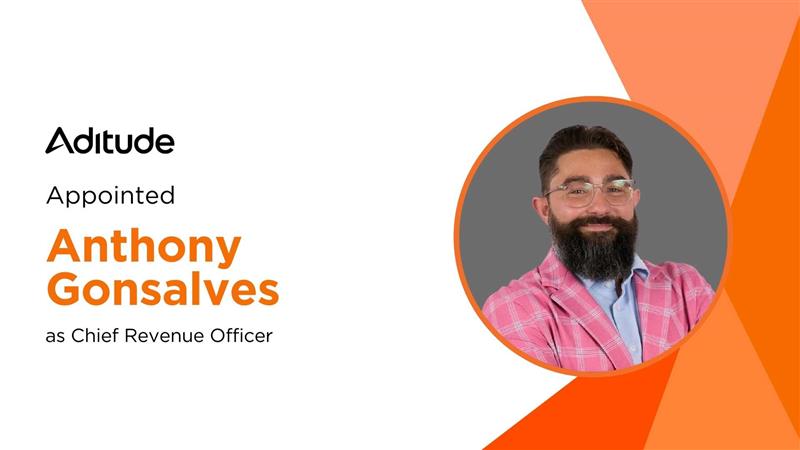
Aditude, the ad tech company known for its focus on publisher-first solutions, just made a major leadership move: the appointment of Anthony Gonsalves as its first Chief Revenue Officer (CRO).
Gonsalves, a digital media veteran with more than 20 years of experience, joins Aditude from JWP Connatix, where he served as SVP of Global Business Development. He has also held senior leadership roles at Outbrain and Swisscom, sharpening his expertise in scaling revenue, building partnerships, and navigating the increasingly complex ad ecosystem.
For Aditude, the hire signals more than just a new C-suite title—it’s a play for aggressive growth in a market where competition for publishers and advertisers is fierce. As programmatic advertising consolidates, companies like Aditude are betting on specialized leadership to stand out.
“Anthony brings exactly the kind of strategic vision and execution expertise we need as we enter our next phase of growth,” said Jared, Aditude’s CEO and founder. “His understanding of the digital media landscape and ability to scale sales organizations makes him the ideal leader for our commercial strategy.”
In his new role, Gonsalves will oversee all revenue-generating operations, including sales, partnerships, and marketing, with a mandate to expand Aditude’s reach and sharpen its go-to-market strategy. His journalism background (Penn State) also underscores his media-savvy approach to storytelling—a skill increasingly relevant in an industry where brand trust is as valuable as revenue streams.
Industry Context:
The CRO role has become a fixture in ad tech and martech firms as companies push to unify sales, partnerships, and marketing under one revenue-focused strategy. Rivals such as The Trade Desk and PubMatic have similarly leaned on executive hires to scale global operations and keep pace with evolving privacy rules, shifting ad spend, and growing publisher demands for transparency.
For Aditude, this appointment could mark the beginning of a more aggressive push into the competitive video and programmatic landscape—areas where Gonsalves has already proved his chops.
“Joining Aditude at this pivotal moment is incredibly exciting,” Gonsalves said. “The foundation is strong, and I’m eager to unlock new opportunities, strengthen our market position, and deliver exceptional value for clients and partners.”
With Gonsalves at the revenue helm, Aditude is clearly signaling it wants to play a bigger role in shaping the future of digital advertising.
Get in touch with our MarTech Experts.
Loyalty Heavyweights Join Forces: Ascendant Loyalty and The Loyalty People Go Global
digital marketing 18 Aug 2025
When loyalty programs first emerged, they were little more than punch cards and frequent-flyer miles. Today, they’re multimillion-dollar ecosystems driving customer retention, brand differentiation, and data-driven marketing. Now, two industry heavyweights—Ascendant Loyalty (Chicago) and The Loyalty People (London)—are teaming up to expand their reach and sharpen their edge in a space that’s becoming increasingly competitive.
Why This Matters
This isn’t just another handshake across the Atlantic. The partnership effectively merges Big 4-level consulting discipline with boots-on-the-ground expertise in EMEA markets, creating a consulting network with global coverage spanning North America, Europe, APAC, and beyond. For brands struggling to scale loyalty and CRM programs across regions, this collaboration could be the difference between fragmented execution and seamless customer experience.
The Partnership in Detail
Ascendant Loyalty has built its reputation in North America and APAC by delivering loyalty and retention strategies with the precision you’d expect from ex-Big 4 consultants. The Loyalty People, meanwhile, carved out its niche in Europe with a network of senior consultants and a knack for market-specific CRM insights.
Together, they promise:
-
Cross-market reach: A unified consulting model spanning EMEA, North America, and APAC.
-
Depth of expertise: Combining strategic frameworks with hands-on program design.
-
Industry range: From retail and travel to hospitality and e-commerce, sectors where loyalty is a direct driver of revenue.
As David Slavick, Co-founder at Ascendant Loyalty, put it: “With The Loyalty People’s deep network and market insight in EMEA, we’re extending our footprint and elevating the impact we can deliver for brands across the globe.”
The Bigger Picture
The timing isn’t accidental. Loyalty programs are enjoying a resurgence as inflation-weary consumers demand more value and as brands look for first-party data in a post-cookie world. According to market analysts, loyalty tech spend is on track to grow steadily through 2030, fueled by AI-powered personalization, integrated CRM systems, and the rise of subscription-based loyalty models (think Amazon Prime as the gold standard).
Against this backdrop, partnerships like Ascendant–TLP signal a broader trend: consulting firms are moving fast to globalize expertise, consolidate resources, and prepare for brands that want loyalty programs to scale across multiple continents without losing local nuance.
Who Stands to Gain?
-
Retail brands can expect sharper CRM strategies that reduce churn and increase basket size.
-
Travel and hospitality firms—still recovering post-pandemic—get a chance to reignite loyalty through personalized offers and dynamic tiers.
-
E-commerce platforms will benefit from best practices on retention in an environment where acquisition costs keep rising.
As Pete Howroyd, Founder of The Loyalty People, summed it up: “We’re stronger together – combining regional expertise, proven methodologies, and a network of senior consultants to deliver even greater results.”
Competitive Landscape
This move also places pressure on other consulting shops operating in the loyalty and CRM niche. Firms like Capgemini, Accenture Interactive, and boutique loyalty specialists will be watching closely. By formalizing a cross-continental alliance, Ascendant and TLP are positioning themselves as a leaner, more specialized alternative to the consulting giants.
The loyalty game has evolved. No longer about simply rewarding repeat customers, today’s programs must stitch together data, personalization, and seamless digital experiences. With this partnership, Ascendant Loyalty and The Loyalty People are betting that global scale plus specialized depth is the winning formula. Whether competitors—or clients—agree will be worth watching.
Get in touch with our MarTech Experts.
Page 226 of 1504