News

Easify Bets Big on AI With Unified Marketing Platform
marketing 22 Sep 2025
For years, marketers have stitched together campaigns across half a dozen platforms—one for SMS, another for email, something else for voice. Easify thinks that era is over. The four-year-old company has rolled out an AI-powered, all-in-one marketing platform that pulls MMS, SMS, email, voice broadcasting, and ringless voicemail into a single dashboard.
The promise? Less juggling, more automation, and AI that makes smarter decisions about when and how customers hear from you.
One Platform to Rule Them All
Easify’s system aims to centralize customer outreach without forcing teams to toggle between tools. Its AI optimizes delivery timing, personalizes messages, and automates campaign management across channels. For businesses, that means one place to launch and track campaigns, regardless of whether the medium is text, inbox, or voicemail.
Founder Adam Schwartz built the platform after his own frustrations with managing fragmented apps. Four years later, Easify is used by more than 1,000 customers—a sign, perhaps, that his hunch about market demand was right.
Standout Features
-
Concurrent Calling: Users can dial up to four leads at once, with AI instantly routing to the first who answers and managing the rest quietly in the background.
-
Branded Calling & Geo-Matching: Designed to counter spam-likely labels, these features display verified business details and allow local area code matching to boost answer rates.
-
AI-Powered Personalization: SMS/MMS campaigns adapt to engagement patterns, while emails dynamically shift based on recipient behavior.
-
Compliance Management: Built-in monitoring ensures campaigns meet standards like 10DLC, complete with automated documentation and reporting—especially useful in regulated industries.
-
Analytics & ROI Tracking: A central dashboard crunches engagement and performance data, with AI surfacing trends and recommending next steps.
Why It Matters
Marketing software is a saturated field, but Easify’s bet is on consolidation plus intelligence. Instead of marketers piecing together “best of breed” tools, the platform sells itself as a one-stop shop with AI-driven optimization baked in. The Concurrent Calling feature in particular feels designed for sales teams under pressure to maximize productivity.
With adoption climbing and a growing appetite for integrated, AI-powered solutions, Easify’s push comes at a moment when businesses are rethinking efficiency, compliance, and personalization in outreach. If its growth continues, Easify could nudge rivals in the email, SMS, and voice spaces to play catch-up on integration.
Get in touch with our MarTech Experts.

Sophisticated Marketing Solutions Expands Into Social Media With Key Hire
digital marketing 22 Sep 2025
Sophisticated Marketing Solutions is stepping into the fast lane of digital engagement with its latest hire: Mindy Jo Bradley as Social Media Specialist. The move marks the agency’s official expansion into full-scale social media management—a service increasingly expected from modern marketing firms as clients demand measurable growth across digital platforms.
Bradley isn’t new to the grind. With more than a decade of experience building digital strategies, she’s worked with nonprofits, small businesses, and tech startups alike. Her toolkit spans paid advertising, email marketing, and social campaigns—all stitched together with data analysis and sharp content strategy.
Perhaps most notably, she grew audiences from zero to thousands organically at her own consultancy, Minjo Marketing, while fine-tuning everything from customer personas to brand positioning. That’s the kind of groundwork many agencies claim but few consistently deliver.
From Freelance Hustle to Agency Stage
Bradley’s career path also includes launching social channels for local governments and public institutions—no small feat in communities where offline has traditionally dominated. Her ability to translate grassroots strategy into measurable online engagement positions her as a practical operator, not just a strategist.
William Campos, founder of Sophisticated Marketing Solutions, called the hire a “strategic addition” designed to help clients grow online. In an era where brand credibility often begins and ends on a social feed, the timing couldn’t be more relevant.
Certifications and Credibility
On paper, Bradley checks the right boxes: a dual bachelor’s in Marketing and Business Administration from Idaho State University, plus certifications as a Google Product Manager and Meta Community Manager. The combo signals a professional fluent in both platform dynamics and campaign execution.
Why It Matters
For Sophisticated Marketing Solutions, the addition isn’t just about staffing up—it’s about credibility in a crowded market. Agencies without a robust social offering often lose ground to competitors, especially as businesses look to consolidate digital marketing under one roof. With Bradley on board, the firm strengthens its pitch to clients who need more than SEO and email—they want the always-on, algorithm-tuned visibility that social media delivers.
The hire reflects a larger trend: boutique agencies arming themselves with seasoned specialists to compete with bigger players. Whether this expansion translates into market share remains to be seen, but in a marketing world where social platforms double as storefronts, community hubs, and customer service desks, the bet seems well placed.
Get in touch with our MarTech Experts.

OMA Launches in Dubai With Outcome-Focused Digital Marketing Approach
digital marketing 22 Sep 2025
Dubai’s digital marketing landscape welcomes a new entrant: OMA (Outsourced Marketing Agency FZCO), which has officially launched operations after a soft launch period refining its outcome-driven model. Founded in December 2024 by UK-born entrepreneur Yasin Shariff, OMA aims to cut through vague promises with measurable results for clients across industries.
Measurable Marketing, Not Magic
OMA’s service mix is designed around clarity and accountability: pay-per-click campaigns on Google and Meta, mobile-first web design, and end-to-end analytics. Campaigns and landing pages are built in tandem to ensure consistent messaging, while tracking captures calls, form submissions, and WhatsApp clicks. Weekly reports translate complex metrics into plain English, showing qualified enquiries, cost per lead, and campaign performance.
“This is a market that moves quickly and expects results,” said Shariff. “Owners aren’t asking for magic; they’re asking for clarity, speed and accountability.”
Shariff’s Entrepreneurial Edge
Shariff brings a dual-pronged commercial perspective to OMA. He co-founded Duraclean, a cleaning consumables supplier now serving over 600 hotels in the UK, scaling into wholesale and 3PL operations. He also invested in Vertex, a boutique sell-side advisory firm supporting strategic exits and capital raises.
“This experience taught me how easy it is for service providers to lose focus on clarity and accountability,” Shariff said. “OMA is structured to be the partner I always wished for—transparent, data-driven, and disciplined in execution.”
Target Market and Technology Choices
OMA plans to serve industries where speed and digital presence are critical: healthcare, hospitality, retail, e-commerce, professional services, and local businesses. Services are offered in both English and Arabic to meet Dubai’s diverse market.
Technology adoption is pragmatic: WordPress or Shopify for websites, Google Analytics 4, Tag Manager, and Meta tracking for measurement. KPIs focus on metrics that business owners care about—cost per lead, enquiry volume, and return on ad spend. OMA avoids long-term contracts but promises “consistent work and the discipline to improve week by week.”
Why It Matters
Dubai’s marketing sector is crowded with agencies promising clicks, impressions, and leads. OMA’s approach—aligning campaigns with tangible commercial outcomes, clear reporting, and disciplined iteration—positions it to stand out in a market increasingly demanding accountability and ROI from digital partners.
Get in touch with our MarTech Experts.
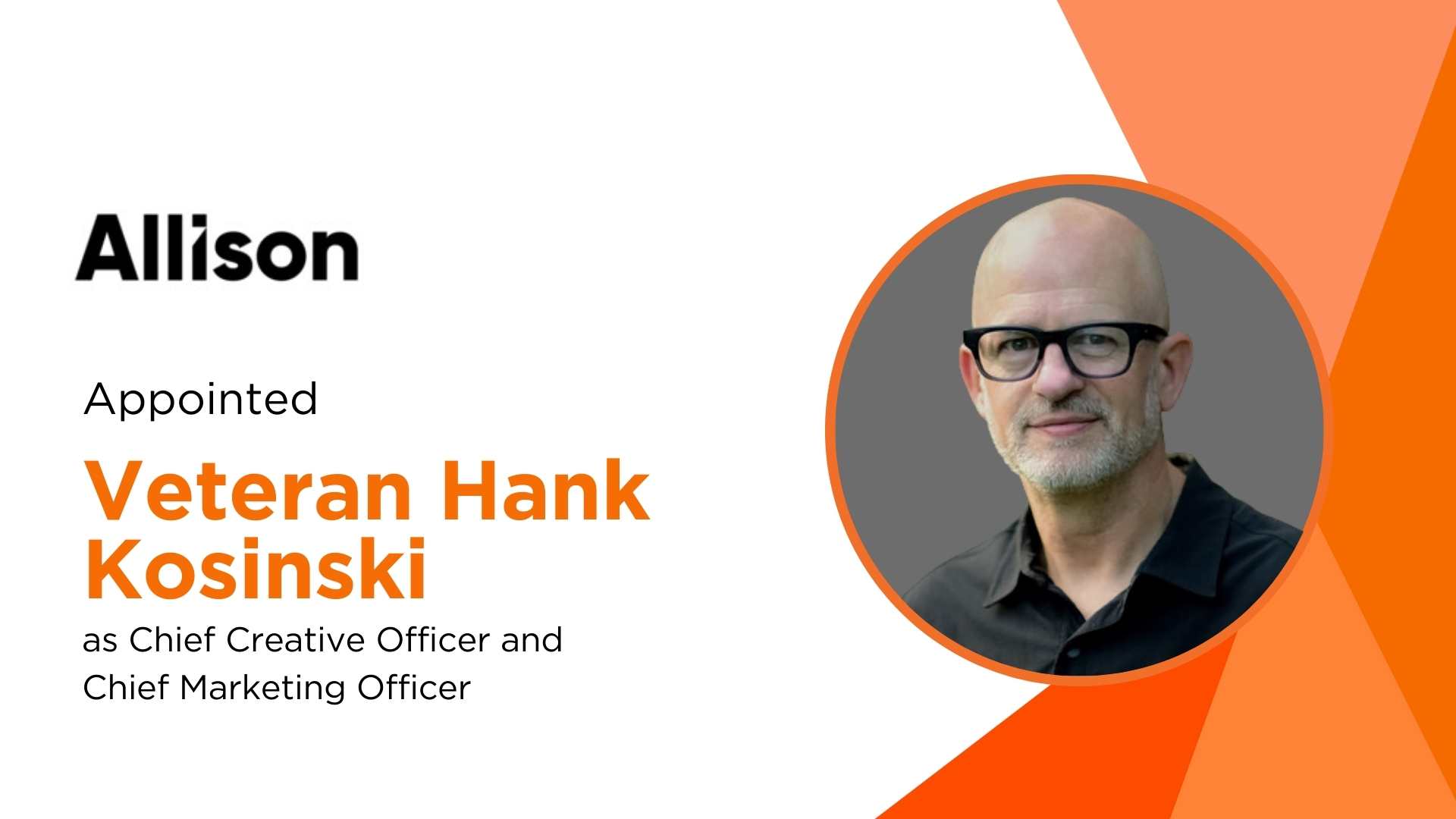
Allison Worldwide Appoints Hank Kosinski as Chief Creative and Marketing Officer
marketing 22 Sep 2025
Allison Worldwide, a Stagwell (STGW) agency, has tapped Hank Kosinski as its new Chief Creative Officer and Chief Marketing Officer, effective October 1. Kosinski brings more than 20 years of experience shaping iconic campaigns for global brands including Microsoft, Nike, Coca-Cola, Lego, Heineken, Mercedes-Benz, and Pfizer.
A Proven Global Creative Leader
Before joining Allison, Kosinski was executive creative director at WPP’s VML and a partner at Gardner Nelson + Partners in New York. He’s also held leadership roles at Goodby, Silverstein + Partners, Lowe, Merkley, and McCann, building a portfolio of campaigns that balance creative innovation with measurable business results.
“Allison is committed to delivering world-class results for every client, and Hank’s addition strengthens our ability to turn creative vision into global impact,” said Ray Day, Allison executive chair and Stagwell vice chair.
Driving Creativity and Thought Leadership
At Allison, Kosinski will oversee all creative operations, client-work ideation, and agency marketing initiatives, reporting directly to CEO Jonathan Heit. His mandate includes reinforcing Allison’s reputation for fusing creativity with innovation, and accelerating the agency’s next phase of growth on a global scale.
“I’m thrilled to join Allison Worldwide at such a pivotal moment,” said Kosinski. “The agency’s dedication to combining creativity with innovation is inspiring. I look forward to collaborating with this talented team to turbocharge our next chapter of growth.”
Why It Matters
Kosinski’s appointment signals Allison Worldwide’s commitment to elevating creative leadership while enhancing its global agency footprint. For clients, it underscores a focus on transforming bold creative ideas into tangible business outcomes—a critical differentiator in a crowded marketing services landscape increasingly dominated by digital-first campaigns and data-driven storytelling.
Get in touch with our MarTech Experts.

Portside Marketing Named Top 3 Marketing Specialist in Denton County
business 22 Sep 2025
Denton County-based Portside Marketing has been officially recognized as one of the Top 3 Marketing Specialists in the region, marking the agency’s 13th consecutive year earning the honor. The recognition reflects its consistent track record in delivering measurable results across SEO, website design, and logo creation.
Delivering Results That Matter
Founded to help local businesses stand out online, Portside Marketing focuses on strategies that drive tangible business outcomes. Its services combine keyword research, on-page and technical SEO, professional website design, and custom logo development to enhance visibility, engagement, and lead conversion.
“Being recognized for thirteen consecutive years is not only an honor, it’s a responsibility,” said Lisa Parziale, founder of Portside Marketing. “Our goal has always been to deliver results that directly impact client success. This recognition reflects the dedication of our team and the trust our clients place in us.”
Proven Expertise Across Digital Channels
Portside Marketing’s approach emphasizes measurable metrics over vanity numbers. SEO campaigns are tailored for higher search rankings, website designs are optimized for user experience and mobile-first performance, and custom logos reinforce brand identity—together forming a cohesive strategy that positions clients for sustained growth.
The agency has helped hundreds of businesses transition from minimal online presence to fully optimized digital platforms, establishing brand credibility and driving revenue growth. Testimonials from clients highlight successful campaigns, improved search rankings, and distinctive branding that sets businesses apart in competitive markets.
Longevity and Local Impact
Earning Top 3 recognition for more than a decade underscores Portside Marketing’s reliability, adaptability, and innovation in a constantly evolving digital landscape. Its services support Denton County’s economic growth by helping local businesses attract leads, increase sales, and compete effectively online.
Looking forward, the agency plans to expand its offerings while maintaining the high standards that have kept it at the forefront of digital marketing in the region.
Get in touch with our MarTech Experts.

MindStir Media Offers Flexible Financing to Make Self-Publishing More Accessible
financial technology 22 Sep 2025
MindStir Media, an award-winning self-publishing company, is easing the financial burden for authors by offering flexible financing options through Affirm. The move allows writers to spread the cost of professional publishing services into manageable monthly payments, making it easier than ever to bring their books to market.
Financing That Fits Every Author
MindStir Media’s packages combine editing, book design, marketing, and mentorship from USA Today and Wall Street Journal bestselling author J.J. Hebert. With Affirm, eligible authors can access 0% APR for six months or longer-term options up to 36 months, depending on the package and approval.
For example, the Emerald Publishing Package, priced at $13,099, can be financed as six interest-free payments of $2,183.17 per month or 36 monthly installments of $454.05 at 15% APR. Rates vary from 0%–36% APR, subject to eligibility and state regulations.
“MindStir Media has always been about providing great value to authors,” said J.J. Hebert, CEO of MindStir Media. “By offering Affirm, we’re giving authors the flexibility to pursue their publishing dreams without the stress of upfront costs.”
Accessible, Affordable, and Professional
The company’s self-publishing services, endorsed by celebrities like Shark Tank’s Kevin Harrington and praised by publications such as USA Today and Newsweek, have become more financially accessible. Authors can now select Affirm during checkout and manage payments while benefiting from MindStir Media’s full suite of publishing support.
Why It Matters
For self-publishing authors, upfront costs have long been a barrier to entry. By combining comprehensive publishing services with flexible financing, MindStir Media positions itself as a more inclusive and author-friendly solution in a competitive market increasingly embracing digital-first publishing and online mentorship.
Get in touch with our MarTech Experts.

EQT Sells Remaining Stake as TELUS Digital Acquisition Moves Forward
customer experience management 22 Sep 2025
EQT has agreed to sell its remaining stake in TELUS Digital as part of TELUS Corporation’s proposed acquisition of the company, marking the end of EQT’s nearly decade-long investment journey. The transaction underscores EQT’s success in transforming TELUS Digital into a global technology and digital services leader.
From BPO to Global Digital Powerhouse
Since EQT’s initial investment in 2016, TELUS Digital has expanded dramatically, now employing over 78,000 people across 30 countries and growing EBITDA by more than 500%. The company evolved from a traditional outsourcing and BPO provider into a next-generation digital services company, offering customer experience (CX) management, AI and data solutions, digital transformation consulting, and security and trust services.
Strategic acquisitions—including Voxpro, Xavient, Competence Call Center, Lionbridge AI, Playment, and WillowTree—have bolstered TELUS Digital’s capabilities in digital design, product development, content moderation, and AI-driven solutions. Strong organic growth complemented these acquisitions, positioning the company as a global technology solutions partner for clients across telecom, e-commerce, gaming, financial services, and healthcare.
Investment Success and IPO Milestones
During EQT’s investment period, TELUS Digital achieved several key milestones, including its 2021 IPO on the NYSE and Toronto Stock Exchange, the largest technology IPO on the latter at the time. EQT realized an approximate 4x return on its investment, having previously sold portions of its stake during the IPO and follow-on offerings. The remaining stake will be sold for $215 million upon closing of the TELUS acquisition.
Leadership Perspective
“TELUS Digital’s transformation into a global leader in customer experience and technology services has been remarkable,” said Janice Leow, Partner at EQT Private Capital Asia. “Full integration with TELUS Corporation will create new opportunities for innovation and long-term growth.”
Darren Entwistle, President and CEO of TELUS Corporation, added, “EQT has been a valued partner in TELUS Digital’s evolution. Their support helped the company transition from a BPO provider to a global enterprise solutions leader, including the development of the Fuel iX AI platform.”
Why It Matters
The acquisition highlights private equity’s role in scaling digital services providers and the growing value of companies that combine CX expertise with AI, data analytics, and digital transformation capabilities. For TELUS, full ownership of TELUS Digital solidifies its position in global digital services and strengthens its ability to offer integrated enterprise solutions.
Get in touch with our MarTech Experts.

Zeta Global Rolls Out Generative Engine Optimization to Keep Brands Visible in the AI Search Era
artificial intelligence 19 Sep 2025
Search optimization just got a 2025 upgrade. Zeta Global (NYSE: ZETA), the AI Marketing Cloud, is launching a new feature called Generative Engine Optimization (GEO), built directly into the Zeta Marketing Platform. The goal: help brands show up accurately—and advantageously—when consumers turn to generative AI systems like ChatGPT, Gemini, and Claude for answers instead of Google or Bing.
The product will roll out in the coming weeks, and the timing couldn’t be sharper. According to Gartner, query volume on traditional search engines will drop 25% next year, while Bain & Company reports that 80% of consumers already use generative AI for nearly half of their searches. For marketers, that’s less “How do I rank on page one of Google?” and more “How does ChatGPT describe me?”
From SEO to GEO
For two decades, the marketing playbook has revolved around SEO. Zeta’s new GEO tool flips that model to meet a consumer reality where AI-driven summaries, not blue links, are the gateway to discovery.
Inside the platform, marketers will be able to:
-
Track brand visibility and sentiment across major AI models via an “AI Visibility Leaderboard.”
-
Spot inaccuracies like hallucinations, misattributions, or off-brand messaging—and correct them.
-
Optimize content for large language models with Q&A formats, summaries, and metadata tweaks.
-
Benchmark competitors and measure “AI share of voice.”
-
Unify PR, SEO, and content strategies around a single AI-facing playbook.
David A. Steinberg, Zeta’s Co-Founder and CEO, frames it bluntly: “Generative engines are becoming the new front door of digital discovery. If you’re not present and accurate in the answer box, you’re invisible.”
Why It Matters
The shift is bigger than just another marketing buzzword. GEO acknowledges that the rules of online visibility are being rewritten by AI—and fast. While SEO has matured over 20 years into a data-driven science, GEO is still a frontier space, with no universal standards for how AI systems surface and cite information.
That creates both risk and opportunity. A brand that fails to appear (or appears incorrectly) in AI-generated answers risks disappearing from customer consideration. Conversely, those that adapt early could secure a defensible edge in what may become the next billion-dollar marketing category.
As Neej Gore, Zeta’s Chief Data Officer, put it: “The next 20 years will be about optimizing for generative engines that generate high quality visitors.”
Context: An Emerging Arms Race
Zeta isn’t the first to hint at the AI-SEO convergence, but its GEO solution arrives as marketers scramble to understand how generative AI is reshaping search. Rivals like BrightEdge and Conductor have rolled out early tools to monitor AI search visibility, while agencies are experimenting with “LLM-ready” content strategies. Zeta’s differentiator lies in integrating GEO directly into its full-stack marketing platform, pairing monitoring with immediate optimization recommendations.
Whether GEO evolves into a must-have feature or a niche experiment depends on how quickly consumer search habits continue to shift. But the writing is on the wall: for brands, optimizing for AI-generated answers could soon be as critical as buying keywords was in the Google era.
Get in touch with our MarTech Experts.
Page 197 of 1502