News

BrowserStack MCP Server Launches on AWS Marketplace for AI Testing
automation 11 Dec 2025
The rapid growth of AI-assisted development has transformed how teams write, test, and deploy software. However, most AI coding assistants still lack the ability to execute real-world testing workflows on actual devices and browsers. BrowserStack addresses this limitation with the launch of BrowserStack MCP Server on Amazon Web Services (AWS) Marketplace.
This availability brings enterprise-grade testing capabilities directly into AI-powered developer environments, enabling teams to automate, debug, and validate software with greater speed and accuracy. By integrating into AWS Marketplace, BrowserStack simplifies adoption, procurement, and deployment for enterprises seeking to scale AI-powered testing.
1. Understanding BrowserStack MCP Server
What Is the MCP Server?
-
An open-source integration layer connecting BrowserStack’s testing infrastructure to AI assistants.
-
Enables developers to trigger tests, run debugging workflows, and launch real devices directly through natural language commands.
-
Eliminates the need to switch between IDEs, browsers, and device farms during development cycles.
Why It Matters
-
AI tools like GitHub Copilot, Cursor, and Claude offer code suggestions but cannot execute real tests.
-
MCP Server unlocks hands-on actions by allowing AI agents to interact with BrowserStack’s device cloud.
-
Helps teams ship higher-quality software by integrating automation and testing directly into developers’ IDE workflow.
2. Benefits for AWS Marketplace Users
Seamless Discovery and Deployment
-
AWS Marketplace provides instant access to BrowserStack MCP Server.
-
Enables enterprises to procure, deploy, and manage testing tools from a unified cloud destination.
Faster Integration into Existing Workflows
-
Direct installation from AWS Marketplace reduces onboarding time.
-
Teams can integrate AI-powered testing into CI/CD pipelines without complex setups.
Enterprise-Ready Scalability
-
Supports thousands of device-browser combinations through BrowserStack’s global testing infrastructure.
-
Designed for large development teams requiring reliable, scalable testing environments.
3. Key Capabilities of BrowserStack MCP Server
a. Launch Testing Sessions on Real Devices Instantly
-
Trigger apps or websites on real devices from within the IDE.
-
Access thousands of OS versions, browsers, and mobile devices.
-
Removes reliance on emulators or manual device management.
b. Execute Playwright and Selenium Test Suites with AI-Powered Analysis
-
Run automated test suites with improved accuracy and context-driven insights.
-
AI-driven debugging identifies root causes of failures.
-
Automatic fixes and recommendations reduce manual troubleshooting.
c. Perform Accessibility Testing with AI Suggestions
-
Conduct WCAG and ADA compliance scans using BrowserStack tools.
-
AI-generated remediation guidance helps teams fix accessibility gaps faster.
-
Supports inclusive design from the earliest development stages.
d. Auto-Generate and Improve Test Cases Using AI Agents
-
Convert PRDs into structured test cases.
-
Transform manual test scripts into automated ones.
-
Auto-heal flaky tests to improve reliability.
-
Introduces higher efficiency in QA workflows.
4. How AI Assistants Become Testing Agents
Natural-Language Execution Examples
With MCP Server, AI assistants do more than recommend code. They can:
-
Run an APK on a specific device model.
-
Launch a website on a particular browser version.
-
Debug crashes with real-time logs and stack traces.
-
Perform accessibility scans or validate UI behavior.
Example in Action
Ritesh Arora, CEO and Co-founder of BrowserStack, explains the impact:
A developer can simply ask the AI assistant to "run this APK on a Pixel device and debug the crash"—and BrowserStack handles the entire workflow automatically.
This transforms AI assistants from passive helpers into active testing partners.
5. The Broader Impact on Software Development
Strengthening Developer Productivity
-
Reduces time spent configuring test environments.
-
Allows developers to focus more on building features, not managing testing infrastructure.
Improving Release Velocity
-
Faster debugging shortens release cycles.
-
Automated workflows ensure consistent quality across builds.
Supporting Modern DevOps and QA Practices
-
Integrates seamlessly with continuous testing pipelines.
-
Encourages test automation adoption across teams.
Conclusion
The rollout of BrowserStack MCP Server on AWS Marketplace marks an important step in merging AI development tools with practical software testing capabilities. By enabling AI assistants to run tests, debug software, analyze failures, and manage real devices, BrowserStack is redefining the future of developer productivity.
Enterprises using AWS can now more easily integrate AI-powered testing into their workflows, ensuring faster, more reliable, and more efficient software delivery at scale.
Get in touch with our MarTech Experts.

Independent Agencies Get a Boost as PubMatic, Untapped Growth, and tvScientific Redefine CTV Buying and Measurement
artificial intelligence 11 Dec 2025
Independent agencies are getting a major upgrade. PubMatic, Untapped Growth, and tvScientific have formed a new alliance aimed at fixing one of digital advertising’s most outdated problems: a slow, fragmented, and opaque CTV supply chain. Their joint solution brings AI-driven infrastructure, direct premium inventory access, and performance-grade measurement into a single workflow that puts independent buyers on equal footing with holding companies.
The partnership offers a streamlined path to premium CTV, allowing agencies to optimize faster, measure more clearly, and scale without sacrificing their agility. It is part of a broader industry shift as CTV transforms into a performance channel rather than a branding-only medium.
A Modern Supply Chain Built for Speed
The companies are tackling a long-standing issue in programmatic advertising. Over the past two decades, layers of intermediaries accumulated across the supply path, often adding cost and friction without adding value. PubMatic argues that AI is finally creating the opportunity to rebuild the system.
PubMatic’s AI-powered infrastructure gives agencies direct access to premium CTV supply, while Untapped Growth aggregates buying power across boutique firms without minimizing their independence. tvScientific adds a performance layer that ties impression-level data to business outcomes. Together, the trio delivers a supply chain designed around speed and clarity rather than legacy toll booths.
Independent agencies working with Untapped Growth report faster access to quality CTV inventory, reduced setup drag, and better visibility into what drives campaign performance. Much of that improvement comes from real-time measurement and AI-driven optimization through PubMatic and tvScientific.
AI Agents Enter the Ad Transaction Layer
One of the most ambitious elements of the partnership is its use of agentic AI. PubMatic’s accelerated compute layer and Model Context Protocol allow AI agents to automate campaign setup, troubleshoot delivery, and handle diagnostics across systems. This approach reduces campaign troubleshooting time by up to 70 percent.
The implementation marks an early commercial use of agentic AI within the transaction layer of digital advertising. It hints at a future where AI handles the operational heavy lifting, leaving agencies free to focus on strategy and creative differentiation.
tvScientific strengthens this system by linking every impression to a measurable business outcome. That closes the loop between exposure and conversion, enabling CTV to perform like a digital performance channel rather than a broad-reach awareness tool.
Independent Agencies Gain Enterprise-Level Firepower
Level Agency, an Untapped Growth member, offers a real-world look at the partnership’s impact. The agency positions itself as a hybrid—big enough for enterprise-grade performance but small enough to deliver hands-on service. Through this collaboration, Level gains pricing power and transparency traditionally reserved for holding companies.
The consolidated supply chain allows Level to pair competitive CPMs with its high-touch strategic approach. According to Level’s leadership, brands no longer need to choose between scale and agility. The unified infrastructure helps mid-market advertisers unlock efficiencies once available only to the largest buyers.
A Growing CTV Opportunity
The timing of this partnership reflects the rapid rise of connected TV. U.S. CTV ad spend is expected to reach $33 billion in 2025, climbing nearly 16 percent year-over-year. Much of that growth is driven by independent agencies and mid-market brands expanding their budgets into premium video and performance-led CTV campaigns.
This collaboration positions PubMatic, Untapped Growth, and tvScientific at the center of that momentum. By unifying infrastructure, inventory, and measurement, the companies offer a scalable model for the next wave of CTV buyers—particularly those that value speed, transparency, and outcomes.
As the CTV market matures, the trio’s combined approach signals a shift away from consolidation as the industry’s growth engine. Instead, success is being built on expansion—empowering independent agencies with tools and technology once reserved for the largest holding groups.
Get in touch with our MarTech Experts.

Karat Launches NextGen, a Human-Led AI-Native Interview System Built to Identify Engineers Ready for the Human + AI Era
artificial intelligence 11 Dec 2025
Karat is making a decisive move in the future of technical hiring. With the launch of Karat NextGen, the company is introducing the first human-led, AI-enabled talent evaluation system designed to measure engineering ability in an era where humans and AI collaborate every day. It arrives at a moment when engineering productivity is rising faster than ever, and organizations are scrambling to identify talent that can harness this shift.
Karat’s new 2025–2026 AI Workforce Transformation Report outlines a clear trend: the ROI of a strong engineer is expected to triple in the next three years. Nearly 70 percent of engineering leaders plan to scale their AI capabilities, but most companies still evaluate engineers using outdated, pre-LLM criteria. The gap between what companies need and how they hire is widening quickly.
“Most companies are still hiring based on a pre-LLM rubric,” said Jeffrey Spector, co-founder and president at Karat. He argues that the nature of engineering has changed, and technical interviews must evolve with it. Karat NextGen aims to deliver a hiring signal that reflects modern work—where humans and AI operate in the same loop.
A New Benchmark for Human + AI Talent
Karat draws from a dataset built over more than 600,000 industry interviews. That consistency has allowed global brands like Atlassian, Duolingo, and PayPal to define engineering quality in a structured and measurable way. With NextGen, Karat is turning that historical foundation into a future-ready interview format.
The system is fully managed and aligned with the speed of AI advancement. It adapts as tools, models, and workflows evolve, helping leaders build engineering organizations capable of facing rapid transformation. As AI reshapes the development landscape, companies need a reliable way to evaluate whether candidates can think critically, collaborate with AI, and make sound engineering decisions.
Engineering Reality, Not Theoretical Coding
David Lau, VP of Engineering at OpenAI, reinforced the pace of change. AI models have progressed from autocomplete tools to agents capable of writing full libraries and exploring new solutions. As he notes, last month’s edge cases quickly become standard. Organizations that fail to rethink their hiring will fall behind.
This shift demands interviews that reflect reality and cannot be auto-solved by a model. That means giving engineers real-world environments, complex multi-file projects, and AI tools integrated directly into the workflow. More importantly, it requires expert interviewers who know how to differentiate between genuine engineering thinking and what comes from an AI prompt.
Inside the NextGen Interview
Karat NextGen blends live human evaluation with AI capabilities in a single interview flow. Candidates work through complex projects with an integrated AI assistant while collaborating with Karat’s Interview Engineers. The format tests reasoning, trade-offs, debugging, and judgment—factors that AI alone cannot fully reveal.
It also ensures fairness by applying consistent structure across all interviews, reducing bias and preventing inflated performance from AI-generated answers. The goal is not to punish AI use but to measure how well an engineer can wield it.
“AI is transforming engineering, but the real breakthroughs happen when human judgment and AI capabilities work together,” said Sagnik Nandy, CTO at DocuSign. He argues that organizations need reliable ways to identify talent that thrives in this dual-intelligence model. Karat NextGen provides a framework for doing exactly that.
A Turning Point for Engineering Hiring
As software development becomes more AI-centric, hiring becomes far more complex. Companies can no longer rely on traditional coding tests or theoretical questions. The teams that succeed will be those that evaluate engineers the way modern development actually happens: collaboratively, interactively, and with AI as a core tool.
Karat NextGen enters the market not as an incremental update but as a response to a structural shift. Engineering leaders now need to understand who can reason with AI, challenge AI, and use AI responsibly—all while maintaining the depth of skill that defines great engineering.
With NextGen, Karat aims to set a new standard for measurement. The company positions the platform as a crucial solution for CTOs, CIOs, and VPs of Engineering who want to build resilient teams capable of succeeding in the human + AI era. As AI accelerates, the organizations that adapt their hiring the fastest will gain a meaningful competitive advantage.
Get in touch with our MarTech Experts.

HawkEye 360 Secures $100M+ Intelligence Contract to Expand RF Constellation and Boost Global Mission Capabilities
technology 11 Dec 2025
HawkEye 360 is scaling its global intelligence footprint with a major new win. The company announced a multi-year contract worth more than $100 million with a strategic international partner, marking one of its largest agreements to date. The five-year deal includes guaranteed access to HawkEye’s advanced radio frequency (RF) data and analytics, along with options for expanded collection capacity and regional ground infrastructure integration.
The agreement underscores the rapid acceleration of RF intelligence as a critical asset for defense, national security, and tactical operations. It arrives at a moment when governments are seeking more precise, persistent, and flexible ways to monitor activity across contested and high-risk regions.
A High-Confidence Partnership in a High-Stakes Era
“This agreement highlights the trust placed in HawkEye 360 as a mission partner in one of the world’s most dynamic regions,” said John Serafini, CEO of HawkEye 360. He emphasized the importance of scaling the constellation in collaboration with regional partners to strengthen decision-making and support critical missions.
Under the contract, HawkEye will deploy dedicated satellite clusters that will reach full operational capability in early 2027. These clusters will deliver priority RF access for the partner while increasing overall system capacity for HawkEye’s global customer base. The agreement also leaves room for expanded collection capabilities and deeper regional infrastructure integration as mission needs evolve.
Growing Demand for RF Intelligence
RF intelligence is becoming a strategic differentiator in global security operations. HawkEye 360 has positioned itself as a category leader by building a commercial constellation capable of detecting, characterizing, and geolocating RF signals. This capability allows customers to track illicit maritime activity, monitor border security, enhance situational awareness, and support rapid-response operations.
The company’s approach has been especially valuable in regions where traditional intelligence assets face limitations. As geopolitical threats and gray-zone activities grow more complex, demand for multi-source precision intelligence continues to rise. This contract signals that international partners are willing to make long-term investments in scalable SIGINT solutions.
A Scalable Future for Regional Defense
Alex Fox, President of HawkEye International, noted that the deal demonstrates the strength of HawkEye’s model. “This commitment shows the value of HawkEye 360’s adaptable, scalable, mission-ready capabilities,” Fox said. He added that expanding the constellation will directly enhance regional operational effectiveness while fueling continued innovation for the company.
The deployment of new clusters will improve data refresh rates, increase collection range, and add resilience across the system. It also strengthens HawkEye’s ability to serve commercial, defense, and humanitarian missions with faster and more precise RF insights.
What the Deal Signals for the Intelligence Market
This agreement reflects a broader trend: nations and defense organizations are turning to commercial space providers for intelligence advantages once limited to government programs. Commercial RF monitoring is becoming essential infrastructure for modern security, giving partners access to intelligence without the cost or timeline of building their own space systems.
For HawkEye 360, the contract reinforces its position as a critical supplier of global signals intelligence. For the international partner, it secures long-term access to technology that will shape the next decade of operational readiness.
As geopolitical environments shift and RF activity grows more complex, this deal marks a significant step toward more agile and collaborative intelligence ecosystems. HawkEye 360’s expanding constellation will play a central role in supporting missions that demand accuracy, speed, and scalable coverage.
Get in touch with our MarTech Experts.

Kustomer Launches Data Explorer, an AI-Powered Reporting Tool for Instant CX Insights
artificial intelligence 11 Dec 2025
Kustomer has introduced Data Explorer, an AI-driven reporting experience designed to transform how customer experience (CX) teams analyze performance, diagnose issues, and make operational decisions. The launch positions Kustomer as the first CX platform to combine unified customer data, conversational insights, visual analytics, and prescriptive recommendations in a single workspace.
Built into Kustomer’s AI-native platform, Data Explorer lets leaders type questions in natural language—such as “Why did chat response times spike last week?”—and receive immediate charts, explanations, and suggested actions. The goal: reduce the time CX leaders spend switching between dashboards, exports, and manual analysis.
A Faster Way to Understand CX Performance
“For most CX teams, reporting is still slow and reactive,” said Brad Birnbaum, CEO & Co-Founder of Kustomer. “Data Explorer analyzes every part of the customer journey—performance, sentiment, backlog, staffing signals—and explains what’s driving outcomes. You get real, actionable intelligence sourced from your live data.”
Instead of simply showing what happened, the system highlights why it happened and what teams should do next, helping leaders quickly adjust staffing, workflows, or coaching priorities.
Jeremy Suriel, CTO & Co-Founder, described Data Explorer as a shift in how service teams interact with their data. “You can chat with your data and get insights in seconds. The system predicts trends, builds the right visualizations, and removes friction from reporting.”
Key Features
-
Natural Language Querying
Ask questions in everyday English and receive structured responses with visuals and narrative explanations. -
Unified CX Data Model
Analyze customer profiles, conversations, sentiment, SLAs, and custom objects—without stitching together multiple exports. -
Actionable Recommendations
Each insight includes operational next steps, such as routing updates, staffing changes, or targeted agent coaching. -
250+ Guided Prompts
Covers backlog analysis, SLA health, volume forecasting, team performance, voice-of-customer themes, and more. -
Always-On Monitoring
Detect unusual shifts in sentiment, CSAT, volume, or handle time to flag emerging issues before they escalate.
What CX Teams Can Do with Data Explorer
The new tool helps CX leaders:
-
Plan staffing more accurately using volume forecasts and SLA risk modeling.
-
Investigate anomalies in refunds, cancellations, or contact spikes by linking trends to specific customers, agents, or policies.
-
Elevate team performance through rep scorecards and targeted coaching workflows.
-
Amplify customer feedback with automated analysis of sentiment patterns, recurring themes, and friction points.
Customer Spotlight: Goody
Modern gifting platform Goody has adopted Data Explorer for its weekly CX reviews. The result: what once required manual reporting now takes seconds.
“It has quickly become one of my favorite tools,” said Marissa Sherwood, Senior Manager of Customer Experience. “I can deep-dive into any metric I need, and the analysis is faster, more accurate, and far more actionable.”
Goody’s team uses Data Explorer to:
-
Analyze tags for behavior trends.
-
Break down CSAT drivers.
-
Review agent-level performance.
-
Surface new customer themes earlier.
“It centralizes complex analytics in an accessible way,” Sherwood added. “It saves hours every week and improves the clarity of our insights.”
Get in touch with our MarTech Experts.

Sprinklr Wins ADWEEK Tech Stack Award for Best Social Media Marketing Platform
artificial intelligence 11 Dec 2025
Sprinklr, the AI-native platform for Unified Customer Experience Management (Unified-CXM), has been named the winner of the ADWEEK Tech Stack Award in the Social Media Marketing Platform category. The annual awards spotlight technology companies pushing the boundaries of modern marketing, and Sprinklr’s win highlights its long-standing leadership in social media management and its transformation into an enterprise-grade, AI-powered CXM platform.
From Social Media Management to AI-Native Unified-CXM
Founded in 2009, Sprinklr began as a social media management solution built for brands navigating the early shift toward digital engagement. As consumer expectations intensified and channels multiplied, Sprinklr expanded its platform to unify marketing, customer care, and customer-facing operations under one AI-powered ecosystem.
Today, Sprinklr positions itself as the definitive platform for brands seeking to deliver seamless, personalized experiences across the entire customer journey.
“Winning ADWEEK’s Tech Stack Award for Best Social Media Marketing Platform is a powerful validation of our vision,” said Arun Pattabhiraman, Chief Marketing Officer at Sprinklr. “Social isn’t just a channel — it’s the heartbeat of modern customer engagement. This recognition reflects our leadership and relentless drive to help brands build authentic, impactful connections everywhere their customers are.”
AI-Driven Marketing for Global Teams
Sprinklr Marketing, the company’s end-to-end AI-powered marketing suite, enables global brands to unify campaign planning, content creation, publishing, collaboration, and analytics. With support for more than 30 social channels, the platform helps teams accelerate go-to-market execution, maintain brand consistency, and optimize performance at scale.
What Differentiates Sprinklr
Unified Platform
Sprinklr eliminates disconnected tools by bringing campaign planning, approvals, publishing, and performance into one system. This creates faster workflows, tighter collaboration, and improved operational efficiency.
Native AI Across the Workflow
Sprinklr AI enhances every stage of campaign management — from generating briefs and content to localization, compliance, intelligent bidding, and performance analytics. Teams can produce more content, refine targeting, and improve results with significantly less manual effort.
Integrated Analytics
Paid, organic, and earned data flow into a single analytics layer. This unified visibility allows marketers to measure impact holistically and optimize campaigns with greater speed and accuracy.
Enterprise-Grade Governance
Robust compliance tools — including AI-powered pre-flight scoring, off-brand alerts, automated content checks, and role-based permissions — help global organizations maintain control while moving fast.
A Win That Reinforces Market Leadership
Sprinklr’s ADWEEK win underscores how central social media remains to customer engagement — and how AI-powered unification is becoming a competitive necessity. For brands seeking scalable marketing operations and more connected customer experiences, Sprinklr continues to position itself at the forefront of the evolving CXM landscape.
Get in touch with our MarTech Experts.

OnePlan Unveils NextGen PPM to Fast-Track Migrations Ahead of Microsoft Project Online Retirement
artificial intelligence 11 Dec 2025
Microsoft’s retirement of Project Online is forcing thousands of enterprises to rethink their project management stack. OnePlan wants to make that shift painless. The company today introduced OnePlan NextGen PPM, an AI-enabled migration and modernization solution built specifically for organizations facing a mandatory move before Microsoft’s September 30, 2026 deadline.
Instead of lengthy transitions and costly project overhauls, OnePlan promises a guided, automated, and low-disruption migration in under twelve weeks. For PMOs, IT teams, and project leaders racing against the clock, the offering delivers a rare combination of speed and stability.
A Migration Path Built for Urgency
Microsoft Project Online’s retirement has put enterprise PMOs in a bind. Many rely heavily on the legacy platform’s custom schedules, resource plans, and financial structures. Rebuilding that infrastructure manually often leads to re-engineering costs, training overhead, and long delays.
OnePlan NextGen PPM aims to avoid that pain entirely. The process starts with technical readiness, followed by structured sprints including system setup, configuration, sample data migration, user acceptance testing, and final production cutover. Each stage uses automated mapping to transfer schedules, resources, financials, and site data directly into OnePlan—without reinventing workflows.
Because OnePlan is a long-standing Microsoft Project Portfolio Management partner, the transition avoids the pitfalls seen in tool-to-tool migration projects. Everything flows through OneConnect, OnePlan’s integration layer, which ensures data accuracy while maintaining governance and continuity.
“Project leaders today need more than just a tool—they need a partner who can deliver clarity, speed, and confidence as they enter 2026,” said Scott Hebert, CEO of OnePlan. He positioned OnePlan as the “most comprehensive solution” for enterprises seeking a replacement for Project Online.
AI Becomes a Core Project Management Companion
Alongside the migration offering, OnePlan unveiled new enhancements to its Strategic Project Portfolio Management platform. The highlight is Sofia GPT, its embedded AI assistant powered by natural language understanding and predictive analytics.
Sofia GPT acts as a collaborative partner rather than a basic chatbot. Users can ask questions, automate workflows, create forecasts, or explore dependencies through everyday language. This AI-driven layer unlocks faster decision-making across portfolios and reduces the manual effort typically associated with PPM tools.
By merging strategic insights, automated workflows, and guided recommendations, OnePlan aims to help PMOs boost governance and accelerate delivery across complex portfolios.
What’s New in OnePlan’s Enhanced Platform
The latest platform upgrades focus on visibility, control, and operational speed—three priorities for enterprise PMOs navigating hybrid work models and budget constraints.
Key capabilities include:
-
Streamlined Strategic Planning – Real-time, context-aware insights help PMOs manage investments, resources, and work with greater precision.
-
Embedded Dashboards & Reporting – Executive-ready visualizations eliminate the need for external BI tools.
-
Advanced Portfolio Management – Enhanced modeling, business rules, and segmentation improve alignment and governance.
-
Modern Financial Planning – Flexible forecasting follows fiscal calendars or agile cadences.
-
AI + Automation at Scale – Structured responses and workflow automations reduce PMO workload and boost accuracy.
-
Expanded Integrations – Bulk import tools and new connectors, including Trello, simplify tool consolidation.
These additions signal OnePlan’s push to become the central hub for enterprise project delivery in a market where AI-native PPM platforms are becoming the norm.
The Bigger Picture
The retirement of Project Online has sparked a competitive rush across the PPM ecosystem. Vendors are racing to offer modern replacements that combine automation, AI, and portfolio-level intelligence. OnePlan’s advantage comes from pairing migration automation with an evolving AI-native PPM environment.
As organizations accelerate their transition away from legacy tools, solutions that reduce disruption—and deliver immediate productivity gains—are positioned to lead the market. OnePlan clearly wants to be one of them.
Get in touch with our MarTech Experts.
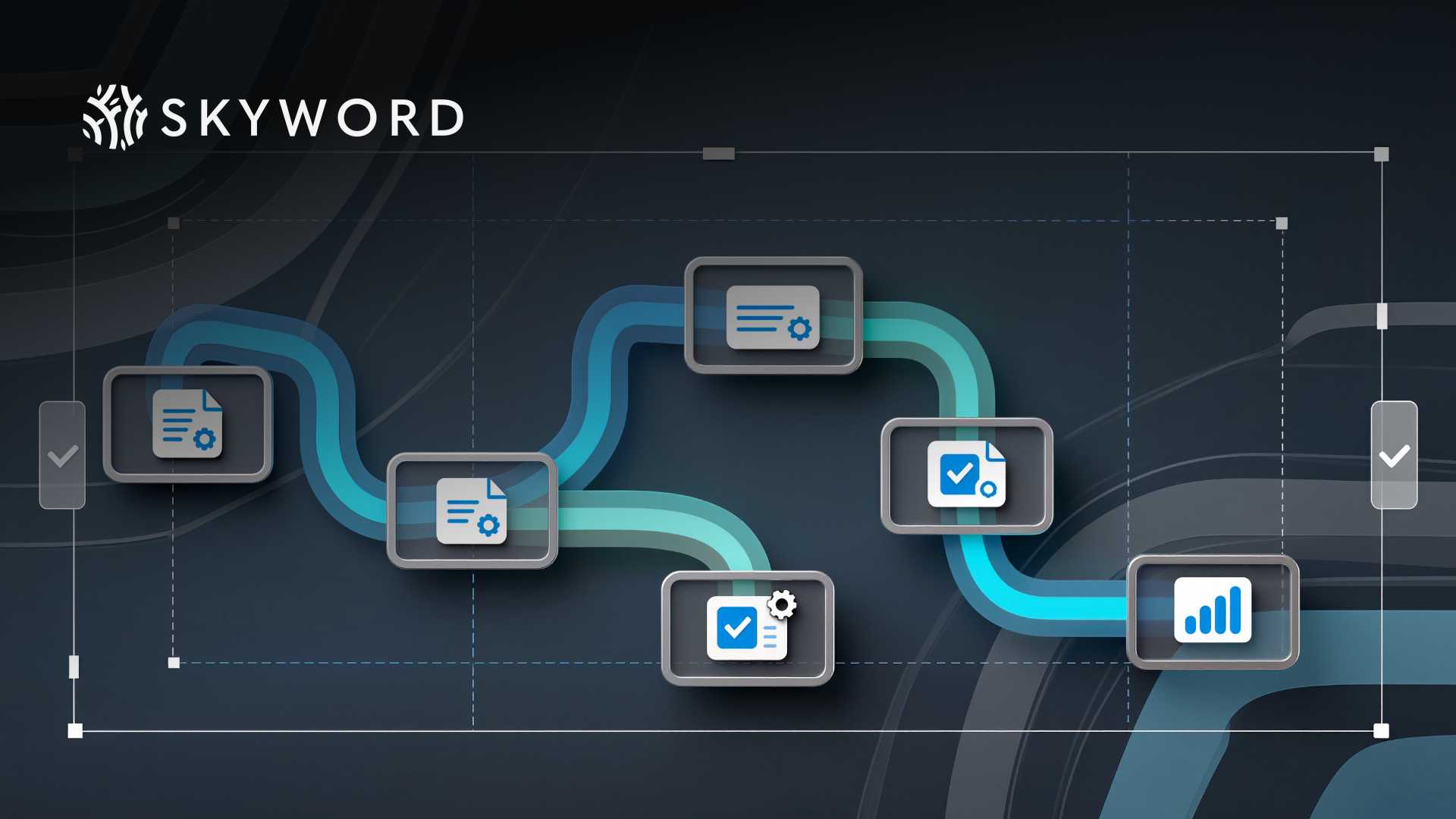
Skyword Secures Patent for AI Workflow That Redefines Enterprise Content Strategy
content marketing 11 Dec 2025
Skyword is doubling down on the future of strategic content operations. The enterprise content marketing company has secured U.S. Patent No. 12,437,022 B1 for a workflow that uses AI to close one of marketing’s most persistent gaps: turning strategy into consistent, high-quality execution at scale.
The patented system powers Accelerator360, Skyword’s end-to-end content marketing platform. Its goal is straightforward but difficult for most brands to execute—identify where a company can gain visibility, generate precise content briefs based on those opportunities, match them to subject-matter experts, and coordinate production from start to finish.
In an era where AI-powered search is rewriting the rules of discoverability, Skyword is positioning its model as a counterpoint to fully automated content creation. Instead of replacing experts, the company argues for using AI to accelerate the planning, briefing, and orchestration that sit upstream of great content.
Solving the Part of Content Marketing AI Hasn’t Figured Out
Most generative AI tools can churn out copy. What they often lack is strategic discipline. Skyword’s workflow uses AI to automate the decisions that determine performance before a single sentence is drafted.
Accelerator360’s patented capabilities include:
Pinpointing visibility opportunities:
The system analyzes real-time search data through a brand-specific lens to surface gaps where the brand can stand out. These insights account for category trends, competitor activity, and shifting audience demands.
Generating strategy-driven briefs:
LLMs translate opportunities into data-backed creative briefs that guide human authors with clarity and precision. Because the workflow updates dynamically, briefs always reflect current realities—not last quarter’s insights.
Matching briefs to experts:
Skyword uses proprietary logic to pair each assignment with top subject-matter specialists from the Skyword Talent Network. From bidding to routing, the system ensures the work lands with the right expert, not the next available writer.
This workflow aims to produce content that is authoritative, differentiated, and strategically aligned from the first draft.
Why It Matters in the Age of AI Search
Marketers are dealing with compressed organic reach, rising content costs, and chaotic workflows across teams. AI search only compounds the pressure by reshaping how buyers discover information.
Skyword’s patented technology attempts to give marketers an edge by offering:
-
Faster execution with strategic guardrails
-
Real-time visibility signals to guide smarter content bets
-
Expert-authored quality with AI-supported speed
-
Coordinated workflows that unify insights and delivery
This approach positions Accelerator360™ as a tool that doesn’t just generate content—it ensures content is worth generating.
A Human-Led Approach the Company Is Willing to Defend
Skyword’s leadership is clear on one point: AI should accelerate strategy, not replace expertise.
“We believe brands are losing their soul by having AI create their content,” said Darryl Gehly, Chief Strategy Officer. He argues that compelling, thoughtful storytelling still requires human insight—something AI can't replicate.
“Brands should be using AI to automate and accelerate processes…to get to market faster and gain visibility,” Gehly added. “This patented technology protects a brand’s soul while driving speed and efficiency.”
CEO Andrew Wheeler echoed the sentiment, noting that brands that act quickly on visibility signals—and execute with authority—will dominate the next era of discovery. Skyword plans to integrate AI search visibility inputs directly into Accelerator360, making the platform more responsive to future discovery trends.
Positioned for the Next Era of Discovery
As buyer behavior evolves and digital channels multiply, content operations must scale without sacrificing quality. Skyword’s new patent plants a flag in that future. Its human-led, AI-accelerated workflow aims to give marketing leaders something they’ve long lacked: a direct, automated path from strategic insight to expert execution.
With competitive pressures rising and AI reshaping the landscape, tools that unite intelligence with craftsmanship are poised to reshape enterprise content strategy.
Get in touch with our MarTech Experts.
Page 133 of 1501