News

Global Meat Market to Hit $1.12 Trillion by 2029, Driven by Health and Sustainability Shifts
marketing 25 Aug 2025
The global meat industry is on track to top $1.12 trillion by 2029, expanding at a 2.3% CAGR from 2024–29, according to a new market outlook. Asia-Pacific dominates the sector, expected to climb from $408.1 billion in 2024 to $461 billion by 2029, propelled by population growth, rising incomes, and a shift toward leaner, more nutrient-rich proteins.
While growth is steady rather than explosive, the story isn’t just about volume—it’s about transformation. Consumers increasingly want healthier, ethically sourced, and sustainably packaged meat products. That trend is forcing global players and regional producers alike to adapt.
Health, Ethics, and Eco-Friendly Labels Take Center Stage
From leaner cuts to fortified products, health-first positioning is now central to meat branding. Add in rising concerns over animal welfare and carbon footprints, and the meat aisle is starting to look a lot more like the organic produce section of a decade ago: claims-heavy, purpose-driven, and marketing-led.
Manufacturers are responding by:
-
Highlighting nutritional benefits on labels.
-
Investing in sustainable farming and ethical sourcing.
-
Experimenting with eco-friendly packaging to cut waste.
The shift is not just consumer-led—it’s becoming a competitive differentiator for big players like Tyson Foods, WH Group, Itoham Foods, and fast-scaling regional leaders in China and Japan.
Regional Dynamics
-
Asia-Pacific: The growth engine, with both scale and volume CAGR (2.5%) leading the pack.
-
Americas: Mature but still lucrative, particularly in North America with its appetite for premium, branded meats.
-
Western Europe: Health-conscious and regulation-heavy, pushing clean labels and traceability.
-
Eastern Europe & MEA: Growing but fragmented markets, with infrastructure and supply chain hurdles.
Distribution & Packaging: Modern Retail Takes the Lead
Modern retail channels—hypermarkets, supermarkets, warehouse clubs—are tightening their grip on distribution, while specialist retailers retain loyalty in markets like Japan and Germany. On the packaging front, the winners will be lightweight, recyclable materials and smart labeling that delivers both compliance and consumer confidence.
Competitive Landscape
The report identifies WH Group, Tyson Foods, Linyi Xincheng Jinluo, Neimenggu Caoyuanxingfa, and Itoham Foods as global leaders, though local champions in Asia and Europe are increasingly carving out niches through differentiated branding and localized strategies. Private labels are also gaining share, especially in value-driven markets.
Why It Matters
For investors, retailers, and manufacturers, the opportunity is clear: growth lies at the intersection of health, ethics, and innovation. Whether through packaging, positioning, or distribution, companies that align with consumer expectations will carve out a bigger slice of the trillion-dollar pie.
Get in touch with our MarTech Experts.
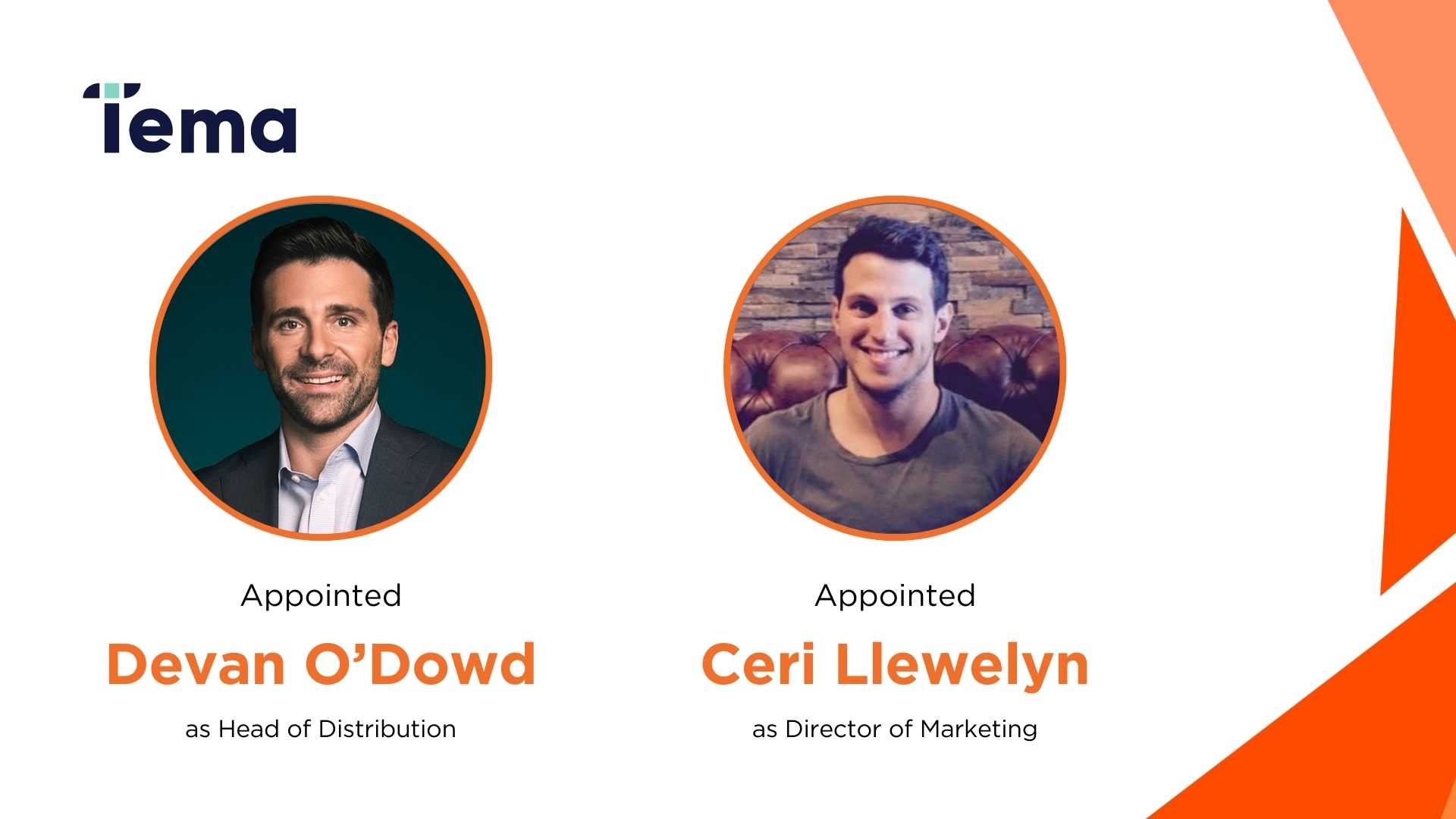
Tema ETFs Hits $1B AUM in Record Time, Adds New Leadership Muscle
financial technology 25 Aug 2025
Breaking the billion-dollar mark is a big deal for any asset manager. Doing it in under two years, with less than $5 million in seed capital, is rarer still. Tema ETFs, a New York–based provider of thematic exchange-traded funds, has hit $1 billion in assets under management (AUM), cementing its place among the fastest-growing ETF issuers in recent memory.
But the milestone isn’t just about speed—it’s about who’s buying. More than 90% of Tema’s AUM comes from institutional investors like RIAs, wirehouses, family offices, and other fiduciary players. That’s a strong endorsement in a crowded ETF market where most newcomers struggle to get noticed, let alone secure serious institutional adoption.
Big Bets, Fast Payoffs
Tema’s growth has been turbocharged by its latest products. The Tema S&P 500 Historical Weight ETF Strategy (DSPY) and the Tema Electrification ETF (VOLT) have raised more than $700 million combined in less than eight months of 2025, despite starting with just $4 million in seed AUM. In an industry where most ETFs sputter out below $50 million, those numbers are eye-catching.
The growth isn’t isolated to a couple of hits either. Five of Tema’s six funds have cleared $60 million AUM, with half of those now over $100 million. In short: demand is broad, not just hype-driven.
Leadership Reinforcements
With momentum on its side, Tema is bolstering its bench. The firm has hired Devan O’Dowd as Head of Distribution and Ceri Llewelyn as Director of Marketing to drive its next phase of expansion.
O’Dowd joins from Global X ETFs, where he spent nearly a decade spearheading West Coast distribution. His career started at Morningstar before moving into ETF strategy at Cedar Capital.
Llewelyn brings digital firepower, having served as SVP of Web Strategy & Innovation at Direxion ETFs and previously leading digital transformation at State Street Global Advisors. With agency-side roots, he’s adept at building digital ecosystems—something Tema will need as it scales.
Why It Matters
The ETF market is famously brutal: over 60% of ETFs launched in the last decade have failed to gain traction. Tema’s mix of thematic strategies, institutional credibility, and strong early performance suggests it’s cracked part of the code. Add in fresh leadership with distribution and digital marketing chops, and the firm is positioning itself not just to ride trends, but to shape them.
CEO Maurits Pot called the milestone “an early win,” crediting the team and pointing to Morningstar rankings as validation. For now, Tema looks less like a scrappy upstart and more like a serious contender in the $8 trillion U.S. ETF market.
Get in touch with our MarTech Experts.

Ireland’s Loyalty Programs Market Set to Hit $387M by 2029
artificial intelligence 25 Aug 2025
Loyalty programs in Ireland aren’t just about grocery points anymore—they’re fast becoming one of the most competitive and tech-driven sectors in retail and financial services. According to a new ResearchAndMarkets.com report, the Irish loyalty programs market is expected to grow 15.1% year-over-year in 2025 to $239.5 million, before climbing to $387 million by 2029 on the back of digital transformation, gamification, and personalization.
For context, the market has already logged a 16.9% CAGR from 2020 to 2024, proving that loyalty is no longer an optional add-on but a core revenue driver.
Digital First, Rewards Later
Irish businesses are increasingly leaning on digital platforms to keep customers hooked. Fuel retailer Maxol recently introduced a Fuel Pay-enabled app, letting customers pay and collect rewards in one seamless interaction. IKEA has leaned into personalized offers that feel less “buy one get one” and more “we know what you actually want.” And luxury retailer Brown Thomas has doubled down on multi-tiered loyalty, offering escalating rewards to keep high-value shoppers spending.
The game-like angle is also rising. KFC’s “Rewards Arcade” uses challenges and leaderboards to turn fried chicken into a digital dopamine hit. This gamification trend is expected to spread quickly as brands realize customers stick around when loyalty programs are fun, not just transactional.
Big Players, Bigger Data
Ireland’s loyalty market remains a highly contested battleground, with heavyweights holding firm. Tesco Clubcard, SuperValu Real Rewards, and Dunnes Stores Value Club dominate grocery, while Aer Lingus’ AerClub continues to fly high in travel rewards. Banks like AIB and Bank of Ireland are pushing harder into the space with credit card-linked programs that extend their reach via retail partnerships.
The ecosystem is still fragmented, but data is the secret weapon. Retailers with large customer bases can wield advanced analytics to tailor offers down to the individual, making it tough for smaller players to compete. Yet niche operators like Applegreen in fuel or hospitality-focused loyalty startups are carving out space by targeting specific consumer needs.
The Next Frontier: AI, Partnerships, and Sustainability
Over the next two to four years, expect the loyalty battlefield to intensify. AI and machine learning are already being deployed—Tesco, for example, is using AI to fine-tune offers at scale. Partnerships are also on the rise, with Aer Lingus collaborating with global carriers to expand its loyalty footprint.
And then there’s sustainability: with eco-conscious consumers on the rise, programs like SuperValu’s “rewards for reducing plastic waste” point toward a future where loyalty perks aren’t just about discounts but also align with consumer values.
Why It Matters
For businesses, loyalty isn’t just about customer retention anymore—it’s about owning the customer relationship across multiple touchpoints. With more than $387 million up for grabs by 2029, brands that adapt with personalization, gamification, and eco-friendly perks will be the ones that keep winning wallets.
Get in touch with our MarTech Experts.

Midyear 2025 Reinsurance Pricing Sees Rare Favorable Conditions Amid Record CAT Bond Issuance
financial technology 25 Aug 2025
Midyear 2025 renewals brought a rare win for cedents, as reinsurance pricing softened amid growing competition, according to AM Best’s latest Market Segment Report. Property catastrophe reinsurance pricing fell roughly 10% on a risk-adjusted basis, a notable reversal from the broad rate hikes seen just two years ago.
The report, “Record CAT Bond Issuance Boosts ILS Capacity and Reshapes Pricing Landscape,” highlights the surge in 144A catastrophe bond issuance, which has expanded avenues for investors and added capacity for insurers. In the first half of 2025, record-breaking issuance facilitated greater participation by the capital markets, especially benefiting small- to mid-sized insurers seeking fully collateralized multi-year reinsurance.
Pricing Trends Across Reinsurance Layers
While overall rates fell, reductions were layer-specific:
-
Upper layers: High single-digit rate cuts.
-
Lower layers: Flat to modest reductions, fueled by new startups in Florida and ongoing depopulation of Citizens Property Insurance, driving additional demand.
This stratified pricing underscores a more competitive market where insurers must balance risk exposure with evolving capital availability.
CAT Bonds and ILS Market Dynamics
The first half of 2025 also saw unprecedented catastrophe bond activity, with new sponsors entering the market and smaller insurers leveraging the capital markets. AM Best notes that the Insurance-Linked Securities (ILS) market began the year with weaker returns, largely due to California wildfires in January. Returns rebounded February through June but lagged 2024’s levels.
“While 2025 full-year CAT bond returns may not match 2024, current spreads and collateral yields indicate returns will still exceed the 2017–2022 average,” said Wai Tang, Senior Director at AM Best.
Why It Matters
For cedents, the combination of softening midyear pricing and expanded capital via CAT bonds offers a rare window to secure cost-effective coverage. Investors and insurers alike are navigating a reshaped landscape, where ILS growth and targeted pricing strategies across layers are redefining risk management in property catastrophe reinsurance.
Get in touch with our MarTech Experts.
Fivetran Partners with Thales Subsidiary S3NS to Enable Sovereign Cloud Data Movement in Europe
data management 25 Aug 2025
Fivetran, a global leader in automated data movement, has teamed up with S3NS, a Thales subsidiary powered by Google Cloud, to address a critical challenge facing European enterprises: modernizing in the cloud while keeping sensitive data sovereign, secure, and regulatory-compliant.
The partnership positions Fivetran as the first data movement solution available within S3NS’s Contrôles Locaux environment, enabling organizations in banking, insurance, government, and energy to accelerate digital transformation without compromising data sovereignty.
“Businesses today face increasingly stringent regulations and rising demands for sovereignty. By integrating our technology into S3NS’s secure architecture, we enable customers to harness the full power of the cloud with high levels of data protection,” said Virginie Brard, Regional Leader for France and Benelux at Fivetran.
Key Features and Capabilities
Fivetran’s integration within S3NS’s environment offers enterprises:
-
Flexible deployment: on-premises, hybrid, or cloud-native.
-
End-to-end encryption: via S3NS’s External Key Management (EKM) service.
-
Robust security controls: role-based access control (RBAC), column blocking, hashing, and advanced certifications.
-
Regulatory compliance: ensures sensitive data is protected both in transit and at rest.
The solution was validated through a joint project with a major French insurance company, demonstrating that high-performance data ingestion can coexist with stringent compliance and sovereignty requirements.
“Fivetran is a recognized technology, praised for its data ingestion performance. Its integration into our secure cloud environment represents a major step in aligning technological performance with regulatory compliance,” said Estelle Samwells, Chief Commercial Officer at S3NS.
Implications for the European Cloud Ecosystem
This collaboration strengthens the European sovereign cloud ecosystem, allowing enterprises to scale analytics and AI workloads without regulatory compromise. With rising EU mandates around digital sovereignty, solutions like this may set a benchmark for combining performance, security, and compliance in cloud modernization efforts.
Get in touch with our MarTech Experts.

Fireflies.ai Becomes First AI Meeting Tool in Anthropic’s Claude Directory
artificial intelligence 22 Aug 2025
Fireflies.ai, best known as the AI-powered “teammate” that transcribes and analyzes meetings, just notched a first: it’s the first AI meeting tool officially listed in Anthropic’s Claude Connectors Directory.
The move marks a major step in how teams can wring business intelligence from their endless Zooms, Google Meets, and Teams calls. Fireflies’ new Model Context Protocol (MCP) connector—now out of beta—plugs meeting data directly into Claude. Translation: you can skip digging through call transcripts and simply ask Claude for insights like “What objections did enterprise buyers raise last quarter?” or “Which product features are most requested?” Answers arrive in seconds, no SQL or engineering skills required.
“Meeting data has always been one of the richest sources of business intelligence, but it’s been trapped in silos,” said Krish Ramineni, CEO and co-founder of Fireflies. “With our MCP connector, we’re making it possible for anyone to unlock insights from conversations in seconds.”
Adoption Proves the Demand
During its beta phase, Fireflies logged strong traction: 55% of users came back for multiple sessions, with usage climbing 20% week over week. Teams across sales, product, and customer success discovered tangible applications:
-
Sales analyzed objection patterns across deals to sharpen pitch strategies.
-
Product managers tracked feature requests across customer calls without manual review.
-
Customer success teams flagged churn risks early.
-
Leadership monitored decision-making and project momentum across distributed teams.
Some early adopters say the Claude integration finally makes customer conversations actionable. Jeff Hardison, CRO at CaseMark, put it bluntly: “We’ve used call-recording services for years, but Fireflies is the first to give us access to the gold in the calls via a third-party AI platform.”
Privacy by Design
Unlike many AI note-taking rivals, Fireflies makes a clear promise: meeting data is never used to train AI models. That policy extends to the MCP integration, meaning Anthropic won’t harvest transcripts to improve Claude. Enterprise-grade permission controls ensure employees only see conversations they’re authorized to access—reassurance for privacy-conscious IT buyers.
Available Now Across Claude
The integration is already live for any Fireflies user with a paid Claude plan (Pro, Max, Team, or Enterprise). Setup is refreshingly simple: open Claude’s Settings, browse Connectors, and click Fireflies. The connector works across Claude’s web, desktop, mobile apps, and Claude Code for developer workflows.
Beyond Claude: ChatGPT and Devin on Deck
Fireflies isn’t stopping at Anthropic. The company has rolled out a beta integration with OpenAI’s ChatGPT, bringing the same meeting intelligence to another leading AI platform. Even more intriguing is its debut on Devin, the AI software engineer, where meeting transcripts can directly inform coding tasks.
Imagine a product manager discussing an API in a call, and Devin coding against those exact requirements minutes later. Or a developer querying last week’s architecture review via Slack. That’s the promise Fireflies is chasing.
“We’re committed to making meeting intelligence available wherever teams work,” Ramineni said. “Whether you’re using Claude for research, ChatGPT for content creation, or Devin for engineering—your meeting insights should follow you.”
The race to productize meeting intelligence is heating up. Otter.ai, Gong, and Chorus have long pitched transcription and analytics, but Fireflies is pushing further by integrating with leading general-purpose AI platforms. The result: meeting data isn’t just stored—it becomes a live knowledge layer across business workflows.
With enterprises increasingly leaning on AI copilots, Fireflies’ Claude debut may set a new standard: if your meeting platform can’t surface insights instantly, it’s already behind.
Get in touch with our MarTech Experts.

Starburst Sets AI & Datanova 2025 for New York: Data Meets Enterprise AI
artificial intelligence 22 Aug 2025
If the AI boom has made one thing clear, it’s this: data isn’t just the fuel—it’s the steering wheel. Starburst, the data platform for apps and AI, is doubling down on that message with AI & Datanova 2025, set for October 9 at The Westin New York Times Square.
The one-day in-person event promises a mix of strategy, tech deep dives, and forward-looking predictions. Expect a crowd heavy on CDOs, CIOs, CTOs, chief architects, and data power users—translation: the people actually responsible for making sure AI doesn’t collapse under the weight of bad data.
Borgman’s Keynote: The Enterprise Agent Era
The highlight? Two keynotes from CEO and co-founder Justin Borgman, who plans to take attendees on a tour of the near-future enterprise AI landscape. The tentpole topics:
-
Enterprise Agents — AI-powered, autonomous systems that can execute complex business tasks across functions.
-
The Data Readiness Gap — Why companies with governed, high-quality, and accessible data will be the only ones still standing in three to five years.
-
Blueprints for Scale — The critical role of federated query, governance, and real-time data access in fueling AI apps that work in practice, not just in PowerPoint.
-
Predictions for the AI-Driven Enterprise — From reshaped decision-making to entirely new categories of customer experience.
Borgman’s positioning isn’t theoretical. Starburst has built its reputation helping organizations unify and query data across silos, and he’s expected to share real-world customer use cases that show where the data-to-AI pipeline breaks—and how leading firms are patching it.
Executives from Arity, Expedia, OCBC Bank, and others will round out the speaker lineup, offering cross-industry perspectives.
Not Just Talk: The Datanova Edge
Lisa Luscap, CMO of Starburst, pitched the event as less hype, more hands-on strategy:
“AI & Datanova 2025 is designed to give data and technology leaders the strategies, insights, and peer connections they need to drive tangible AI outcomes.”
That’s a deliberate framing in a market increasingly flooded with AI conferences long on buzzwords and short on actionable detail. For Starburst, the event also positions its platform as the bridge between raw enterprise data and AI apps that actually deliver.
The Data Visionary Awards
Alongside the event, Starburst opened nominations for its 2025 Data Visionary Awards, celebrating customers and partners who’ve turned data into competitive advantage. Categories span everything from the AI & Data Visionary Award to the Impact Through AI Award and Data Disruptor Award, with regional and partner-specific honors as well.
Key dates:
-
Deadline for submissions: September 5, 2025
-
Winners announced: October 9, live at AI & Datanova 2025 in NYC
-
Eligibility: Customers, partners, and employees can submit entries, with multiple nominations allowed.
The awards serve a dual purpose—spotlighting customer success stories while showcasing how Starburst’s platform underpins real-world transformation.
The timing couldn’t be sharper. With generative AI hype cooling into questions of ROI and operational reality, enterprises are increasingly focused on data readiness. Analysts have warned that without strong governance and high-quality inputs, AI deployments risk hallucinations, compliance failures, or worse—irrelevance.
By positioning itself at the crossroads of data infrastructure and enterprise AI, Starburst is angling for the sweet spot: enabling companies to connect disparate data sources in real time while making that data usable by AI systems. In other words, if AI is the brain, Starburst wants to be the circulatory system.
And the concept of Enterprise Agents—autonomous AI systems that don’t just analyze but act—is one of the most closely watched frontiers in enterprise tech. If Borgman’s predictions pan out, we may soon see data-driven bots handling everything from pricing adjustments to customer service workflows, backed by clean, federated data.
Get in touch with our MarTech Experts.

PebblePost Taps AdTech Veteran Will Harrington as CRO to Drive CTV and Direct Mail Growth
advertising 22 Aug 2025
PebblePost, the performance marketing company that turned direct mail into a programmatic channel, just added more firepower to its leadership bench. The company has appointed Will Harrington as Chief Revenue Officer (CRO), a move designed to accelerate its push into Programmatic Direct Mail and Connected TV (CTV).
Harrington isn’t a newcomer to adtech. With senior roles at Criteo, Vayner3, and MiQ Digital, he’s led revenue teams, scaled client partnerships, and driven growth in both agency and brand-direct settings. Now, he’s bringing that experience to PebblePost at a moment when marketers are hungry for channels that blend digital-like precision with measurable outcomes.
Direct Mail Meets CTV
PebblePost is best known for its Performance Marketing Engine, which transformed direct mail from an old-school tactic into a performance-driven channel. CEO Jacob Ross puts it bluntly:
“PebblePost brought direct mail into the modern CMO's stack by making it a true performance channel, rivaling search and social. Now, with our launch into CTV, we're doing the same for TV advertising.”
That CTV play is no small bet. PebblePost’s new Performance CTV product extends its engine to streaming households across the U.S., engaging “decision-ready consumers” with ads that are measurable and attributable. Early numbers look impressive: 23x incremental ROAS and a 36% lift in conversion rates.
For brands under pressure to prove ROI in a fragmented media landscape, those metrics could make CTV more than just another brand-awareness play.
Leadership Momentum
Harrington’s appointment is part of a broader leadership build-out. Over the last 18 months, PebblePost has brought in Amit Nigam as SVP, Head of Product, and Ryan Horn as SVP, Head of Marketing, signaling a strategy to scale beyond mail and into the wider performance marketing ecosystem.
Harrington seems aligned with that vision:
“PebblePost has the technology, the data, and the vision to lead the next era of performance marketing. The company can combine the precision and measurability of digital with the immersive power of TV—and deliver outcomes marketers can trust.”
The addition of Harrington underscores PebblePost’s bid to be seen not as a niche player but as a performance-first alternative to search and social. With advertisers demanding verifiable ROI, PebblePost is positioning itself to make both mail and CTV channels behave like precision digital campaigns—data-driven, measurable, and performance-backed.
As CTV grows more crowded—with offerings from The Trade Desk, Roku, and Google’s YouTube TV—PebblePost’s angle is clear: measurable outcomes that justify the spend. The question now is whether Harrington can scale that proposition to enterprise marketers looking for a fresh edge in performance.
Get in touch with our MarTech Experts.
Page 221 of 1504