News
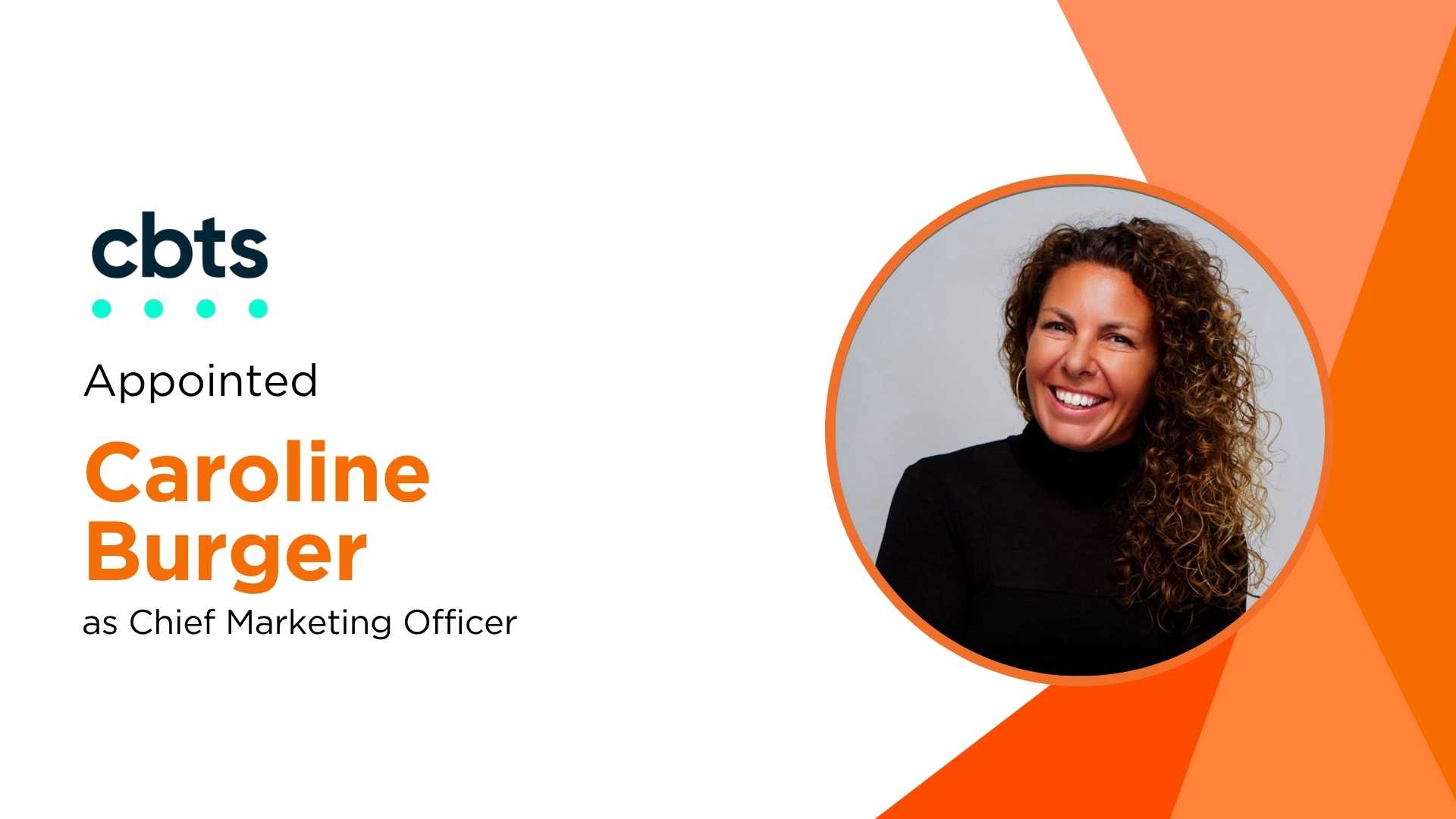
CBTS Appoints Caroline Burger as CMO to Accelerate Growth and Strengthen Global Market Position
technology 11 Nov 2025
CBTS has appointed Caroline Burger as its new Chief Marketing Officer, a move that signals the company’s intent to elevate marketing as a key driver of growth, innovation, and customer value. The hire also strengthens alignment across the CBTS-OnX brands as the company pushes forward with its transformation into a next-generation, AI-enabled global solutions provider.
Burger brings more than two decades of experience in technology and consulting. Before joining CBTS, she served as CMO at GlobalLogic, a Hitachi Group company known for its digital engineering capabilities. Her track record is rooted in building high-performing marketing teams, driving pipeline acceleration, strengthening brand equity, and developing marketing-sales partnerships that boost revenue impact.
Strengthening CBTS’s Growth Strategy
CBTS CEO Kristin Russell positioned Burger’s arrival as a crucial milestone in the company’s growth strategy. “Caroline’s appointment marks a pivotal step in our transformation into a next-generation, AI-enabled global solutions provider,” Russell said. She emphasized that Burger’s deep expertise in growth marketing and her collaborative approach to sales alignment will be central as CBTS expands its market presence and increases the value it delivers to clients.
The move follows the recent addition of Arrian Mehis as President of U.S. Sales. Together, the appointments demonstrate a coordinated push to unify sales and marketing leadership around a shared mission of customer success, operational scalability, and long-term revenue growth.
A Vision for Client-Centric Innovation
Burger’s appointment comes during a period of transformation across the technology services sector. Clients are demanding more tailored, AI-infused solutions, while competition continues to intensify. CBTS is aiming to differentiate itself through cohesive go-to-market strategies backed by strong leadership.
Burger expressed enthusiasm about joining at a defining moment. “Kristin and the leadership team have built a strong foundation, and I look forward to partnering to drive growth, deepen client relationships, and showcase the innovation that defines CBTS,” she said.
Her focus will center on elevating the company’s brand positioning, strengthening its customer engagement strategy, and amplifying CBTS’s capabilities in hybrid IT, cloud, cybersecurity, and advanced managed services.
Aligning Marketing and Sales for Scalable Impact
The broader message behind CBTS’s leadership additions is clear: revenue alignment matters more than ever. As AI and digital transformation reshape customer expectations, organizations must streamline how they market, sell, and deliver solutions. CBTS is responding by building a unified leadership structure designed to accelerate decision-making, improve collaboration, and bring sharper focus to customer outcomes.
With Burger leading global marketing and Mehis steering U.S. sales, CBTS is positioning itself to capture new market opportunities while reinforcing its reputation as a trusted, forward-thinking partner.
Get in touch with our MarTech Experts.

SearchStax Unveils Multi-Site Search Management to Transform Search Into a Scalable, AI-Driven Marketing Engine
marketing 11 Nov 2025
SearchStax has launched new multi-site management capabilities for its AI-powered Site Search platform, redefining how enterprises govern and optimize search experiences across large, complex digital ecosystems. The update elevates search from a background utility to a governed, insight-rich channel that drives engagement across hundreds of digital properties.
Large organizations often juggle sprawling networks of brand, regional, and division-specific sites—each with unique compliance needs, content structures, and audience intent. In most cases, site search is treated as a functional add-on rather than a strategic marketing asset. SearchStax is aiming to change that, giving enterprises a unified, AI-enhanced layer for governance, contextual relevance, analytics, and performance tuning across every digital property.
Solving Search Challenges Across Massive Digital Footprints
Managing search across multi-brand ecosystems has always been difficult. Each site has different content rules, regulatory requirements, and user expectations, making standardization nearly impossible. SearchStax’s new capabilities consolidate control while preserving local flexibility, so each site maintains its unique identity without sacrificing consistency or compliance.
The platform now provides enterprises with centralized oversight across regions, brands, and languages. Teams can apply governance policies globally while fine-tuning experiences based on local context and audience behavior. This approach supports scale without sacrificing precision.
“By combining centralized governance with AI-powered search, SearchStax is transforming how organizations deliver search,” said Leslie Persaud, VP of Product at Acquia. “Our shared customers can now better manage search experiences at scale — across brands, regions and languages — while empowering marketers to act on real-time audience signals.”
Unified Tools for Digital, Marketing, and IT Teams
Digital, marketing, and IT leaders gain a single point of control for governance, tuning, and analytics. The upgrade introduces simplified workflows that allow teams to update search experiences across entire ecosystems or individual sites without developer assistance.
SearchStax’s multi-site capabilities enable teams to:
-
Streamline governance with granular access controls for brands and geographies
-
Deliver contextual relevance by tuning results to region, brand, or audience
-
Gain actionable insights through aggregated analytics and site-level dashboards
-
Operate efficiently with bulk updates, ranking adjustments, promotions, and AI tools like Smart Answers
According to SearchStax CEO Sameer Maggon, customers need search that scales with their ecosystems. “Multi-site search management brings efficiency, structure and visibility to a high-value touch point in the digital journey that is often overlooked.”
Meeting Higher Expectations in Regulated, Information-Heavy Industries
Industries such as healthcare, financial services, government, and higher education rely heavily on trusted, compliant search experiences. Visitors expect accurate results when searching for doctors, service locations, academic programs, or policy resources—across entire websites or within segmented content areas like blogs or resource centers.
“SearchStax’s new capabilities enable our teams to collaborate efficiently while maintaining organizational governance,” said Panara Dhavalkumar, Drupal architect at the International Organization for Migration. “We now have greater control and flexibility in how we scale search across multiple sites without compromising compliance.”
These enhancements give regulated industries the ability to deploy AI-driven search that respects compliance boundaries while improving customer experience. Marketing teams also benefit from first-party insights that reveal intent signals and emerging search trends without waiting for developer intervention.
Strengthening AI Governance Across the Digital Landscape
SearchStax continues to hold the #1 position in Site Search Software on G2, reinforcing its leadership in enterprise-grade search governance and AI-driven relevance. The company plans to showcase its multi-site management capabilities at the Healthcare Interactive Conference (HCIC) and the AMA Symposium for the Marketing of Higher Education, both taking place Nov. 9–12.
As digital ecosystems grow more distributed and regulated, SearchStax’s new multi-site management release offers a blueprint for delivering consistent, compliant, and intelligent search experiences at scale — turning every search interaction into a measurable marketing opportunity.
Get in touch with our MarTech Experts.
SymphonyAI and AML Intelligence Reveal FinCrime Frontier Report, Exposing a Sector Ready for AI-Led Compliance Transformation
artificial intelligence 11 Nov 2025
SymphonyAI and AML Intelligence have released the FinCrime Frontier 2025–26 Report, and it delivers a surprising conclusion. Instead of treating rising compliance expectations as a regulatory burden, financial institutions now see them as a catalyst for long overdue modernization. The study, based on insights from more than 250 compliance, risk, and financial crime leaders, paints a sector hungry for transformation—yet constrained by structural weaknesses it must overcome to realize its AI ambitions.
Compliance Expectations Become an Innovation Opportunity
According to the report, 58% of institutions say today’s fast-shifting regulatory and risk environment is the force pushing them toward proactive intelligence and data-driven operations. Nearly 80% plan to implement AI-driven compliance solutions within the next 18 months. Most also expect measurable improvements in transaction monitoring and customer due diligence within two years.
This marks a clear mindset shift from defensive compliance to strategic modernization. The sector now sees intelligence-driven systems as not just a competitive edge but a necessity.
Critical Barriers Still Slow Progress
However, the momentum is not without friction. The report highlights several constraints threatening to stall transformation:
-
Only 11% of leaders are confident in their data quality.
-
Over half report serious fragmentation across data sources.
-
46% cite data quality and cost as the biggest barriers to adopting automation and AI.
-
More than 70% say fewer than half of their AML activities are automated.
-
Only 17% have operational responsible AI governance frameworks.
-
Nearly 75% have never calculated ROI on their compliance technology investments.
These gaps make the move to intelligence-led compliance difficult. Manual reviews remain widespread, false positives remain high, and governance frameworks lag behind technological ambition.
From Pilot Projects to End-to-End Intelligence
The report suggests the sector is prepared to move beyond isolated AI experiments. Instead, financial institutions are aiming for integrated compliance ecosystems—where unified data, automation, and human expertise work together to deliver continuous intelligence.
Jason Shane, Head of Product Strategy and Innovation at SymphonyAI, says institutions are no longer waiting for the next regulatory shock. “They’re seeing changing compliance expectations as their opening to build intelligence and resilience into the heart of their operations,” he said. “Success now depends on unifying data, automating the entire compliance lifecycle, and embedding explainable AI into day-to-day decision-making.”
This shift marks a broader transition from reactive incident management to proactive financial crime prevention.
Responsible AI Will Define the Next Compliance Era
Stephen Rae, Co-Founder and Chair of AML Intelligence, stressed the importance of responsible deployment. He noted that intelligent technologies will define the next era of financial crime prevention—but only if paired with strong oversight and clear performance metrics.
The report reinforces that organizations must improve their ability to measure impact, calculate ROI, and operationalize responsible AI frameworks. Without this structure, institutions risk building AI systems that fail to satisfy regulators or provide meaningful intelligence.
Proactive Intelligence Becomes the New Compliance Standard
The FinCrime Frontier Report makes one theme clear: proactive intelligence is fast emerging as the central principle for next-generation compliance. This requires connected data pipelines, automated workflows, and a deeper partnership between human analysts and AI.
Across banking, insurance, and financial services, the institutions that succeed will be those that break down data silos, scale automation, and embed AI into the full lifecycle of risk and compliance operations. The frontier of financial crime prevention is no longer a future vision—it is becoming the operational blueprint for the next two years.
Get in touch with our MarTech Experts.
Bitget Names New CMO as It Pushes Toward a Universal Exchange Future
marketing 10 Nov 2025
Bitget has made another strategic move in its race to redefine what a crypto exchange can be. The company has appointed Ignacio Aguirre Franco as Chief Marketing Officer, adding a seasoned marketer-engineer hybrid to its leadership bench as it pushes its Universal Exchange (UEX) model deeper into the global market.
Ignacio’s arrival lands at a pivotal moment for Bitget, which is shifting from a traditional exchange to what it calls a Universal Exchange—an all-in-one ecosystem that blends CeFi, DeFi, and TradFi. It’s a bold attempt to unify fractured financial systems under a single user-first platform.
A CMO With Both Technical and Creative Firepower
Ignacio brings more than fifteen years of experience across fintech, technology, and blockchain. His resume spans Adobe, SAP, Scorechain, and Xapo Bank—roles that sharpened his ability to scale global products, shape brand narratives, and translate difficult concepts into accessible stories.
That blend matters. Crypto’s biggest hurdle isn’t technology; it’s communication. Ignacio’s engineering background gives him fluency in the underlying mechanics of Web3, while his marketing chops help him position those mechanics in ways real users actually understand.
His focus at Bitget will revolve around simplifying product narratives, deepening user engagement, and strengthening Bitget’s global brand. The company is betting that clearer storytelling will accelerate adoption of its newest innovations, including Onchain, GetAgent, and Stock Futures.
“The Future of Finance Should Belong to Everyone”
Ignacio has already made his mission clear: turn the Universal Exchange model into something billions of people can grasp—and trust.
“The core of any great tech is based on its access and the opportunities it brings to disrupt,” he said. He wants to dismantle long-standing barriers that have splintered the financial landscape and raise awareness of how crypto, tokenized assets, and cross-market trading can unlock new freedom for global users.
His mandate extends beyond feature-level marketing. Bitget aims to position itself as both a financial and cultural platform, connecting innovation with community. Ignacio’s job is to lead that narrative shift.
Bitget’s Next Phase: Scale, Security, and Cultural Reach
The appointment follows Bitget’s renewed push toward mass adoption, backed by an ambitious target: 150 million users by 2026. The company has expanded its product lineup and reinforced its focus on security—two areas the market now expects as crypto matures.
Ignacio’s leadership will also shape how Bitget uses cultural partnerships to extend its reach. The exchange’s recent alliances with LALIGA, MotoGP, and UNTOLD Festival show a clear strategy: embed the brand in entertainment, sports, and global youth culture.
CEO Gracy Chen said Ignacio’s creative and technical strengths align with Bitget’s mission to merge innovation, culture, and community into a seamless user experience.
A Universal Exchange With Global Ambition
As Bitget enters its seventh year, it is positioning itself as more than a trading platform. The company is leaning into a future where financial systems—centralized or decentralized—aren’t siloed. Ignacio’s appointment signals Bitget’s commitment to building that future with sharper communication, stronger trust, and a clearer message that the next era of finance should be truly open to all.
Get in touch with our MarTech Experts.

Korean AI Firms Target Middle Eastern Energy Market at ADIPEC 2025
artificial intelligence 10 Nov 2025
Korea’s AI and software sector made a coordinated push into the Middle Eastern energy market this week. The Korea AI·Software Industry Association (KOSA) joined ADIPEC 2025—one of the world’s largest and most influential energy exhibitions—bringing nine homegrown innovators to Abu Dhabi to pitch their technologies to global buyers.
The move is part of a broader strategy supported by MegazoneCloud and backed by KOFCA’s Joint Entry Support Project, designed to help Korean companies break into high-growth global markets.
Korea’s AI Pavilion Debuts at the World’s Largest Energy Expo
ADIPEC is massive by any metric. More than 2,250 companies from 170 countries and over 200,000 attendees converge annually to shape the next wave of energy innovation. This year’s theme, “Energy. Intelligence. Impact,” set the tone for a market hungry for AI-driven transformation—and Korea arrived ready to meet that demand.
KOSA operated the KOREA AI PAVILION in Hall 17 at ADNEC, hosting companies spanning AI, ESG tech, automation, cloud intelligence, and industrial analytics. The nine participating firms—Ecopeace, i-ESG, Serdic, Piaspace, VueronTechnology, enhans, FutureMain, Tradlinx, and Seanergy Partner—used the platform to demonstrate how Korean technology can modernize and optimize energy operations across the region.
Meetings, Deals, and Market Entry Ambitions
Throughout the exhibition, Korean companies conducted on-site business consultations with regional buyers and enterprise leaders. Their goal: secure partnerships that can accelerate market penetration in a region investing heavily in digital infrastructure, predictive analytics, and AI-based operational efficiency.
The Middle East’s energy sector is in the middle of a deep modernization cycle, pushing companies to adopt automation, AI safety systems, real-time optimization engines, and cloud-native platforms. That shift creates a strong opening for Korean firms backed by KOSA’s network and MegazoneCloud’s cloud infrastructure across the region.
A High-Impact Networking Push
Beyond the exhibition floor, KOSA hosted KOREA AI INNOVATION DAY, an exclusive networking dinner on November 5 at Novotel Abu Dhabi Al Bustan. The event pulled in major regional stakeholders, including representatives from the Abu Dhabi Investment Authority (ADIA), Plug&Play, and Shorooq Partners—an indicator of the growing appetite for Korean industrial tech.
This engagement gave Korean SMEs direct access to capital networks, innovation accelerators, and enterprise partners actively seeking AI solutions for large-scale energy projects.
Leadership Perspective: A Strategic Expansion Moment
KOSA Chairman Joh Joon-hee emphasized the importance of timing: the global energy sector is accelerating its AI-led transformation, and Korea sees an opportunity to showcase its competitiveness.
He noted that ADIPEC provided “a valuable opportunity for Korean AI and software companies to demonstrate their technological prowess and competitiveness in the Middle Eastern energy market.”
Lee Ju-wan, Chair of KOSA’s Overseas Expansion Committee, highlighted MegazoneCloud’s role in enabling Korean SMEs to compete globally. Their cloud infrastructure and Middle Eastern network, he said, will be central to helping Korean firms secure a foothold in the region.
A Launchpad for Korean AI in Global Energy
As the energy industry retools itself with automation, AI insights, and predictive analytics, Korea’s delegation at ADIPEC signals a clear intention: to position itself as a global partner in next-generation energy tech.
KOSA’s coordinated participation, combined with MegazoneCloud’s support and growing interest from local stakeholders, suggests this may be the beginning of deeper Korean involvement in Middle Eastern digital transformation projects.
Get in touch with our MarTech Experts.

Palabra AI Expands Into Consumer Tech With Talo Acquisition and New Real-Time Translation Suite
artificial intelligence 10 Nov 2025
Palabra AI, best known for powering sub-second speech-to-speech translation behind the scenes, is stepping into the spotlight. The company has acquired Talo and launched a suite of consumer-facing products designed to bring its ultra-fast voice translation technology directly into everyday communication. It’s a strategic shift from pure infrastructure provider to full ecosystem player—and it arrives as global demand for real-time multilingual communication accelerates.
From Backend Engine to Full Product Ecosystem
The acquisition of Talo marks Palabra’s move beyond developer tools and deeper into the workflows of businesses, creators, educators, and everyday users. With Talo’s team and interface technology now integrated, Palabra is introducing five real-time translation solutions built to work across the formats people actually use:
-
Video Calls: A Palabra bot can join meetings and provide sub-second translation for all participants, either through shared interpretation or personalized translation streams.
-
Webinars: Each attendee receives an individual, real-time translation feed, regardless of the presenter’s language.
-
Streams & Broadcasts: Creators and media platforms gain multilingual streaming without delays, unlocking instant accessibility for global audiences.
-
Events: In-person attendees can listen to instant interpretation directly from their phones while watching a live speaker onstage.
-
API Platform: The company’s original developer-focused layer continues to power custom workflows across enterprise environments and consumer applications.
Together, these offerings blur the line between AI infrastructure and user-facing communication tools, making real-time voice translation usable without technical expertise.
A Partnership Built on Shared Vision — and Speed
Palabra CEO Artem Kukharenko called Talo’s interface “one of the most elegant and convenient implementations” built on Palabra’s translation engine. The acquisition, he said, will help bring the technology to millions who need fast, natural translation for business, education, and daily conversation.
Talo’s own mission aligns closely. Former Talo CEO and now Palabra CPO Anton Selikhov emphasized that the combined platform finally delivers on the long-promised idea of effortless multilingual communication—no slow processing, no robotic voices, no awkward pauses. Translation happens mid-sentence, with the translated voice preserving tone, rhythm, and personality.
Inside the Technology Powering the New Suite
At the core of the launch is Palabra’s predictive-context translation engine, a system engineered to voice translations before a speaker finishes their sentence. Instead of waiting for full speech recognition, the model predicts meaning as it unfolds, producing translation output in real time.
The platform supports 60+ languages and over 3,000 language pairs, enabling natural communication across nearly any combination. Unlike traditional translation models that flatten vocal nuance, Palabra’s system mirrors each speaker’s timbre and cadence—offering continuity that’s especially critical for broadcasts, education, and high-stakes business settings.
What the Acquisition Signals for the Industry
Real-time multilingual communication has long been a staple of science fiction. Now, platforms like Palabra are dragging it firmly into the mainstream. The expansion into calls, events, and global streaming makes Palabra a direct competitor to emerging voice-translation features from Big Tech, while its sub-second latency gives it a notable head start.
The move also positions the company to capture a surge in demand from enterprises that operate across multilingual teams or serve diverse global audiences. As virtual events, remote work, and cross-border collaboration become the default, the need for frictionless communication tools continues to rise.
For now, Talo’s brand will stay active for existing users, but the long-term plan is to merge fully under the Palabra umbrella as new conversational tools roll out.
Palabra’s new strategy is clear: remove the friction that keeps people from talking to each other. And with this acquisition, the company is making real-time translation feel less like a feature—and more like a natural part of communication.
Get in touch with our MarTech Experts.

Akkodis Showcases Real-World AI Wins Across Healthcare, Banking, and Enterprise IT
artificial intelligence 10 Nov 2025
Akkodis is making the case that AI transformation isn’t theoretical anymore—it’s happening inside factories, banks, and enterprise IT teams today. The global digital engineering and consulting firm has announced a string of successful implementations that illustrate how its AI and data solutions are delivering measurable impact at scale.
The message is straightforward: AI isn’t just a capability; it’s becoming core infrastructure. And Akkodis is positioning itself as the partner that turns AI ambition into enterprise-wide change.
AI That Compresses Days Into Seconds
One of the most striking examples comes from a global healthcare manufacturer wrestling with production scheduling. Historically, syncing supply forecasts with manufacturing capacity took five days of manual work. Using Akkodis’ combinatorial optimization engine—and a human-in-the-loop review layer—the company cut that to seconds.
The next phase introduces LLM-based agents allowing managers to describe production priorities in plain language. If successful, scheduling could shift from reactive to predictive, offering a real competitive edge in an industry where precision and reliability matter.
Teaching Banks to Use AI Responsibly
AI transformation often fails not because the tools don’t work, but because teams don’t know how to use them. Akkodis addressed this challenge through a partnership with Microsoft Worldwide Learning and the Commonwealth Bank of Australia.
Through tailored bootcamps, webinars, and hands-on AI training, engineering teams rapidly learned how to apply tools like GitHub Copilot. Roughly 30% of AI-generated code was accepted—an early indication that AI can enhance accuracy and speed when applied responsibly. For a sector where governance and compliance are non-negotiable, this approach offers a repeatable blueprint.
Automating Enterprise IT at Scale
Akkodis Japan delivered another notable case study: a generative AI and low-code program that helped 2,000 employees become proficient in AI tools within 10 months. The effort saved more than 15,000 hours annually by automating claims submissions and sales processes—workstreams traditionally plagued by repetitive tasks and human bottlenecks.
This internal success now serves as a template for clients looking to scale automation responsibly without losing oversight or quality control.
A Blueprint for Responsible AI Transformation
Akkodis argues that these outcomes highlight a broader truth—AI is only as powerful as the human expertise, governance, and change management that support it. The company calls this framework Akkodis Intelligence, a philosophy that blends domain experience with advanced technology to ensure AI deployments create sustained, measurable results rather than isolated wins.
Akkodis Group AI Officer Joshua Morley emphasized this point, noting that businesses need “confidence and capability” as much as they need technical horsepower. Responsible AI isn’t just an industry promise; it’s fast becoming a competitive differentiator.
What It Means for the Market
These examples underline a growing shift across sectors: AI transformation is moving out of pilot projects and into full operations. Healthcare, financial services, and enterprise IT all face intense pressure to improve efficiency, reduce errors, and accelerate decision-making. Solutions that combine speed with responsible governance are quickly becoming the industry’s preferred path.
Akkodis’ recent projects show how combining human insight with machine intelligence can compress timelines, elevate quality, and unlock new operational capacity. With more AI-driven products planned in the months ahead, the company is preparing for a wave of demand from organizations trying to modernize without compromising control.
For industries seeking practical AI—with real impact, not hype—Akkodis is positioning itself as a partner that delivers transformation that lasts.
Get in touch with our MarTech Experts.

Halper AI Launches as a “Silent Business Manager” for SMBs
artificial intelligence 10 Nov 2025
Artificial intelligence may be reshaping global industries, but small and mid-sized businesses face a different constraint: time. That’s the gap Halper AI, founded by Eduard Gevorkyan, aims to eliminate. The newly launched platform positions itself not as another tool to manage—but as an invisible partner that quietly runs the operational backbone of a business.
Eduard’s background blends science, strategy, and product innovation. Trained in biochemistry and biomedical engineering, he started his career at McKinsey & Company before moving to Google, where he specialized in data-driven product design. His entrepreneurial profile solidified in 2023 with the launch of SoulsHub, a Barcelona-based platform offering AI-powered replicas of mentors and coaches. The product grew to more than 200 AI personalities and was acquired a year later by a Saudi tech group for an estimated €5–10 million.
An Invisible Business Manager for Overworked Owners
With Halper AI, Eduard shifts focus from knowledge platforms to day-to-day business survival. Many owners spend more time managing logistics than serving clients. Halper operates as an AI Business Manager that automates communication, bookings, invoicing, and follow-ups, syncing with Instagram, WhatsApp, and calendar tools.
“Let others chase engagement. We’re chasing freedom,” Eduard says, capturing the platform’s philosophy in a single line.
The goal isn’t sticky engagement or dashboards. It’s relief.
A “Do Less” Approach to AI
Most digital platforms want users to check in constantly. Halper flips that model entirely. Eduard’s guidance is simple: “Please, don’t open Halper or open it once and close it.” The platform is built to run quietly in the background, ensuring clients get timely responses, schedules stay full, and invoices go out without fuss.
This design philosophy revolves around what Eduard calls “freedom metrics.” Silicon Valley values daily active users; Halper values time returned to the owner. Less screen time, more real time.
Why Halper Matters for SMBs
For small businesses where the founder is often the marketer, accountant, scheduler, and customer support team, Halper acts like an unseen employee. It gives a barber more time to refine a cut, a yoga instructor more attention to dedicate to students, or a local designer more hours to create.
At its core, Halper AI addresses the oldest challenge in business: balancing operations with growth. By absorbing the administrative load, it frees owners to focus on the part of their business that customers actually experience.
With simplicity, invisibility, and peace of mind as its guiding principles, Halper AI is redefining what effective AI looks like for SMBs—not more software, but less noise.
Get in touch with our MarTech Experts.
Page 155 of 1501