Interview

MarTech Edge Interview with Cyril De Queral, Co-Founder & CEO, Powell Software
communications 20 Jul 2023
Welcome, Cyril! Tell us about your experiences and motivations that led you to establish Powell Software.
In 2015, I was the CEO of Expertime, a French system integrator specializing in deploying enterprise intranets on SharePoint/Microsoft. With the move to the cloud, we created a SaaS platform to onboard all our customers in the same environment but with a specific configuration and design for each of them. It was a massive opportunity for us to go international since the cloud architecture made it available worldwide. We immediately created a global partner network to deploy our solution locally and reached international success within a few months.
How does Powell Teams catalyze the collaboration capabilities of Microsoft Teams to boost the overall user experience?
Powell Teams enhances Microsoft Teams' collaboration capabilities by offering several key features. It provides users with an intuitive dashboard to streamline navigation through their Teams and organize their collaboration efforts, including unique tagging and filtering options. Ready-to-use templates, validated by both IT and business criteria, facilitate employees in creating impactful Teams, like specific templates for HR onboarding or vendor project management. Life cycle management capabilities help archive inactive or expired Teams, ensuring sustainable use and information protection. The list goes on.
Besides these features, Powell Teams allows employees to leverage the best of Microsoft 365, offering a unified workspace where all documents, tasks, and conversations can be accessed from one place, further improving the user experience.
How decisive a role does employee engagement & experience play in slashing down employee turnover rates?
Employee engagement and experience play a pivotal role in reducing employee turnover rates, especially in the context of hybrid work and post-COVID scenarios. Considering the "Great Resignation" and challenges in talent acquisition, focusing on employee attraction and retention has become a strategic necessity for organizations. By providing an optimal employee experience, companies can enhance productivity, foster happiness at work, and cultivate an inclusive culture, ensuring social links between employees across departments are maintained.
A well-structured digital workplace like Powell Software can significantly enhance employee engagement by offering seamless communication, collaboration tools, and personalized content, which can help reduce turnover rates.
In what innovative ways has Powell Intranet revolutionized internal communications?
Powell Intranet transforms internal communications by converging multiple features into one unified portal. For employees, it combines news from the company—targeted per role and with employee-set preferences—with productivity tools from Microsoft and engagement techniques for employee connection. This integration of communication, engagement, and Microsoft 365 productivity in one portal is unique. For content contributors, Powell Intranet simplifies the process of creating impactful content like news, job offers, and ideas by offering ready-to-use templates and user-friendly forms. Furthermore, it's the only solution that bridges communication in the Intranet with collaboration in Microsoft Teams.
This innovative approach results in a user-centric digital workspace that is responsive, intuitive, and designed to adapt to individual needs, making Powell Intranet a communication platform and a tool for fostering a more robust, more inclusive corporate culture.
How much employee contribution goes into the product development process of Powell Software?
Employee contribution is a significant aspect of Powell Software's product development process. Our 'User Voice' approach prioritizes user feedback and is crucial in roadmap development and feature requests. Our product team is continuously attuned to customer feedback, whether sourced from our online community space or shared by our Customer Success Managers who regularly interact with customers. In addition, our partners serve as vital listeners in the market, providing insights about evolving needs.
One example: During the pandemic, our customers asked for a desk booking tool to match the constraints of COVID. We created Flexdesk, a micro app in the Intranet that allows organizations to organize better the physical space allocation, which has become a top-used feature of our solution.
This process ensures our solutions stay relevant, user-centric, and innovative, aligning with the changing requirements of the digital workplace and market trends. This 'feedback loop' is integral to Powell Software's commitment to continuous improvement and customer satisfaction.
Where do you see digital workplace technology heading, and how would it transform workplace experiences?
We envision digital workplace technology moving towards an era of the 'Augmented Digital Workplace.' This concept will enhance the capabilities of employees, contributors, and IT administrators in their daily tasks, from producing impactful content to searching for documents, people, or knowledge within the company. Generative AI is a critical enabler in this augmentation. Moreover, we foresee changes in how employees interact with their Intranet and Teams space. Some employees seek more visual interaction, so we're launching a Virtual Building—where employees can meet, access content, and collaborate visually and innovatively, enriching their everyday digital workspace experience.
As digital workplaces become more 'augmented,' the boundary between physical and virtual workspaces will blur. As a result, businesses must prioritize creating seamless, intuitive, and engaging digital experiences to attract and retain talent in an increasingly competitive market.
Which groundbreaking solution is Powell Software working on right now, and when can we expect it to go live?
Powell Software is currently working on augmenting our solutions Powell Intranet and Powell Teams, involving the new Generative AI capabilities, which is a significant accelerator in our roadmap: delivering our vision from a five-year timeline to an estimated 12-24 months. As always, our focus will remain on simplicity for employees and prioritizing security and privacy for organizations in all our solutions development.
Another area we're focusing on is further strengthening our mobile capabilities. Recognizing the growing trend of remote and flexible work, we're investing in making our solutions even more accessible and efficient on mobile devices, enabling seamless collaboration regardless of location.
If you could have a chance to start your career afresh, what would you do differently?
For sure, I would create my own company faster. Nothing is more exciting than creating and developing an innovative company and working with ambitious and talented people like we do at Powell Software. Additionally, if I could go back to the beginning of my career, I would go international directly. The international experience provides you with a better outlook and strong agility.
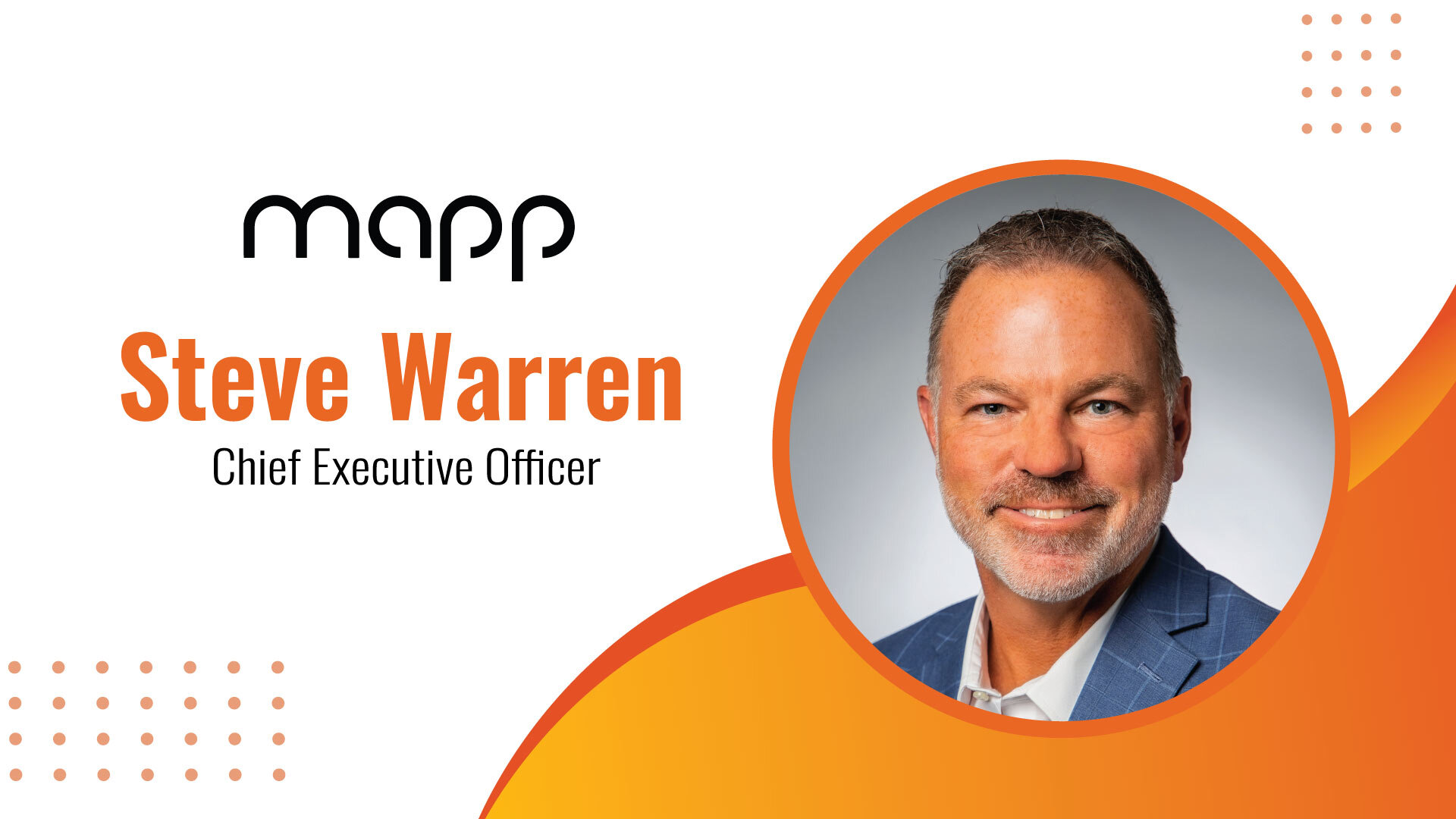
MarTech Edge Interview with Steve Warren, Chief Executive Officer, Mapp
customer experience management 18 Jul 2023
Welcome, Steve; the tech marketplace is ever-evolving. What three key learnings did you pick up while leading Mapp as the CEO?
I’ve learned it’s essential to stay focused on the long-term vision and prioritize features with strong use cases and measurable improvements for marketers. At the technology level, this means enhancing customer experiences, decreasing friction in brand-consumer interactions, or reducing cost/effort to reach desired outcomes. Next, businesses should prioritize client KPIs above everything else—because when your efforts align with your customers’ goals, success follows. And finally, constant employee communication is critical, as it emphasizes the “why” behind what we do. This is highly valuable in our hybrid work environments and globally distributed teams.
Can you highlight how today’s CEOs need to be more adept at leveraging technology?
For all CEOs, embracing technology can improve operations, customer experiences, and decision-making. In addition, technology for CEOs is vital to quickly analyzing data and making strong decisions. Mapp uses a number of tools, including excellent analytics and dashboards, to measure company performance, customer behavior, and even anomalies that need to be addressed internally.
For CEOs to be successful, fostering a culture of digital transformation is crucial. This means being surrounded by the right talent and leveraging tech partnerships, particularly MACH-certified technology, to make informed decisions and drive innovation. With this approach, it empowers you to stay ahead, adapt to market changes, and achieve sustainable growth in the digital era.
We’d love to hear your observations on how CX is evolving by the day; how does Mapp ascertain to adapt to this constant change?
It will come as no surprise to hear that customer experience (CX) is constantly evolving, driven by data and innovation. At Mapp, we’re reflecting this by exploring new options available to customers. For instance, we have incorporated Artificial Intelligence (AI) into our solutions, allowing marketers to make complex decisions more efficiently. By automating certain processes with AI, we free up time for our team to focus on other areas. The most important thing, however, is that we ensure that any improvements made for CX have measurable outcomes attached, as that is what truly matters to the end customer.
Please walk us through Mapp Cloud, the all-in-one marketing solution, and what makes it the go-to platform for modern marketing challenges.
Mapp Cloud is the largest independent Marketing Cloud and the go-to platform for modern marketing challenges. Mapp enables cross-channel marketing campaigns at scale. Our Customer Data Platform, combined with our Marketing Insights engine, provides marketers with valuable information to maximize their campaigns. And while my opinion is biased, I believe no one can touch Mapp’s ability to leverage first-party customer data for marketing, which explains why Mapp has been recognized by Forrester for our Marketing Intelligence and Analytics, showcasing our ability to leverage first-party customer data effectively.
Can you talk about the distinctive characteristics that set Mapp Cloud apart from other vendors in terms of its CDP capabilities?
Mapp’s Marketing Cloud is powered by our comprehensive Customer Data Platform (CDP). Unlike other vendors, Mapp Cloud excels at collecting, leveraging, and exporting data within our platform without additional charges. These capabilities eliminate the need for a costly standalone CDP. It’s also important to note that our focus is not solely on delivering cross-channel customer experiences but also providing insights for future improvement opportunities. With Mapp Cloud, marketers can drive strategic campaigns, maximize conversions, and generate revenue while gaining valuable insights for enhancing customer experiences.
How does Mapp plan to leverage generative AI to reinforce its solutions for better marketing outputs?
Well, AI is, of course, not new. We’ve used it throughout our platform for several years now, and our AI capabilities were highly regarded by Forrester way back in 2021. Having said that, the latest advancements in natural language processing models and ChatGPT are opening up so many more opportunities. Soon, our clients will be able to engage in conversational interactions with our AI engine, improving personalized content, campaign direction, timing, channel optimization, and actionable data sets for future campaigns. I’m excited to see what will come next!
What fundamental shifts should we expect following Eric Lubow joining Mapp as the new CTO & CPO?
Eric has done a fantastic job in his short time here at Mapp. Coming from our technology teams in Berlin and Munich, Eric has brought about tremendous change and excitement within our organization. He has played a crucial role in improving our solution delivery to customers and unifying our teams under a common mission. We can’t wait to see what our Technology Teams, led by Eric, will deliver in the future.
What business ploys do you live by to keep your competitors at bay?
I’m not sure I would say “ploys”, but we work hard to understand where we fit against the competition in our sector. At Mapp, we focus on how we communicate about our marketing platform, emphasizing a “data-first” approach with our CDP and Marketing Intelligence solutions. This enables marketers to make informed decisions and avoid wasted investments. Mapp additionally differentiates itself by owning and managing its campaign infrastructure, unlike many competitors who rely on third-party providers. This end-to-end control ensures reliability and brings exceptional value to our customers.
Looking at the massive acceleration of digital transformation, how do you see customer intelligence evolving in the next five years?
Marketing technology remains at the forefront of this transformation, and the integration of AI will empower marketers to automate complex decisions regarding content, channels, and more. At Mapp, we envision “living-breathing campaigns” as the future of marketing. This entails real-time adjustments in messaging, content, timing, or channels based on customer responses. As this technology evolves, we aim to bring these innovative solutions to all companies, not just those with large marketing budgets, for years to come.
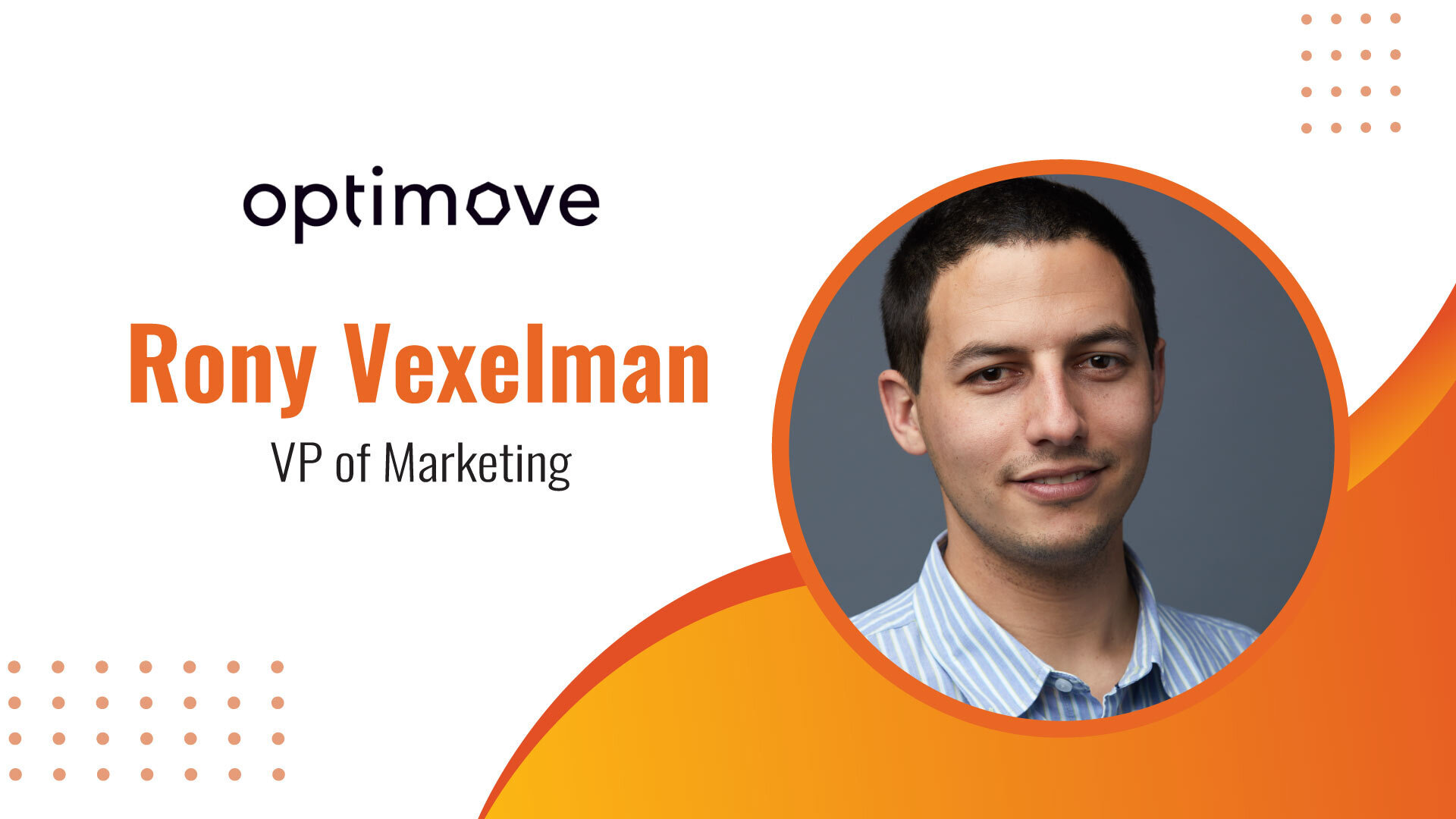
MarTech Edge Interview with Rony Vexelman, VP of Marketing, Optimove
customer data platforms 11 Jul 2023
Welcome, Rony! What has your journey in marketing been like, and what learnings guide you in your current role as the VP of Marketing at Optimove?
I started my journey in marketing as a kid. My mom was a marketeer and when shopping in supermarkets would always stop to look at the marketing displays and promotions.
Professionally I started as an intern in a big tech firm in the CX space called NICE. The years there taught me how to build large-scale marketing programs that cater to specific audiences and products.
For the past 5 years I’ve been at Optimove using those same principles to guide the marketing team. Who is our customer, what do they need to do their jobs better, and how can we communicate our value proposition to them in a way that meets those needs.
What common mistakes do you see contemporary marketers repeating continuously, and what advice would you give them to break the cycle?
Marketers today grew up in a world where technology was limited. Even the younger generation of leaders had only old-school marketing automation tools.
Today, they still approach customer marketing as a rigid practice where they plot a journey in an automation tool and force all their customers through it. The result is a customer journey that caters to the average or minimum common denominator of their customers instead of a personalized journey that caters to each one individually.
My advice would be to flip the process on its head. Don’t start with a journey or a campaign. Start by looking at your customers, segmenting them, understanding what makes them unique. And only then, create a campaign for them. In today’s world, where AI can make decisions based on data and with the right guardrails, there is no reason to continue with old-school automation.
In terms of CDP capabilities, how does Optimove surpass its contemporary competitors by a fair margin?
The CDP category is so broad right? We have CDPs that focus on analytics and serve a BI team. And we have CDPs that focus on orchestration and serve marketing teams. We also have pseudo CDPs further confusing the market and buyers in it.
For Optimove, it is about being the CDP of choice for those wanting to scale their customer marketing efforts.
This comes in the way of empowering marketers to discover valuable customer insights by giving them non-technical access to unified historical, real-time, and predictive customer data, as well as using AI to surface such insights.
While most CDPs selling into the marketing department stop at that, we don’t. We aren’t happy with just sending a segment to an execution channel. We believe the data value erodes when working that way. You should be able to use all your customer data when making decisions on what is the next best action or message for your customers, be that by leveraging AI or business rules. And that is exactly what we give our clients.
How can marketers ensure that they don't go over the line while delivering personalized experiences to their audience?
Customers want to receive personalized messages, but they don’t want to be creeped out by you. That line is very fine, but the solution is pretty simple.
There are two ways of personalization: “show me you know me” and “show me you can help me.” The first runs the risk of going over the line. No one wants to feel like big brother is looking above their shoulder. The second though, gives customers the feeling you are there for them. That you genuinely care about them and aren’t just trying to get that next purchase.
This means being willing to stop sending promotional messages when applicable, it means combine CX into marketing flows, and being able to anticipate their needs.
For example, if you are a clothing retailer selling to all ages and one customer begins buying baby clothes. After a few purchases, you might assume they have a newborn child. Based on their purchases you can determine their newborn’s age and tailor messages that combine tips for parents with recommendations for clothes for the next age group.
What groundbreaking product is Optimove currently brainstorming on, and when can we expect it to go live?
Although I’m not allowed to share our roadmap publicly, I can say we will continue to innovate in the use of AI to create customer-led marketing strategies that build long-term loyalty for brands worldwide.
What professional goals do you hope to achieve within the next five years?
I’m completely focused on Optimove and how we can continue to grow into the #1 platform for companies looking to go from campaign-led marketing to customer-led marketing. Achieving this will require myself and the team to continue to rise to the occasion and our product to continue to develop to stay ahead of our clients’ needs.
What do you think B2B marketing would look like ten years from today?
Oh! It is easy to say it will be dominated by Generative AI, but I actually believe it will not be that different than what it is today. The best marketers will still be those who are able to understand their customers and communicate their unique value propositions effectively.
I do think technology today is much better than before. We spoke at the beginning about that old-school automation and how that has changed. So, I can foresee more changes coming in that respect. The tools available to us all will be better, but that only means that talent, customer understanding, and grit will be the core difference between poor and great B2B marketing.

MarTech Edge Interview with Tom Burke, Chief Executive Officer, AtData
email marketing 29 Jun 2023
You’ve been leading AtData for 20+ years now; how would you narrate your journey and experiences?
In 2001, I founded TowerData, now AtData, two months after 9/11 and right as the dot com bubble was bursting—a rather chaotic and difficult time to be launching a tech company. The first few years were very lean and hard, always worrying if we would make payroll, and it was at least five years before I thought the company would actually survive.
Perhaps surprisingly, we managed to hit our stride after the 2008 financial crisis hit. Email is significantly cheaper and more effective than direct mail, and this was a boon for our business. At the same time, I felt like we were in a rut, and I had my own crisis, unsure I had the desire to keep going. I had actually negotiated the sale of the company but, at the last moment, changed my mind, instead taking a 6-month sabbatical in Europe to recharge and reset.
I haven’t looked back since. By prioritizing innovation and excellence; by expanding the suite of services we offer organically and by acquisition; and by working with people of high integrity who are knowledgeable and passionate about what they do; I continue to be stimulated, be challenged, and learn. The most recent adventure was TowerData’s 2021 merger with its longstanding partner, FreshAddress. We doubled in size and rebranded as AtData to emphasize that we are the leaders in email address intelligence solutions.
It amazes me how we’ve evolved from helping a local NYC gift shop to being the trusted partner of Fortune 500 companies such as Verizon and McDonald’s. Several times along the way, “the death of email” has been proclaimed, but email marketing remains a highly effective channel, fueling our growth.
How does AtData empower companies to make the most of their first-party email data and decode customer identities?
First off, why are we talking about first-party data? Customers are the lifeblood of a company, and unlike inflation or the walled gardens of Ad Tech, your customer data is something you can control and leverage to maximize the return of your marketing efforts. However, if you don’t know who your customers are, what they want, and how and when to best reach them, you won’t be able to execute your campaigns effectively. AtData’s Email Address Intelligence ensures you have accurate, complete, and safe first-party data.
We start at the very beginning, letting organizations know if an email address is valid and safe to send to. It’s not uncommon for us to block 15% of the emails entered on a website because they are typographical errors, fraudsters, bots, fake addresses, spam traps, etc. We can then go a step further than other solutions to tell you if an address is active and has been used to complete purchases. Knowing an email address is actionable is key and often overlooked in our increasingly digital-first economy.
Similarly, we are also able to update the email address associated with an individual to their most current and preferred or link an email to a postal address or vice versa. This allows companies to reach their customers who otherwise might have lapsed—simply because they forgot to update their email addresses in the company’s database. When the average consumer can have hundreds of profiles and subscriptions, it’s not a rare occurrence that data becomes outdated. AtData also enriches first-party email data with demographic information to improve personalized messaging.
We provide a wealth of information to evolve a company’s first-party email addresses into more robust, accurate, and up-to-date profiles so they can really get to know the person and have meaningful conversations. Our Email Address Intelligence solutions are really all about developing relationships with your customers by being able to reach them, utilizing messaging that resonates with them, and protecting their interests.
In your opinion, what works better during economic crises—sticking to the core business approach or trying something out of the box?
In general, I am a proponent of going with the core business as long as that core business was working prior to the crisis. Refocusing efforts on fundamentals can have a big impact on a business. Many companies are either resource-constrained or moving quickly, and it’s not uncommon for them to get too far ahead of themselves and forget about the quality of their messaging and datasets. For example, when was the last time the customer welcome series was reviewed? I think we have all seen statistics on earning a new customer versus keeping an existing one—so retention efforts can make or break a company through economic downturns.
With the help of partners like AtData, customer email addresses can be turned into a wealth of information so marketers can be sure they’re reaching their audience at their preferred addresses with better messaging for the offers that make the most sense. Along with that, we help prevent fraud, utilizing the largest global email address network. Unfortunately, economic uncertainty tends to correlate with malicious individuals trying to take advantage. Focusing on protecting the core business by preventing fraud and protecting customers can also go a long way in building loyalty.
In what advanced ways do AtData’s fraud prevention solutions ensure to keep companies a step ahead of cyberattacks?
False identities are one of the primary attack vectors of fraudsters, and AtData protects businesses by recognizing emails used in fraud. In fact, newly created email addresses are 300% more likely to be fraudulent, and emails are much more predictive of fraud than phones or postal addresses.
No one sees as many email activity events as AtData, literally billions of signals every month, which enables us to recognize when an address or domain first comes into use or presents anomalous behavior. An individual company is likely to only see activity across its systems and network, limiting the scope of information needed to identify malicious intent. Built from these signals, our historical email database, fraud feedback consortium, and machine-learning models detect fraud in real time. In this way, our Email Address Intelligence helps reduce the unknown, so companies can protect themselves and their customers without adding friction to the process.
Transactions, account creations, profiles—the list goes on—are all becoming digital. If email is central to your customer identities, email-based fraud prevention will help you minimize risk and reduce costs.
What fundamental strategies do you implement at AtData to ensure a working equilibrium among all BUs?
We start with business objectives, one of the best ways to get everyone on the same page. Our trajectory is determined by these primary goals, which each department then builds from to develop its team and individual goals. They really do keep us all moving in the same direction and, perhaps more importantly, keep us honest and on task. We also have our core values—data-driven, innovative, collaborative, agile, experts—that underly everything we do, from who we bring on board to how we operate. These form the framework for how we do business and make it easier for our various teams to work together.
Beyond that, our goal is to work transparently with all our employees. We strive to empower everyone to have an owner’s mentality, so they are accountable and always willing to help. Keeping everyone informed with regular staff meetings and ongoing communications helps drive collaboration, alleviating siloes and making sure everyone is aware of what we’re building together.
Should we be expecting any new product launch from AtData soon in the future?
Not necessarily a new product per se, but we are investing heavily in developing machine-learning models based on our unique datasets for a variety of use cases. We recently unveiled a new model that reduces the unknown rate of our email verification service, maximizing the number we can provide a status on. This equates to potentially 20% more actionable email addresses within a database.
Looking forward, we are developing an email quality score. Where our SafeToSend® service tells you if an address is safe to mail, the quality score will tell you if an address is active, responsive, and belongs to a buyer. This will be game-changing for email marketers as they look to have better insight into who is and isn’t engaging beyond their limited scope. It will help to better differentiate if an email address is not engaged or just not engaged with your campaigns. It really is something marketers have wanted for quite some time, and the technology has finally caught up such that we can’t wait to provide it for them.
What differentiating brand characteristics enable AtData to become one of the best in business?
AtData was brought about by the merger of two very strong email intelligence brands—TowerData and FreshAddress. The resulting organization has a depth of experience, robust dataset, and technology that is unmatched in the industry. Our proprietary network alone provides us with a scope of email activity not found anywhere else, ultimately making our Email Address Intelligence solutions the leader in accuracy and comprehensiveness.
We are constantly innovating, with recent advancements utilizing machine learning to further improve the insights we can provide on an email address. I would say we are one of the few companies that are treating email verification and hygiene as the evolving technology that it is, going well beyond a simple SMTP ping to truly understand activity and the individual behind an email address. There are many reasons why we can offer our 100% SafeToSend® guarantee—we are that confident in our results.
How influential a role, do you think, will AI play in both escalating and preventing digital fraud?
As an industry, we’re still just scratching the surface of AI. It will definitely play a role in the very near future, unfortunately, in both escalation and prevention. But I believe there are far more individuals working diligently on prevention, that the AI models used to identify malicious activity will advance at a much more rapid pace. Sadly, digital fraud is still too lucrative, but I trust that, as we work with AI and machine learning, we’ll be able to develop systems that make it harder and harder.

MarTech Edge Interview with Garrett MacDonald, Chief Commercial Officer, AUDIENCEX
advertising 27 Jun 2023
How has your journey led to the CCO’s role at AUDIENCEX? Please share some key takeaways from your journey.
The path to becoming a CCO can vary depending on your circumstances and experiences. My journey to the CCO role has been a result of effectively driving revenue growth within a company through a combination of strong leadership skills, continuous learning, relevant experience, and a strategic mindset. Focusing on these key areas has propelled me on my path to becoming a CCO.
To achieve this, I have developed expertise in product, sales, and marketing through hands-on leadership experiences. Creating a culture of excellence has been the force multiplier throughout my career, and it starts with empathy, resourcefulness, and accountability. This includes learning how to develop effective sales strategies, manage teams, leverage technology solutions to make teams more efficient, and, most importantly, a deep understanding of customer needs.
In addition, I have sought opportunities to gain exposure to different business functions within an organization. By exploring the science behind cross-functional collaboration, I have gained a deeper understanding of the broader aspects of the business and how they interconnect.
To further support my journey, I have demonstrated strong leadership skills and the ability to think strategically. These qualities have allowed me to drive results, effectively manage teams, and make critical business decisions.
Overall, my path to the CCO role has been shaped by a combination of practical experience, continuous learning, and the ability to navigate and excel in various aspects of the business. By focusing on these areas, I have been able to progress and succeed in my journey toward becoming a CCO.
How does client segmentation play an important role in an ad-marketing campaign & how do your targeting strategies revolve around it?
Client segmentation plays a crucial role in an advertising marketing campaign by allowing businesses to tailor their marketing efforts to specific target audiences. Effective segmentation enables businesses to create targeted, relevant, and personalized messages, allocate resources efficiently, enhance customer experiences, improve conversion rates, and gain a competitive edge in the market. Some common targeting strategies that businesses often employ based on client segmentation include demographic targeting, psychographic targeting, behavioral targeting, geographic targeting, technographic targeting, firmographic targeting, and customer lifecycle targeting. We employ a combination of these targeting strategies to optimize our advertising campaigns to improve our overall campaign effectiveness.
AUDIENCEX recently announced a strategic partnership with Geenee AR. How will it enable advertisers to deliver better campaign experiences using WebAR-enabled ads?
Through our strategic partnership with Geenee AR, we are excited to offer our clients cutting-edge access to Web-based Augmented Reality (WebAR) ads. This collaboration enables us to provide comprehensive AR advertising solutions, incorporating specialized formats that seamlessly integrate immersive virtual try-on technology into ad placements. This creates an engaging and immersive user experience, allowing consumers to interact with products before making a purchase. The utilization of this technology enables brands to establish meaningful connections with customers by delivering personalized experiences.
By combining this innovative technology with AUDIENCEX’s omnichannel media access, strategic expertise, and AI-powered predictive analytics, WebAR can be seamlessly integrated into targeted ads across various platforms, channels, and devices. Our clients will benefit from fully managed and continuously optimized campaigns that leverage AR across display, social media, native ads, digital out-of-home (DOOH), connected TV (CTV), and other digital channels.
How do you collaborate with different teams to drive client success?
Collaboration is the bedrock of effective teamwork. Successful collaboration relies on a culture of mutual respect and a shared commitment to deliver exceptional results for our clients.
Clear and open communication between teams is essential to effective collaboration. To help facilitate this and ensure that everyone is aligned on goals, timelines, and client expectations, we leverage all the modern communication and project management tools.
Our collaborative teams have a shared understanding of the client’s goals and objectives and how their contributions fit into the bigger picture. By aligning their efforts towards common outcomes and KPIs, our teams work together more cohesively and effectively.
Knowledge sharing and best practice training are crucial for enhancing the overall expertise and capabilities of our team. We organize a cadence of training sessions and workshops to exchange best practices, industry insights, and lessons learned. This fosters continuous learning and enables teams to provide better support and solutions to clients.
What sales-enabling strategies have you used till now that were the most successful?
Some of my most successful sales-enabling strategies have been sales and marketing alignment, sales training and development, and leveraging sales enablement technology. It is critical to promote collaboration and alignment between the sales and marketing teams to ensure consistent messaging, lead handoff, and a unified customer experience. Having clear communication, regular meetings, and shared goals helps bridge the gap between these departments and improve overall sales effectiveness.
Providing comprehensive training and development programs to sales teams equips them with the necessary skills, product knowledge, and sales techniques to effectively engage with prospects and close deals. Ongoing training helps sales professionals stay current with industry trends, refine their selling skills, and adapt to changing customer needs. Utilizing sales enablement tools and technology helps to streamline sales processes, enhance productivity, and improve collaboration within sales teams. These tools include CRM, sales automation software, email tracking tools, and CMS, among others.
How AUDIENCEX is setting itself apart from its competitors with capabilities like programmatic advertising, media platforms, analytics, DSP, etc.?
AUDIENCEX enables challenger brands to compete with their category leaders. We develop innovative solutions to solve common problems in marketing and advertising. Our platform is purpose-built to support brands and agencies in navigating the ever-evolving digital landscape, harnessing the power of emerging technologies, and implementing innovative, creative strategies to produce better outcomes for our clients. Our cutting-edge technology and strategic partnerships are complemented by seamless media access, AI-powered predictive data, expert strategies, and award-winning creative services. This empowers us to execute impactful and engaging campaigns that drive performance at every stage of the marketing funnel across all channels and screens.
We also understand the numerous challenges faced by brands and agencies today. To address these challenges, we have developed AUDIENCEX Intelligence (AXi). AXi ensures that our clients stay ahead of the curve, not only in terms of performance but also in privacy compliance, scalability, and cost efficiency. In an increasingly fragmented and fiercely competitive digital landscape, AXi leverages sophisticated data science tools to understand and predict consumer behavior, delivering enhanced performance throughout the entire customer journey. As marketers grapple with uncertainty and economic pressures to optimize their budgets, our solutions instill confidence that every advertising dollar is utilized effectively, modeling and reaching audiences that are more likely to convert.
What’s your process for assessing new or emerging technologies that can help streamline sales processes?
When evaluating new or emerging technology to streamline sales processes, my approach involves several key steps. First, we identify the specific pain points and inefficiencies in our current sales processes. This helps us understand the areas that require improvement and sets the foundation for evaluating potential solutions.
Next, I conduct thorough research to identify new or emerging technologies that have the potential to address our needs. Once I have a list of potential technologies, we define evaluation criteria based on our specific requirements and goals. Defining these criteria helps us assess the technologies consistently and objectively.
I then reach out to the technology providers and request product demos or trials. I involve my sales team in the evaluation process and gather their feedback on how the technology would impact their day-to-day activities.
If feasible, we conduct a proof of concept (PoC) to test the technology within our sales environment. As part of the evaluation, we also assess the reputation, reliability, and track record of the technology provider.
Based on the evaluation, feedback, and analysis, we make an informed decision on whether to adopt the technology. If we decide to proceed, we then create an implementation plan that includes training programs, change management strategies, and a timeline for rolling out the technology to our sales team.
Overall, the process involves a systematic and thorough evaluation, ensuring we select solutions that align with our specific needs and provide the greatest value in streamlining our sales processes.
How does AUDIENCEX leverage machine learning technology to analyze enterprise-level platforms across programmatic, search, and social to determine what works best for each campaign?
AUDIENCEX Intelligence (AXi) is our comprehensive collection of advanced data science tools powered by artificial intelligence. These tools are strategically utilized across the digital landscape to efficiently identify, model, and target the most relevant audiences. By doing so, AXi drives performance and optimizes spending to achieve a greater ROAS at a large scale. Our AXi solution allows us to determine what strategies work best for each campaign.
Machine learning algorithms within AXi analyze vast amounts of data from various platforms, including programmatic advertising, search engines, and social media. By processing this data, the algorithms can identify patterns, trends, and correlations that provide valuable insights into campaign performance.
Through the use of machine learning, AUDIENCEX can optimize campaign strategies by identifying the most effective targeting parameters, ad formats, and messaging for different audiences. The algorithms can also analyze customer behavior and engagement data to understand what resonates with the target audience, allowing for the creation of highly personalized and relevant campaigns.
AXi’s machine learning capabilities enable AUDIENCEX to continually refine and improve campaign performance. The algorithms learn from previous campaigns, adapting and optimizing strategies based on real-time data to deliver the best results.
By leveraging machine learning technology and AXi, AUDIENCEX provides our clients with data-driven insights and recommendations to enhance campaign effectiveness. This approach allows us to constantly iterate and improve strategies, ensuring that each campaign is tailored to the specific needs and preferences of the target audience.

MarTech Edge Interview with Hector Pantazopoulos, CRO & Co-Founder, SourceKnowledge
advertising 22 Jun 2023
Could you share the remarkable journey and valuable insights you have gained while leading SourceKnowledge for the past 13 years?
Co-founding SourceKnowledge in the fast-paced digital sector has shown the importance of being adaptable in the face of ever-changing technology. SourceKnowledge itself has pivoted since its video-focused inception in 2009 to become an advertising network dedicated to recognizing quality publishers and allowing retailers and DTC brands to spend based on their goals, all while showcasing the power of the open web.
What factors contribute to SourceKnowledge being recognized as the premier performance platform in the industry?
A key factor contributing to SourceKnowledge being recognized as the premier performance platform on the open web is our ability to adjust to the current digital landscape. With industry changes over the last decade and a half, SourceKnowledge has had several iterations. Being flexible and adaptive is vital to any successful business.
Can you outline the key strategic approaches you adhere to in order to achieve and scale revenue at SourceKnowledge?
- Define clear revenue goals and track that targets are being met
- Build strategic partnerships
- Address user feedback and continuously improve the tech/products and tools available to our advertisers
- Provide effective customer support and account management to strengthen relationships
How do you effectively align the efforts of the product, marketing, sales, and customer success teams to drive revenue growth within SourceKnowledge?
Our product, marketing, sales, and customer success teams remain in sync by connecting on a regular basis. Our developers, along with product and marketing teams, review the product roadmap regularly to prioritize critical and revenue-driving projects. Our sales and customer success teams closely monitor campaign performance to identify the potential for revenue optimization, as well as identify new revenue and business development opportunities. Having teams with open lines of communication keeps efforts aligned, which ultimately supports our top line.
Are there any upcoming solutions or innovations that SourceKnowledge plans to introduce in the near future?
We are currently working on completely revamping our dashboard to provide a new framework, new skin, additional tools, and visual insights to our users.
When faced with revenue challenges during economic downturns, what strategies have you implemented to overcome them at SourceKnowledge?
During economic downturns, SourceKnowledge has continued building and strengthening publisher relationships. By partnering with non-traditional deal-centric publishers (such as coupon sites, comparison shopping engines, coupon influencers, or BNPL services) with a focus on helping shoppers save, advertising remains relevant. Retailers can increase traction, effectively get in front of shoppers looking to save, and make the most of their ad dollars.
From your perspective, what significant disruptions do you foresee shaping the adtech landscape in the next decade?
Some key factors that will continue to shape the adtech landscape are:
- Compliance/privacy laws and regulations: Increasingly strict regulations will affect ad targeting and tracking.
- The deprecation of the cookie: A cookieless future will require new solutions for targeting ads and tracking.
What advice would you offer aspiring entrepreneurs seeking to establish themselves in the competitive adtech niche?
In the digital space, things change so rapidly, so it’s important to be adaptive and reactive. Getting stuck on a specific idea or result for your business won’t be productive. If an idea or project is no longer feasible, be nimble and adjust. Keeping up with the industry is key and also sparks your creativity.
Surround yourself with good people. The team you hire, as well as the publishers you partner with, are big decisions that should be made with thoughtfulness. You want to be able to work with people for the next many years and have mutual trust. This is key to growing your business.
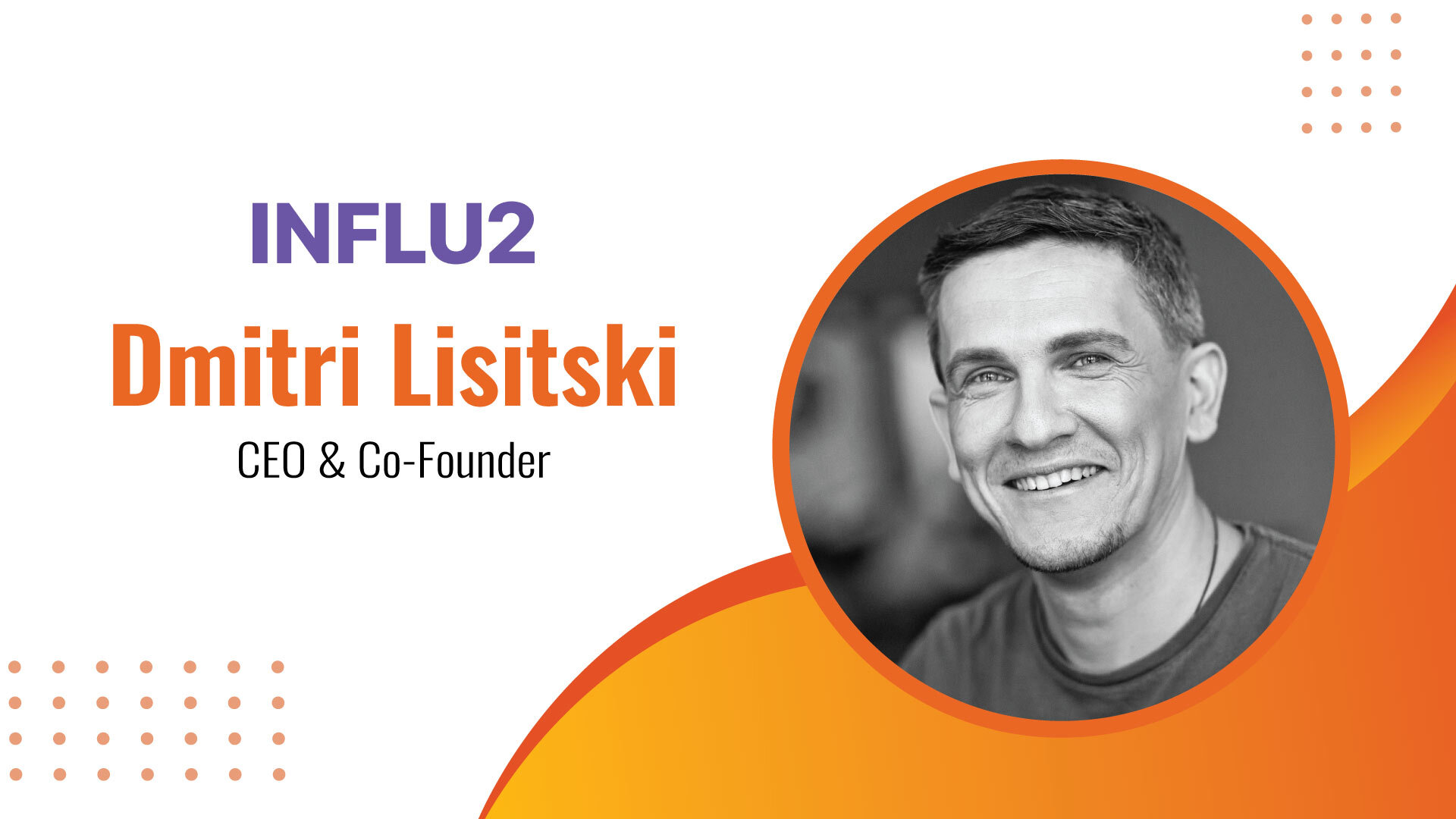
MarTech Edge Interview with Dmitri Lisitski, CEO & Co-Founder, Influ2
advertising 20 Jun 2023
What were your inspirations and previous experiences that prompted the establishment of Influ2?
Advertising brings new products to life like no other medium. It can help brands to build relationships. It’s less intrusive than the traditional sales process. To me, the best advertising—think David Ogilvey’s work for VW or Leo Burnett’s work with Kellogg—can become a form of contemporary art.
That’s when it’s done well.
Enterprise B2B is sales-driven by nature, and to be honest, marketing makes minimal contributions to sales conversations. At least, that was my experience before starting Influ2. I wanted to change that, and I saw an opportunity to build something that makes advertising work for B2B enterprise sales.
As the first person-based marketing platform, how is Influ2 creating disruptions within the martech industry?
Our technology helps companies use advertising to build relationships with specific individuals. No other vendor in the space can build this kind of one-to-one connection through advertising, one that’s so closely integrated with the sales process. That’s been disruptive, as we see businesses coming to use to run ads that actually contribute to the sales conversation and become an integral part of the broader go-to-market strategy. They’re not finding this capability anywhere else.
In terms of ABM capabilities, intent capturing, and engagement tracking, how does Influ2 surpass its competitors?
What’s interesting is that, in many cases, we’re not surpassing competition, we’re complementing it. Many of our customers are already successfully using a competitor to understand intent when they come to us. They need us to build this relationship, influence their buyers, and connect this influence to the sales process.
Because you cannot establish any meaningful alignment between marketing and sales if you don’t know who marketing is speaking to, as in, the actual names. And that’s the critical capability that we add and our differentiator. When salespeople ask, “Who do I talk to and what do I say?” we provide the answer.
What are your plans for incorporating AI into Influ2’s solutions in the future?
This reminds me of an old joke:
Q: “What’s the difference between AI and machine learning?”
A: “Machine learning is done in Python. AI is done in PowerPoint.”
It’s silly, but the point is that we’ve been talking about AI for a decade now. Not just us—everyone in our space. It’s already part of what we do, in some form or another, so nothing has really changed. AI has been, still is, and will remain part of our unique targeting capabilities. We’ve embraced this tech since our inception in 2017, and I can tell you that we’d all rather talk about the value we create for customers than the technology we use under the hood.
To what extent do Influ2’s offerings assist brands in navigating the current challenging economic climate?
Contemporary marketers need to provide tangible, short-term gains as efficiently as possible. There’s not a lot of room for marketing ideas that sound good but can’t be measured. The current economic environment has a lot to do with that. The latest iteration of the Influ2 platform focuses on just that: it connects your marketing influence to impact on pipeline and revenue. It’s a very tangible look at what’s working and what’s not within an enterprise’s go-to-market strategy.
Can you elaborate on the marketing and business strategies employed by Influ2?
Walk the talk, if you will. Eat your own dog food. We started using our own products to acquire new customers and go to market in 2018, and, honestly, it was tough, which was disappointing because we built this amazing tech but had trouble deploying it for our own business. But we stuck with it and made it work—proved it worked—for our own objectives. That process taught us a lot about our strengths and weaknesses. Now this philosophy is part of our DNA: whatever we build for customers, we also use it for our own business. I think customers recognize and appreciate this commitment.
How do you envision scaling Influ2 over the next five years?
In the beginning, our approach was, okay, here’s an amazing technology that lets you target specific people and track how they engage with ads, but we have no idea how clients might use it. So we’ve spent a lot of time gathering information about how clients use Influ2 and have finally distilled a clear understanding of why customers choose Influ2 and what they need to be successful. The challenge now is to scale that success with 100% clarity about our place in the Martech ecosystem and the tech stacks of our customers.
If you could offer advice to your younger self who established Influ2 in 2017, what would it be?
Don’t be afraid. The uncertainty and unanswered questions, the fears about failing—just don’t be afraid. That would be my advice. And in a perfect world, I could go back and warn my 2017 self about what wastes time and which mistakes to avoid—just to speed up the decision-making, you know? But at some point, you have to let go, refuse to be afraid, and just carry on, come what will.

MarTech Edge Interview with Alana Levine, Chief Revenue Officer, Fintel Connect
financial technology 15 Jun 2023
Tell us about your journey and how you landed your current role as the CRO at Fintel Connect.
My background is actually in finance and economics, but I was connected with our founder around 11 years ago and fell in love with what she was building. Those in affiliate marketing know that the channel is a perfect match between advertorial and PR, and what attracted me to this industry was the inherent foundation of partnership where everyone wins—brand, affiliate, and consumer. The opportunity to work at a technology company that really specialized and offered ways to scale and create efficiency with this type of marketing was exciting. Fintel Connect emerged from another business that we ran in a different industry. We recognized a huge opportunity in financial services and evaluated whether we could really make a difference and create value by bringing a new solution to the space. My background and career have focused on growth, which means leveraging scrappy marketing and creating meaningful partnerships and relationships. As a result, I took on the responsibility of driving the growth of the business forward.
What key strategies do you implement at Fintel Connect to drive revenue growth?
We strongly believe in creating value for our clients and our industry. Therefore, we strive to offer thought leadership, educational materials, and insightful content that is engaging. This approach establishes us as a destination for individuals seeking such insights, and we aspire to be known as the foremost provider of growth marketing solutions for financial brands. By fostering strategic partnerships and delving deep into this niche, we are working to solidify our credibility and expand our presence. However, we consider ourselves to be only at the beginning of our journey.
What works better for revenue generation during an economic downturn—sticking to the basics or doing something out of the box?
I believe it’s important to be realistic about what truly makes a tangible difference for your business. In our case, we understand the formula that works, so we focus on strategies that can have the greatest impact. For us, thought leadership revolves around creating valuable content, providing education, and sharing insightful perspectives. However, other businesses might achieve it through different direct channels or paid avenues for broader awareness. The key is to strive for predictability. While the basics are important, it is crucial to leave room for experimentation. You never want to fully commit your resources. But experimentation is valuable because you never know where an opportunity might arise. Of course, it should be well calculated. You need to set clear goals, measure the results, and adapt as you go along. The most important thing is not to put your business in a state of discomfort or at risk. So, striking the right balance between tried-and-true methods and calculated experimentation is the way to go.
Familiarize us with the technologies you leverage to accomplish Fintel Connect’s revenue objectives.
Well, as a B2B business operating in the financial services industry, our sales cycles tend to be quite lengthy. To manage our processes effectively, we rely on CRM tools like HubSpot. In fact, we recently implemented their marketing solution, which has been beneficial for our email marketing campaigns and overall workflow. To stay organized, we utilize tools like ClickUp, which helps us manage our time and development tasks. Speaking of development, we make use of platforms like GitHub and DevOps to streamline our development processes.
When it comes to channels for communication, LinkedIn takes the lead as the primary digital channel for engaging with our target audiences. We also leverage Twitter to establish ourselves as thought leaders in the industry. We also use SEMRush for web optimization purposes. However, in terms of importance, our email marketing campaigns and CRM system are key tools for us. So, with these tools in our arsenal, we are able to enhance our operations and effectively reach our goals.
How does Fintel Connect ensure the best experience for its customers?
It all boils down to understanding the pain points of our customers and creating products and solutions that effectively address those challenges. We firmly believe people are willing to invest money to eliminate pain or friction. With our specialized approach, we have diligently identified and defined these friction points in terms of growth and compliance. We have developed tools and features that are intuitive, user-friendly, and designed to alleviate those pain points.
We are not ones to shy away from feedback. In fact, we actively seek insights from our clients, end users, and publishers to gather direct feedback on how we can enhance our offerings. Their input is invaluable in making improvements that simplify their lives, empower them to excel in their roles, and have a more significant impact. This feedback constantly informs our development roadmap, ensuring that we are always evolving and delivering the best possible solutions. After all, our goal is to make a positive difference and enable their success.
How do you ensure alignment of sales, marketing, and customer success teams to keep revenue goals on point?
Communication plays a pivotal role in effective leadership. We make it a point to cascade specific targets, insights, and information about what is working and what is not, ensuring everyone is on the same page and understands their role in the organization.
In our company, we view marketing as an extension of the sales team, as their efforts directly contribute to sales performance. However, it is crucial to acknowledge that marketing’s success is also dependent on feedback and input from the sales team. It is a collaborative relationship where both teams work hand in hand. When we onboard new clients, our customer success team plays a vital role in gathering insights and understanding the unique motivations and priorities of our clients. This valuable information is then shared with the marketing and sales teams, ensuring we are all aligned and working towards the same objectives.
By maintaining this open line of communication and feedback loop, we create a cohesive environment where everyone understands the needs and goals of our clients. This approach allows us to provide the best possible solutions and ensures that all teams are working together harmoniously toward customer success.
How do you measure and optimize the effectiveness of your revenue growth initiatives?
We focus on aligning our efforts with revenue-related metrics and understanding the key factors influencing them. We analyze both activity-based and results-based metrics to assess the effectiveness of our efforts and the impact on our growth.
From an activity standpoint, we measure metrics related to volume and quality. We set targets for each business area that generates net new growth opportunities. It’s essential to evaluate whether we are reaching the right audiences and if our marketing efforts are generating the desired volume of opportunities. Moreover, we assess the conversion rate and quality of these opportunities from a sales perspective. We consider factors like messaging frequency, number of touchpoints, pipeline development, and conversion rate of the pipeline.
In addition, we also track metrics related to cross-selling and upselling to our existing clients. This allows us to maximize opportunities within our client base and further contribute to our revenue growth.
By consistently monitoring and analyzing these metrics, we can gain valuable insights into the effectiveness of our strategies and make informed decisions to drive sustainable growth.
How are Fintel Connect’s solutions transforming the fintech landscape for the better?
Our overarching vision as a business is to become the digital backbone for financial brands. Right now, we specialize in customer acquisition and tools to provide transparent insights into their marketing efforts. We’ve since evolved our solutions to meet compliance and monitoring needs as fintechs and brands expand their marketing efforts. Our future vision is to allow finserv marketers to have all the data, transparency, and protection they need at all stages of the funnel—from acquisition to conversion to retention and beyond.
Ultimately, our goal is to enhance people’s access to exceptional products and brands. We aspire to support these brands in their innovation journeys, enabling them to continually deliver outstanding solutions to the market.
Page 46 of 48
Most Recent
How AI Is Reshaping Ecommerce Discovery, SEO and Marketing Attribution
Interview Of : Daniel Reid

How AI-Powered Clienteling Helps Retailers Turn Holiday Shoppers Into Loyal Customers
Interview Of : Leigh Sevin

Why Human Judgment Still Matters in AI-Powered Biopharma Marketing
Interview Of : Lauren Boyer

Why Continuous Customer Feedback Matters to Marketers
Interview Of : Katie Miserany

Why Clean Data Is Critical to AI-Ready Sales Operations
Interview Of : Heather Rinke

AI-Driven Fraud Is Reshaping Security in Private Markets, Says 6lock CEO
Interview Of : Todd Sorrel