Interview

AI Conversation Intelligence: Edwin Miller & Marchex
customer engagement 11 Sep 2025

Summer Thompson on Real-Time Personalization
marketing 10 Sep 2025
1. What does your approach to real-time personalization different from other CDPs or journey orchestration platforms?
Most CDPs and journey orchestration platforms limit how much data can be used for real-time personalization, often restricting brands to a narrow set of behavior signals and limited customer history. Hightouch removes those limits. Our approach is built around full data access and flexibility, enabling marketers to combine real-time behavioral signals with the complete depth of customer history from the data warehouse. With our new take on same-session personalization, we made it possible, for the first time, to react to in-session activity using the entire customer profile. Whether you're delivering an experience in under a second or orchestrating it over minutes, our real-time product suite is designed to meet the full range of real-time needs with no trade-offs between speed and data richness.
2. Same-Session Personalization is a bold claim. What was the core challenge in marketing that this feature is solving?
The core challenge is relevance in the moment. Without understanding current customer behavior, personalization efforts can create a disconnect between user intent and brand response. Same-session personalization solves this by allowing marketers to react to in-session signals, like product views, cart behavior, or site search, in less than a second. That means offers, messaging, and experiences can adapt as the customer is browsing, not after they've bounced. Our approach to same-session personalization goes one step further, and makes it possible to combine behavior signals with complete customer history in under a second. Brands can interact with their customers as a person, not just a set of digital behaviors.
3. Many CDPs force marketers to choose between speed or historical depth. How do you remove that trade-off?
Hightouch is uniquely positioned as a Composable CDP, which means we use the data warehouse as the source of truth for rich customer profiles, while also integrating real-time event streams. This approach means marketers don’t have to sacrifice depth for speed. You get the historical context of warehouse data and the in-the-moment context of behavioral events. It’s not about choosing between the past or the present. With Hightouch, you get both.
4. How do you handle identity resolution in same-session scenarios where the user might not yet be logged in?
We can use anonymous identifiers to stitch session activity to a profile. Whenever an anonymous user authenticates or provides identifying information, we can retroactively connect their session data to their historical profile in the warehouse, and be ready to address that user’s anonymous identifiers in the future as well. This enables persistent, privacy-safe personalization that respects user consent, while still delivering highly relevant experiences in the moment.
5. What’s your take on how AI and decisioning engines are collapsing the gap between insight and action?
AI is transforming marketing from reactive to predictive. With tools like Hightouch’s AI Decisioning, we’re enabling marketers to operationalize insights the moment they emerge. Rather than waiting for analysts to surface trends or build segments, AI models can evaluate user behavior and context in real-time. AI Decisioning constantly experiments and continuously improves delivery based on the results of each experiment. The result is personalization that’s not just fast, but smart—driven by data, governed by logic, and scaled through automation. Even with this rapid iteration, it’s also really important to surface key insights back to marketers, so they can improve their overall strategies and create more effective content and campaigns.
6. How do you envision yourself evolving to support marketers as zero-party and consent-driven data become the new norm?
Hightouch is built on privacy-first principles. As the industry shifts toward zero-party and consented data, our composable architecture gives brands full control over what data is collected, how it’s used, and where it’s activated. We’re also investing in features that help marketers surface and act on self-reported preferences in real time, whether that’s through consent banners, preference centers, or in-product feedback. The purpose of personalization is to create connections with people, and that starts with trust. With Hightouch, security, privacy, and trust are not an afterthought; they are core components of our architecture and company culture.
Get in touch with our MarTech Experts.

Bryan on Data, AI & the Future of Marketing
data management 10 Sep 2025
Enterprises must approach marketing technology adoption with privacy-first design as a foundational principle. Trust with customers is paramount, and without it, no advantage gained from marketing will make up for loss of trust. While enterprises do need to create the right internal policies and governance for marketing teams around how they should use AI-powered resources or generated content (including navigating the complexities of external regulatory requirements for data privacy), they can also integrate tools that are tailored to align with security needs. Databricks’ Data Intelligence for Marketing integrates Unity Catalog’s centralized governance and security with privacy and consent management — partnering with OneTrust — to ensure data is collected, unified, and activated responsibly with full respect for customer consent. This approach helps turn privacy from a compliance burden into a competitive advantage, helping enable personalized experiences at scale without sacrificing customer trust or regulatory compliance.
Regardless of technical skill, the need for marketers to access real-time data is important to effectively respond to changing customer behavior and broader market dynamics. The time it takes to go from event to insight to action can mean the difference between an engaged or churned customer. Databricks empowers marketers of all technical skill levels through self-serve access to real-time insights using AI/BI Genie. Often, insights happen on the front line, but decisions happen at a leadership level. Self-serve access to insights can empower front line marketers to make more informed decisions, while leadership can more closely track progress and thereby give more independent decision making power to front line marketers. As a result, we see Databricks enabling both technical and non-technical marketers to make data-driven decisions, optimize campaigns in-flight, and personalize customer journeys effectively.
When marketers operate from a single source of truth that unifies customer and campaign data, the operational efficiencies are transformative. An integrated marketing data platform can break down silos across disparate systems, such as CRM, ad platforms, analytics, and content management, to enable consistent metrics and identifiers across channels. This unified data foundation eliminates delays caused by fragmented or inconsistent data, allowing marketers to trace and optimize customer journeys end-to-end with confidence. For example, since utilizing the Data Intelligence Platform, HSBC has seen a rapid increase in the speed at which they have data available for analysis, and has a number of jobs that used to take 6 hours and now take only 6 seconds.
One of the most critical challenges for marketers is getting a complete view of their customers and campaigns, because their data is scattered across different systems–and fragmented data leads to incomplete insights and reactive marketing. Building from a unified customer and campaign source of truth is no longer a nice to have, but necessary to compete and win in today’s data-driven business environment. Databricks unifies disparate data sources into a single source of truth, and then seamlessly integrates out-of-the-box with leading martech providers to empower marketers to deliver consistent, personalized experiences and measure campaign effectiveness with clarity and confidence.
Ultimately, any improvement seen in key metrics like click-through rates, cost-per-click, and return on ad spend help to directly validate the value of marketing data solutions. When organizations see tangible performance gains driven by data intelligence—enabled by real-time insights and AI-powered personalization—they are more likely to increase investment in these platforms to sustain competitive advantage and maximize marketing ROI. For example, Databricks’ customer Sketchers has used the new access to data insights they’ve gained to create personalized customer journeys, enhancing their ability to engage customers and achieve higher customer lifetime value. They’ve seen a 324% increase in click-through rates, a 68% decrease in cost-per-click, and a 28% increase in return on ad spend.
Over the next 3-5 years, we believe data intelligence will evolve from a supporting function to the core driver of marketing strategy across B2B and B2C organizations. Advances in AI automation, real-time and conversational analytics, and privacy-first data governance will enable marketers to anticipate customer needs, truly personalize experiences at scale, and orchestrate seamless omnichannel journeys. At Databricks, we believe in a future where marketing decisions are data-informed, privacy-compliant, and can automatically adapt to changes in customer behavior.

Cristy Ebert Garcia on Partnership Marketing
digital marketing 10 Sep 2025
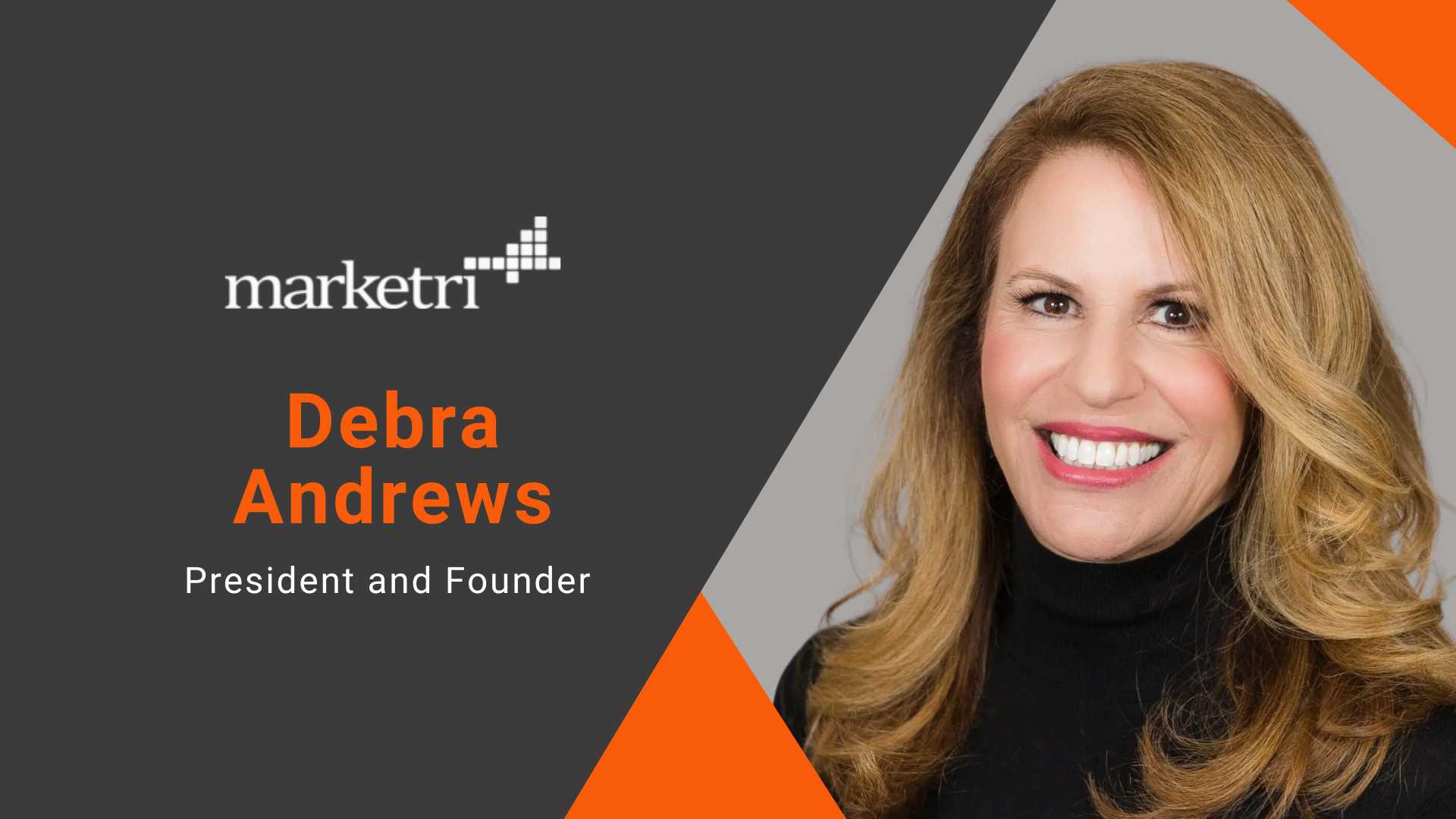
Fractional CMO Insights with Debra Andrews
b2b data 10 Sep 2025
1. How important is a diverse background in sectors such as healthcare, financial services, and technology when considering a candidate for a fractional CMO role?
Finding a fractional CMO with expertise in your company’s sector is ideal. While there's always a learning curve when someone new joins, a CMO who already understands the industry can cut that curve in half. They can focus immediately on the business model, differentiators, strategic vision, and goals rather than starting with industry fundamentals.
Sector-specific knowledge enables the fractional CMO to create impact from day one. However, if your business operates in a niche space and relevant experience is hard to find, the next best option is someone with strong B2B or B2C experience that aligns with your model.
2. What strategies will you employ to ensure seamless integration of leadership with your current marketing department and overall company culture?
Integration starts with the fractional CMO spending time with the CEO and president to understand the organization’s mission, vision, and values. They should ask insightful questions about what defines an ideal team member and what signals a poor cultural fit.
The executive should also share their leadership style and work with senior leaders to assess how that approach aligns with the marketing team and broader structure. If the company uses frameworks like EOS or Radical Candor, the CMO should either be familiar or open to learning.
One-on-one interviews with marketing team members are critical. These conversations reveal career paths, roles, communication styles, and challenges. The CMO needs to understand strengths and development areas—both soft and technical. Tools like Predictive Index can support this process by surfacing team dynamics quickly.
3. How will you leverage data-driven insights to inform your organization’s marketing strategies and business decisions?
In the first month, a fractional CMO should conduct a thorough review of year-over-year metrics and industry benchmarks. This includes evaluating website performance like traffic patterns, bounce rates, session duration, subscriber growth, and form conversions. It’s also important to assess how recent algorithm changes may have impacted traffic.
Channel performance is another priority. Social growth, engagement, and the role of each channel in driving qualified traffic and leads should be reviewed. Paid media efforts need analysis as well, especially cost-per-lead trends and lead quality over time.
If the company attends trade shows, measuring ROI for each event will help determine future participation. And with AI changing how people discover content, growing an opt-in database of leads and subscribers is more critical than ever. Funnel conversion metrics help guide decisions on where to optimize.
Once this data is reviewed, the CMO can prioritize initiatives that align with strategic goals. Without accurate, timely insights, marketing strategies lose their power.
4. What factors influenced your decision to incorporate fractional marketing leadership into your organization’s growth strategy?
CEOs often bring in a fractional CMO when they realize marketing has potential to drive growth but isn’t yet delivering. Marketing has become more complex, and existing team members may be skilled doers but not strategic leaders who can optimize technology, people, and process.
The decision is sometimes driven by competitor activity when others gain visibility through branding, websites, thought leadership, or speaking engagements. This creates urgency to improve market presence and perception.
Meanwhile, the cost of a full-time CMO, typically $250,000 to $300,000, can be out of reach. A fractional leader provides senior-level insight at a more reasonable investment, helping companies move forward without overextending.
5. In what ways do you expect a fractional CMO to contribute to your organization’s long-term growth and competitive advantage?
A fractional CMO should be measured against clearly defined metrics from day one. Most companies want a clear brand strategy and a go-to-market plan that improves awareness, positioning, and market share.
Results should include a healthier pipeline, faster lead velocity, and better close rates—all driven by focused messaging and campaign execution. Some fractional CMOs also support product or service launches, with success tracked by market traction and sales performance.
Others are hired to explore new verticals or markets that offer better growth than current segments. Expanding into new areas can boost long-term growth and create lasting competitive advantages.
6. How will the addition of a fractional CMO influence your company’s future marketing hires and department structure?
Once companies see the value of fractional marketing leadership, they often expand the approach. Many go on to hire full fractional teams—experts from the same firm who collaborate under shared goals and tested processes.
This model works well for companies that want to scale quickly without the burden or lag of internal hiring. These teams bring specialized skills and cutting-edge tools, offering instant impact.
Hybrid structures are also popular. One or two full-time employees, typically a coordinator or manager, are paired with a fractional CMO and a tailored team of generalists and specialists. This approach delivers both continuity and access to senior-level strategy, all while remaining agile and efficient.
Debra Andrews is the President and Founder of Marketri, a strategic marketing consulting firm helping mid-sized B2B businesses modernize their marketing functions, adopt AI with intention, and build stronger relationships with their clients and teams
Get in touch with our MarTech Experts.

AI Agents & Reinforcement Learning: The Future of Customer Engagement | Jojo Zieff, Braze
artificial intelligence 8 Sep 2025
More than just enhancing personalization, reinforcement learning helps marketers drive meaningful outcomes by aligning individual experiences with their most impactful business goals. It helps marketers create a deeply relevant experience for customers, while optimizing any marketer-defined goals.
2. What kinds of behavioral or contextual data will be used to power more intelligent message optimization within your journeys?
3. In what ways will marketers retain creative control while letting AI automate experimentation and optimization?
4. How do you see the role of AI agents evolving within customer engagement platforms over the next 2–3 years?
5. What impact should enterprise customers expect on KPIs like engagement rate, retention, and CLV from this enhanced AI decisioning?
To resonate with consumers across both traditional and emerging channels, it’s no longer just about finding the right message, for the right channel, in the right moment—it’s finding the most relevant, end-to-end experience: the right copy and creative, combination of messages, the right sequencing of channels, and the right moments to send each message across the customer’s journey. We see the capabilities of reinforcement learning representing a fundamental shift within Customer Engagement. The successful deployment of machine-learning-driven and reinforcement-learning optimization is key to helping marketers achieve relevance at scale across the many different dimensions of a customer's experience.
Cross-channel engagement becomes truly orchestrated rather than simply coordinated—the AI determines not only message content but also optimal channel selection, financial offers, engagement timing, and more. Each interaction teaches the system something new about that specific customer, creating a feedback loop that becomes more effective over time, and delivers more relevant experiences for customers.
We are excited by OfferFit’s capabilities and how they will shape our approach for customer engagement. OfferFit AI agents make 6.4B agent decisions per day. Millions of end users are getting 1:1 personalized decisions a day - meaning marketers can orchestrate more deeply relevant experiences for their customers, at scale.

AI-Driven Product Experiences: Personalization, Trust & Data Accuracy | Romain Fouache, Akeneo
artificial intelligence 8 Sep 2025
1. Given that nearly one-third of consumers complete purchases based on AI recommendations, how is your organization evolving its AI capabilities to influence decision-making across the customer journey?
Based on our data, we know that about 33% of consumers have completed a purchase based on AI recommendations. We also know that 84% of them were satisfied with the purchase – a significant success rate. This tells us that the majority of people are benefiting from these recommendations that are relevant and personalized to their needs, which is why we are always looking for ways to evolve and mold our AI capabilities to go beyond the basics, such as “you previously purchased a similar item so you might like…” and focus on helping to ensure that recommendations and product information are complete, consistent, and contextually relevant for every shopper no matter where they are in their journey. It’s not just about nudging a sale, it’s about building and fostering a greater level of trust, reducing friction, and helping consumers feel more confident in their purchases.
2. How do you assess the current maturity of your product information systems to support AI-driven personalization across your digital commerce channels?
Product information maturity is a critical foundation for any successful AI strategy, especially when it comes to personalization. Akeneo helps brands assess this by providing the right foundation of technology, and through a unique blend of data audits, system diagnostics, and customer journey mapping to better understand where content is falling short. Most of the time, the challenge isn’t the lack of data; it’s that the data is siloed, inconsistent across channels, or doesn’t have the right context that AI needs. Looking at key indicators such as readiness, completeness, and consistency helps evaluate maturity. Once there is a baseline, we help customers move up the maturity curve and automate where possible to scale AI personalization efforts.
3. How is your team measuring the impact of AI implementations on key metrics such as product return rates, customer satisfaction, and conversion efficiency?
AI isn’t valuable unless it’s working to drive business impact, so it’s important to track key metrics to ensure efficiency and accuracy. We are always looking to tie our implementations and product offerings to our clients' success metrics that matter, and customer satisfaction, conversation efficiency, and return rates fall into that category. For example, when product information is incomplete, we know it leads to confusion and frustration, AKA more likelihood of returns. So, using AI to automatically flag gaps, suggest improvements, scan reviews for common themes, and generate missing content allows brands to enrich their product content with the help of our AI tools.
4. With trust in AI-powered features still emerging, what measures is your organization taking to ensure transparency around how AI is used in customer interactions and data handling?
Increasing trust in AI is an issue that every company is facing. Without trust, the technology will fall flat, so it’s top of mind to increase. At Akeneo, our approach is always a transparency-first mindset. That means we are crystal clear with our customers, and ultimately their customers, about how, when, where, and why AI is being used and incorporated into the product experience. For example, if an AI model is working to enrich product descriptions or recommending alternative options, we make sure that users know its AI-driven and provide that context. Or if AI is scanning reviews to highlight themes, we outline that clearly to consumers.
5. In what ways is your organization investing in improving product data accuracy and enriching descriptions to support AI applications such as improved search results, summaries, and personalized recommendations?
AI is only as smart as the data that it’s fed. For Akeneo, that means the product data that it’s given. A major aspect of our investment is going toward helping brands not only clean up their plethora of data and information, but also to ensure it’s AI-ready. Our PIM platform incorporates AI capabilities that can detect inconsistencies, suggest category-specific improvements, and generate richer, more contextual descriptions at scale. This is essential for powering better search results, more accurate summaries, and ultimately, recommendations. Because when marketers and product teams can collaborate and enrich the product data faster, they’re able to provide a strong customer experience.
6. How is your leadership balancing the pursuit of AI innovation with the need to establish ethical boundaries that prioritize user consent, data privacy, and transparent value exchange?
Our roots as an open-source company have instilled a deep commitment to transparency, openness, and user trust, which are values that continue to guide our approach to AI innovation. As we develop and integrate AI capabilities across our platform, we remain committed to upholding ethical principles, particularly around user consent, data privacy, and transparent value exchange. We believe that innovation should never come at the cost of trust, which is why we prioritize building AI features that are explainable, auditable, and respectful of customer data boundaries, while ensuring users understand how value is being created and shared. Our commitment to openness is the foundation for how we shape the future of AI at Akeneo.
Get in touch with our MarTech Experts.

Ethical AI in Marketing: Balancing Innovation and Trust | Sara Clodman, CMA
artificial intelligence 8 Sep 2025
1. What strategies should leaders employ to ensure their teams are adequately trained and prepared for AI integration?
The most critical strategy for AI integration is to treat it as a continuous process, not a one-time project. AI is evolving rapidly, and marketing teams need structured, sustained support to build confidence and competence. According to our recent Generative AI Readiness Survey, in collaboration with Twenty44, more than half (56 per cent) of marketers reported receiving either no training or ineffective training on AI tools. That's a clear signal that more investment is needed in practical, role-specific upskilling.
Leaders should start by setting clear expectations for how AI will be used, developing guidelines for what tools are approved, who reviews AI-generated content and how to manage privacy and consent. Training should help teams not only operate AI tools, but also review their outputs carefully. For example, AI-generated copy should be checked for accuracy, audience targeting should be monitored for fairness and organizations should ensure that customers understand when AI is being used.
To help organizations on this journey, the CMA has developed resources like the CMA Guide on AI for Marketers and the CMA Mastery Series of weekly playbooks. These resources provide practical advice on adopting AI tools, setting policies and reviewing outputs. By combining skills training with clear guidelines and review processes, leaders can help their teams use AI effectively and responsibly.
2. How can companies make their AI processes more understandable to consumers and stakeholders?
Making AI processes more understandable to consumers and stakeholders isn't just about disclosure statements; it's about designing transparency into the experience. Trust is more than a value: it's a strategic asset that determines how brands grow and endure.
Transparency means not only stating that AI is used, but helping people intuitively grasp when and how AI is playing a role in product recommendations, personalized content, and so forth.
One way to do this is by creating real-time touchpoints that signal AI involvement. For example, prompts like "Why am I seeing this?" in recommendation engines or "Reviewed by a human" tags in chatbots make AI more tangible, and more trustworthy.
Similarly, a simple note like "This content was generated with the help of AI" in emails or apps can manage expectations and build trust. Some companies are introducing "transparency hubs" or layered explanations where users can find out whether a piece of content or interaction was AI-assisted. These cues provide clarity and empower choice.
Internally, explainability dashboards help customer-facing teams respond to inquiries with confidence and provide insight into how decisions are made. Embedding explainability doesn't require revealing proprietary algorithms: it's about giving people enough information to understand how AI contributes to their experience, how targeting decisions were made, and ensuring teams are equipped to answer questions if concerns arise.
Ultimately, the brands that make their AI visible, relatable, and explainable will build trust and achieve greater success.
3. What lessons can be learned from international markets that are ahead in AI integration?
Strong governance creates a more predictable environment for innovators, encouraging responsible development and investment. It gives organizations the confidence to experiment, knowing the rules of the game. It also sets a higher bar for trust, which is increasingly a differentiator in competitive global markets.
The European Union (EU) has taken a bold and early lead in AI governance, offering a globally recognized reference point for responsible innovation with its General Data Protection Regulation (GDPR). Its emphasis on transparency, accountability, and fundamental rights has helped shape a culture of responsibility across industries and jurisdictions.
That said, being first doesn't always mean getting everything right. For example, the GDPR improved data protection rights and awareness for consumers, but its shortcomings – from interpretational ambiguity to over-compliance and operational strain – offer critical lessons for any nation developing its own framework.
Other countries, like the U.K. and Singapore, have pursued a more flexible, risk-based approach that aims to support innovation while safeguarding public trust.
Canada has the opportunity to evaluate what has, or has not, worked in other jurisdictions and to develop an approach that serves as a model for the world, while reflecting and supporting local conditions, practices and expectations.
The key lesson from these international approaches is that proactive governance builds trust. Canadian organizations can lead by embedding these principles now, without waiting for legislation:
• Establish pre-defined ethical checkpoints for all AI-powered marketing campaigns
• Use visible content labels such as "AI-generated" to maintain transparency
• Display confidence scores or "human approval" indicators in decision systems
• Conduct regular diversity and bias audits
• Publish internal reports on AI use to foster transparency
These measures build internal confidence and external trust.
4. How should marketing leaders balance innovation with ethical considerations to maintain consumer trust?
Ethics and innovation are not competing priorities; they are inextricably linked. The most durable innovations are built on an ethical foundation.
Companies have existing codes of conduct, ethics, privacy principles, and brand safety standards. But many of these were designed before the age of generative AI. Leaders should review existing ethics frameworks through an AI lens, ensuring they are updated to address issues like bias in automated targeting, transparency in AI-generated content, and accountability for machine-assisted decisions. This is not about reinventing governance — it's about evolving it to match today's reality.
An effective system ensures innovation and ethical responsibility reinforce each other.
This begins with integrating governance into AI-related decision-making from the start. Practical steps may include:
• Pre-launch ethical reviews of AI-generated content to identify bias, tone sensitivity, or fairness issues
• Ensuring inclusive representation in audience segmentation and flagging patterns that risk exclusion
• Providing clear opt-out options when AI is used for personalization
It’s also important to define accountability, which is best achieved by establishing a formal "human-in-the-loop" protocol. This approach goes beyond theory and answers the critical operational questions: Who is the designated person responsible for reviewing and approving AI outputs? Who has the authority to monitor for ethical compliance and the duty to intervene when something goes wrong? By embedding human oversight directly into the workflow, marketing leaders ensure that technology serves strategy, not the other way around.
Establishing these structures early helps translate values into action, making ethics a consistent part of the workflow, not an afterthought.
Organizations that treat ethics as operational, not optional, are better equipped to navigate complexity and earn lasting trust.
Integrity doesn't constrain innovation, it gives innovation staying power.
5. What emerging AI technologies do you foresee having the most significant impact on marketing strategies in the next five years?
Over the next five years, AI will evolve from a creative assistant into a dynamic co-pilot: able to personalize content, adapt journeys and optimize campaigns across channels with minimal human input. The most significant impact won't come from tools that merely automate tasks, but from intelligent systems that can think, learn, and act autonomously.
A major shift will be the rise of AI agents — intelligent systems that don't just recommend actions but autonomously execute them. These agents will manage complex tasks like campaign orchestration, budget adjustments, and real-time response to customer behaviour, enabling a move from reactive to proactive, autonomous marketing.
Predictive analytics and adaptive content engines will also play a growing role. Marketers will be able to tailor experiences based on real-time signals and audience context, while generative tools will scale voice, visual, and written creative across platforms.
Perhaps most importantly, AI is advancing ethical and inclusive marketing through tools that analyze social sentiment, generate accessible content like captions and translations, and adapt messaging for diverse communities.
The key differentiator won't be the tools themselves, but how responsibly they're deployed. The most successful marketers will use AI as a creative and analytical partner, maintaining human oversight to ensure alignment with brand values, ethics, and consumer trust.
The future belongs to marketers who design with both intelligence and intention—letting AI amplify their values, not just their velocity.
6. What role do industry associations play in guiding ethical AI adoption, and how can companies collaborate with such bodies to shape the future of marketing?
Industry associations provide an essential platform for setting standards, sharing knowledge and fostering collaboration as AI adoption grows. By offering guidance, convening expert voices and translating emerging regulations into actionable practices, associations help businesses navigate AI's complexities with more confidence.
Associations play a vital liaison role, ensuring the marketing industry's perspective is represented in policy discussions and regulatory development. They also help nurture best practices by developing shared frameworks, toolkits, and use cases that companies can adopt and scale. As educators, they elevate industry competence by upskilling marketers and leaders on the risks, opportunities, and operational realities of AI.
Companies can collaborate by participating in working groups, contributing to discussions about ethical guidelines, or sharing their own case studies and lessons learned. This collaboration not only helps shape the resources and standards that emerge but also ensures businesses stay connected to evolving best practices.
Associations also serve as a bridge between marketers, policymakers and technical experts. Engaging with these groups enables companies to anticipate regulatory changes, align with industry expectations and build AI strategies that balance innovation with accountability. By working together, the marketing community can help ensure AI delivers long-term value while protecting trust and fairness.
Get in touch with our MarTech Experts.
Page 15 of 48
Most Recent
How AI Is Reshaping Ecommerce Discovery, SEO and Marketing Attribution
Interview Of : Daniel Reid

How AI-Powered Clienteling Helps Retailers Turn Holiday Shoppers Into Loyal Customers
Interview Of : Leigh Sevin

Why Human Judgment Still Matters in AI-Powered Biopharma Marketing
Interview Of : Lauren Boyer

Why Continuous Customer Feedback Matters to Marketers
Interview Of : Katie Miserany

Why Clean Data Is Critical to AI-Ready Sales Operations
Interview Of : Heather Rinke

AI-Driven Fraud Is Reshaping Security in Private Markets, Says 6lock CEO
Interview Of : Todd Sorrel