Featured Articles

Balancing Act: Personalization and Privacy in 2024
business31 Jan 2024
As 2024 unfolds, the art of personalization takes center stage, requiring a thoughtful and strategic approach that respects user boundaries. Amidst growing concerns and regulatory developments, businesses are challenged to weave together an experience that is both intimately customized and ethically aligned with the evolving standards of digital privacy.
"In the next year, we can expect to see a continuation of the trend towards tighter regulations and increased protection of individual data privacy. This will likely include new laws and regulations around AI, speech, and likeness, as well as enhanced privacy laws globally and a focus on sustainability and reducing carbon emissions in data centers. There may also be a push for standardization of regulations across different regions, particularly in the US. Companies will need to invest in compliance tools and audits to avoid fines, and there may be a stronger emphasis on data protection and transparency in the advertising industry. Additionally, there is potential for increased scrutiny and potential actions against major players like Google and Meta for anti-competitive practices” said Kristina Prokop, CEO & Co-Founder of Eyeota.
The interplay between personalization and privacy has become a delicate dance, and as we step into 2024, it is a narrative that continues to shape the trajectory of user experiences. AI plays an important part in this dance of personalization and privacy.
Jeff Ragovin, CEO of Fyllo has supported by saying “I think one of the most useful applications of AI in marketing is "Personalization." AI enables marketers to analyze vast amounts of data to understand individual customer preferences, behaviors, and patterns. This information is then used to tailor marketing messages, content, and experiences on a highly personalized level. Personalization powered by AI enhances customer engagement, increases the relevance of marketing efforts, and ultimately contributes to improved customer satisfaction and loyalty”.
Key Takeaway
“Within a first-party data silo, customers still want personalization. In other words, if one is visiting a premium video site like YouTube or streaming channel like Max, most people are willing to share their personal information for access. And as a result, most of us appreciate the personalized recommendations based on previous viewings. We also can trust that our information is not being resold (as it might be on the open web)”.
“What people don’t want, on the other hand, are scary applications like digital ads targeted to conversations they had in the privacy of their own home. With more state privacy regulations in the US and laws in Europe, audience targeting will become more challenging. For example, you won’t be able to track people across sites for ad retargeting. Overall, consumers are becoming more knowledgeable and they will delete accounts that they don’t trust. However, most of us agree that an anonymous user experience isn’t good for the consumer because it will always be an average, generic and underwhelming experience” said Brian Pugh, Chief Information Officer, Comscore.
The trajectory of personalization in a privacy-conscious era demands continued vigilance, innovation, and collaboration between stakeholders. Striking the right balance is not a one-time achievement but an ongoing commitment to evolving with the ethical and regulatory landscape. The art of personalization, when performed with respect for privacy, is a powerful catalyst fostering tailored content coexisting seamlessly with individual privacy rights.

Beyond Keywords: The AI/ML Revolution in Contextual Targeting
artificial intelligence31 Jan 2024
In the era of information overload, the reliance on traditional keyword-based targeting has given way to a more nuanced approach, where AI and ML algorithms discern intricate patterns and contextual cues to deliver advertisements with unprecedented precision and relevance.
The integration of AI/ML in contextual targeting goes beyond mere keywords, ushering in a new era of advertising. The collection of insights navigates the realm where algorithms learn, adapt, and evolve to comprehend the intricacies of user behavior, preferences, and context.
Rachel Gantz, Managing Director, Proximic by Comscore has predicted
- “2024 will bring reliance on contextual audiences that leverage AI to bridge the benefits of holistic audience behaviors and align those behaviors with contextual attributes, resulting in the ability to drive targeted reach in a privacy-first manner free of any user identifiers”.
- “Adoption of these AI-powered contextual audiences is poised to really take off this year as we witness the demise of remaining third-party cookies and advertisers and publishers are forced to adopt new ways of reaching audiences”.
AI and ML algorithms empower advertisers to transcend the limitations of conventional targeting methods, ushering a future where advertising resonates with audiences on a level deeper than ever before.
“We use advanced technologies and data analytics to help marketers reach specific audiences with their advertising campaigns wherever they buy their media. We collect billions of pages a month and analyze large amounts of data to create detailed audience segments. These segments are then used to target advertising to specific groups of users based on their demographics, interests, and behaviors” said Jeff Ragovin, CEO of Fyllo.
Conclusion
The resonance of the revolution echoes through the corridors of digital advertising strategy, with the integration of AI/ML becoming a cornerstone for precision targeting in the years to come. The marriage of intelligent algorithms with contextual understanding has elevated the efficacy of advertising campaigns and also redefined the dialogue between brands and consumers.
“A key theme this year will focus on how companies integrate advanced AI into their product offerings. In 2023, AI’s early adopters had a competitive advantage as they began to utilize LLMs to vastly improve the ability of contextual tools to understand the subtlety and nuance of web pages — enabling things like avoiding misinformation. In 2024, AI adopters will extend their lead through the use of multi-modal models. These models will allow contextual tools to understand page layout and placement, enabling attention to be better maximized and content like made-for-advertising sites to be better avoided” said Aaron Andalman CSO and co-founder of Cognitiv.
It is clear that the future of contextual targeting lies in the hands of AI and ML, opening new horizons where advertising is not just served but intimately understood. It is the catalyst for a refined, adaptive, and personalized approach, aligning seamlessly with the dynamic nuances of individual consumer journeys.

The Evolution of Connected TV Advertising in 2024
advertising31 Jan 2024
2024 marks a pivotal juncture in the trajectory of Connected TV (CTV) advertising. As streaming platforms continue to dominate the way audiences consume content, advertisers are faced with a dynamic and ever-shifting canvas on which to engage their target demographics. Innovation and technological prowess converge to redefine the boundaries of advertising, reshaping the narrative of viewer engagement in the digital age.
Kristina Prokop, CEO & Co-Founder of Eyeota has said that "The rise of streaming services and cord-cutting will have a significant impact on the advertising industry by 2024. Advertisers will shift more budget towards CTV and digital streaming platforms as they become increasingly popular among younger generations. This shift will also allow for more personalized and interactive advertising, leading to improved conversion tracking and higher prices.
She also advised the marketers in terms with costing “With more viewers choosing to include advertising to lower monthly costs, there will be increased opportunities for advertisers, but it may take some time for consumers to adjust to these new ad formats. Additionally, continued consolidation among streaming services and the potential for new data partnerships will play a key role in shaping the advertising landscape in the coming years. Overall, the growth of streaming services and cord-cutting suggests a shift toward more targeted and personalized advertising, with the potential for some short-term challenges and changes in the industry."
In 2024, the evolution of CTV advertising is characterized by a fusion of creativity and cutting-edge technology. From interactive ad formats that engage viewers on a whole new level to data-driven insights that redefine targeting strategies, advertisers are leveraging the power of CTV to create personalized and immersive experiences.
“The trend in CTV is that more users are opting for ad-supported channels over subscription-based. Content is very fragmented across streaming providers —so people feel compelled to sign up for many different options in order to get both The Morning Show, Schitt’s Creek, old Law and Orders, and British murder mysteries to name just a few. However, cord- cutters who left cable are starting to realize that if they subscribe to 7, 8, 10+ streaming channels, they will be paying just as much as cable. So now people are more willing to tolerate ad-supported channels. On that note, we will see growing adoption in Free Ad-Supported Streaming Television (FAST) channels like Pluto TV, or the Roku or Samsung Channels for their niche programming. That will become a larger audience for advertisers going forward” said Brian Pugh, Chief Information Officer, Comscore.
The Journey Ahead
Looking forward, the trajectory of CTV advertising appears for continued innovation and evolution. The symbiotic relationship between technology and storytelling will undoubtedly pave the way to challenge advertisers to push boundaries and captivate audiences in new and unprecedented ways.
The lessons learned in 2024 become the foundation upon which future advertising narratives will be written, reinforcing the notion that adaptability, creativity, are paramount in navigating the ever-changing currents of consumer engagement.

First-Party Publisher Data: Answer to Cookie-Based Advertising?
data management31 Jan 2024
Ever since Google announced that it would remove third-party cookies, B2B marketers have been looking for possible alternatives. The hunt for the next best thing is what B2B marketers are contemplating. There has been a rising importance of first-party publisher data in the months ahead.
Kristina Prokop, CEO & Co-Founder of Eyeota, has mentioned that "To succeed in 2024, brands and advertising technology companies should prioritize collecting and cleansing first-party data from all touchpoints, invest in cloud-based infrastructure for effective data management, and invest in cookieless strategies such as contextual targeting, universal IDs, and social activation through MAIDS/HEMs”.
She has also focused on the change in approach by saying, “It is also crucial to adopt an omnichannel approach, leveraging different technologies and media to hedge against cookie deprecation. Additionally, preparing for the future of measurement in a cookieless environment and prioritizing a full-funnel + omnichannel approach will be key in staying ahead of the competition. Brands should also focus on collecting first-party consent-based data, optimizing content for mobile, and investing in quality data to ensure success in the cookieless future. Finally, there should be a shift towards less creepy and more entertaining ads to reduce ad blocking and engage consumers effectively."
The Road Ahead
In the coming months, the significance of first-party publisher data is poised to ascend, becoming a pivotal element in the landscape of data-driven decision-making. The rising importance of first-party publisher data is closely intertwined with the evolving digital marketing ecosystem.
“Many big companies have still not adopted proper first-party data collection. It will be paramount for them to focus on this for the future,” said Jeff Ragovin, CEO of Fyllo.
He further added that “Publishers and advertisers need to build direct relationships now: Again, as third-party cookies phase out, companies will prioritize establishing direct relationships with their customers. This involves creating touchpoints and interactions that encourage users to willingly share their information. This might be through loyalty programs, newsletters, exclusive content, or other value-added services”.
As privacy concerns intensify and regulations surrounding data usage become more stringent, first-party data stands out as a reliable and ethically sourced asset, fostering trust-based relationships between publishers and their audiences.
Jeff Ragovin, CEO of Fyllo, seconded it, “With privacy concerns on the rise and the implementation of regulations like GDPR and CCPA, relying on first-party data ensures better compliance. Since users willingly provide this data and have more control over how it's used, companies are less likely to run afoul of privacy regulations”.
First-party data offers a unique and valuable perspective that surpasses the insights derived from third-party sources. This shift underscores that a direct, consent-based relationship with users not only ensures compliance with privacy regulations but also unlocks accurate and actionable insights, empowering publishers to refine their strategies and stay at the forefront of the competitive digital landscape.
Brian Pugh, Chief Information Officer, Comscore, said, “When it comes to my wheelhouse of measuring/currency for digital planning —third-party cookies have been employed for at least 15 years. This space needs to adjust, obviously, along with everyone else”.
He has direct advice for publishers: “Now, we are working directly with publishers to integrate their first-party data into measurement to produce the best results. It’s important to note that when it comes to first-party data, there are a lot of haves and have-nots. A publisher needs to have the right value proposition in order to build a first-party network—and many do not. On the premium video side, however, there is a lot of data authentication happening there (one has to log in to access a video)”.
“Keep in mind that if you’re a publisher, you want eyeballs, so you don’t want to insist on collecting information users don’t want to provide. It’s a balancing act. Therefore, publishers need to be able to sell their inventory without first-party data.
That’s where measurement comes in. What drives an audience to your website is the content itself. If it’s compelling, you’ll get an audience. In order to show that your media provides value to brands — without first-party data —you need measurement. Media measurement enables planning and provides predictive audience data without IDs so marketers can still find their audience with precision”.
The 2024 Retail Media Networks Revolution
advertising31 Jan 2024
The evolution of retail media networks and ads has been marked by a rapid transformation driven by technological advancements and shifting consumer behavior. Retailers are recognizing the value of their digital platforms as lucrative advertising spaces, leveraging the vast amount of customer data they possess to deliver targeted and personalized ads.
Furthermore, the integration of e-commerce and in-store experiences has become a focal point in the evolution of retail media. Retailers are exploring innovative ways to bridge the gap between physical and digital retail spaces, creating seamless omnichannel experiences for consumers. Augmented reality (AR) and virtual reality (VR) technologies are being incorporated into retail media strategies, allowing consumers to interact with products virtually before making a purchase.
What Can We Expect Next?
As we move forward, the evolution of retail media networks is to be shaped by a continued emphasis on data-driven personalization and the seamless integration of online and offline retail channels. As retailers continue to invest in data analytics and AI, the ability to understand consumer behavior becomes more refined, enabling them to provide advertisers with valuable insights for optimizing ad content and strategies.
Brian Pugh, Chief Information Officer, Comscore, has said, “Retail Media Networks like Amazon, Walmart, Instacart, eBay, and Etsy are already extremely popular thanks to their robust first-party data. Marketers can feel confident that their products are being presented to a consumer at the end of the purchase funnel —which is where you want to reach them. More dollars are moving in the direction of RMNs, especially because, on the open web, brands don't have transparency or confidence in accurate measurement in light of signal loss”.
He also explained that “RMNs have a ton of first-party data, as do the premium video platforms, because a user needs to be authenticated. The same is not always true, for example, on news or content websites — unless, of course, they are subscription-based.
However, there will be diminishing returns at some point on Retail Media Networks, so marketers shouldn’t put all of their eggs in one basket. Marketers will still need to advertise more broadly to drive total audience reach and awareness”.
“One thing to also note is that because RMNs self-report, they can use their own metrics that tell the best story — whether it is conversions, clicks, ROAS, etc. This can make it challenging for brands to get a true read on the return on media investment”.
This blending of physical and digital realms aims to enhance the overall shopping journey, providing consumers with novel ways to engage with products before making purchasing decisions. The fusion of cutting-edge technologies and a seamless omnichannel approach is poised to redefine the retail media landscape, offering exciting possibilities for both retailers and advertisers in the year ahead.
Google Third-party Cookies Phasing Out: What's Next?
advertising31 Jan 2024
In 2023, one pivotal announcement sent ripples through the industry: Google's decision to phase out third-party cookies. On January 4th, 2024, Google rolled out a new feature called Tracking Protection for 1% of Chrome users, which restricts third-party cookies by default. As Google took the bold step towards a more privacy-centric approach, marketers, advertisers, and users found themselves at the crossroads of change.
"Performance marketing and brand marketers are having a moment of convergence. As we move into 2024 and have less visibility with the continued deprecation of 3rd party cookies, marketers will have to rely on more expansive measurement sets,” said Lacie Thompson, Chief Growth Officer, New Engen.
She also added, “They’ll also have to rely more on their expertise and common sense about how people engage with brands. Working to incorporate research and insights, industry intelligence, and audience segmentation, motivations and their journey into the media strategy will become more common practice. Designing performance marketing to engage throughout the entire journey and understanding the right way to measure effectiveness is the North Star."
What's Next?
Google's strategic move to phase out third-party cookies marks a watershed moment in the digital landscape. However, it has brought diverse reactions from B2B marketers as they are contemplating other alternatives. "A continued shift toward cookieless strategies and a greater emphasis on leveraging first-party data. As cookies continue to phase out and consumer privacy becomes a top priority, advertisers and agencies will need to find new ways to target and measure their campaigns,” said Kristina Prokop, CEO & Co-Founder of Eyeota.
She also emphasized technological advancement by saying, “This will lead to increased adoption of AI and machine learning technology, as well as a focus on contextual advertising and social channels. Additionally, there may be a greater intersection of cloud computing and AI technology to improve real-time optimization and audience targeting. Overall, the industry will likely be heavily invested in finding trustworthy, reliable, and validated solutions for the cookieless world."
Brian Pugh, Chief Information Officer of Comscore, also added that “Signal loss has been happening for several years now with default cookie blocking on Safari and Firefox. Now that Chrome has finally followed suit this month in a long-anticipated move, the cookieless future is finally here”.
“The walled gardens, of course, have a lot of first-party data on their own large networks. However, marketers and tech providers needed to scramble to develop a mix of new strategies for audience targeting — such as building identity networks (e.g., The Trade Desk and LiveRamp). Google also has its solution —Topics API, which is a function of its Privacy Sandbox. Yet, with all these good intentions, we are still left with a fragmented approach.
What we will see more of on the open web will be ‘predictive audiences’ based on AI, in which training sets will be used to optimize and activate the most likely target audience that is consuming content”.
He predicted that “Rich contextual data will play a huge role — and reduce waste — as the industry moves towards a future of alternative signals. And not just the obvious examples like “NFL content is most likely to reach males ages 21-54.” There are other more sophisticated, granular contextual solutions that can mine hundreds of thousands of categories and synthesize them into something consumable — all while protecting brand safety”.
“And don’t forget — what’s happening on the web will also play out on mobile, which already operates on an opt-in model (no longer opt-out). There’s already a lot less yield now across mobile apps because people just aren’t incentivized to opt in”.
The Upcoming Trajectory
Before the final rollout happens, B2B marketers have to gear up and look beyond to find answers. Many organizations have started working on marketing strategies that would strike a balance between innovation and respecting user privacy. Strategies such as first-party data or contextual advertising have gained traction to replace third-party cookie advertising. “Finally, with the phasing out of third-party cookies and increasing concerns about privacy, marketers are likely to focus more on privacy-centric marketing strategies. This includes adopting technologies and approaches that respect user privacy while still delivering personalized and relevant content. Contextual is once again king,” said Jeff Ragovin, CEO of Fyllo.
He also added, “Contextual targeting, where ads are placed based on the content of the webpage rather than individual user behavior, will gain prominence. This allows marketers to reach audiences based on the context of the content they are consuming, rather than relying on user-specific tracking”.
“The eventual deprecation of the third-party cookie will have two important effects. First, contextual tools will become a tool to find audiences — allowing advertisers to more accurately find the content their target audience likes to consume. Second, maximizing the value of the signals that are available through alternative ID systems will become a competitive advantage. And again, AI’s ability to understand the nuance in user journeys will be important in this regard”, said Aaron Andalman, CSO and co-founder of Cognitiv.
The deliberate shift towards bolstering user privacy reflects a broader industry acknowledgment of the growing importance of individual data protection. The shift empowers users with greater control over their online privacy, promising a more confidential and tailored web experience. While it presents challenges for marketers and advertisers who have long relied on third-party cookies for targeted advertising, it also opens doors to innovative, privacy-conscious approaches.
Connecting with Intent: Tools and Tactics for Audience Segmentation
audience data16 Jan 2024
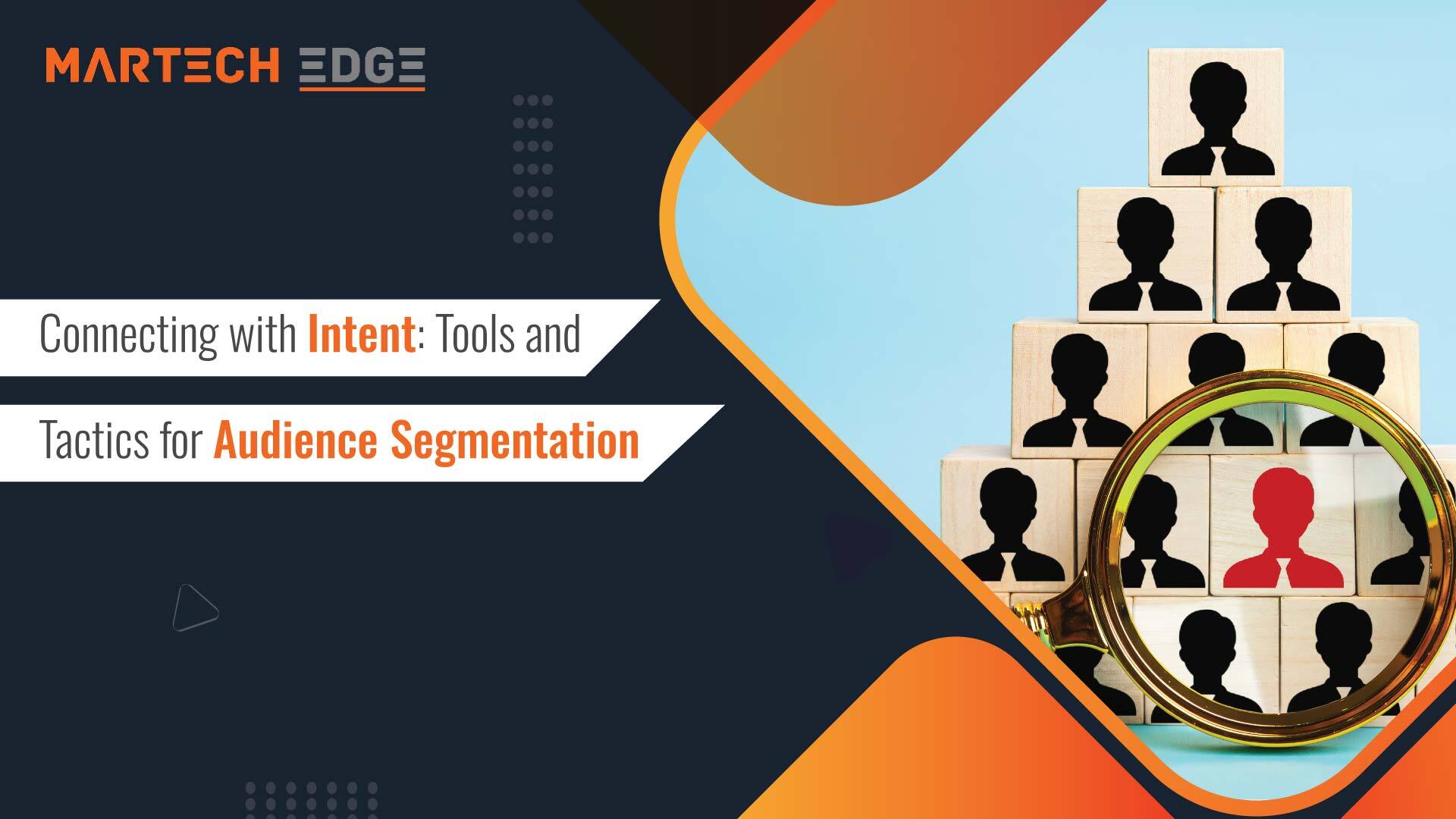
Today's evolving marketing landscape demands the ability to connect with audiences on a meaningful level. The concept of audience segmentation stands as a linchpin in this pursuit, offering a strategic approach to understanding and reaching diverse groups with distinct preferences and behaviors. As the online sphere expands, the need for a nuanced understanding of your audience has become more crucial than ever. You decipher your audience and tailor interactions to foster deeper engagement.
Tactics for Effective Audience Segmentation
To elevate audience segmentation, you must employ specific tactics that refine your understanding of diverse audience segments.
Creating Detailed Buyer Personas
Develop detailed representations of your ideal customers.
Tactic: Conduct research to identify demographic, psychographic, and behavioral traits. Use this information to craft personas that embody the characteristics of distinct audience segments.
Benefits: Provides a clear understanding of different customer groups' unique needs, motivations, and challenges.
Dynamic Content Creation
It generates content that adapts to the characteristics and preferences of specific segments.
Tactic: Use dynamic content tools to display different versions of a webpage, email, or advertisement based on segmentation criteria.
Benefits: Increases relevance and engagement by delivering content that resonates with the unique interests of diverse audience groups.
Lifecycle Marketing
Tailoring marketing efforts to correspond with different stages of the customer journey.
Tactic: Develop specific campaigns and communications for audience segments based on where they are in the purchasing process.
Benefits: Improves conversion rates and customer satisfaction by providing targeted information and support at each buying cycle stage.
Social Listening and Monitoring
Monitoring social media channels for conversations, mentions, and sentiments related to your brand or industry.
Tactic: Analyze social media data to identify emerging trends, sentiment shifts, and discussions relevant to different audience segments.
Benefits: Enhances responsiveness and enables real-time marketing strategy adjustment based on social insights.
A/B Testing for Segmentation Optimization
Comparing two or more versions of a marketing element to determine which performs better.
Tactic: Implement A/B tests on different segments to refine messaging, visuals, or offers based on real-time performance data.
Benefits: Enables continuous optimization of strategies by identifying the most effective approaches for each audience segment.
Tools for Audience Segmentation
The landscape of audience segmentation is vast and intricate, necessitating the utilization of tools to dissect the diverse layers of consumer behavior. When used in conjunction, these tools empower you to move beyond generic marketing strategies.
Data Analytics Tools
Google Analytics
Purpose: Comprehensive web analytics tool for understanding user behavior.
Features: Demographic insights, user interests, and behavior flow analysis.
Benefits: In-depth data on website visitors, helping refine content and marketing strategies.
Social Media Insights
Purpose: Analyzing audience engagement across social platforms.
Features: Demographic data, post-performance metrics, and audience engagement analytics.
Benefits: Enables personalized content creation based on the preferences and behaviors of specific social media audiences.
CRM Software
Purpose: Centralized platform for managing customer interactions and data.
Features: Customer profiles, purchase history, and communication preferences.
Benefits: Facilitates targeted communication, personalized offers, and improved customer relationship management.
Surveys and Feedback Tools
Online Surveys
Purpose: Gathering direct feedback from the audience.
Features: Customizable survey questions and feedback forms.
Benefits: Provides firsthand insights into customer preferences, opinions, and expectations.
Feedback Forms
Purpose: Collecting continuous feedback on specific touchpoints.
Features: Embedded forms on websites, emails, or applications.
Benefits: Real-time insights into user experiences, allowing for swift adjustments to improve satisfaction.
Polls and Quizzes
Purpose: Engaging and interactive tools for audience feedback.
Features: Quick polls on social media, quizzes within content.
Benefits: Encourages audience participation, providing valuable data on preferences and interests.
Evolving Trajectories
One prominent trend is the integration of AI and ML algorithms to enhance segmentation precision. AI-driven segmentation will automate the process and continuously adapt to changing consumer behaviors, ensuring marketing strategies remain agile and responsive in a dynamic market landscape. Additionally, the rising importance of ethical and privacy-conscious data practices will shape the future of audience segmentation. The emphasis will be on obtaining explicit consent for data collection, prioritizing user privacy, and offering opt-in/opt-out mechanisms.
Conclusion
The future of audience segmentation is poised to witness a shift driven by technological advancements and evolving consumer expectations. Striking the right balance between technological innovation and ethical conduct will be the key to effectively segmenting audiences for building trust and loyalty in an increasingly discerning consumer landscape. You need to embrace the change to thrive in an era where personalized and ethical communication is not just a preference but an expectation.
The Next Chapter: Marketing Predictions for 2024
marketing4 Jan 2024
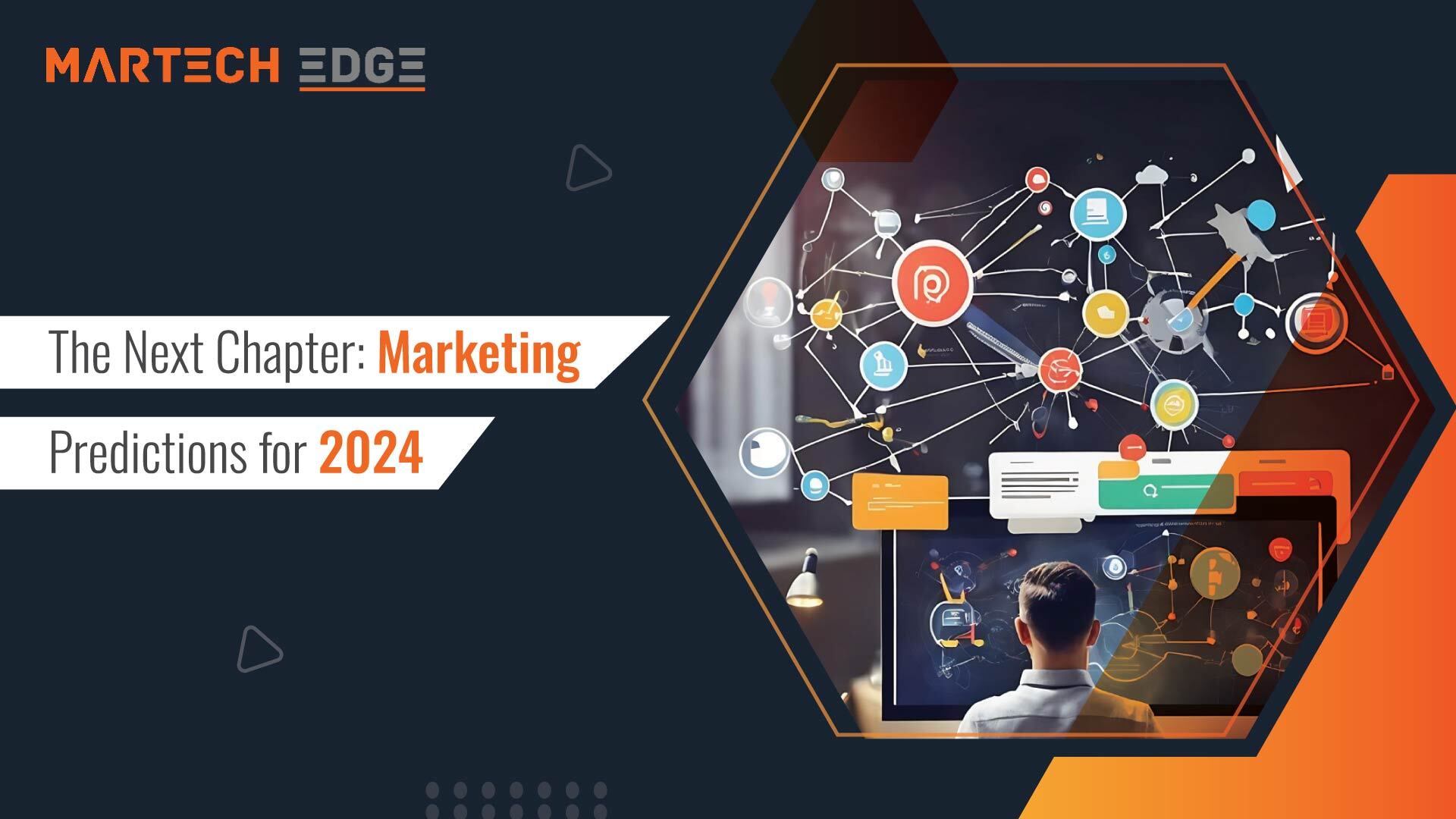
The year 2024 promises to be a pivotal chapter for marketers, marked by a heightened emphasis on unparalleled CX. The marketing terrain has witnessed significant transformations driven by technological advancements, shifting consumer behaviors, and the imperative for businesses to adapt. These trends have redefined how you engage with your audiences to create meaningful connections in a dynamic digital ecosystem.
The article aims to unravel the intricate threads of change, forecasting the recipe for successful marketing campaigns. These marketing predictions for 2024 will help you with the insights needed to navigate the future successfully.
Personalization & Customer Experience
Imagine a consumer, Mark. Mark loves to check out merchandise online. So next time he searches for a particular product, you gauge his attention everywhere, from social media platforms to third-party apps and websites. The era of one-size-fits-all marketing is swiftly giving way to a landscape where consumers crave tailored interactions and individualized content.
Personalization transcends traditional demographic targeting, deepening into behavior, preferences, and past engagements. The key is to unlock the ability to go beyond surface-level customization. It is not just addressing customers by their first names but predicting their needs, offering relevant recommendations, and seamlessly guiding them through a journey uniquely crafted to align with their preferences.
Cross-Channel Marketing Integration
Cross-channel marketing integration harmonizes the message and user experience across diverse touchpoints, from social media and email to websites and mobile apps. This integration is about maintaining a consistent brand image, creating a unified journey that transcends individual channels, and providing customers with a seamless and coherent experience regardless of where and how they engage with a brand.
The power of cross-channel marketing lies in its ability to amplify the impact of individual marketing efforts. The synergy achieved through cross-channel integration is the cornerstone for captivating and retaining the attention of multi-channel consumers.
AI & ML
AI and ML are no longer futuristic concepts but integral tools that empower you to harness the vast troves of data at their disposal. AI is becoming the linchpin of marketing automation, streamlining tasks such as data analysis, customer segmentation, and campaign optimization. ML, on the other hand, empowers with predictive analytics, allowing you to anticipate consumer behaviors and tailor strategies with a level of precision.
The combination of AI & ML is set to propel marketing strategies to new heights, ushering in an era of hyper-personalization and data-driven decision-making. Whether customizing content based on individual preferences or optimizing advertising campaigns in real-time, it will enable you to move beyond traditional approaches.
Data Privacy and Compliance
With an increasing awareness of data privacy among consumers and the enactment of stringent data protection laws, you are facing the imperative to establish and maintain transparent practices. It is marked by regulations such as GDPR and CCPA, which demand accountability in collecting, storing, and utilizing personal information.
The focus on data privacy has become a critical element in building and maintaining consumer trust. Consumers today are more discerning and concerned about how their data is utilized, and prioritizing data privacy will foster stronger relationships with your customers.
Sustainability and Social Responsibility
Consumers today seek quality products and services and align themselves with brands that prioritize values such as environmental stewardship, fair labor practices, and community engagement. As a result, you need to showcase a brand's commitment to sustainability, not just as a marketable feature but as an intrinsic aspect of corporate identity.
From eco-friendly product packaging to transparent supply chain practices, the focus has extended beyond profit margins to encompass the broader impact of business operations. Shedding light on how brands can navigate the intersection of profit and purpose fosters brand loyalty and contributes positively to societal and environmental well-being.
Conclusion
Looking ahead, successful marketers will be those who not only adapt to technological innovations but also embrace the ethical imperatives of our time. The year 2024 promises a marketing landscape where you thrive by delivering exceptional products and services and embodying values that resonate with the socially conscious consumer. You are in an era where purpose-driven initiatives and customer-centricity are not just trends but integral components of sustained success.
Page 15 of 22
Most Recent
The Real Cost of Martech Sprawl: How Many Tools Is Too Many?
MTE Staff Writer
How Do You Measure ROI on a Campaign an AI Agent Built End-to-End?
MTE Staff Writer

Cookieless Marketing: How First-Party Data Strategies Are Performing
MTE Staff Writer

Building a High-ROI Email Marketing Budget for 2026
MTE Staff Writer
Email Marketing ROI: Why It Should Be in Your 2026 Marketing Budget
MTE Staff Writer

How to Justify Email Marketing Spend in Your 2026 Marketing Budget
MTE Staff Writer

Why Brand Consistency Is the Biggest Challenge in Agentic Marketing
MTE Staff Writer