marketing
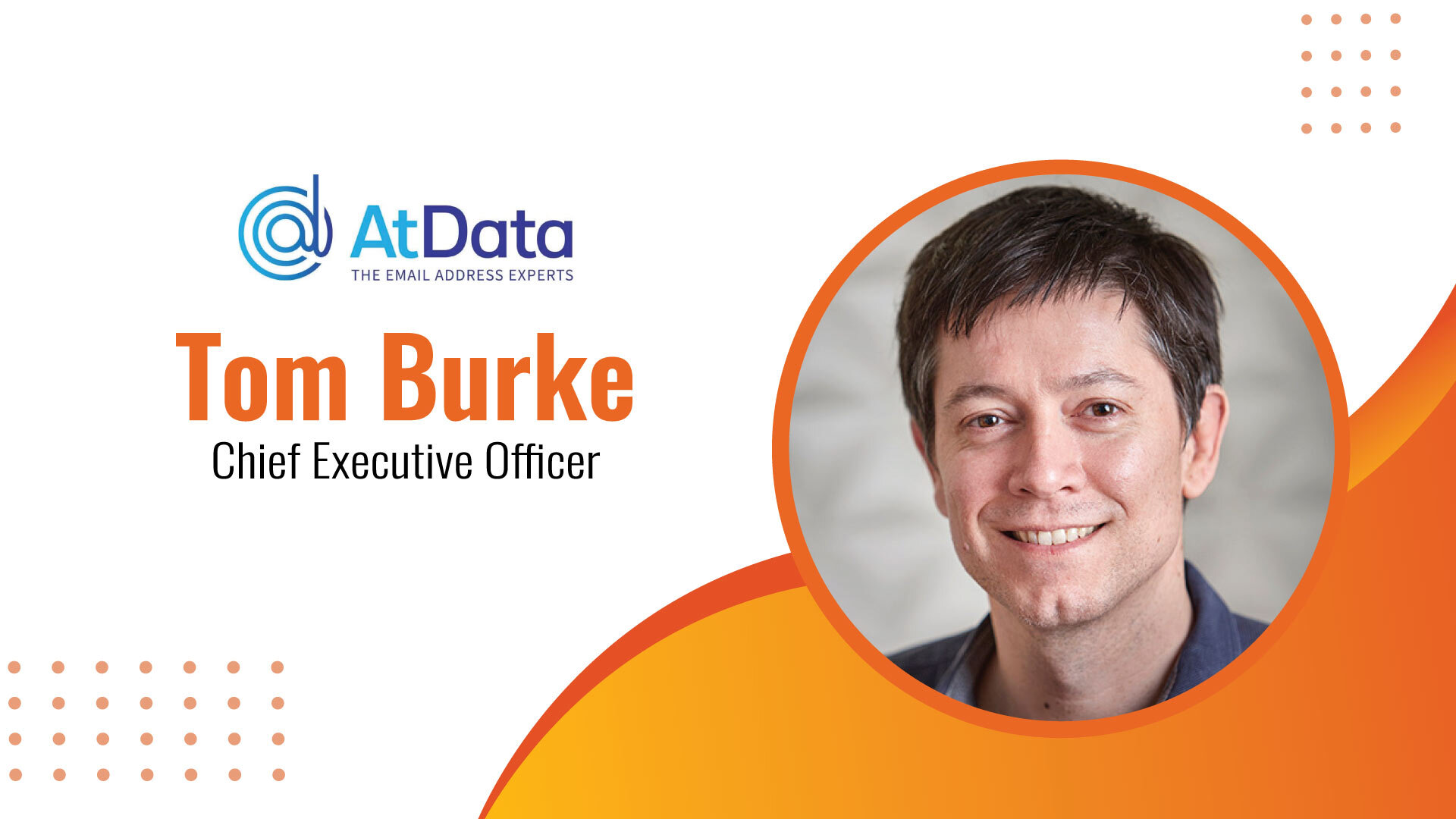
MarTech Edge Interview with Tom Burke, Chief Executive Officer, AtData
email marketing 29 Jun 2023
You’ve been leading AtData for 20+ years now; how would you narrate your journey and experiences?
In 2001, I founded TowerData, now AtData, two months after 9/11 and right as the dot com bubble was bursting—a rather chaotic and difficult time to be launching a tech company. The first few years were very lean and hard, always worrying if we would make payroll, and it was at least five years before I thought the company would actually survive.
Perhaps surprisingly, we managed to hit our stride after the 2008 financial crisis hit. Email is significantly cheaper and more effective than direct mail, and this was a boon for our business. At the same time, I felt like we were in a rut, and I had my own crisis, unsure I had the desire to keep going. I had actually negotiated the sale of the company but, at the last moment, changed my mind, instead taking a 6-month sabbatical in Europe to recharge and reset.
I haven’t looked back since. By prioritizing innovation and excellence; by expanding the suite of services we offer organically and by acquisition; and by working with people of high integrity who are knowledgeable and passionate about what they do; I continue to be stimulated, be challenged, and learn. The most recent adventure was TowerData’s 2021 merger with its longstanding partner, FreshAddress. We doubled in size and rebranded as AtData to emphasize that we are the leaders in email address intelligence solutions.
It amazes me how we’ve evolved from helping a local NYC gift shop to being the trusted partner of Fortune 500 companies such as Verizon and McDonald’s. Several times along the way, “the death of email” has been proclaimed, but email marketing remains a highly effective channel, fueling our growth.
How does AtData empower companies to make the most of their first-party email data and decode customer identities?
First off, why are we talking about first-party data? Customers are the lifeblood of a company, and unlike inflation or the walled gardens of Ad Tech, your customer data is something you can control and leverage to maximize the return of your marketing efforts. However, if you don’t know who your customers are, what they want, and how and when to best reach them, you won’t be able to execute your campaigns effectively. AtData’s Email Address Intelligence ensures you have accurate, complete, and safe first-party data.
We start at the very beginning, letting organizations know if an email address is valid and safe to send to. It’s not uncommon for us to block 15% of the emails entered on a website because they are typographical errors, fraudsters, bots, fake addresses, spam traps, etc. We can then go a step further than other solutions to tell you if an address is active and has been used to complete purchases. Knowing an email address is actionable is key and often overlooked in our increasingly digital-first economy.
Similarly, we are also able to update the email address associated with an individual to their most current and preferred or link an email to a postal address or vice versa. This allows companies to reach their customers who otherwise might have lapsed—simply because they forgot to update their email addresses in the company’s database. When the average consumer can have hundreds of profiles and subscriptions, it’s not a rare occurrence that data becomes outdated. AtData also enriches first-party email data with demographic information to improve personalized messaging.
We provide a wealth of information to evolve a company’s first-party email addresses into more robust, accurate, and up-to-date profiles so they can really get to know the person and have meaningful conversations. Our Email Address Intelligence solutions are really all about developing relationships with your customers by being able to reach them, utilizing messaging that resonates with them, and protecting their interests.
In your opinion, what works better during economic crises—sticking to the core business approach or trying something out of the box?
In general, I am a proponent of going with the core business as long as that core business was working prior to the crisis. Refocusing efforts on fundamentals can have a big impact on a business. Many companies are either resource-constrained or moving quickly, and it’s not uncommon for them to get too far ahead of themselves and forget about the quality of their messaging and datasets. For example, when was the last time the customer welcome series was reviewed? I think we have all seen statistics on earning a new customer versus keeping an existing one—so retention efforts can make or break a company through economic downturns.
With the help of partners like AtData, customer email addresses can be turned into a wealth of information so marketers can be sure they’re reaching their audience at their preferred addresses with better messaging for the offers that make the most sense. Along with that, we help prevent fraud, utilizing the largest global email address network. Unfortunately, economic uncertainty tends to correlate with malicious individuals trying to take advantage. Focusing on protecting the core business by preventing fraud and protecting customers can also go a long way in building loyalty.
In what advanced ways do AtData’s fraud prevention solutions ensure to keep companies a step ahead of cyberattacks?
False identities are one of the primary attack vectors of fraudsters, and AtData protects businesses by recognizing emails used in fraud. In fact, newly created email addresses are 300% more likely to be fraudulent, and emails are much more predictive of fraud than phones or postal addresses.
No one sees as many email activity events as AtData, literally billions of signals every month, which enables us to recognize when an address or domain first comes into use or presents anomalous behavior. An individual company is likely to only see activity across its systems and network, limiting the scope of information needed to identify malicious intent. Built from these signals, our historical email database, fraud feedback consortium, and machine-learning models detect fraud in real time. In this way, our Email Address Intelligence helps reduce the unknown, so companies can protect themselves and their customers without adding friction to the process.
Transactions, account creations, profiles—the list goes on—are all becoming digital. If email is central to your customer identities, email-based fraud prevention will help you minimize risk and reduce costs.
What fundamental strategies do you implement at AtData to ensure a working equilibrium among all BUs?
We start with business objectives, one of the best ways to get everyone on the same page. Our trajectory is determined by these primary goals, which each department then builds from to develop its team and individual goals. They really do keep us all moving in the same direction and, perhaps more importantly, keep us honest and on task. We also have our core values—data-driven, innovative, collaborative, agile, experts—that underly everything we do, from who we bring on board to how we operate. These form the framework for how we do business and make it easier for our various teams to work together.
Beyond that, our goal is to work transparently with all our employees. We strive to empower everyone to have an owner’s mentality, so they are accountable and always willing to help. Keeping everyone informed with regular staff meetings and ongoing communications helps drive collaboration, alleviating siloes and making sure everyone is aware of what we’re building together.
Should we be expecting any new product launch from AtData soon in the future?
Not necessarily a new product per se, but we are investing heavily in developing machine-learning models based on our unique datasets for a variety of use cases. We recently unveiled a new model that reduces the unknown rate of our email verification service, maximizing the number we can provide a status on. This equates to potentially 20% more actionable email addresses within a database.
Looking forward, we are developing an email quality score. Where our SafeToSend® service tells you if an address is safe to mail, the quality score will tell you if an address is active, responsive, and belongs to a buyer. This will be game-changing for email marketers as they look to have better insight into who is and isn’t engaging beyond their limited scope. It will help to better differentiate if an email address is not engaged or just not engaged with your campaigns. It really is something marketers have wanted for quite some time, and the technology has finally caught up such that we can’t wait to provide it for them.
What differentiating brand characteristics enable AtData to become one of the best in business?
AtData was brought about by the merger of two very strong email intelligence brands—TowerData and FreshAddress. The resulting organization has a depth of experience, robust dataset, and technology that is unmatched in the industry. Our proprietary network alone provides us with a scope of email activity not found anywhere else, ultimately making our Email Address Intelligence solutions the leader in accuracy and comprehensiveness.
We are constantly innovating, with recent advancements utilizing machine learning to further improve the insights we can provide on an email address. I would say we are one of the few companies that are treating email verification and hygiene as the evolving technology that it is, going well beyond a simple SMTP ping to truly understand activity and the individual behind an email address. There are many reasons why we can offer our 100% SafeToSend® guarantee—we are that confident in our results.
How influential a role, do you think, will AI play in both escalating and preventing digital fraud?
As an industry, we’re still just scratching the surface of AI. It will definitely play a role in the very near future, unfortunately, in both escalation and prevention. But I believe there are far more individuals working diligently on prevention, that the AI models used to identify malicious activity will advance at a much more rapid pace. Sadly, digital fraud is still too lucrative, but I trust that, as we work with AI and machine learning, we’ll be able to develop systems that make it harder and harder.
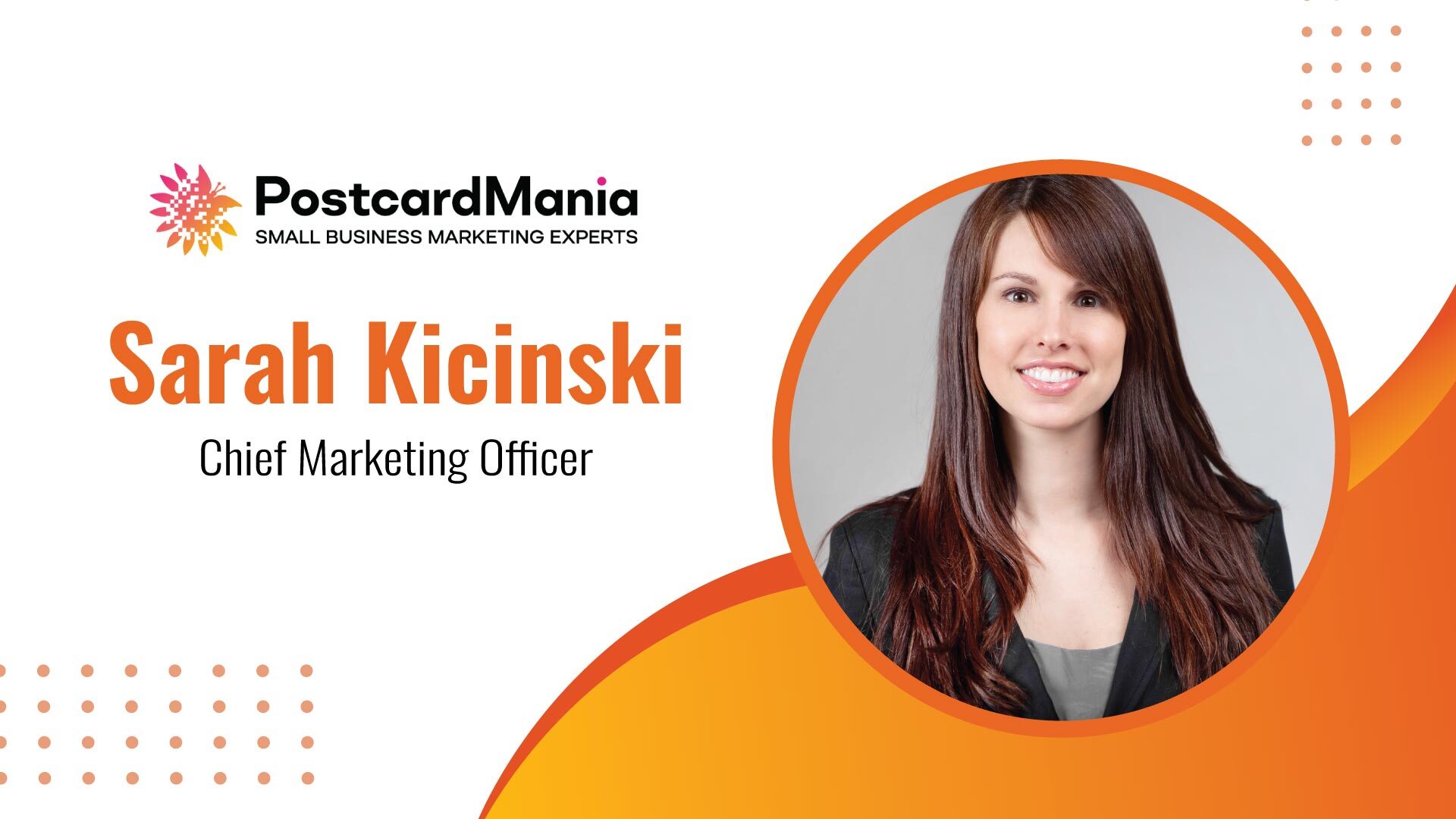
MarTech Edge Interview with Sarah Kicinski, Chief Marketing Officer, PostcardMania
marketing 13 Jun 2023
You have been leading PostcardMania as its CMO for 14 years. Brief us on your journey.
I started working at PostcardMania in 2004, straight out of college. I was originally hired to run a project to partner with franchises and then was promoted to launch all new products as the Vice President of Business Development. Five years later, our VP of Marketing gave notice, and Founder & CEO Joy Gendusa asked me to fill his shoes (which I have to admit was a bit terrifying). At that point, we had a $4 million marketing budget, and I didn’t want to mess it up! It worked out, and I was able to outperform existing metrics and was eventually promoted from Vice President of Marketing to Chief Marketing Officer. It’s now been 19 years, and I feel very lucky to have been part of this company’s journey as we surpass $100 million in annual revenue. We continue to evolve our products around an unwavering commitment to helping small business owners grow their businesses and contribute to an expanding US economy. Currently, my team is made up of 10 marketing professionals who are all experts in their fields and generate more than 2000 B2B leads each week.
Please walk us through Everywhere Small Business, PostcardMania’s flagship marketing product, and the recently added features.
Everywhere Small Business is our multichannel marketing campaign package that gives small business owners the opportunity to target prospects with postcards and coordinated digital ads on Facebook, Instagram, Google, Gmail, and YouTube. As the postcards are mailed out, digital ads are displayed to prospects on these platforms, and not only do they amplify the client’s reach and exposure and make it seem like their business is everywhere, but they also give prospects an easy way to get to clients’ websites to convert.
The recent features we added to Everywhere Small Business expand the reach of those coordinated digital ads by targeting prospects based on their online behavior and the physical locations they visit. So, for example, a vet could target people nearby doing research online on why their cat might be throwing up at night or people visiting a local dog park.
The best part about the new Browsed-Content Targeting and Visited-Locations Targeting is that small business owners have access to premier technology previously only available to large brands. And at prices that a small business can afford. By leveling the playing field with bigger brand names, small businesses can achieve success and grow bigger and better than before—and that’s PostcardMania’s driving mission.
What major alterations have you made in marketing strategies to sail through economic downturns like the current one?
PostcardMania was founded in 1998, so we’ve been through our fair share of tough economic times. We had our first major economic challenge in 2008, which ultimately gave us the experience we needed to be better prepared for any economic downturn.
In 2008, 46% of our revenue came from clients in the mortgage and real estate industries, and we lost thousands of clients almost instantly when the housing bubble burst. Against our gut instincts, we cut our marketing spend significantly based on advisors’ recommendations. By 2009, we were struggling to make payroll and were down 15%. It turned out that reducing our marketing budget had made everything worse. So we decided to restore the marketing budget back to pre-crash totals, and our numbers recovered quickly—2010 ended up being an all-time high revenue year for us at the time.
We learned the valuable lesson to never stop marketing regardless of economic conditions, and we applied this principle when the pandemic hit in 2020. We never cut our marketing or even laid off a single staff member despite our revenue crashing over 40% for several weeks in March and April 2020. But we recovered more quickly than most. July 2020 became the new highest-ever revenue month for us. In the final six months of 2020, we increased our leads by 9.24% without increasing our marketing spend. Our competitors all cut back, which ended up making our marketing efforts more effective than ever. Every year we get a little bit smarter and more efficient with our marketing efforts, but consistency is something we have kept in since day one. It’s honestly our biggest piece of advice to clients, and it doesn’t change even during an economic crisis.
What is PCM Integrations, and how does this technology work for marketers?
PCM Integrations is one of our newer divisions that has been expanding by leaps and bounds. It is a direct mail API which is basically a software connection between us and any other software to automate mail going out. It gives businesses the opportunity to automate mailings based on triggers like when a shopping cart is abandoned or if a new lead is entered into a customer relationship management system. Business owners can automatically target their hottest leads with mailers at a key time in the buying process, and it is a one-time set-it and forget-it process. It gives brands the opportunity to automatically increase credibility by 49% over just sending emails to prospects.
We have clients switching over to us from other direct mail APIs every day because of our vast knowledge of direct mail design for response, as well as our print quality. Other direct mail APIs outsource the production to many different printers, which means the quality control of the finished product is nonexistent. We also don’t charge tech fees which can save companies tens of thousands of dollars a year. It was a natural fit for us to build out a development team to offer this based on our existing capabilities and experience. I don’t know any other company with as much direct mail marketing experience as us. We have over 110,000 clients at this point.
Despite market conditions being on the downside, how did PostcardMania reach new revenue records?
I think it goes back to building so much momentum during the pandemic by never pausing our marketing. Since then, we’ve reached new revenue records in 2020, 2021, and 2022, growing total revenue an average of 20% per year after a decade averaging 5% revenue growth. And the momentum is still rolling—we just set a new quarterly record in revenue in our first quarter of 2023 at over $25 million and $1.8 million more than the same quarter last year. We also achieved the most revenue in a single month in March of 2023, right at the end of the quarter.
That success has come from our commitment to pushing forward with our marketing strategies, increasing our marketing spend despite economic challenges, and adding new direct mail marketing solutions in the past couple of years. We mail 190,000 postcards a week and spend more than $5 million a year on marketing. Since we switched from a print focus to a technology focus, growth has reached a new level. Everywhere Small Business, our retargeted direct mail solutions and PCM Integrations are sure to push us to new heights for the rest of the year and beyond.
Name 3 things you do to ensure marketing, sales, and customer success are on the same page.
Good leadership has a massive influence on the fluidity between departments. The C-level executives here are actually friends, and we’re all working towards the same goal. There is no finger-pointing; we’re working together to make improvements or fix issues. We’ve worked hard at developing this over the years, but this is still one of our top priorities. We all do a trip every year and several other team-building dinners and meetings throughout the year. Last year, we promoted a longtime PostcardMania staff member, Jackie Wirsing, as Chief Experience Officer. It’s her job to boost clients’ results by enhancing the quality of our operations throughout the business. She has helped us improve the internal performance of our staff and the customer experience for our clients. As a guiding hand, she figures out how to help each department and division work more effectively and efficiently toward the goal of improving client success. She’s been doing a phenomenal job, and we’ve witnessed a tremendous difference overall.
What advice would you like to give to budding marketing professionals?
Don’t underestimate the amount of promotion you need to do to get people’s attention. Between direct mail, online ads, social media ads, and email, we are sometimes hitting prospects 20-100 times before converting them to a sale, and we are reaching up to 250,000 businesses every week. Don’t get frustrated or discouraged if you don’t see results right away. Stay the course and market more than you think you need to. People can be super indecisive these days, and they are being hit with so many marketing messages that you need to be persistent and consistent.
How do you foresee direct mail technologies evolving in the upcoming years?
Like many other marketing tools, direct mail has evolved and become automated. This means the technology is intelligent enough to mail postcards, letters, or brochures to people based on their actions in real-time. Currently, we have a service called Website to Mailbox that can mail a postcard to an anonymous website visitor within 24 hours. The technology can capture a visitor’s location, match it to an address, and even select certain mailers based on their browsing behavior, like which pages they read, for how long, and more.
Our PCM Integrations division has also created new avenues that let businesses send fully responsive mailers any time of day without lifting a finger. A business can connect its CRM to our direct mail platform to enable triggered mail based on actions taken at any point during a customer’s lifecycle with the business. A salesperson calls and makes contact with a prospect—or doesn’t and leaves a voicemail—both prospects get a follow-up postcard. Someone purchases from you for the first time or hasn’t purchased for a year, they get a postcard. The options for nurturing leads and fostering relationships are endless.
In the future, I foresee even more specialized technology that can detect specific customer behaviors and react to them quickly. The targeting will get even more detailed and personalized so prospects can find the products and services they need lightning fast. I also see marketers returning to more traditional channels like direct mail as digital advertising becomes more and more saturated and digital response rates continue to dwindle.
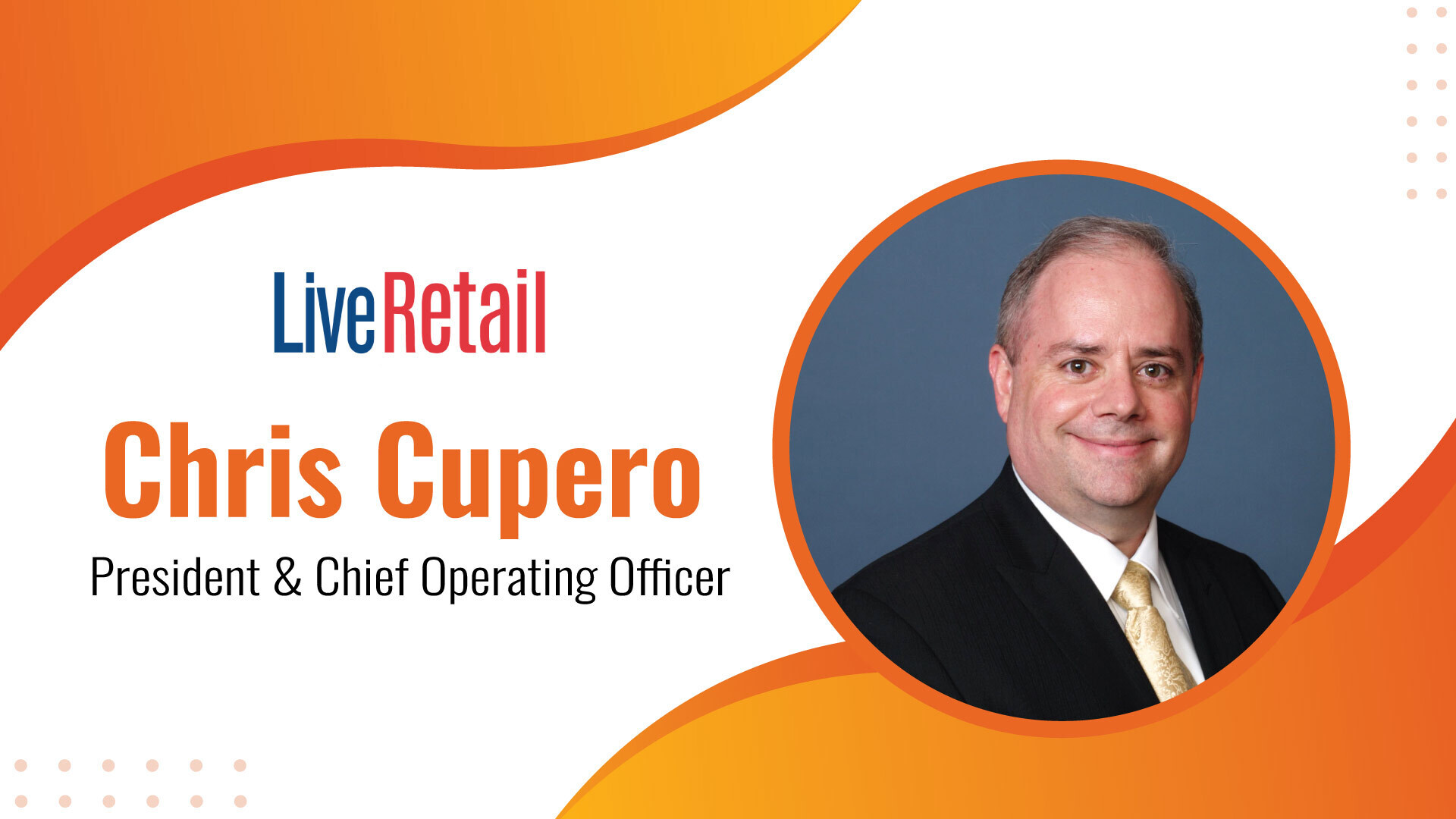
MarTech Edge Interview with Chris Cupero, President & Chief Operating Officer, LiveRetail
marketing 4 May 2023
You have vast experience as Bank of America SVP & LiveTechnology’s Chief Client Officer. How has your transition to the current post of COO at LiveRetail been?
During my 28-year tenure at Bank of America, I primarily worked in Corporate Marketing and Marketing Technology. I found great satisfaction in creating innovative MarTech solutions that addressed complex issues within the marketing organization. Many of these solutions focused on improving processes and workflow, ensuring compliance, and supporting localized marketing efforts across approximately 4,000 banking center locations. As part of the development process, I was involved in every step, from ideation to implementation.
Transitioning from the “client-side” to a “service provider” at LiveTechnology was an exciting but natural progression, as Bank of America’s customer-centric approach has always been ingrained in me. What I enjoyed most about the transition was the opportunity to serve multiple clients rather than just one corporate marketing department. I take great pleasure in providing support to our clients and feel a sense of pride when actively engaging with each and every one of them.
My experience managing Marketing Technology at Bank of America played a significant role in shaping LiveRetail’s direction. Supporting localized marketing for large brands with multiple locations was one of our core features, similar to Bank of America. However, LiveRetail also extends its support to franchise brands, retail brands, manufacturers with multiple retail locations, as well as small businesses, thus broadening our reach.
In this fast-paced era where the approach to administrative and operational functions keeps changing, which technologies do you rely on?
Businesses can benefit from leveraging technology to streamline administrative and operational functions, improve efficiency, and maintain a competitive edge in today’s fast-paced business environment. At LiveRetail, we’re in a unique position because our parent company, LiveTechnology, is a SaaS development company, which means we’ve created most of our tools in-house.
Our proprietary project management system supports our agile development process, team collaboration, client onboarding, and routine tasks and deliverables. One of the most powerful features of our tool is that it allows me to track our deliverables and monitor our progress in real-time, at the project level, team level, and even down to the individual responsible for each task. I can view our deliverables for any time period—deliverables for today, this week, the month, the upcoming week, etc. This gives my management team the ability to make sure we have the resources needed to hit all of our deadlines.
Although we have developed most of our tools in-house, we do rely heavily on Zoom, which has been a game-changer for our fully virtual company since 2022. Zoom allows our internal teams to collaborate seamlessly, even allowing us to whiteboard just as if we were in a conference room. We have also found Zoom to be an efficient way to communicate with clients, with video calls replacing traditional conference calls, giving us more face time with our clients around the globe than ever before.
What, according to you, is more critical: cost-reduction in budgets or time savings in tasks?
It depends on the specific situation and priorities of the organization or individual involved. Both cost-reduction in budgets and time savings in tasks can be important factors to consider, but which one takes priority may depend on several different factors.
In some cases, cost reduction in budgets may be more critical. For example, if an organization is facing financial difficulties or working with limited resources, reducing costs may be necessary to keep the organization afloat or to ensure that critical programs or services can continue to operate. In this case, reducing expenses may take priority over time savings in tasks.
On the other hand, if an organization is under pressure to increase productivity or to meet tight deadlines, time savings in tasks may be more critical. For example, if a team is working on a project with a tight deadline, finding ways to complete tasks more quickly and efficiently may be necessary to ensure that the project is completed on time. In this case, time savings may take priority over cost reduction.
Both cost reduction and time savings can be important factors to consider, and the best approach may involve finding a balance between the two.
Tell us how the LiveRetail platform helps drive engagement & sales with lower CPMs for brands.
Based on our experience at LiveRetail, we have identified three critical factors—targeting, response, and spend—that help drive lower CPM rates.
First, it’s essential to ensure that all social media ads are hyper-targeted, including both location and audience targeting. Ads using broad targeting criteria tend to compete with many other ads, increasing CPM costs. Hyper-targeted ads, on the other hand, don’t compete against national ads, resulting in lower CPM and CPC costs.
Secondly, localized content is crucial in driving engagement, given the “buy local, support local” consumer movement that’s gaining momentum globally. In-market consumers respond 2-5 times more to ads showing their dealer, city, town, or neighborhood. However, creating localized content can be a challenge for businesses, as agencies charge exorbitant fees for custom ads. For instance, creating customized ads globally for all of Dunkin Donuts’ 11,300 locations would require a team of one hundred designers and cost a fortune.
Lastly, it’s been our experience that one hundred ads at $50 each perform significantly better than spending $5,000 on one ad.
What, according to you, is the essential aspect of managing a corporate budget?
The essential aspect of managing a corporate budget is to have a clear understanding of the financial resources available and to plan and allocate those resources effectively. This involves identifying the company’s financial goals and objectives, forecasting revenue and expenses, and creating a budget that outlines the expected income and expenses for a specific period.
To effectively manage a corporate budget, it’s important to regularly monitor and track the actual performance of the company against the budget, making adjustments as necessary to ensure that the company stays on track to achieve its financial objectives.
Additionally, effective communication and collaboration between departments and stakeholders is critical in managing a corporate budget. This ensures that everyone understands the financial goals and constraints and can work together to make decisions that align with the overall financial strategy of the company.
How do you effectively organize all the teams to be coherent and ensure the operations between them run smoothly?
Assembling highly effective cross-functional teams is no easy feat. It requires clear communication, a clear definition of roles and responsibilities, proper delegation of tasks, and effective collaboration. Here are a few things that I have found to be useful in fostering coherent operations:
Define goals and responsibilities: Clearly define the goals and responsibilities of each team and how they fit into the overall project or organization. Make sure each team understands their role and what is expected of them.
Communicate clearly: Ensure that communication is clear, concise, and consistent. Make sure that each team understands the objectives, timelines, and expectations. Encourage open communication and foster an environment where team members can voice their concerns and ideas.
Establish internal processes: Set up clear workflows and processes for each team to follow. This helps ensure everyone is on the same page and knows what is expected of them.
Delegate tasks effectively: Delegate tasks based on team member strengths and expertise. This helps to ensure that tasks are completed efficiently and effectively.
Foster collaboration: Encourage collaboration between teams. This helps to build relationships and trust between team members and ensures that everyone is working towards the same goal.
Monitor progress: Regularly monitor progress and provide feedback to each team. This helps to ensure that teams stay on track and can adjust their processes if needed.
Remember that effective communication and collaboration are key to success!
Can you explain an instance when implementing new or upcoming technology helped the company?
The implementation of additional AI tools, such as ChatGPT, into LiveRetail’s internal processes and client-facing tools represents a significant shift towards increased efficiency and productivity. AI tools have the ability to perform repetitive tasks quickly and accurately, reducing the time and effort required by employees. This not only saves time but also drives consistency and reduces errors while freeing up employees to focus on more complex tasks.
In addition to improving internal workflows, AI tools can also have a significant impact on client-facing tools. Automating certain parts of our content curation process, such as copy recommendations, will reduce the need of the clients or their agencies significantly. This can lead to increased scalability, speed to market, and reduced production costs, ultimately driving higher revenue growth/margins.
Overall, the implementation of additional AI tools represents a major step forward for LiveRetail. By leveraging these technologies, the company can work more efficiently, scale more quickly, and provide a better experience for both its employees and customers.
What tips would you give the other COOs or VPs struggling in the current economic downturn?
In today’s economic climate, businesses, both big and small, are facing unprecedented challenges. As a startup, LiveRetail is no exception to these difficulties. To navigate this environment, we recommend several key strategies.
First, it’s important to re-evaluate and prioritize frequently. Focus on the essential aspects of your business and consider cutting back on non-essential expenses. Building a rainy-day fund can also provide a safety net in uncertain times.
Secondly, be adaptable and open to change. It may be necessary to pivot to new markets or implement new strategies to respond to changing circumstances.
Thirdly, communication is crucial. Keep your team informed of any changes that may impact them, and provide clear and transparent communication to avoid confusion and uncertainty.
Fourthly, maintaining a positive company culture is essential. Recognizing and rewarding achievements, providing opportunities for personal and professional development, and showing appreciation for your team’s efforts can help keep morale high.
Lastly, seeking expert advice from consultants and influencers can be valuable in identifying new market opportunities and accelerating growth. Remember, while the current economic climate presents challenges, it also presents opportunities for innovation and growth. Through adapting, innovating, and investing in our team, we aim not only to withstand the challenges of these difficult times but also to enhance our ability to make a positive impact on the communities, clients, and customers we serve.
Looking at the current market scenario, what do you think lies in the future of the marketplace & what is LiveRetail planning?
In order to remain competitive, it’s essential for marketing strategies to include a localized marketing component. However, this can be challenging due to the high production costs associated with traditional agency models. It’s important to remember that localized content leads to more relevant content, which in turn drives higher response and engagement rates and ultimately results in increased sales.
LiveRetail is well-positioned to support companies and brands with their localized marketing strategy by providing innovative solutions that utilize AI and other technologies to simplify localized marketing and advertising processes with localized ad production, enhanced targeting, and personalization. LiveRetail is committed to investing in these areas and expanding its offerings to meet the evolving demands of the market.
Page 21 of 21
Most Recent
Why Continuous Customer Feedback Matters to Marketers
Interview Of : Katie Miserany
Why Clean Data Is Critical to AI-Ready Sales Operations
Interview Of : Heather Rinke

AI-Driven Fraud Is Reshaping Security in Private Markets, Says 6lock CEO
Interview Of : Todd Sorrel

Alekh Jindal: Co-Founder & CEO of Tursio
Interview Of : Alekh Jindal

Most of Your Best Creator Content Isn't Tagging You
Interview Of : Kayla Franklin
Breaker Transforms Email Marketing with Hyper-Targeting Designed for Modern Audience Engagement
Interview Of : Ben Billups