artificial intelligence

Jim Yu on the Future of AI-Powered Search and Brand Visibility
artificial intelligence 20 May 2025
1. How do you see AI-powered search evolving in the next 3-5 years?
AI-powered search is evolving fast, and we’re just getting started. The way people search is already shifting, thanks to AI models that don’t just return links but summarize, expand, and refine queries in ways that make searching way more intuitive.
Over the next 3-5 years, we’ll likely see search engines becoming more specialized. Google has a massive advantage in real-time indexing and location-based search, while newer players like Perplexity are leaning into research-heavy use cases with built-in citation tools. Just like we already turn to different platforms for different needs Google for general searches, Amazon for products, YouTube for videos we’ll see AI-powered search engines carve out their own niches.
For businesses and marketers, that means adapting. AI-driven search engines prioritize authority, so it’s more important than ever to be a trusted, go-to source in your domain. High-quality, insightful content that establishes expertise is key because AI models will be surfacing and citing the most credible sources.
That said, AI-driven search also brings challenges. With platforms licensing data from sources like Reddit to train models, questions around content moderation, bias, and misinformation will only grow. AI engines aren’t just retrieving facts anymore they’re presenting perspectives, which means credibility and accuracy are critical.
The bottom line? The next generation of search will be smarter, more conversational, and more fragmented across different AI platforms. If businesses want to stay ahead, they’ll need to focus on authority, adaptability, and making sure they show up where it matters.
2. What are the biggest challenges organizations face in adopting AI-driven search solutions?
In my view, AI-powered search is changing the game just like mobile did years ago. The way people find information is shifting from traditional search to AI-driven experiences, where AI agents are doing the searching for them.
For brands, this means a new playbook. It’s no longer just about ranking on Google; it’s about showing up where AI models pull their information from AI Overviews to ChatGPT and Perplexity. In the past, if you ranked well, you had a shot at telling your story when someone clicked on your site. But now, AI decides which brands to feature, how they’re ranked, and sometimes even what to buy. The real challenge for brands today is figuring out how to adjust their marketing strategies for this new AI-driven world.
Enters BrightEdge’s new tool, AI Catalyst, to help brands see how they’re showing up across AI platforms like ChatGPT, Google AI Overviews, and Perplexity—and gives them the insights they need to stay visible and relevant. Everything’s in one place, so teams can stop guessing and start acting.
Just like we optimized for mobile, now we have to optimize for AI.
3. What are the key data security and privacy challenges associated with AI-powered search tools?
When I look at the AI search industry and speak with brands, user privacy and data collection consistently emerge as top concerns. Another major challenge is the need for sensitive company data to train AI models, which makes many businesses hesitant to adopt these technologies due to security, accuracy, and compliance risks.
AI is still evolving, and we are actively refining solutions for content moderation and bias to ensure information remains accurate and credible. While progress is being made, there’s still work to do to get it right. Platforms like DeepSeek are introducing more transparency into how they generate answers, but many AI models still operate as black boxes. Brands need to prioritize AI-driven search solutions that provide clarity on how data is processed and surfaced.
4. How do organizations differentiate themselves in a market increasingly influenced by AI-driven search capabilities?
There are a couple of key ways organizations can stand out in an AI-driven search landscape, starting with building authority and trust. AI-powered search prioritizes credible sources, so brands that consistently publish expert-driven, well-structured content will surface more often.
Second is optimizing for AI-driven search. Unlike traditional SEO, AI search engines rely on contextual understanding. Structured data, schema markup, and multimedia formats help AI interpret and categorize content effectively. The goal isn’t just ranking but ensuring AI can synthesize and serve your insights in meaningful ways.
Finally, search is fragmenting. Different AI models prioritize different search behaviors, so brands must ensure visibility across platforms like Google, ChatGPT, and Perplexity. Optimizing for one platform isn’t enough anymore. In sum, it's not just about ranking—it’s about becoming the source AI trusts.
5. How can AI-driven search be effectively integrated with other technologies like automation, analytics, or personalization engines?
The future of search is deeply interconnected with automation, analytics, and personalization and can be extremely powerful when well-integrated into these other areas of a business. For example, automation streamlines SEO workflows by handling tasks like keyword research and performance tracking, freeing up marketers to focus on strategy. And personalization engines use AI to understand user intent and deliver tailored content, experiences, etc., which boost engagement and conversions. By blending automation and analytics, businesses can refine their strategy dynamically, which in turn creates hyper-relevant, hyper-personal experiences that drive engagement and conversions.
6. What are the key metrics businesses should track to evaluate the effectiveness of AI-powered search?
You can start with the basics how you're performing in traditional search. Then, look at how visible you are in AI-generated responses and how people engage with them. Forget just tracking clicks; with AI doing most of the answering, that doesn’t tell the full story. Focus on metrics like impressions, share of conversation, and sentiment in those AI results. The first step is understanding where your brand shows up in AI responses, what the sentiment is, and how it compares to competitors.
While clicks still matter in traditional search, with AI, it’s about how your brand is reflected in the answers. Tracking query refinements—whether users adjust their searches after an AI response—could be useful, but it's tough since only AI engines have that data. By understanding which metrics are available and then focusing on the ones that directly impact your brand presence, you can refine your strategy and stay ahead in the AI search landscape.
7. Do you believe traditional search engines will remain dominant, or will AI-driven alternatives redefine the search landscape?
With new AI-powered search platforms emerging every week, it may seem like AI-driven alternatives could overtake traditional search engines. But it’s still too early to tell. In reality, I believe traditional search engines and AI-driven alternatives will coexist, each serving distinct and evolving user needs. We’re already seeing this unfold with the rise of specialized, vertical search engines designed for specific industries and content types. Our latest research highlights the potential of DeepSeek’s "do it for me" approach where AI thinks first, searches second to redefine how users engage with search. There’s no question that AI-driven search is fundamentally reshaping the landscape, impacting both brands and consumers. Yet, Google still commands 92% of the market, and AI-powered search continues to rely on established SEO principles. As this transformation accelerates, the key for brands is to stay agile and optimize for visibility across all AI-powered search experiences.

Phantom Digital’s Approach to Innovation in Marketing: AI, Automation & More
artificial intelligence 19 May 2025
1. How is innovation in digital marketing being redefined through the integration of new technologies like AI, AR/VR, or automation?
Innovation in digital marketing is undergoing a significant shift, driven by the rapid adoption of technologies like Artificial Intelligence (AI), Augmented Reality (AR) and Virtual Reality (VR), and automation. These tools are allowing businesses to create more personaliszed, efficient, and impactful marketing strategies than ever before.
AI, in particular, is transforming the way we approach data-driven marketing. It enables us to analyse vast amounts of data to understand consumer behaviours, predict trends, and optimise campaigns in real-time. At Phantom Digital, we’re leveraging AI to build bespoke marketing automation solutions that streamline workflows, enhance customer experiences, and drive measurable results for our clients. Whether it’s creating intelligent email customer journeys, optimiszing content to keep pace with the changing face of SEO, or generating leads, AI allows us to work smarter and deliver highly targeted solutions.
Automation is another game-changer, particularly for scaling marketing efforts. By automating repetitive tasks, businesses can focus on strategy and creativity. At Phantom Digital, we specialise in creating tailored automation customer journey workflows that save time and resources while ensuring consistent, personaliszed communication with customers.
While these new technologies are impressive, they are tools to enable greater creativity and efficiency. They allow businesses of all shapes and sizes to connect with their audiences in ways that are more meaningful, engaging, and results-driven. As a digital marketing professional, I’m passionate about staying at the forefront of these innovations and helping businesses make the most of this exciting new landscape.
2. How important is industry recognition (such as awards or nominations) in building credibility and momentum for digital agencies or marketing teams?
Industry recognition through awards and nominations plays a significant role in building credibility and driving momentum. In a competitive landscape like digital marketing, these awards help you stand out from the crowd. They also help build trust and confidence with potential clients, partners, and even your internal team.
Awards and nominations also help build momentum by attracting new opportunities. They enhance visibility, open doors to new collaborations, and often lead to organic referrals. For clients, it’s a reassurance that they’re working with a team that has a proven track record of success. Internally, recognition boosts morale and motivates the team to continue pushing boundaries.
That said, while awards are important, they are not the sole measure of success. At Phantom Digital, we balance recognition with tangible results client satisfaction, measurable ROI, and long-term partnerships. Industry accolades amplify our credibility, but it’s the consistent delivery of results that really drives growth and builds lasting relationships.
3. How do awards and accolades influence internal culture, client confidence, and talent acquisition?
Receiving awards also have an impact on our internal culture and talent acquisition.
For internal culture, recognition is a powerful motivator. It boosts morale, fosters pride, and reinforces the belief that the team’s efforts are making a real difference. At Phantom Digital, we’ve seen how celebrating wins whether through awards or client milestones creates a sense of shared achievement. It energises the team to continue innovating and striving for excellence, which ultimately reflects in the quality of work we deliver.
For clients, awards act as a trust signal. They demonstrate that your agency is not only capable but also recognised by industry peers for its expertise and results. This reassurance is invaluable, particularly in industries like ours where clients often rely on referrals and reputation. Awards can also serve as a conversation starter for potential clients who are seeking proven expertise.
In a competitive job market, top talent wants to align themselves with companies that are leaders in their field. So, for us, it’s about attracting people who are the right fit to complement our team dynamics.
4. What strategic balance should digital teams aim for between creativity and performance when developing campaigns for modern audiences?
In today’s fast-paced digital landscape, creativity captures attention, while performance ensures measurable results—both are equally important and interconnected.
Creativity is at the heart of any campaign. It’s what makes your message stand out amid the noise and resonate with your audience on an emotional level. However, creativity without strategy is not enough. To be effective, creative ideas must be rooted in a deep understanding of your audience, their needs, and their behaviours. At Phantom Digital, we ensure our creative concepts align with data-driven insights, so every campaign is not only engaging but also relevant and impactful.
Measuring, performance ensures that the campaign achieves its intended goals, whether that’s driving engagement, generating leads, or increasing conversions. This is where tracking, analytics, and optimiszation come into play. For instance, we use tools like A/B testing, tracking codes, and unique URLs to measure the effectiveness of campaigns and refine them in real-time. By constantly monitoring performance, we can ensure that our creative efforts are delivering tangible results.
Modern audiences expect campaigns that are both visually and emotionally engaging while also offering value and relevance. At Phantom Digital, we believe in starting with clear objectives and using data to inform creative decisions. This approach allows us to design campaigns that not only capture attention but also deliver measurable success.
5. How have client expectations shifted in the past few years in terms of digital strategy, storytelling, and ROI delivery?
They’ve evolved significantly, as a result of advancements in technology, changes in consumer behaviour, and the increasing demand for measurable results.
Clients now expect digital strategies that are not only innovative but also highly targeted and data-driven. They want campaigns that are tailored to their specific audience, leveraging tools like AI and automation to deliver personaliszed experiences at scale. At Phantom Digital, we’ve seen a growing demand for marketing automation solutions that streamline processes and ensure consistent communication with audiences. Clients are also more focused on omnichannel strategies, ensuring their messaging is cohesive across all platforms, from social media to email and beyond.
Storytelling has become more important than ever, but expectations have shifted towards authenticity and relatability. Modern audiences are savvy—they can spot inauthentic marketing a mile away. Clients now want stories that resonate with their audience on a deeper level, reflecting their values, mission, and human side. It’s not just about selling a product or service; it’s about creating a connection. At Phantom Digital, we focus on crafting stories that align with our clients’ brand identity while addressing their audience’s needs and aspirations.
Perhaps the most significant shift has been in how clients understand and expect ROI. Today, clients demand transparency and measurable outcomes for every campaign. It’s no longer enough to simply deliver creative work; clients want to see tangible results like increased engagement, lead generation, and sales. At Phantom Digital, we measure ROI using tools like Google Analytics, social analytics, and client feedback. For industries such as financial services and renewable energy, we focus on metrics like user engagement, interaction, and sales to demonstrate the value of our work.
It’s our responsibility to adapt to these changing demands by staying ahead of trends, leveraging data, and delivering campaigns that not only look great but also drive meaningful results.
6. How are agencies and creative teams preparing to deliver value in a world driven by personalisation, sustainability, and purpose?
In today’s digital-first world, personalisation is no longer optional—it’s essential. Consumers expect tailored experiences that reflect their needs, preferences, and values. Agencies are leveraging data-driven insights, AI tools, and automation to create hyper-targeted campaigns that speak directly to individual audience segments. At Phantom Digital, we focus on building bespoke automation systems and workflow tools to deliver personaliszed content at scale. This approach ensures that every touchpoint feels relevant and meaningful, ultimately driving better engagement and loyalty.
Sustainability has become a key factor in consumer decision-making, and agencies are stepping up to help brands communicate their eco-conscious efforts authentically. Creative teams are prioritising sustainable practices in their own operations, such as reducing waste in production processes or using digital solutions to minimise environmental impact. Beyond that, they’re helping clients craft transparent messaging around sustainability initiatives, ensuring it resonates without coming across as performative. At Phantom Digital, we’re mindful of how we can align with sustainable practices while helping our clients do the same.
It’s the agency's job to help clients define and communicate their purpose in ways that connect authentically with their audience. For example, we work with clients to highlight their contributions to their communities, industries, or the environment, ensuring these messages are integrated into their broader marketing strategies.
By combining personalisation, sustainability, and purpose, we can help businesses not only stay relevant but also build deeper, more meaningful connections with their audiences.

How AI and Behavioral Data Are Transforming Personalized Marketing | Insights from RYA's Mark Himmelsbach
artificial intelligence 16 May 2025
1. In what ways can aspirational survey insights complement behavioral data to improve the effectiveness of AI-powered marketing campaigns?
Intention + action = marketing gold. What people say they want to do and what people actually do doesn’t always match up, and that’s where the opportunity lies. Our survey data asks a very hopeful question – where would you spend your free time or extra money. That gets people in their most optimistic state. Our behavioral data reports on what people actually do with their free time or extra money. That provides a look at people in their most realistic state. Analyzing the gaps and overlaps between the two data sources with ML and AI leads us to sharper insights and better creative ideas.
2. What challenges might arise when combining AI-generated content with behavioral intelligence, and how can they be mitigated?
We believe that RYA makes our creative humans better, rather than serving as a substitute for them. With so much data at hand we sometimes over-rely on the numbers and forget about innate human qualities that make something better – taste, nuance, and understanding of the variety of organizational, political, and cultural landscapes. It’s essential to not let AI take complete control. At this point in the evolution of AI content, humans still own the overall craft of what makes them professionals: produce the narrative, act on the insights, and explain the "why" behind their work.
3. What measures are essential to ensure consumer data privacy and compliance when utilizing behavioral data in AI-driven marketing?
For advertisers and marketers, the combination of AI and BI comes with new opportunities and responsibilities. On one hand, we can craft more meaningful, timely experiences that drive deeper engagement and loyalty. On the other hand, we need to think critically about data ethics, consent, and transparency. Just because we can personalize down to the individual level doesn’t always mean we should – at least not without a clear value exchange and trust built with the audience. We continually align with privacy regulations and design strategies that put the consumer first – because the future of personalized marketing will belong to brands that are not only smart, but also respectful and human in their approach. This means, collect only what’s necessary and be clear about how the data will be used, ensure consumers have a clear, easy way to opt in and out while controlling their data preferences, and build internal guidelines to prevent bias and ensure AI decisions align with brand values.
4. How can small to mid-sized enterprises leverage such advanced AI-driven marketing tools to compete with larger organizations?
The advance of AI-driven tools means a greater parity across marketing organizations, regardless of headcount, budgets, or industry. Previously, only Fortune 500 brands, and usually those in the consumer space, were known for highly creative and bold campaigns. Those companies were able to take risks and reap the rewards because of their large budgets and ability to test-and-learn into success. We have created RYA to allow any company to think boldly without the need to find their way over time. Using our proprietary audience data, RYA can generate insights on any audience (down to 0.25% of the US population) and then develop ideas that will resonate with that audience. We’ve seen RYA generate compelling ideas for new startups and for established Fortune 50 companies.
5. What metrics should be used to evaluate the success of marketing campaigns developed through the integration of AI and consumer behavioral data?
The first way to know if a marketing campaign is successful is if it drives business results – awareness, consideration, purchase, loyalty, and so on. That is true for a campaign generated completely by humans or completely through AI. If it doesn’t change consumer behavior then it isn’t successful. Where AI tools like RYA help is through efficiency and effectiveness. RYA helps marketers go faster, cutting time spent on developing strategies and ideas by about 97%. RYA helps marketers think more broadly by generating ideas spanning 180 genres and finding new ways to engage a customer.
6. How do you foresee the evolution of AI and behavioral data integration shaping the future of personalized marketing?
Just because we can do something doesn’t mean that we should. This is true for using AI to get to precise personalized marketing. Blending AI and behavioral data means we can get to near-infinite levels of personalization in the near future. But that could easily violate the trust brands have with their customers. Instead, we should use data to make people feel a part of something – attract them to content and experiences that we know they’ll love, interact digitally or in real life with people like them, make sure brands are additive and not interruptive.
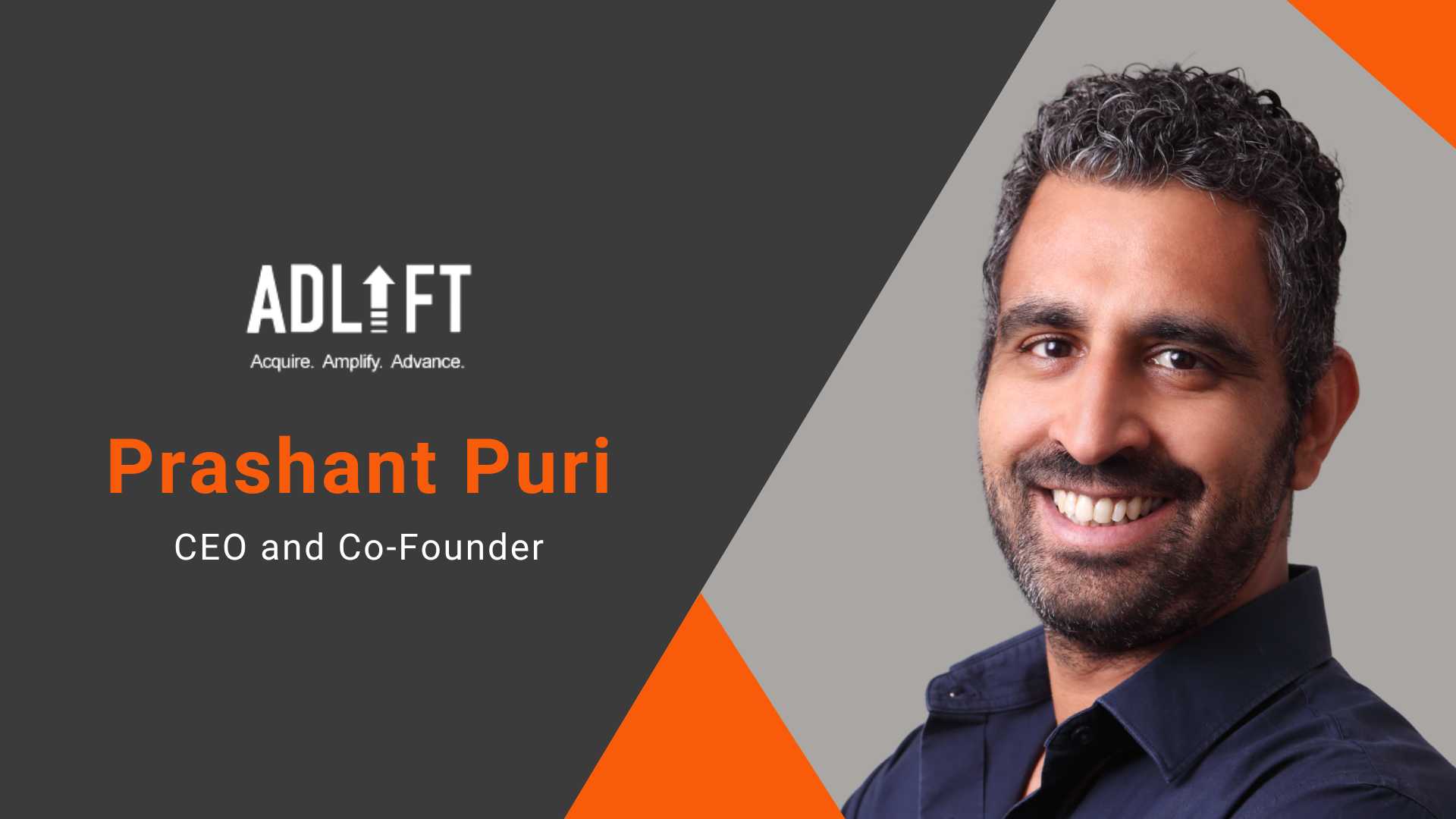
AdLift CEO Prashant Puri on AI, Martech & Scaling Global Digital Reach
artificial intelligence 13 May 2025
1. What are the key challenges in scaling a digital marketing agency across multiple markets, and how does this collaboration address them?
Scaling across geographies is never just a plug-and-play. You’re dealing with different consumer behaviors, varied platform preferences, and, of course, cultural nuances that can make or break a campaign. One of the biggest challenges is building localized expertise while maintaining a unified brand promise. This collaboration helps bridge that exact gap—by pooling together regional strengths, talent, and tech stacks, we’re able to offer clients global consistency with local relevance. It’s scale with soul.
2. How will this merger help both companies strengthen their regional and global footprint in digital advertising?
This merger is about synergy. We’re combining complementary strengths AdLift’s performance marketing and SEO DNA with Liqvd Asia’s creative and digital storytelling muscle. Regionally, it gives us deeper roots in India and Southeast Asia. Globally, it positions us as a stronger player with full-funnel capabilities. We’re now equipped to serve global brands looking for both depth and breadth across markets.
3. How do AI and automation factor into the next wave of digital marketing innovation?
AI and automation are no longer buzzwords they’re the backbone of what’s next. From predictive analytics to hyper-personalized content delivery, AI is reshaping how we target, optimize, and even create content. Automation frees up human creativity by taking over repetitive tasks think real-time bidding, A/B testing, even basic copywriting. The agencies that harness AI not just for efficiency but for insight that’s where the real innovation lies.
4. What are the biggest challenges brands face in maintaining a consistent omnichannel marketing strategy?
Consistency across channels is easy to say, hard to do. Brands often work in silos - search here, social there, CRM somewhere else. The biggest hurdle is integration of data, of messaging, and of teams. Without a unified strategy and tech stack, brands end up with fragmented journeys that confuse more than convert. That’s where agencies like ours step in—to help orchestrate a seamless, cross-channel narrative that actually performs.
5. What role does data-driven marketing play in optimizing campaigns for performance and engagement?
Data is your marketing GPS. Without it, you’re just guessing. But raw data isn’t enough - it’s about actionable insights. What content is driving conversions? Which channels are bleeding budget? How are micro-behaviors influencing macro trends? Data-driven marketing lets us test, learn, and adapt in real time - maximizing ROI while staying agile. In short, performance marketing without data is like cricket without stats pointless.
6. How do you see MarTech and AI-driven personalization shaping the future of digital advertising?
MarTech and AI are turning mass marketing into me marketing. The future is all about personalization at scale delivering the right message to the right person at the right time, without sounding robotic. AI can now predict intent, personalize journeys, and even adapt creatives in real time. Combined with a smart MarTech stack, this creates marketing that’s not just seen but felt. And that’s what builds lasting brand love.

Matt Oakley on AI, Data Strategy, and Innovation at Hotwire Global
artificial intelligence 9 May 2025
1. What challenges have you faced in integrating AI tools into your existing marketing infrastructure?
Great question – and I think the honest answer is many!
When we’re looking at integrating new AI tools into our tech stack, we’re ultimately considering three factors when evaluating potential value and chances for success: data quality and integrity, scalability and adoption potential, and privacy and compliance.
What we have found is that if one of these factors is missing, the rate of success of integrating a new AI tool into the business declines significantly.
And this isn’t just a technical consideration, organizational readiness is just as important. Ensuring the workforce has had the training and has the skills required to adopt new AI tools is critical, and more important than simply introducing new tools.
This is something that we are hyper-focused on, and we’ve set clear goals to upskill our workforce to be AI ready and enabled globally by the middle of 2026.
2. What factors influence your decision to adopt AI-powered tools for search discovery optimization?
Firstly, we know how people research has already changed and that this change is only going to continue at a rapid pace.
This is being driven of course by user adoption and changes in user preferences for search (it’s said that up to 40% of more complex queries are now being done in AI answer engines) – but also in the way AI answer engines work.
We are moving from a world of traditional search engines which are based on lexical search methodologies (exact matches of keywords and phrases) to the AI answer engines which use semantic search to present answers back to users (return results based on the meaning and context behind a query).
This change means that the types of content that are being used to pull information from is changing, as are the sources that are being cited when presenting information back to users. And this would be a big shift for our clients in how their target audiences would discover information about them, their competitors and their industry.
Therefore, we developed our own proprietary agentic AI solution, Hotwire Spark, that is designed to reflect user and target audience behavior in AI answer engines and help us identify the key sources of information and content that is being recommended. The insights and recommendations we provide to our clients from the Hotwire Spark data enables them to optimize content for improved discoverability in AI search but also ensure clear and consistent messaging across channels to get in front of target audiences who are searching for information on solutions and topics related to their brand.
3. What investments are planned to further integrate AI into your marketing operations over the next 1-3 years?
We have recently just announced the launch of our AI Lab, which is a team focused on ensuring Hotwire is AI-enabled and continuously innovating.
This means developing new AI-enabled tools and solutions for our team such as Hotwire Spark but also looking at how we can integrate new third-party tools into our infrastructure to help us continue to deliver high-quality work for our clients. It’s not just one new tool, but many—for instance, along with Hotwire Spark we also launched Hotwire Ignite, an AI-enabled solution that analyses multiple streams of first and third-party data for ongoing account prioritization and optimized go-to market strategies-as well as ensuring our teams have a tech and AI forward mindset to take advantage of these tools.
Our main objective will be to deliver sharper insights faster for clients across the whole lifecycle of campaigns from strategy and planning, creative concepting, through to delivering measurement and reporting solutions to help demonstrate the value of marketing and communications work.
4. How does your organization ensure data privacy and compliance when utilizing AI-driven marketing tools?
Everything that we do regarding tools, whether it be AI-driven or other tools that we are looking to bring into our tech stack, we do so in partnership with our IT and legal team to ensure we are compliant and privacy-first in our decision making.
All our AI practices and tool usage is in adherence to our AI governance policy that has been developed by our parent organization, Enero Group, and which we have adopted across our agency.
5. What role do you foresee AI playing in the future of your organization's marketing and communications strategy?
It is already integral, and that influence is only set to continue to grow over the next few years.
One of our key goals as a business is to be a tech-forward consultancy, and central to the success in achieving this goal is that we invest in the best technologies – whether that be the development of proprietary solutions or third-party tools - and in upskilling our workforce to confidently utilize new tools and solutions for our clients and to enhance our own business.
We have encouraged all our workforce to embrace AI and look for ways to responsibly integrate this into daily workflows and processes. As a leadership team, we know that if we don’t integrate and utilize AI we will be at a competitive disadvantage, and therefore it is central to our current and future planning.
6. How does your leadership team stay informed about emerging AI technologies relevant to marketing?
With how quickly things are developing and evolving, it can be so easy to become overwhelmed!
Internally, would say it’s a mix of reading news, forums, newsletters, LinkedIn posts, listening to podcasts, having daily digests curated by AI … it’s certainly a challenge! But we have a global group of AI champions who are active in consuming this information and testing new technologies, and alongside our Analytics and AI leadership team (Anol Bhattacharya, Laura Macdonald and I) are sharing updates across internal Slack channels to help us stay as up-to date as possible. We also run our own research, for example we have an upcoming Frontier Tech report which examines the disconnect between how business leaders perceive impact of AI and how employees and the wider public feel about it.
And then we also ensure we’re engaging with other experts. For example, we work with think tank House of Beautiful Business to engage with their community, as well as running a series of reports and salon events (including at Davos) to explore what other leaders are addressing. We don’t just participate but are taking active leadership roles – for example, I’m on the board of AMEC where how AI is impacting how companies can more effectively measure comms programs is unsurprisingly a hot topic.

Qualtrics’ AI Strategy: Transforming CX with Predictive Intelligence with Manisha Powar
artificial intelligence 8 May 2025
1. What role does predictive AI play in anticipating and resolving customer pain points before they escalate?
Predictive AI plays a crucial role in identifying potential customer pain points by analyzing behavioral clues and feedback data in real-time. For example, Qualtrics Digital Experience Analytics uses indicators like rage-clicking to spot issues before they escalate, enabling organizations to intervene proactively and enhance the customer experience.
Another great example is ServiceNow, a Qualtrics customer, which uses real-time insights from over 24 survey programs to inform their customer journeys. By proactively recommending easy-to-consume content that matters most to our customers and meets them where they are, ServiceNow is creating a unified, personalized, and guided digital experience to help our customers get to value fast. Additionally, ServiceNow is continually reimagining its customer journey to ensure that customers are connected to the right resources and partners at every stage, ultimately driving success on their platform.
2. What are the biggest challenges businesses face in turning customer feedback into actionable insights, and how does AI address them?
Businesses face several challenges in turning customer feedback into actionable insights, primarily due to the volume and variety of data they receive from multiple channels. This can be overwhelming to process manually. AI helps address these challenges by automating the analysis, categorizing, and summarizing the data to highlight key themes and sentiments efficiently. Another significant challenge is dealing with unstructured feedback, which can be complex, as it often includes text, voice, and other forms of data. AI-powered text analytics and natural language processing (NLP) can convert this unstructured feedback into structured insights, revealing the emotions and intentions behind customer comments.
Timeliness is crucial as well, with businesses needing to respond quickly to feedback in today's fast-paced environment. AI facilitates real-time processing and analysis, allowing companies to swiftly gain insights and make informed decisions to enhance customer experiences.
Qualtrics addresses these challenges head-on with its suite of advanced AI capabilities, including newly launched features like conversational feedback and established strengths in conversation analytics. With conversational feedback, businesses can seamlessly engage with customers across various channels, capturing rich insights through natural interactions. This real-time engagement allows companies to respond more dynamically to customer needs.
More than 50 brands are already using Conversational Feedback and are doubling the feedback collected, with 90% of survey respondents opting to answer follow-up questions when prompted.
3. How can AI-driven CX solutions help businesses measure and optimize customer loyalty and retention?
AI-driven customer experience (CX) solutions, such as Qualtrics' Location Experience Hub, offer businesses unparalleled real-time insights into customer interactions and experiences, analyzed down to the individual store level. These solutions empower businesses to swiftly identify and address trends, enabling rapid responses that enhance customer loyalty and retention. By delivering granular insights, businesses can make informed decisions that significantly improve the overall customer experience and solidify customer relationships.
A prime example of leveraging AI-driven CX solutions is KFC's global omnichannel experience management program. By collecting both structured and unstructured feedback from sources such as in-store transactions, online surveys, and delivery platforms, KFC has seen a 300% increase in customer feedback. This influx of valuable insights equips team members with the information needed to refine and improve the customer experience continuously.
Qualtrics enhances this process through customized dashboards that deliver insights tailored to employees based on roles and locations. Feedback from various channels is aggregated and instantly analyzed, highlighting issues that require immediate attention. For example, restaurant managers receive specific feedback pertinent to their location, allowing them to make meaningful changes, while market managers and executives access broader insights related to larger business units. This comprehensive approach not only boosts customer retention but also cultivates a more engaged and proactive workforce dedicated to delivering exceptional experiences.
4. How does Qualtrics’ AI improve sentiment analysis and voice-of-customer (VoC) programs?
Qualtrics’ AI-enhanced tools, such as Insights Explorer and Assist for CX, significantly improve sentiment analysis and VoC programs by analyzing both structured and unstructured feedback to provide a comprehensive view of customer sentiment. Users can easily access insights without needing a background in data analytics; they can pose straightforward questions like, “What are the top three customer complaints affecting loyalty?” or “What themes are emerging from recent feedback?”
For example, Qualtrics Assist quickly surfaces relevant insights and offers informed recommendations based on expert methodologies and industry benchmarks. This accessibility allows employees at all levels to understand customer sentiments and act on them effectively.
5. What are the best practices for organizations to integrate AI-powered CX tools without overwhelming existing teams?
Organizations need omnichannel listening and comprehensive customer journey data to ensure a holistic understanding of customer behaviors and preferences. By capturing insights across multiple touchpoints, companies can better inform their AI strategies, allowing for more personalized interactions and proactive responses to customer needs. This cohesive data foundation not only enhances AI effectiveness but also enables organizations to create seamless and engaging experiences that drive customer satisfaction and loyalty.
To successfully integrate AI-powered CX tools, organizations should adopt a centralized strategy rather than running disparate programs. This ensures a cohesive approach to AI that aligns with overall business objectives. While 89% of executives report having at least one AI initiative, only 12% have a comprehensive strategy in place.
Market leaders are notably more successful, being 2.3 times more likely to take a strategic approach. Key actions to realize the value of AI in customer experience include setting clear AI ambitions, establishing guidelines for responsible use, creating a strong technology and data foundation, and designing a governance team to oversee implementation. Companies should also focus on launching high-impact use cases to build momentum, developing employee training strategies, and fostering a culture that embraces AI as a core driver of customer experience.
6. How can businesses measure the ROI of AI-powered CX enhancements and ensure they are driving real value?
According to new research, almost half of executives (42%) anticipate seeing a significant measurable impact from using AI to improve experiences within two years, with another 42% expecting results within three to five years. There is huge business incentive to do this – Organizations stand to gain an estimated $1.3 trillion by using AI to improve the experiences they deliver to customers.
To measure ROI effectively, businesses need to establish a clear AI ambition and value strategy that outlines where to invest in AI initiatives.
Key performance indicators should be defined upfront, along with risk and ethics guidelines for responsible AI use. By creating a solid data foundation and implementing AI-related governance, companies can track their progress and outcomes more effectively. This organized approach not only helps ensure that AI-driven improvements translate into real, measurable value but also facilitates ongoing evaluation and refinement of AI initiatives to align with strategic goals.

AI-Powered Search: Chris Brownlee on Conversational AI & Visibility
artificial intelligence 7 May 2025
1. What role does conversational AI play in transforming how users interact with digital platforms?
The way customers discover your brand or your products and services is very different when it's done through conversational AI. The results are very specific.
For the last twenty years or so, customers typed a search query in Google, and that required them to chase down various links.
But now with conversational AI, you ask a question, and you get a pretty direct answer. Or you can refine your request in far more natural ways. It isn’t natural to have to ask for things like [jaguar speed -animal] , but it’s really easy to conversationally look for the exact information you are seeking just like you would with a person.
Even better, if you use these tools frequently, it starts to learn about you. It starts to know your preferences and provide even better answers tailored for you.
2. What are the key technical advancements behind Yext Scout’s AI-powered search?
As a marketer, AI-powered search is a black box. There is no dashboard to update your information. There are no metrics to measure your performance. So how does a Marketer survive in this new world?
AI Search and their LLM’s still need the web. The web and its data are the fuel that they run on. All of the information the LLM is sharing with your customers comes from the web.
With Yext, we are connected to more web publishers than any other solution in the market. We help brands manage their reviews and social presence across the web. We help brands firmly establish their 1st party websites as a source of truth. We do this really well.
And so what we can see now, and map out with Scout, is that your AI strategy is your Digital Presence strategy. We can show a marketer where their information is being picked up from and give them real actionable recommendations on how to improve their visibility.
3. What are the key benefits of integrating AI-driven search solutions into digital platforms?
AI search is still somewhat in its infancy. You know, there is the Mom test. Does my Mom use SearchGPT, Perplexity, Gemini, or Copilot? No, not yet. But do I think she is far off? No, not at all.
This technology is getting baked into our everyday technology. My Mom has an iPhone. She uses Siri. Apple is baking OpenAI into their devices through Apple Intelligence - they are still honing it - but we are really close to crossing the chasm in my opinion. Taking advantage of agentic AI technology like Scout is how brands can put their best foot forward — or they risk getting left behind.
4. How does Yext Scout enhance user experience by understanding search intent?
Scout is really meant to be your AI search and competitive intelligence agent. It's for anyone looking to measure and optimize brand visibility and sentiment across both traditional and AI-driven search. Scout delivers a unified platform that delivers deep search insights, competitive benchmarking, and actionable recommendations, and all with a seamless execution in one place.
Unlike legacy SEO tools that only focus on Google and other traditional digital networks, Scout uniquely tracks AI-driven search presence, sentiments, and share of voice, and provides prioritized recommendations that can be deployed seamlessly from within the Yext platform.
5. What are the security and compliance considerations when adopting AI-driven search technologies?
LLMs and AI search agents are trained on everything that's found across the web. They crawl listings, reviews, first-party web content, social profiles, and more. Scout is helping you to know how you are already appearing in the public domain.
Which comes to the point: more than ever, it's important to have accurate, clear, and consistent data across your entire digital presence.
To illustrate further: with SearchGPT, there could be a small listings website that your brand is mentioned on — but that you're not active on, and the information there might be out of date. In AI search, this information could still get pulled up as a citation and thus give outdated or incorrect information to your customers.
It's incredibly important to have a tool like Scout and Yext with a knowledge graph that can take all of your data, manage it in a clean, consistent way, and push that information out in an accurate, consistent, and manageable way across the entire web. That gives you the best chance to show up in AI search.
6. What types of organizations can benefit most from Yext Scout’s capabilities?
Right now we have honed Scout to really help out multi-location businesses. Think of large franchises across verticals like Food & Beverage, Retail, Financial Services or Healthcare.
In Scout, we provide a map-like overview so these brands can really quickly see at a glance which locations are performing well, and where they can benefit from our recommendations. We provide all of the data to help them identify the problem spots, but with our deep data science expertise and massive depth of data, we can find the trends and opportunities that would be impossible for any one brand to find on their own.

Zahava Dalin-Kaptzan on AI-Driven Fraud Prevention at Riskified
artificial intelligence 5 May 2025
1. How do you balance fraud prevention with customer experience to reduce false declines?
False declines are a costly problem for merchants. They not only lose the order value, merchants incur sunk acquisition costs and risk damaging their reputation with each false decline. It's also a negative experience for customers: 40% do not return to a merchant after a false decline, resulting in lost future business. The challenge lies in identifying orders that are statistically risky but don't fit clear fraud patterns. Merchants want to prevent fraud, but some of these orders are legitimate but flagged as false positives.
The key is balancing a seamless checkout experience for legitimate customers with robust fraud prevention. Requesting additional verification for every order might prevent fraud but increase cart abandonment. A balanced approach uses verification only when necessary and employs sophisticated fraud detection.
Adaptive Checkout addresses this challenge by tailoring each checkout flow to the order's risk profile. This minimizes friction for low-risk orders and requests additional verification only when needed.
The process begins by filtering out blatant fraud before authorization and enriching orders with additional data, making it easier for banks to identify and approve legitimate customers. By surgically analyzing each order's risk, even riskier orders have a better chance of approval, turning potential false declines into approved transactions. This selective verification approach is crucial for improving conversion rates without sacrificing fraud protection or positive checkout experiences for legitimate customers.
2. How do you integrate machine learning and behavioral analytics to identify fraud patterns?
The power of machine learning is the ability for it to ‘learn’ independently as it runs. There are various ways to implement this, but we believe the best approach is a layered one.
It starts with having vast amounts of quality data. Riskified trains its machine learning models on hundreds of millions of data touch points from across our global merchant network. Our algorithms learn to distinguish safe behavior from suspicious patterns and stop existing fraudulent behaviors. But to truly stay ahead of emerging fraud tactics, we also apply real-time anomaly detection using unsupervised machine learning, which flags unusual behavior based on combinations of various order characteristics — such as many orders suddenly exhibiting copy-pasting of credit card details alongside proxy use. Our engine can detect it and stop fraud MOs before they spread.
Machine learning also adapts the checkout flow for every transaction, surgically applying additional security measures for select higher-risk orders and enabling merchants to confidently approve more genuine orders while blocking fraud at various stages of the process.
3. What impact does AI-powered fraud prevention have on cart abandonment rates and conversion optimization?
Cart abandonment has many causes, but a long or overly complicated checkout process is a major one. Consider an order that initially appears suspicious, such as one placed from a new device or with a recently issued credit card. Using AI and Riskified’s merchant network data, we can compare an order against millions of data touchpoints to draw a clear picture of a shopper’s true identity. This allows us to identify legitimate customers and expedite their checkout. Conversely, imagine a returning customer with a stored credit card and no unusual activity in their order data.Why ask them for a CVV if there is no need? Some customers may not have this information readily available, potentially leading to cart abandonment. AI enables us to precisely request verification, such as a CVV or a one-time passcode, only when needed. This reduces checkout friction and increases successful conversions of legitimate orders.
4. What best practices should businesses follow when implementing AI-driven payment security solutions?
It’s important to think of fraud prevention and conversion as two sides of the same coin. Make sure that whatever solution you’re assessing for payment security also helps to optimize conversions and prevent the false declines.
Make sure to connect with other stakeholders to understand the full scope of security issues related to payments. For example, does the payment security solution address post-purchase concerns like returns and policy abuse? Is there a need to protect against abusive behaviors like serial returns or false claims of INR? To empower merchant fraud and customer service teams with real-time ability to address these challenges, ideally, the fewer integrations you have to deal with, the better.
Lastly, look for more than a solution - look for a partner that future-proofs your business. AI and ML solutions should never be a black box - merchant teams need technology that provide them with the visibility, flexibility, and control they need to tailor solutions aligned with their business strategy and success.
For example, when you have declines, do you understand why they were declined? Can you add your own logic into the decisioning? How can you get a clearer image of the customer’s identity? Mapping this out can help you choose the right solution and make decisions that will improve revenue and security in the long run.
5. How does AI-powered checkout impact payment authorization rates across different industries?
Machine learning-based solutions can detect far more patterns than a rules-based solution – and unlike static rules, they can adapt and learn in real time.
Using a sophisticated AI-powered solution that detects and screens out fraud prior to issuer authorization ensures that fewer fraudulent orders reach the issuer. Elite fraud prevention solutions are able to analyze high- quality data and share, that data with issuers at scale. This helps them filter out fraud while understanding the context behind orders better. For example, there can be a significant difference between the risk of buying a $1000 fridge online versus buying a $100 gift card at the same merchant. AI solutions provide the context that distinguishes between safe and risky orders. In the long run, this will lead to more trust with the issuer, higher authorization rates, and less risk of falling into a monitoring program.
6. How can AI-powered fraud prevention solutions be customized to meet specific business needs?
The ideal AI-powered solution should be very customizable. No two businesses are alike, no one can decide your risk tolerance, and no one knows exactly how your business operates – so generic products won't cut it.
Start by making sure fraud is viewed properly. Alongside the standard ML models, Riskified has developedgeo-specific, vertical-specific and sometimes even merchant-specific models, all of which is crucial for accuracy.
Also, when you review transactions for fraud, do you want to review them after authorization, where you can manually overturn declines and leverage additional data like AVS match in the US? Do you prefer to review orders pre-authorizatio? Or maybe leverage both pre- and post-auth review?
For example, policy abuse is extremely specific to the merchant and their defined policies, so having ML to determine risk is an elemental part of the equation. And each merchant will want to deal with policy abusers differently – warning them, blocking them at checkout, denying claims, etc.
Even in CNP fraud, how strict do you want to be? If you want to send a one-time password to some risky orders with verifiable phone numbers, how long would you give your customers to verify the code? High-end fashion offering limited stock would have a different view from fast fashion. And some forms of verification, like 3DS, will work better with consumers in one region, and less well in others.
There is no one-size-fits-all solution, and it will look different from merchant to merchant, as it should.
Page 6 of 9
Most Recent
Why Clean Data Is Critical to AI-Ready Sales Operations
Interview Of : Heather Rinke

AI-Driven Fraud Is Reshaping Security in Private Markets, Says 6lock CEO
Interview Of : Todd Sorrel

Alekh Jindal: Co-Founder & CEO of Tursio
Interview Of : Alekh Jindal

Most of Your Best Creator Content Isn't Tagging You
Interview Of : Kayla Franklin

Breaker Transforms Email Marketing with Hyper-Targeting Designed for Modern Audience Engagement
Interview Of : Ben Billups

Why AI-Generated Advertising Needs Creative Intelligence Signals
Interview Of : Joseph Galarneau