
digital transformation
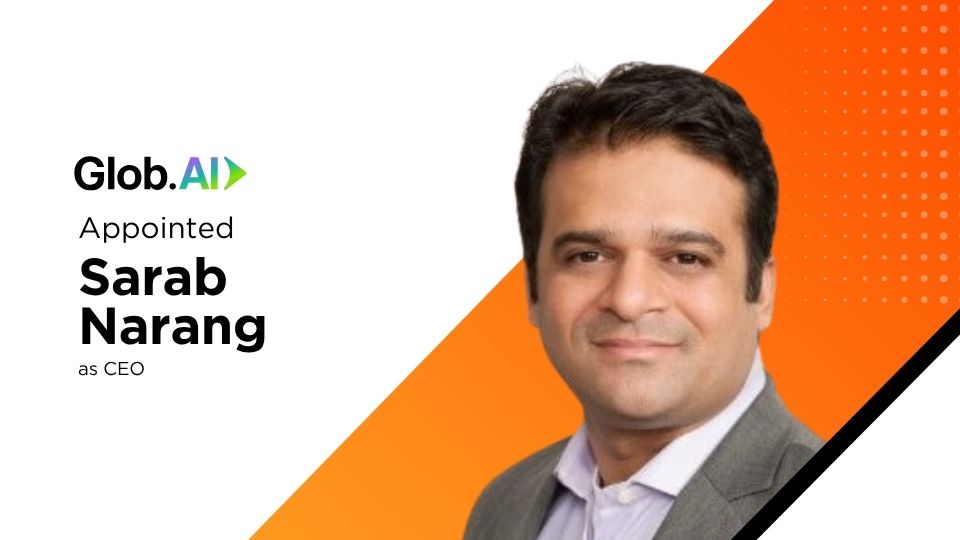
Globant Names Sarab Narang CEO of New AI-Native Glob.AI Model
Globant Names Sarab Narang CEO of New AI-Native Glob.AI Model
 PR Newswire
Published on : Aug 19, 2026
Globant has appointed Sarab Narang as CEO of Glob.AI, a new AI-native technology services model that aims to change how enterprises purchase, deploy, and manage artificial intelligence services.
The initiative represents a significant change in the traditional IT services model. Instead of pricing technology work primarily around employee hours, project teams, or software seats, Glob.AI is designed around AI Pods—service units operated by groups of AI agents under human supervision—with pricing tied to output or consumption.
The approach reflects a broader transformation taking place across enterprise technology services. Generative AI and agentic AI are increasingly capable of handling software development, research, data analysis, customer support, content creation, and other workflows that previously required large teams of specialists.
The challenge for services companies is no longer simply adding AI tools to existing delivery models. It is determining whether AI can fundamentally change how technology work is organized, delivered, governed, and priced.
Glob.AI is Globant's answer to that question.
The company says its AI Pods combine AI-native execution with the governance and enterprise delivery experience developed through Globant's 23 years in the technology services market. Humans remain involved in supervision and governance, while AI agents perform defined tasks within the service model.
That distinction is important for enterprise buyers. Fully autonomous AI services remain difficult to deploy across complex organizations because of concerns surrounding security, accountability, accuracy, compliance, and integration with existing systems.
A human-supervised agentic model attempts to balance automation with organizational controls.
Narang brings more than two decades of experience across agentic AI, generative AI, machine learning, enterprise software, and management consulting. Before joining Globant, he served as vice president of central product management at ServiceNow, where he worked on agentic and generative AI products and go-to-market strategies.
His previous experience includes more than five years at Amazon Web Services (AWS), where he ultimately served as general manager and global head of generative AI and machine learning go-to-market. During his AWS tenure, he was involved with enterprise AI capabilities including Amazon SageMaker and Amazon Bedrock.
Earlier, Narang spent 12 years at KPMG, leading AI, machine learning, and technology engagements while developing new offerings and global delivery organizations.
That background gives Glob.AI an executive who has worked across several layers of enterprise AI: consulting, cloud infrastructure, software products, go-to-market strategy, and now AI-native services.
Globant says Glob.AI is already showing commercial momentum. As of June, the initiative's annual recurring revenue had increased approximately 60% in a single quarter, while its pipeline reached $436 million. Adoption had also extended to 45% of Globant's top 20 accounts.
Those figures are company-reported rather than independent market measurements, but they indicate that Globant is testing the AI-native services model with existing enterprise customers rather than positioning it solely as a future concept.
The strategy puts Globant into a competitive market that includes traditional IT services companies such as Accenture, IBM, Capgemini, and Tata Consultancy Services, as well as cloud providers and enterprise software vendors increasingly building AI agents into their platforms.
The competitive landscape is changing because AI can potentially reduce the labor intensity of some technology services. Traditional services companies have historically generated revenue by combining skilled personnel with consulting expertise and delivery capacity. If AI agents can perform portions of that work at significantly lower marginal cost, services providers may need to rethink pricing and revenue models.
Glob.AI's output- and consumption-based pricing is therefore one of the more consequential elements of the announcement.
Pricing based on outcomes rather than hours could align vendor incentives more closely with customer results. But it also introduces new questions around how output is defined, measured, verified, and governed. Enterprise buyers will need transparency into what AI agents are doing, how performance is evaluated, and where human oversight remains necessary.
The model also has implications for enterprise marketing and customer experience teams.
AI Pods could eventually support functions such as marketing analytics, content operations, campaign optimization, customer research, software development, personalization, and customer engagement. For organizations already building AI into their MarTech stacks, an AI-native services layer could potentially sit between internal teams and the underlying technology platforms.
The larger trend is clear: enterprises are moving from experimenting with individual AI copilots toward designing agentic workflows that can execute multi-step business processes.
Glob.AI is attempting to package that shift as a service.
Market Landscape
The enterprise AI services market is becoming increasingly crowded as traditional consultancies, cloud providers, software companies, and technology integrators build AI capabilities.
Microsoft, Google, AWS, Salesforce, ServiceNow, and other enterprise technology vendors are embedding AI agents into their platforms. At the same time, consultancies such as Accenture and IBM are helping customers redesign business processes around generative and agentic AI.
Glob.AI's differentiation is its attempt to make AI agents the fundamental delivery unit of a technology services model rather than simply an additional tool used by conventional consultants and developers.
Its success will depend on whether enterprises are willing to purchase AI-generated outputs at scale, and whether Globant can maintain quality, governance, and accountability as the number of AI Pods grows.
Strategic Outlook
Glob.AI represents a bet that AI will change not only how technology work is performed but also how technology services are purchased.
If the model succeeds, enterprises could increasingly buy defined AI-driven outcomes rather than staffing projects around fixed teams or hours. That could alter the economics of consulting, software development, marketing operations, analytics, and managed services.
The appointment of Narang strengthens that strategy by bringing experience from AWS, ServiceNow, and KPMG. His immediate challenge will be turning Glob.AI's early customer adoption and pipeline into a scalable operating model while maintaining enterprise-grade governance.
The broader industry will be watching the economics closely. AI-native services promise faster execution and potentially lower costs, but enterprises will ultimately judge the model on measurable business outcomes—not the number of agents deployed.
Top Insights
- Glob.AI shifts technology services toward AI Pods, combining autonomous agents with human oversight and potentially changing how enterprises purchase technology work.
- Output-based pricing challenges hourly consulting models, creating opportunities for efficiency while raising new questions about performance measurement, quality, and accountability.
- Sarab Narang brings enterprise AI experience, having held leadership roles at ServiceNow, AWS, and KPMG across AI products and go-to-market strategies.
- Glob.AI is showing early commercial traction, with Globant reporting 60% quarterly ARR growth and a $436 million pipeline as of June.
- AI-native services could reshape enterprise operations, particularly software development, analytics, marketing, customer engagement, and other knowledge-intensive workflows.
Get in touch with our MarTech Experts




