News

New Programmatic Advertising Study Reveals $6.6 Billion Cost of Bid Shading
reports 8 Aug 2023
Cognitiv Surveyed Digital Media Buyers and Industry Experts to Understand and Uncover the Financial Impact of Bid Shading on the Programmatic Media Landscape
Bid shading, a pervasive optimization practice used in programmatic advertising, is likely leading to $6.6 billion in wasted advertising spend each year. In addition, this practice is not well understood or regarded by most digital media buyers according to a survey just released. The research was spearheaded by Cognitiv, the leading custom AI partner delivering algorithms unique to each advertiser, in partnership with independent research agency, Alter Agents, and queried more than 250 US digital media buyers to explore the complexity of today’s bidding environment and how current solutions are performing for advertisers. Considering that last year, advertisers spent $109.4 billion on programmatic advertising (excluding search), an evolved approach to bidding is essential.
Today, the primary method for programmatic advertising – an industry expected to represent 91 percent of total digital display ad spending in the US – involves a first-price auction. However, in order to avoid overbidding, many buyers employ bid shading, an algorithm that utilizes historical winning bid prices for a given advertising placement, suggesting an optimal bid for advertisers. The introduction of first-price auctions and bid shading aimed to rebalance the power dynamics between advertisers and publishers, while promising greater transparency in the bidding process.
Yet, the focus on transparent pricing provided by first-price auctions was found to shift the balance of power towards the publishers. Cognitiv’s research study found that 75% of digital media buyers believe the switch to first-price auctions has ultimately served publishers more than advertisers, and 64% attest to first-price auctions causing CPMs to increase. Overall, the study concluded that more than a quarter of digital media buyers indicated that the transition to first-price auctions in programmatic media buying impacted their company negatively.
Given rising CPMs and growing discontent among advertisers around the increasing costs of buying in a first-price auction environment, a new stop-gap solution was introduced by publishers: bid shading. Now an industry standard, bid shading serves as a middle ground between second-price and first-price auctions, helping to ensure that advertisers feel like they are getting a better deal on inventory while still preserving the first-price environment.
Cognitiv’s study found that a third of digital media buyers do not even know that bid shading exists, and only 35% feel extremely confident in their understanding of how a bid shading algorithm works and that they can explain it to others. Yet, 70% are paying an extra fee for this tool, assuming that it is saving them money.
The data further reveals that a vast majority of digital media buyers cannot agree on what bid shading does; some say:
- It is a tool to adjust their bids for a first-price auction (33%)
- It is an algorithm that optimizes their win-rate and CPM (32%)
- It is a tool that manipulates their bid so they pay less (22%)
- It just adds another fee to their bid (12%)
“Bid shading is a generic tool across all campaigns that does not take into account an advertiser’s category, unique campaign goals, or the specific individual being reached by the ad, but instead treats each campaign the same,” said Aaron Andalman, Co-Founder and Chief Science Officer at Cognitiv. “Advertisers need a permanent solution, one that is designed for advertisers by media buyers, not a solution that publishers offered as a stop-gap solution to keep advertisers placated.”
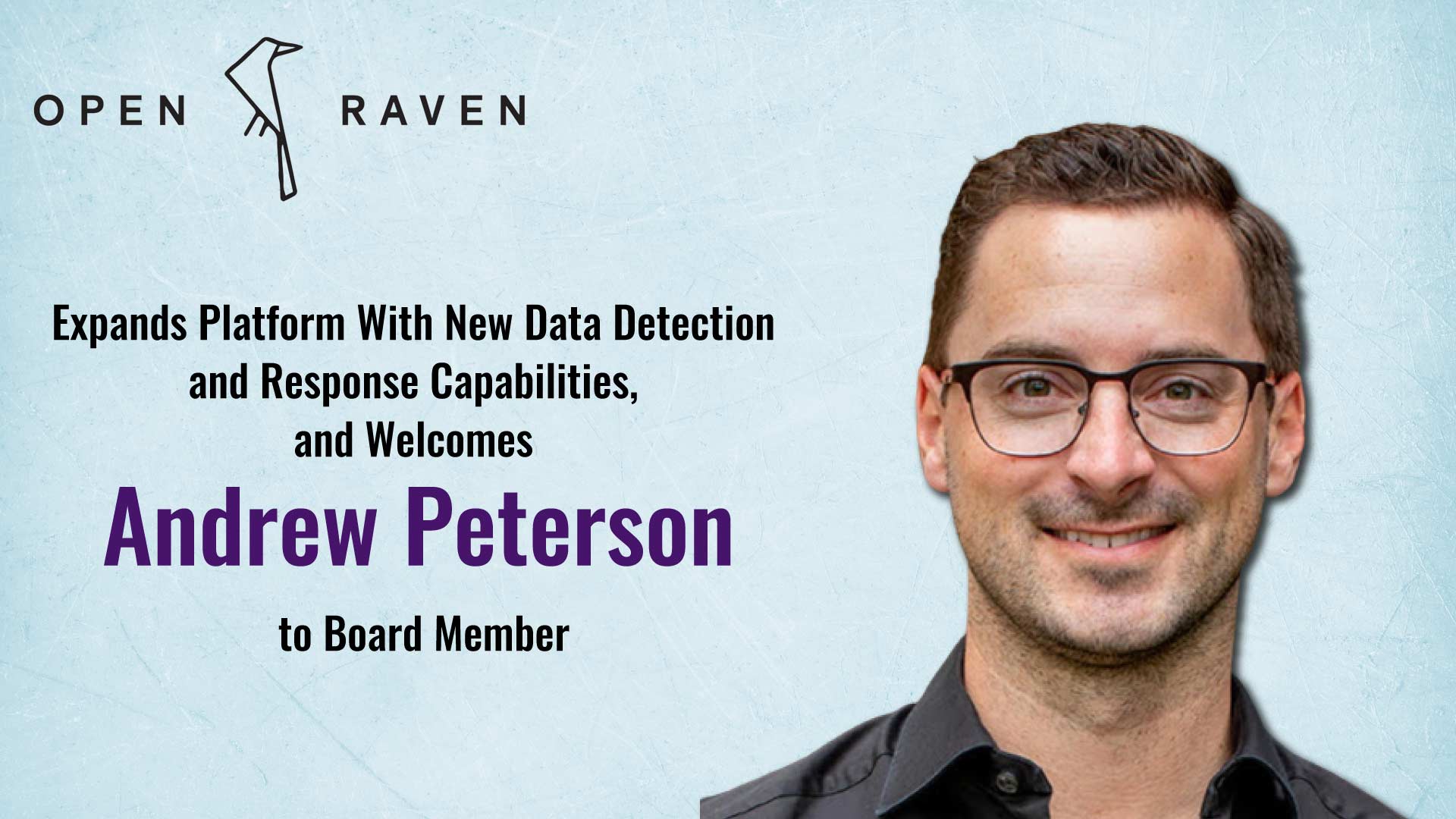
Open Raven Expands Platform With New Data Detection and Response Capabilities, and Welcomes New Board Member
automation 8 Aug 2023
New platform capabilities expand coverage, automate attack prevention and remediation
Open Raven, a leader in automating data security at cloud scale, announced Data Detection and Response (DDR) capabilities, support for Amazon Redshift, workflow automations, real-time scanning, and AI-enabled asset discovery. These new developments build on existing automated data discovery, classification, and posture management, to include live monitoring of critical data events.
Open Raven also announced Andrew Peterson, co-founder and former CEO of Signal Sciences, and current founder of Aviso Ventures, joined the Open Raven Board of Directors. Andrew brings a combination of broad, strategic vision alongside expertise building and scaling industry-defining businesses.
“The pivotal moment in any attack is when the targeted data is within the adversary’s reach; combining DSPM and now DDR means data can be both known and defended automatically,” said Dave Cole, CEO, Open Raven. “Further, Andrew Peterson’s partnership with us from day zero has been invaluable, and we’re thrilled to welcome him to our Board of Directors.”
Automating Data Security
Defending organizations at cloud scale requires automation for both detection and alerting. Too often, security teams feel overwhelmed and immobilized by solutions with a high volume of noisy alerts that require manual triage. Open Raven provides a clear view of where sensitive data is (DSPM) and precise alerts for critical events using DDR.
Additional new product features include:
- Support for Amazon Redshift - Open Raven continues to expand integrations and now supports Amazon Redshift for large scale data storage and complexity challenges.
- New Workflow Automations - This framework eliminates manual intervention and allows security teams to automatically trigger precise actions based on live changes in data and infrastructure.
- Real-Time Scanning - Security teams can automatically trigger a data scan whenever a person or service attempts to access sensitive data, and using OpenRaven APIs they can handle requests in real-time and in coordination with an organization’s automatic authorization or approval process.
- AI-Enhanced DMAP - Open Raven’s machine-learning-based data store discovery and labeling service DMAP is now powered by AI for discovery and classification of both native and non-native data services such as Postgres and MySQL.
“Defending and securing data is more important than it’s ever been,” said Andrew Peterson. “Much like the web application firewall market years ago, we’re at a breaking point given the intensity of the threats, regulator pressure, and outdated solutions designed for on-premises or privacy. Open Raven pioneered modern data security, and I’m delighted to join the team.”

Tangoe Named a Visionary in the 2023 Gartner® Magic Quadrant™ for Managed Mobility Services, Global
technology 7 Aug 2023
Tangoe, the leading technology expense and asset management solution for more than 20 years, today announced it has been named a Visionary in 2023 Gartner Inc.’s Magic Quadrant for Managed Mobility Services, Global report1. This is the 10th time Tangoe has been included in the report. Gartner evaluates providers based on their Ability to Execute and Completeness of Vision.
“It is an honor to once again be named a Visionary by Gartner,” said James Parker, CEO, Tangoe. “This is a recognition of Tangoe’s innovation and industry leadership with 14M+ devices under management globally – more than any other provider. Mobile fleet management has evolved from simply reducing administrative burdens and cutting costs to a mission-critical solution for businesses of all sizes and needs. Tangoe ensures that the mobile devices powering enterprises are up and running and optimized for every user around the globe.”
According to a recent Vanson Bourne study, most businesses are completely reliant on their mobile devices, losing 30+% of revenue without them. But that reliance comes at a price; IT teams spend 34% of their time managing devices. Their top challenges include sourcing new devices, managing the inventory detailing the company fleet, and providing technical support for users and devices.
“Tangoe is a preferred provider because of their deep integrations with nearly all global carriers, flexible management solutions for BYOD or corporate-liable devices, and comprehensive lifecycle solutions that support the most complex use cases,” said Zeus Kerravala, Founder and Principal Analyst, ZK Research.
Tangoe’s vast global coverage helps clients ensure business continuity and security while also handling the day-to-day logistics of administering an increasing number of smartphones, laptops, scanners, and IoT devices. Plus, when clients pair Tangoe’s mobile management services (MMS) with Tangoe’s telecom and cloud expense management, they gain the benefit of cost optimization across their broader IT environment.

WiMi Has Built an Autonomous System for Generating Models Based on 3D Intelligent Algorithms
technology 7 Aug 2023
WiMi Hologram Cloud Inc. , a leading global Hologram Augmented Reality ("AR") Technology provider, today announced that it developed model autonomous generation system based on three-dimensional intelligent algorithm is a system that uses artificial intelligence technology for three-dimensional modeling and image processing. The system can analyze the data by deep learning, extract features from it, and automatically help users generate 3D models and images that meet the requirements.
The system adopts a distributed architecture and consists of multiple subsystems. Each subsystem has clear functions and responsibilities and works together to provide users with high-quality 3D model and image generation services. The advantage of this architecture is that the subsystems can be flexibly expanded and upgraded, which improves the reliability and scalability of the whole system, and can satisfy users of different sizes and needs. Specifically, the system contains the following subsystems:
Data acquisition subsystem: This subsystem is responsible for collecting, organizing and storing raw data from various data sources, as well as pre-processing and cleaning the data. The data acquisition subsystem needs to support a variety of data types and formats, such as 3D modelling data, image data, etc., and be able to transform the data into a unified format for storage and management, to improve the accuracy and stability of subsequent model training and image generation. At the same time, the subsystem also takes into account factors such as data security and privacy protection.
Model training subsystem: This subsystem is the core part of the whole system, which is responsible for using deep learning algorithms to analyze the collected data, analyze the data features and adaptively adjust the model parameters to achieve high-precision recognition and prediction of the sample data, and then train the model. The model training subsystem needs to take into account factors such as data volume, model structure and training time, and also performs model validation and evaluation.
Data management subsystem: This subsystem is responsible for the management and maintenance of collected data, model parameters, generated results and other information, including data storage, backup, recovery, version control, access control and so on. The data management subsystem needs to have high availability, high scalability and high security.
Data Visualization Subsystem: Data visualization can help users better understand and use the system by presenting the generated 3D models and images in an intuitive form through graphical interfaces and other means.
System security subsystem: In practical applications, system security is very critical. The system needs to take a variety of measures to ensure data security, privacy protection and system stability. For example, encrypted communication, access control, security logging and other technical means can improve the security and reliability of the system.
These subsystems communicate with each other through interfaces and share data and resources. Each subsystem runs in a separate container and can be deployed and upgraded independently to achieve system reliability and scalability. Also, using a distributed architecture improves system concurrency and performance, and reduces the impact of system failures on the overall system.
Compared with the traditional 3D autonomous generation system, WiMi's system has the advantages of high efficiency, accuracy, and scalability, etc. It utilizes intelligent algorithms and distributed computing technology, which can efficiently process a large amount of data, and at the same time use deep learning algorithms to train and analyze the data, extract the features and generate high-quality 3D models and images, which can satisfy the various needs of users for the models and images, and can be used to generate 3D models and images in line with the parameters input by users. It can meet the various needs of users for models and images, and can autonomously generate 3D models and images that meet the requirements based on the parameters input by the users, which reduces the cost of manual intervention and time, and improves the efficiency and convenience of work. In addition, the system adopts a distributed architecture, consisting of multiple subsystems, each of which runs independently in a container, enabling faster, more flexible and more reliable expansion of the system. In addition, the system adopts a variety of security technologies, such as encrypted communication, access control, and secure logging, to ensure the security and privacy protection of user data.
The system has a wide range of application scenarios involving 3D modelling, image processing, virtual reality, game development and other fields. For example, the system can be used in industrial design, architectural design, medical image analysis, map production, animation production, etc. It helps to be able to quickly generate high-precision 3D models and images, and promotes product innovation and productivity improvement. In addition, it can be used in education, entertainment, culture and other fields to provide users with immersive and diverse experiences.

Ayre Group–nChain CHF half-billion deal shakes up trillion-dollar blockchain and Web3 sectors
blockchain 7 Aug 2023
CHF500million deal believed to be the single largest enterprise blockchain IP investment to date
Ayre Group founder and Antiguan/Canadian citizen Calvin Ayre has finalized agreements to take a controlling interest in nChain, the global leader in blockchain and Web3 technology, in a deal that will transform the trillion-dollar blockchain and Web3 sectors.
The internet is rapidly shifting from Web2 to the decentralized, blockchain-reliant Web3. This evolution will disrupt the established internet giants who lack the technological foundations to handle the ground shifting under their feet.
As Forbes recently observed, nChain’s patents “affect everything from the US$1 trillion cryptocurrency market to corporate implementations built by some of the largest companies in the world.”
The deal, believed to be the single largest enterprise blockchain IP investment to date, will see Ayre Group invest up to a total of CHF500 million (€516 million/£443 million). The sum consists of an equity acquisition of nChain by the Ayre Group, an IP licensing deal for Ayre Ventures portfolio companies, and a line of credit.
To date, nChain has been awarded nearly 800 technology patents with over 3,000 more presently awaiting approval, a wide-ranging intellectual property library representing the fundamental building blocks on which these next-generation internet products and services will be built. nChain’s IP is the DNA of the new internet, encompassing Web3 precursors, non-fungible tokens, smart contracts, and everything in between.
nChain has a heavyweight R&D team dedicated to turning its vast IP library into workable applications. nChain was included in the LexisNexis Innovation Momentum 2023: The Global Top 100 report of companies advancing innovative solutions to today’s challenges and laying the IP foundations for further breakthroughs.
Ayre Group Founder Calvin Ayre commented on the deal: “For the better part of a decade, nChain and its London-based Chief Scientist Dr. Craig Wright have been quietly amassing a patent portfolio of unparalleled scope, literally the foundational elements of enterprise blockchain, AI and Web3. My goal is to accelerate the pace of nChain’s development and increase the commercial adoption of its extensive IP library.”
Ayre is a vocal supporter of the BSV Blockchain but says nChain’s patents are “blockchain-agnostic. There isn’t a single blockchain or Web3 project out there that isn’t standing on the shoulders of nChain’s patent library—the earliest, largest, and highest quality collection in this space.”
BSV’s combination of unbounded scaling capacity, ultra-low transaction fees and integration with IPv6 make it the only enterprise blockchain on which the internet of the future can be fully realized.
Stefan Matthews, nChain’s Co-Founder and Executive Chairman, added: “Calvin has been a strong advocate for nChain over the years. His decision to take a greater equity position in the nChain Group signifies his confidence in our business model and the value that we hold in our patent portfolio, software development and consulting services.”
Christen Ager-Hanssen, nChain´s Group CEO said: "nChain's bold mission is to catalyze an unprecedented transformation, propelling the world from Web2 to Web3 at an astounding pace. This groundbreaking shift will not only revolutionize our lives but also shake the very foundations of industries far and wide. With Calvin's unwavering dedication and visionary leadership, nChain is poised to spearhead the creation of a trillion-dollar ecosystem, leaving an indelible mark on the world, making it a better place for generations to come.”

Hushmesh Raises $5.2M to Fix the Web’s Foundational Security Flaws
financial technology 7 Aug 2023
Paladin Capital Group backs pioneering technology, “the Mesh”, that by design precludes identity theft, data breaches, fakes and fraud
Hushmesh, a cyber security start-up aimed at securing the world’s digital infrastructure, today announces a $5.2M early stage financing round led by cyber and advanced technologies investor, Paladin Capital Group, with participation from Akamai Technologies. Hushmesh will use the funding to develop the Mesh, a global information space with automated security built in, allowing people and organizations to operate online without fear of malicious attacks or data breaches.
The Mesh automates encryption key management for every individual person and non-person entity, giving them an unlimited number of keys to secure an unlimited amount of personal or entity data. The Mesh encrypts all data at the source, eliminates all human insiders, and cryptographically unites identifiers, aliases, keys, and encrypted data. By removing the inherent vulnerability of knowledge-based credentials like passwords, and with no database to attack, the Mesh makes it possible to end identity theft, prevent data breaches, and eliminate fakes and fraud. In sharp contrast to Web3 and blockchain, individuals who lose access to their keys do not automatically lose all their data.
Unlike the world-wide web, the Mesh is built on a fully automated, globally attested, physically decentralized network of Confidential Computing machines. And instead of relying on the Domain Name System (DNS), the Mesh is underpinned by the “Universal Name System” (UNS), which automates end-to-end cryptography – a method of protecting information and communications using codes and math – between any two individual persons or non-person entities. This ground-breaking approach enables universal trust and authenticity, while providing confidentiality and privacy by default to all participants.
Hushmesh founder and CEO, Manu Fontaine explains the problem that the Mesh solves: “The architecture of the world wide web reflects its original use case: an open, global library where any resource owner can publish and share information with anybody else in any way they want.
“This design introduced two foundational security flaws – or 'world-wide weaknesses' – that haunt us to this day. The first is that it must be administered by domain insiders, meaning that malicious insiders or attackers who gain privileged access can tamper with everything. Second, there is no global security mechanism, nor global identity or integrity verification built in. In contrast, the Mesh is secured by design with automated cryptography.”
Hushmesh is currently working with AMI, a leader in dynamic firmware for worldwide computing, and other early design partners to utilize the Mesh for authentic data transfer. AMI chose to integrate its firmware management and orchestration service with the Mesh to secure critical updates across the global firmware supply chain.
Stefano Righi, AMI SVP Global Security Software Group, says, “Firmware security is of the utmost importance, as the security of everything else depends on it. The built-in cryptographic security of the Mesh has the potential to provide our customers with global assurance of authenticity and enable secure communication in the supply chain in a way that was just not possible before.”
Mourad Yesayan, Paladin Capital Group Managing Director, adds, “At Paladin, we’re in the business of innovation, but what Hushmesh has created truly has the potential to transform global security. As we put our entire lives online and connect our homes, cars, cities, and critical infrastructure, we must demand stronger security for our data and universal trust. The progress for humanity that can come from built-in, invisible, yet ubiquitous cryptographic security is why we are backing Hushmesh as it commercializes its technology.”

Redbrick's Open Metaverse Creation System that connects various metaverse platforms has been patented.
technology 7 Aug 2023
- Enhancing connectivity and scalability between metaverse platforms by this patent registration
- Metaverse creations are linked to another metaverse space, and profits generated from creations are paid at one time
- Companies can also create and upload contents in Redbrick Studio without building a separate metaverse platform.
Redbrick Inc., a metaverse creation platform (CEO YANG Young-mo), announced on 3rd August that Redbrick has obtained a patent for the 'Open Metaverse Creation System', a technology that enhances connectivity and scalability between metaverse platforms, in Korea.
The 'Open Metaverse Creation System' is a technology that allows creators' metaverse creations to be linked in another metaverse space, and the creator's creation profits generated from all linked metaverses to be settled at one time. In previous metaverses, only users of a platform could make an access to the platform with no linkage between existing metaverses, while the current patent allows such linkage.
The 'Open Metaverse Creation System' provides a function which enables uploading contents created by creators to other metaverse platforms and a function which enables transactions of goods such as purchasing items through self-regulated marketplaces without registering them in other marketplaces, such as the App Store or Play Store. These functions make creators settle profits easily and conveniently as well as show their own contents on multiple metaverse platforms.
Companies using a metaverse will also obtain higher accessibility and convenience in content production. Without building a separate platform, companies can upload metaverse contents on their web or app through the Open Metaverse SDK (Software Development Kit), after producing own creations in Redbrick Studio, a web-based engine developed by Redbrick. 'Redbrick Studio', as Redbrick's software creation tool that anyone with no knowledge of coding can use to create a metaverse and produce contents, provides a settlement function that facilitates handling profits from creations, including metaverse games based on block coding and text coding editors.
With this patent registration, Redbrick is planning to further accelerate collaboration with various companies that use metaverses. We are currently collaborating with IPX on Open Metaverse, and any business operator who wants to use Redbrick's Open Metaverse SDK can work jointly with Redbrick.
Redbrick CEO YANG Young-mo said, "Obtaining a patent for the open metaverse has its significance in that it will facilitate an access to all parts of the metaverse world", and "Redbrick will continue to expand the scalability of the platform based on the introduction of various technologies."

Relume Launches World's First AI-Powered Site Builder that exports to Webflow and Figma
artificial intelligence 7 Aug 2023
Sydney-based startup Relume has launched the world's first AI-powered site builder that exports to Webflow and Figma. The new site builder allows users to easily create website wireframes with just a prompt and export them to Figma and Webflow, saving time and streamlining the website creation process.
Relume's AI-powered site builder is the first of its kind no-code platform, featuring an intuitive and user-friendly interface that makes it easy for users to create high-fidelity wireframes without any coding experience. The new site builder was developed by a team of six from Relume, with backgrounds from Canva and Antler.
Since launching in November 2021, Relume has managed to bootstrap to 41k users with no outside investment. The startup's tool has already been used to build website landing pages for Nike, Headspace, Jasper AI, and Dapper Labs.
Relume has strong ambitions to be Australia's next Canva, and the launch of their new AI-powered site builder is a significant step towards achieving this goal.
"We're excited to launch our new AI-powered site builder, which we believe will significantly speed up the process of building marketing websites from scratch," said Dan Anisse, co-founder of Relume. "Our mission is to use AI to empower designers, not replace them, and we're confident that with this launch we will go a long way towards achieving this goal."
Page 1167 of 1489