automation

Jeff Pedowitz on Enterprise CRM, RevOps & Marketing Automation ROI
automation 15 May 2025
1. How do you ensure seamless integration of CRM and marketing automation systems to support clients’ revenue operations?
We start by aligning systems with business outcomes. Integration isn’t just about syncing data—it’s about ensuring marketing, sales, and customer success have a single source of truth and shared processes. We take a diagnostic approach upfront to map out gaps, then implement scalable architectures that support revenue growth. Our team ensures that workflows, data hygiene, and reporting infrastructure work in concert so clients can act in real time, not react after the fact.
2. What challenges are commonly encountered during large-scale enterprise migrations and how are they addressed?
Legacy data, fragmented tech stacks, and change resistance are the usual suspects. Many organizations underestimate the complexity of migrating years of data and business logic. We mitigate risk by breaking down migrations into phased roadmaps with clear accountability. Governance, QA, and stakeholder buy-in are baked into the process. We’ve done enough of these to know that success hinges more on communication and planning than on code.
3. How do you measure the success of implemented automation solutions in terms of client ROI?
We tie automation to outcomes, not activity. That means tracking improvements in pipeline velocity, lead quality, customer retention, and cost per acquisition. We set up performance dashboards so clients can see real-time metrics tied to business KPIs. Success is when marketing stops being a cost center and starts being a revenue driver. And when that happens, it’s not about just ROI—it’s about long-term value creation.
4. What are the key performance benchmarks required to attain and maintain Platinum-tier status?
It comes down to delivering consistent results at scale. Platinum status isn’t just about volume—it reflects our ability to drive enterprise-level impact through technical implementation, strategic consulting, and measurable outcomes. We’ve built long-term client relationships by not chasing quick wins, but by solving complex problems that matter to the business. That’s what gets recognized.
5. What plans are in place to further expand expertise in enterprise CRM and marketing automation migrations?
We’re doubling down on cross-platform fluency and building out more repeatable frameworks. While HubSpot is a core partner, many of our enterprise clients operate hybrid environments. We’re investing in our nearshore delivery model and training programs so we can scale efficiently and continue to deliver speed, quality, and cost-effectiveness. The market’s evolving fast—our team is built to evolve faster.
6. How does the recognition from HubSpot influence your company’s market positioning and client acquisition?
It reinforces what we’ve been doing for years—solving hard problems and delivering outcomes. Being recognized by HubSpot sends a strong signal to the market that we’re not just a vendor—we’re a strategic partner who can scale with you. It strengthens our credibility, expands our visibility, and gives clients added confidence that they’re working with a team that knows how to deliver, especially when it counts.
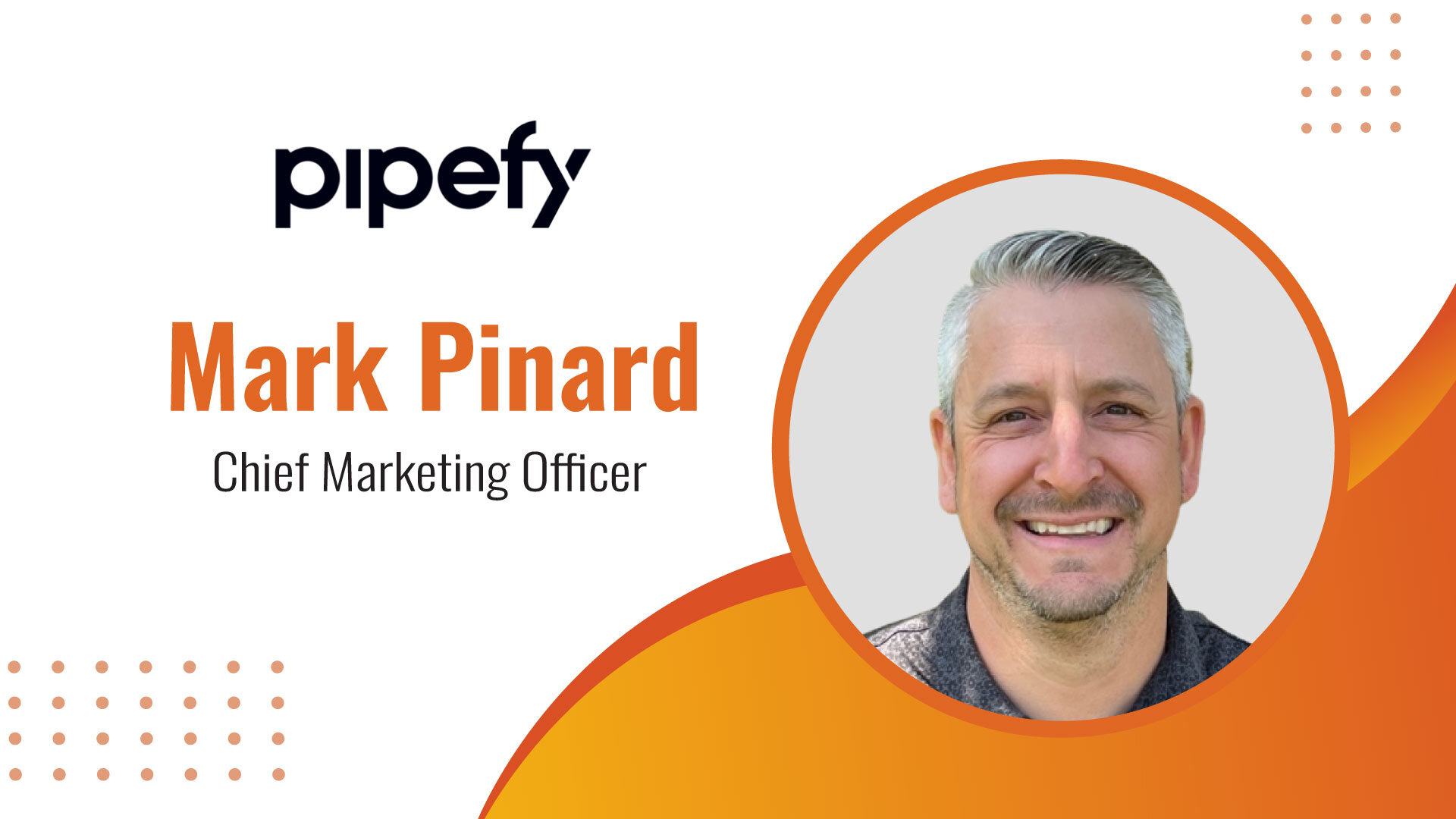
MarTech Edge Interview with Mark Pinard, Chief Marketing Officer, Pipefy
automation 18 Aug 2023
Welcome, Mark! What challenges or obstacles did you encounter during your marketing journey, and how did you successfully overcome them?
The biggest challenges have always been around developing a deep understanding of buyers and how to build effective programs to target them. Every company, every product, and every opportunity I have had in my career has been based on what I have successfully done as a product marketer. But with each new opportunity comes a new product and a new audience to sell to – so you are basically pressing the reset button every time.
This is a big challenge as it takes time to develop that knowledge, and when working with a new team, it takes time to be able to best support them. I will tell you, though, that for me, sticking to what I know has worked in the past. Even if you don’t know the buyer, you can still apply the frameworks and structure you have used in the past to develop it.
At the leadership level, coming in with templates and examples of success can be very inspiring to your team as it provides them with a roadmap; also, tangible examples of how these templates succeeded can provide a level of energy that the team may have been missing.
How are you leveraging your extensive years of experience to develop a winning strategy for Pipefy?
By implementing the battle-tested frameworks and templates I have developed over the years of my career, I am developing a winning marketing strategy for Pipefy. For me, being a good leader is about being down in the trenches and being part of the team. My extensive years of experience just means that I have more scars and a deeper understanding of where the land mines might be. Sharing this knowledge with the team through these battle-tested frameworks and allowing them to put their own approach to it is a recipe for success.
How do you ensure a unique and distinctive approach with a no/low-code platform, and what factors contribute to achieving error-proof execution?
Understanding your buyer, their needs, pain points, what they care about, how they consume information, how they make buying decisions, the list goes on and on. I started my career in sales and have always lived under the mantra “everyone is a sales rep”, and this comes by deeply understanding and caring about your customer. Every vertical, business size, etc. requires a distinctive approach to how you target them; no two customers are the same. By deeply understanding your customers, you can then tailor your message, tone of voice, content, etc., based on what you know they consume (research, whitepapers, LinkedIn, blogs, video, podcasts, webinars, case studies) on your distribution channels (social, paid, etc.) they are utilizing to learn and make decisions.
With that said, nothing in marketing is ever error-proof; it requires multitudes of testing to get it right. You need to be comfortable with being uncomfortable because things will undoubtedly fail. But if you aren’t failing, you aren’t learning. Learning allows you to optimize your playbook and ultimately get to predictability or, as you say, “error-proof.”
What are the key benefits and advantages of utilizing Pipefy's customizable analytics feature?
Simply put, the fact that you can customize them. When it comes to process management, every single business has a challenge that is unique to their business and will have unique analytics requirements. With Pipefy, we put the power in your hands to customize the analytics based on what you are looking to monitor for process performance gains. Whether it’s ticket SLAs or employee onboarding time, you have complete flexibility to track what makes sense for your business. Sneak peek, Pipefy AI will now make that even easier with the ability to ask it anything regarding your processes with an instant answer.
What upcoming advancements and innovations can we anticipate from Pipefy in the near future?
We are always looking for innovative ways to improve the efficiency of process management, and AI will be game-changing for us. The ability to have best-in-class processes automatically built for you, just based on Pipefy's understanding of a few data points about your business, will be revolutionary in two ways. First, a tremendous amount of time will be saved by having a process already built that can be custom-tailored to your particular business needs and pain points. And second, it will provide the ability to deliver real-time analytics at your fingertips, regardless of what you are looking for. Need to know how long, on average, it takes your procurement team to process a purchase request? Done. Need to know how many of your sales reps have hit their quota over the last four months? Easy. Whether you are a department leader or a citizen developer, AI truly changes the landscape of no-code process management, and we’re really excited about it.
What, in your opinion, are some crucial considerations and potential challenges that arise when implementing AI in marketing practices, and how can these be effectively addressed?
When it comes to marketing, AI does not replace the level of experience required for proper execution. It can provide direction and make some of the marketing challenges a bit easier by providing different perspectives, but there still needs to be a layer of understanding to complement it. Like in process management, AI can be used to help fill your biggest gaps in execution or efficiency. For instance, you need to get sales emails written, but your content team is at capacity; AI can help at least as a starting point. It will definitely change the way we work, but I’m very skeptical it will replace the level of experience required to execute marketing at a really high level.
How do you approach and leverage technological shifts to your advantage in your business strategy?
Being in SaaS my entire career, I embrace technological shifts as the advancement is designed to make our lives better in one way or another. But with that comes a balance of having too many solutions to solve too many things. You can overwhelm yourselves with too big of a tech stack because the layers between what each of them does or does not do become blurred. I relate it to kids on Christmas morning, who love seeing the abundance of presents under the tree, but once they unwrap them, they are overwhelmed with what to play with, and something always gets left behind.
What advice do you have for aspiring entrepreneurs who are venturing into the marketing industry and aiming for success?
Don’t be afraid to fail, as every failure is an opportunity to learn. Also, have patience; marketing is not built overnight, it’s a lot of tiny steps to get to a place of predictability, and even once you are there, it changes overnight. Being lean and agile with understanding takes time, but it will pay you huge dividends in the end. I have seen too many marketers in a startup trying to build an empire overnight (even done it myself). They hire a huge team, buy a huge tech stack and throw a lot of money at different things because it’s what everyone else is doing. Don’t make that mistake; take the time to understand your target audience, how they make buying decisions and use that as the foundation to build your marketing strategy.
What is your vision for Pipefy for the next five years, and what strategies do you have in place to achieve these goals?
From a marketing standpoint, it’s having a predictable marketing playbook with error-proof execution; from a company standpoint, it’s being the most innovative no-code process management solution on the market. We don’t want to compete in the industry; we want to change the landscape of it as a whole. As for strategies, it's doing what we are doing today, keep testing, keep learning, and keep applying.

MarTech Edge Interview with Tibor Vass, Chief Marketing Officer, Eccentex
automation 27 Apr 2023
Congratulations on being appointed as Chief Marketing Officer at Eccentex. What are you most looking forward to in your new role here?
As soon as I joined Eccentex, I started to learn about our products and services, and it seems our offer is really great, and we have many happy customers. So, I have nothing to fix, and this is very good news. My first priority is to gain more visibility in our competitive market and attract new audiences based on new messaging. In the past years, Eccentex mastered how to position our products and services to technical buyers, and now I want to do the same by creating simple but powerful messaging for business buyers.
As a CMO, what’s your approach to planning marketing strategies?
My marketing strategy is all about simplification, visibility, and awareness. In our SaaS market, many companies fall into the same trap by creating far too complex offers, too technical messages, and complicated pricing structures. This limits the potential buyers to quickly understand what they’ll get and how much it will cost. I prefer to introduce our solutions to our customers and prospects in short, easy-to-understand terms and sell them through simplified pricing.
How do you wish to implement marketing best practices at Eccentex?
Unfortunately, marketing is not an exact science. There are no magic tricks that work in every company, especially if you have a limited marketing budget. As we learned from some marketing gurus, 97% of the marketing budget never converts, so the “only” challenge of a CMO is to figure out which 3% does. Luckily our conversion rate is industry-leading already, so the question is not how to convince our prospects to consider our solution but how to let them know we have these great solutions. We can’t build a brand that is known by everyone, at least not in the short term, but we may be able to leverage the recent trend that Gartner described—as it seems B2B buyers are getting more open to considering less-known, smaller brands as long as they can expect lower-cost and higher-value solution from them. I can’t reach out to all potential buyers without wasting 97% of my marketing budget, but I may spend our marketing budget more efficiently to influence how they can find us.
How does Eccentex help transform customer service journeys and digitize back-office workflows?
Eccentex solutions are truly unique in the SaaS market because we can help our customers satisfy competing, sometimes controversial, KPIs at the same time. Increasing customer and employee experience at the same time while you need to decrease your operation cost does not sound like an easy task. Automating workflows without sacrificing the easiness of using human-assisted services sounds similarly challenging. The good news is this is not difficult if you use the right product, which is built to automate, digitize, and simplify complex processes based on the customer-experience-first approach. And we have that product in use for many customers across multiple verticals with a proven track record.
You have recently spoken about focusing more on hyperautomation & case management. What are your plans for the same?
Hyperautomation—as a concept—is like a system of systems. We automate components (like workflows, business processes, and customer engagements), then put these automated micro-engagements into a system that can orchestrate the entire customer journey across the business automation ecosystem. Customers can benefit from shorter response times and quicker resolutions through self-service portals and hybrid-assisted (AI/human) services, while brand employees are equipped with all the data and tools they need to resolve customer requests in the quickest and easiest possible way.
In the ever-changing CX landscape, please tell us about your methodology for promoting the new CX transformation.
Customer Experience is probably the most demanding technical capability today’s software vendors need to satisfy. Demands and expectations are changing rapidly and evolving across all innovation components that exist in the market. Solutions that are considered industry-leading can be outdated based on a single shift of customer preferences. Whatever solutions you have, the ultimate capability that can allow you to follow these changes is flexibility. No time for coding, no budget for year long IT projects, no patience to wait for developers to come up with a new release that supports the new demands. Having a platform that can be adjusted by the users itself is the key to adopting these changes instantly.
More than ever, enterprises are inclined towards a low-code platform, so how does AppBase® stand out?
Our AppBase® platform is designed to support all possible development concepts and tools, from absolute No-Code/Low-Code to Deep-Code methodologies. It can even enable business users to create their own solutions without IT knowledge based on intuitive drag-and-drop graphical designers. However, if you need to add some more complex steps or non-standard procedures to your application, a business analyst can quickly add these elements based on standard code snippets. When you need to do something really special, the platform also supports standard code libraries to add your customization by using computer programming languages like C#.
Amongst the looming economic disruptions, what are your forecasts about the technological landscape change and the major focus points in the fiscal year for Eccentex?
Our new platform capabilities are in the final development phases, and I think we can announce them soon. Our new offer will pull together all the latest features and product capabilities in one solution bundle that can enable our clients to hyperautomate their business process automation and customer engagement needs with an end-to-end customer journey focus. As I see it, this new offer will enable our future customers to radically speed up their digital transformation initiatives with lower cost and effort.
What do you think about the future of low-code platforms and customer service journeys?
I think even with the decade-long experiences we have, predicting the future of low-code application platforms is not easy in this market. We already have capabilities similar to ChatGPT, where the AI is able to substitute quite a lot of human work, e.g., in content authoring. We have our “Builders” that can write code on behalf of an IT engineer from graphical process representations, so we feel we are already shaping up the future.
Can we even further automate how our customers design and implement and make their business applications easier? Yes, for sure, we can; however, we can’t be sure about whether certain things will happen just because the trends are suggesting that. We do not want to put all our bets on something that may or may not come. That’s why we are developing our platform in a way that can be flexible to adopt all potential changes that the future may bring.
Page 1 of 1
Most Recent
How AI Is Reshaping Ecommerce Discovery, SEO and Marketing Attribution
Interview Of : Daniel Reid

How AI-Powered Clienteling Helps Retailers Turn Holiday Shoppers Into Loyal Customers
Interview Of : Leigh Sevin

Why Human Judgment Still Matters in AI-Powered Biopharma Marketing
Interview Of : Lauren Boyer

Why Continuous Customer Feedback Matters to Marketers
Interview Of : Katie Miserany

Why Clean Data Is Critical to AI-Ready Sales Operations
Interview Of : Heather Rinke

AI-Driven Fraud Is Reshaping Security in Private Markets, Says 6lock CEO
Interview Of : Todd Sorrel