
digital marketing artificial intelligence
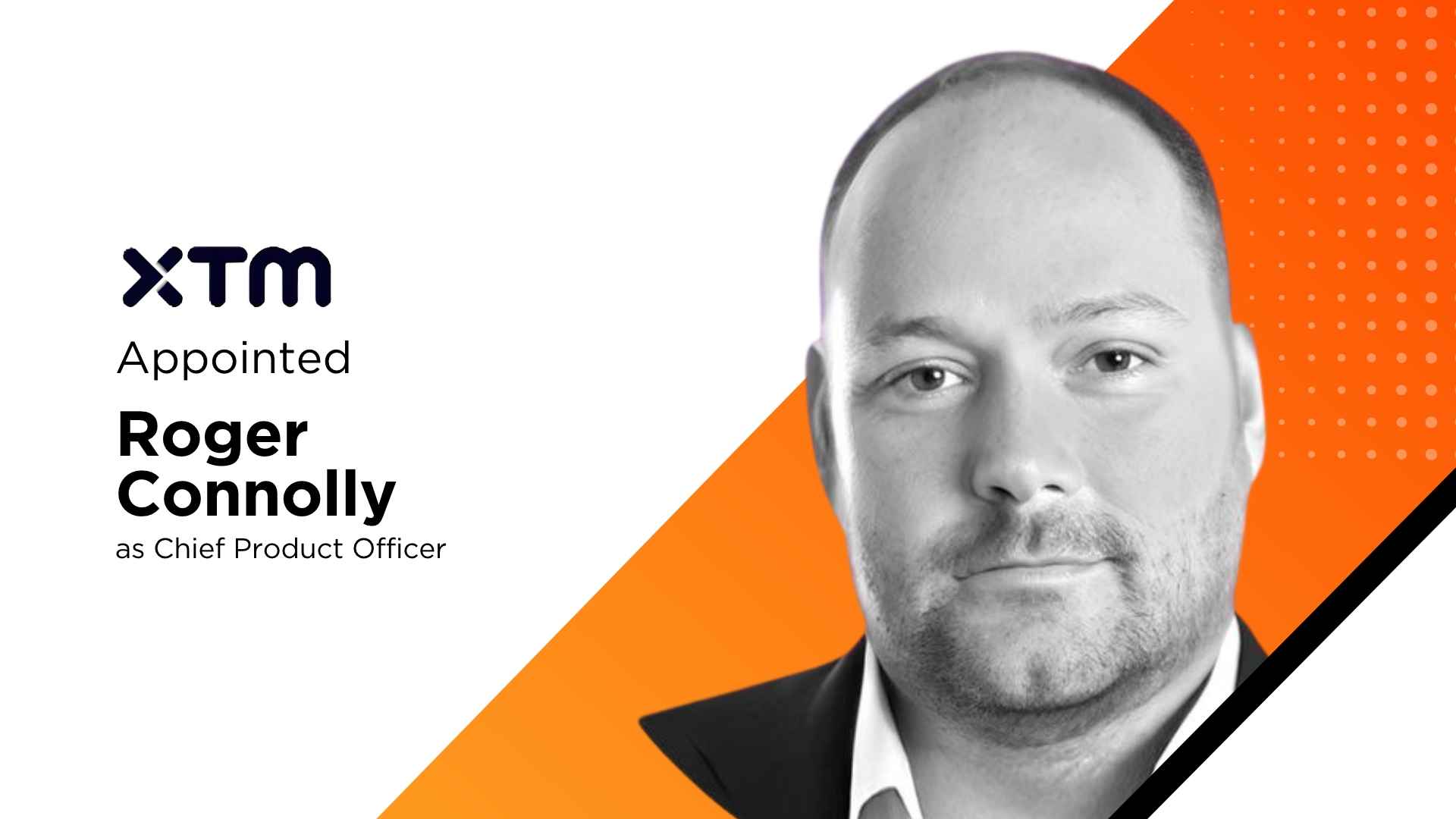
XTM Appoints Roger Connolly as CPO to Lead Agentic AI Strategy
 PR Newswire
Published on : Nov 6, 2026
As enterprises use generative AI to produce and distribute content across more markets, localization platforms are moving beyond automated translation toward AI-driven workflows that can manage entire content processes. XTM has appointed former Sitecore product executive Roger Connolly as Chief Product Officer (CPO), giving him responsibility for its agentic AI strategy and the development of XTM IQ, the company's unified AI engine. The appointment signals a push to combine autonomous localization workflows with enterprise governance, quality controls and brand consistency.
The growing volume of AI-generated content is creating new challenges for organizations operating across multiple languages and regions. Translating individual documents is no longer the only requirement. Enterprises also need to manage multilingual content production, review, quality verification and publishing across different markets while maintaining consistent brand standards.
XTM's latest executive appointment reflects this shift. The localization technology provider has named Roger Connolly its Chief Product Officer, tasking him with leading product strategy and the evolution of its AI globalization platform.
Connolly brings more than two decades of experience in enterprise content and marketing software. Most recently, he served as Chief Product Officer at Sitecore, where he led the company's product portfolio and launched its agentic AI platform. His earlier responsibilities included Sitecore's content management system (CMS) and digital asset management (DAM) product lines, including the launch of its flagship SaaS CMS.
Before joining Sitecore, Connolly led digital asset management and technology programmes at Victoria's Secret in New York. His experience across enterprise content infrastructure and AI platform development is relevant to XTM's effort to expand its localization technology beyond conventional translation management.
At XTM, Connolly will own the product vision and roadmap, with a central focus on making XTM IQ the engine for agentic localization. The company's strategy involves bringing AI orchestration, translation management, quality verification and integrations together within a composable platform.
The distinction between AI-assisted translation and agentic localization is important. Traditional AI translation tools primarily generate translated content or assist human linguists with individual tasks. Agentic workflows aim to coordinate multiple stages of the process, allowing AI agents to plan and execute work, check outputs and move content through defined workflows.
For enterprises, this could support faster localization of websites, product information, marketing campaigns and other digital content across markets. However, autonomous execution also introduces risks involving inaccurate translations, regulatory requirements, cultural context and inconsistent brand messaging.
XTM is positioning governance as a central part of its approach. Its stated strategy is to let AI agents handle high-volume, repeatable work while applying human oversight, rules-based workflows and quality checks where the content carries greater business or compliance risk.
Connolly's comments point to this balance as a defining factor in enterprise agentic AI adoption. Not every content type requires the same level of review, and organizations will need to determine which tasks can run autonomously and which require controlled approval processes.
The appointment also places XTM in a competitive enterprise localization market that includes platforms such as RWS, TransPerfect, Smartling and Phrase. These providers operate across translation management, multilingual content workflows and AI-assisted localization. As AI capabilities expand, differentiation is likely to depend increasingly on orchestration, integrations, quality management and the ability to support enterprise governance.
For XTM, the immediate challenge will be turning its agentic AI vision into reliable production workflows that demonstrate measurable improvements in localization speed, quality and cost. Connolly's experience in enterprise content platforms gives the company product leadership with relevant experience, but the effectiveness of the strategy will ultimately depend on platform execution and customer adoption.
Market Landscape
Enterprise localization is evolving from a translation-focused function into a broader component of global content operations. Organizations increasingly need to adapt websites, software interfaces, product documentation, customer communications and marketing campaigns for multiple languages and markets.
Generative AI has accelerated this shift by reducing the effort involved in producing multilingual content. However, translation accuracy alone is insufficient for enterprise use. Companies must also manage terminology, cultural context, legal requirements, brand voice and approval processes.
Vendors including RWS, TransPerfect, Smartling and Phrase are competing across translation management and AI-powered localization. The emerging agentic AI opportunity is to coordinate more of the localization lifecycle through autonomous workflows while preserving human control over sensitive or high-risk content.
XTM's focus on XTM IQ places AI orchestration and governance at the center of its product strategy.
Strategic Outlook
Connolly's appointment suggests that XTM intends to make agentic AI a central part of its long-term product direction rather than treating it as an additional translation feature.
The opportunity extends beyond faster multilingual content production. If AI agents can coordinate translation, verification and workflow execution, localization could become more closely integrated with enterprise content management, digital commerce and global marketing operations.
However, autonomous localization will require reliable quality controls, transparent approval processes and integrations with existing enterprise systems. Organizations will also need clear policies defining when AI agents can act independently and when human review is mandatory.
XTM's competitive position will depend on how effectively it delivers these capabilities through XTM IQ and demonstrates value in large-scale enterprise deployments.
Top Insights
-
New product leadership: Roger Connolly joins XTM as CPO, bringing more than 20 years of enterprise content, marketing software and product leadership experience.
-
Agentic localization strategy: XTM plans to evolve XTM IQ into an AI orchestration engine coordinating translation, quality verification and localization workflows.
-
Enterprise governance: The strategy combines autonomous AI execution with brand controls, rules-based processes and human oversight for higher-risk content.
-
Content platform experience: Connolly's Sitecore background includes leadership across CMS, DAM and the launch of an agentic AI platform.
-
Localization market shift: AI agents could move localization from individual translation tasks toward coordinated multilingual content operations across global enterprises.
Get in touch with our MarTech Experts
