
customer experience management
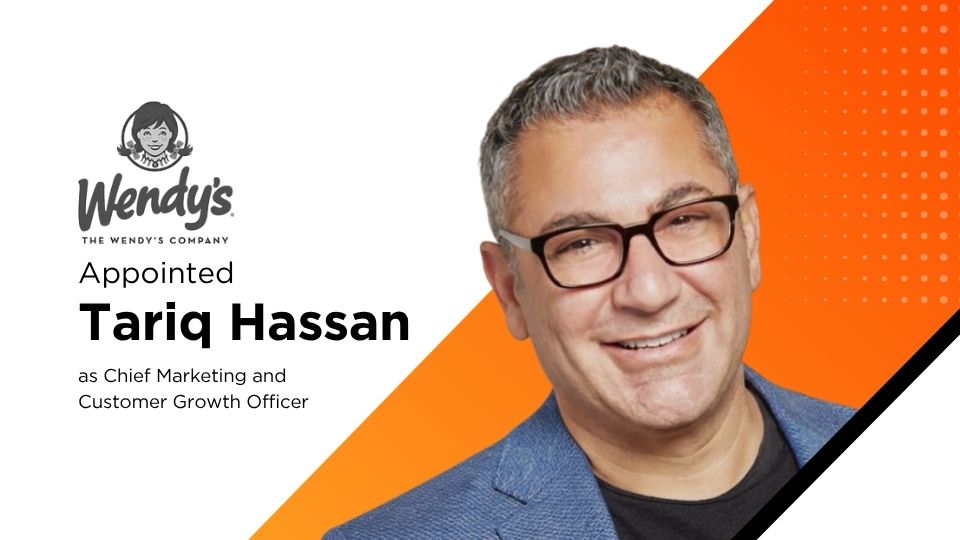
Wendy’s Names Tariq Hassan Chief Marketing and Customer Growth Officer
Wendy’s Names Tariq Hassan Chief Marketing and Customer Growth Officer
 PR Newswire
Published on : Aug 25, 2026
The Wendy’s Company has appointed former McDonald’s executive Tariq Hassan to a newly created marketing and customer growth role as the fast-food chain looks to strengthen brand engagement, digital capabilities and profitable growth.
The Wendy’s Company has named Tariq Hassan chief marketing and customer growth officer, creating a broader executive mandate that combines marketing, customer experience, digital transformation and growth.
Hassan takes the role effective immediately and will report to President and CEO Bob Wright, joining Wendy’s senior leadership team. His appointment comes as the quick-service restaurant (QSR) company seeks to improve performance and reinforce its competitive position in a crowded U.S. restaurant market.
Lindsay Radkoski, who has served as Wendy’s U.S. chief marketing officer since 2024, is leaving the company following a transition period with Hassan. Wendy’s said Radkoski will support the handover over the coming weeks after 15 years with the company.
The creation of Hassan’s position is significant because the remit extends beyond conventional brand marketing. It places customer growth, digital engagement and marketing capabilities under a single senior executive at a time when QSR brands increasingly compete through loyalty programs, mobile ordering, personalization and digitally driven customer relationships.
Former McDonald’s Executive Takes Expanded Mandate
Hassan joins Wendy’s with more than 30 years of experience across marketing, customer experience, digital transformation and brand building.
Most recently, he served as senior vice president and U.S. chief marketing and customer experience officer at McDonald’s, where he was involved in modernizing marketing, strengthening digital and loyalty engagement, and using customer insights in campaigns and menu development.
His experience at McDonald’s is particularly relevant to Wendy’s because the two companies compete directly in the U.S. QSR market.
McDonald’s has spent years expanding its digital ecosystem around mobile ordering, loyalty and personalization. Its loyalty program surpassed 150 million 90-day active users globally in 2024, according to the company's 2024 annual report, demonstrating the scale at which digital customer relationships can become a strategic asset for restaurant brands.
Hassan's background therefore gives Wendy’s an executive familiar with operating marketing within a large restaurant organization where brand, digital channels, customer data and restaurant operations intersect.
Wendy’s Puts Customer Growth at the Center
The newly created title signals a shift in how Wendy’s is defining the marketing function.
Rather than limiting the role to advertising and brand communications, the company is combining marketing with customer growth and experience. That structure reflects a broader trend across consumer brands in which CMOs are increasingly accountable for measurable customer and revenue outcomes.
For QSR operators, the connection is especially important. Customers can interact with a restaurant through advertising, mobile applications, loyalty programs, websites, delivery marketplaces, drive-thru technology and in-store experiences.
Those touchpoints generate customer data and create opportunities for personalized engagement, but they also require coordination.
Wendy’s has previously invested in digital ordering and its Rewards loyalty program. The company's 2024 annual report identified digital sales and loyalty as important components of its customer strategy, while its restaurant system spans thousands of locations across the United States and international markets.
Hassan’s mandate potentially gives Wendy’s an opportunity to connect those initiatives more closely to brand strategy and customer acquisition.
QSR Marketing Becomes Increasingly Data-Driven
The appointment comes amid intensifying competition among large restaurant chains for repeat customers.
Digital loyalty programs allow restaurant operators to collect first-party behavioral data, including purchase frequency, product preferences and response to promotions. That data can inform targeted offers and menu decisions while helping brands measure customer lifetime value.
The trend extends across the restaurant sector.
According to the National Restaurant Association, technology has become an increasingly important component of the off-premises restaurant experience, with consumers citing ordering convenience, speed and digital capabilities among factors affecting where they choose to order.
For Wendy’s, the strategic challenge is converting those digital interactions into profitable incremental visits rather than simply increasing promotional activity.
That distinction matters as restaurants balance value-oriented consumer demand with food, labor and operating costs.
Competitive Landscape: Marketing Is Becoming a Growth Function
Wendy’s decision mirrors a broader evolution in restaurant marketing leadership.
Large QSR brands increasingly use marketing organizations to manage a combination of brand positioning, loyalty, customer data, digital commerce, media and product innovation.
McDonald’s, Restaurant Brands International, Yum! Brands and other major operators have invested heavily in digital ecosystems and loyalty programs as restaurants compete for repeat business.
The competitive advantage is no longer determined solely by advertising reach. It increasingly depends on how effectively a brand can connect marketing messages to actual customer behavior and restaurant transactions.
That puts pressure on CMOs to demonstrate measurable commercial impact while preserving distinctive brand identities.
Wendy’s has historically differentiated itself through its brand voice, product positioning and social-media presence. Hassan’s comments suggest that the company intends to build on that existing identity rather than replace it.
Brand Relevance Meets Menu Innovation
Hassan has also pointed to food as a starting point for strengthening Wendy’s customer connection.
That is strategically relevant because restaurant marketing increasingly intersects with product development. Campaigns can generate awareness, but sustained customer growth depends on menu relevance, value perception and the quality of the restaurant experience.
The integration of marketing, customer experience and growth could therefore allow Wendy’s to connect consumer insights more closely to menu innovation and promotional strategy.
The model resembles the broader shift in consumer packaged goods and retail, where marketing teams increasingly use customer data to inform not only communications but also product and merchandising decisions.
Strategic Outlook
Hassan’s appointment gives Wendy’s a senior executive with direct experience at one of the world's largest restaurant brands and a mandate broader than traditional CMO responsibilities.
The immediate priority will likely be translating that experience into Wendy’s existing brand and franchise system.
The company operates through a large franchise network, meaning changes to marketing and customer engagement strategies must ultimately work at restaurant level. Digital campaigns, loyalty offers and menu promotions need to translate into operationally feasible programs for franchisees.
That makes execution as important as creative strategy.
If Hassan can connect Wendy’s brand equity with stronger digital engagement, customer insights, menu innovation and franchise economics, the expanded role could become an important component of the company's broader growth strategy.
For the wider MarTech market, the appointment illustrates how restaurant companies are treating marketing technology, customer data and digital experience as core growth infrastructure rather than supporting functions.
Top Insights
- Wendy’s has appointed Tariq Hassan as chief marketing and customer growth officer.
- The newly created role combines marketing, customer experience, digital transformation and customer growth.
- Hassan previously served as U.S. chief marketing and customer experience officer at McDonald’s.
- Lindsay Radkoski is departing Wendy’s after 15 years with the company.
- Wendy’s says Hassan will focus on brand connection, digital activation, menu innovation and customer growth.
- The appointment comes as QSR brands increasingly rely on loyalty, digital ordering and first-party customer data.
- The role will report directly to Wendy’s President and CEO Bob Wright.
- Hassan will also join the Wendy’s senior leadership team.
Get in touch with our MarTech Experts




