
marketing artificial intelligence
SOCi Ranks No. 7 in G2 AI Agent Category
SOCi Ranks No. 7 in G2 AI Agent Category
 PR Newswire
Published on : Aug 27, 2026
SOCi has ranked seventh among 1,757 products evaluated in G2’s AI Agents for Business Operations category, according to the marketing technology company’s announcement of its Fall 2026 Grid results. The ranking places the multi-location marketing platform alongside large enterprise technology providers including Microsoft, SAP, ServiceNow and AWS.
SOCi said it also received the highest satisfaction score among marketing software products in the category and was designated a Leader in G2’s AI Agents for Business Operations, AI Agents and Agentic AI categories. The company said those placements put it within the top 1% of products in each agentic AI category in which it was evaluated.
G2’s rankings are based on verified customer reviews and market-presence data. Its AI Agents for Business Operations category covers software designed to autonomously handle business-operation tasks, although G2 notes that its displayed product sets are curated samples rather than exhaustive lists.
The recognition is significant less because of the numerical position itself than because it illustrates how the software market is broadening its definition of AI agents beyond general-purpose assistants and chat interfaces.
SOCi’s Agent Deployment Expands
SOCi reported that more than 412,000 Genius Agents were deployed as of August 2026, representing a 37% increase during its most recent quarter. The company said its agents execute more than 27 million localized marketing tasks annually and have eliminated more than 5 million hours of manual marketing work.
Those figures are company-reported and have not been independently verified.
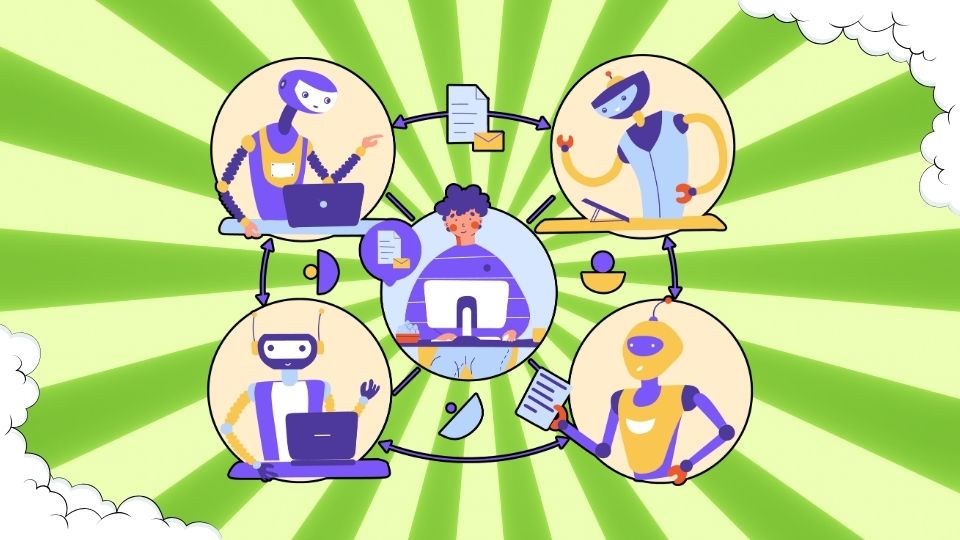
SOCi's strategy is focused on a particular operational challenge: managing marketing activities across businesses with hundreds or thousands of physical locations. Its Genius Agentic System assigns location-specific agents to activities such as local search, social media and reputation management while applying centralized brand rules.
The approach differs from conventional marketing automation, where a central team typically creates campaigns, workflows or templates that are subsequently distributed across locations. SOCi is positioning its agents as systems that can execute recurring tasks independently while remaining subject to enterprise-level controls.
That distinction matters as marketers evaluate whether agentic AI can move beyond content generation and recommendations into operational execution.
From Marketing Automation to Agentic Operations
The emergence of agentic AI is creating competition between specialized marketing platforms and broader enterprise software providers.
G2's Fall 2026 coverage illustrates the breadth of the market. ServiceNow, Microsoft, HubSpot, Workato and other enterprise software companies appear in G2's AI-agent rankings, reflecting the movement of autonomous software capabilities into IT, customer service, sales, collaboration and business-process automation.
For marketing organizations, the competitive question is therefore shifting from whether a platform offers AI to what work its agents can actually complete, what systems they can access and how effectively those actions can be governed.
SOCi's focus on multi-location businesses gives it a narrower operating environment than horizontal enterprise platforms. That specialization can be an advantage where location-level execution is difficult to coordinate manually, but it also limits the addressable problem set compared with platforms designed to automate workflows across an entire enterprise.
The Multi-Location Marketing Problem
Local marketing presents an unusually complex automation challenge. A national brand may have a common identity, messaging framework and compliance requirements, while each location needs accurate business information, locally relevant social activity, review responses and search visibility.
SOCi's architecture attempts to address that tension through distributed execution under centralized governance. The company currently says its system includes three primary agents — Local Search, Social and Reputation — supported by 10 Skills, with five additional Skills planned for launch by the end of 2026.
The model is particularly relevant to franchises, retail networks, restaurants, financial-services branches, healthcare organizations and other businesses where corporate marketing teams must coordinate activity across numerous locations.
SOCi has cited deployments including Sport Clips Haircuts, which it says uses more than 3,400 agents across 1,800 locations, and The Goddard School, which operates more than 660 locations. These are customer examples supplied by the company rather than independently audited deployment figures.
Market Landscape
The broader agentic AI market is becoming increasingly competitive as established enterprise vendors incorporate autonomous capabilities into existing software platforms.
G2's current AI Agents for Business Operations research describes the category as covering tools that autonomously handle business-operation tasks and improve productivity. Its July 2026 category data included products ranging from Salesforce Agentforce and Microsoft Copilot to specialized automation and conversational platforms.
This creates two distinct competitive models. Horizontal platforms can embed agents across established enterprise workflows, data and applications. Vertical or function-specific vendors, meanwhile, can optimize agents around specialized processes and industry requirements.
SOCi is pursuing the second model in marketing, with a particular emphasis on businesses that operate across multiple physical locations.
Strategic Outlook
The next test for SOCi will be whether agent deployment translates into measurable improvements in marketing economics rather than simply higher automation volumes.
For enterprise marketers, relevant measures include task completion rates, search visibility, response times, conversion, customer acquisition cost, retention and the amount of human intervention required. Governance will be equally important as autonomous systems gain permission to publish content, respond to customers and modify business information.
The G2 recognition provides third-party customer-review evidence of market traction, but rankings should not be treated as proof of business outcomes across every deployment. The more consequential benchmark will be whether customers can consistently demonstrate that agentic systems improve performance while maintaining brand, compliance and operational controls.
As enterprise AI adoption moves from experimentation toward production, that distinction is likely to become increasingly important.
Top Insights
- SOCi ranked No. 7 among 1,757 products in G2's AI Agents for Business Operations category, according to the company.
- The company reported more than 412,000 deployed Genius Agents as of August 2026.
- SOCi says its agents execute more than 27 million localized marketing tasks annually.
- G2's agentic AI categories increasingly include both specialized marketing platforms and broad enterprise technology vendors.
- The key competitive issue is moving AI agents from recommendations and content generation toward governed execution of business processes.
Get in touch with our MarTech Experts




