
marketing artificial intelligence
Red Robin Names Scott Hudler CMO as Restaurant Marketing Gets More Data-Driven
Red Robin Names Scott Hudler CMO as Restaurant Marketing Gets More Data-Driven
 PR Newswire
Published on : Aug 11, 2026
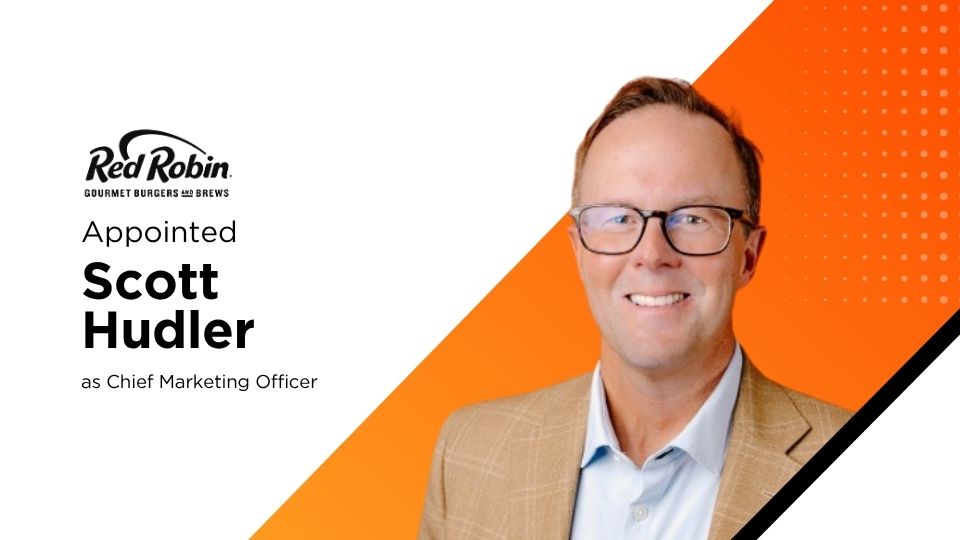
Red Robin Gourmet Burgers is changing the executive responsible for its marketing strategy as restaurant brands increasingly compete on digital engagement, loyalty, personalization and customer data—not just advertising and menu innovation. The company has appointed Scott Hudler as chief marketing officer, bringing in a veteran marketer whose background spans Whataburger, Torchy’s Tacos, DICK’S Sporting Goods, Dunkin’ Brands, Mars and Popeyes.
Red Robin Gourmet Burgers is bringing Scott Hudler into the chief marketing officer role as the restaurant chain looks to deepen customer engagement and build on its broader “First Choice” strategy.
Hudler will begin his transition on September 8 and succeeds Russ Klein, who has served as interim CMO since April 2025. Klein will remain with Red Robin in a consultative capacity through the end of 2026, supporting the leadership transition.
For Red Robin, the appointment comes at a time when restaurant marketing is becoming increasingly tied to first-party customer data, loyalty programs, digital ordering and personalized offers. Marketing chiefs at major restaurant chains are no longer simply responsible for brand campaigns; they increasingly sit at the intersection of customer intelligence, digital experience, product development and revenue growth.
Hudler arrives with more than 25 years of experience across restaurant and retail companies. Most recently, he was senior vice president and chief marketing officer at Whataburger, where he oversaw brand, marketing, digital and customer engagement initiatives.
His previous roles included senior marketing positions at Torchy’s Tacos, DICK’S Sporting Goods, Dunkin’ Brands, Mars and Popeyes. That combination of restaurant and retail experience is particularly relevant to a sector where customer expectations increasingly resemble those created by sophisticated consumer and ecommerce brands.
As Red Robin's CMO, Hudler will oversee brand strategy, advertising, digital marketing, loyalty, culinary innovation and development, guest insights and marketing communications. That remit gives him influence across much of the company's customer-facing technology and marketing stack.
The shift is significant because restaurant marketing increasingly depends on connecting these functions rather than treating them as separate channels. Loyalty data can inform promotional decisions, digital interactions can generate customer insights, and marketing automation can turn those insights into targeted communications.
McKinsey's 2026 analysis of the US restaurant industry found that consumers are becoming more selective about restaurant spending, with value, convenience and channel preferences reshaping demand. The research also found pickup-order frequency increased 14% year over year, while delivery basket values declined 6%.
That environment puts pressure on restaurant marketers to improve the economics of every customer interaction. Broad discounting can generate traffic, but sophisticated loyalty and personalization programs can potentially target incentives toward customers most likely to respond.
Red Robin's move therefore reflects a wider evolution in restaurant marketing: the CMO role is becoming increasingly connected to customer data infrastructure and measurable commercial outcomes.
From Brand Marketing to Customer Intelligence
The restaurant industry has spent years building digital loyalty ecosystems, but the competitive challenge is shifting from simply having an app or rewards program to making customer data useful.
Deloitte's research on restaurant loyalty programs found that 47% of restaurant loyalty members use their memberships several times a month, while 32% use them several times a week. At the same time, 67% belong to two or more loyalty programs, suggesting that enrollment alone does not guarantee customer loyalty.
For Red Robin, that creates a more complex marketing problem. Its loyalty program needs to generate repeat behavior while giving the company enough customer insight to understand frequency, preferences, promotional responsiveness and engagement.
Hudler's responsibility for both loyalty and guest insights puts those capabilities under the same executive umbrella.
The model increasingly resembles the customer-data strategies used by large retailers and technology companies. Platforms from Salesforce and Adobe, for example, connect customer profiles, marketing automation, analytics and engagement across multiple touchpoints. Restaurant operators are adapting similar principles to a business where the physical restaurant remains central but the customer relationship increasingly begins before a guest walks through the door.
What the Appointment Means for Enterprise Marketing Teams
The appointment also highlights a broader change in how enterprises evaluate marketing leadership.
A modern CMO needs to understand brand positioning, but also how customer data moves through CRM, loyalty, analytics, advertising and marketing automation systems. The most valuable marketing programs increasingly depend on these systems working together.
McKinsey has previously found that personalization leaders can generate meaningful revenue gains by tailoring communications and experiences to individual customers. Its research found companies that excel at personalization generate 40% more revenue from personalization activities than average performers.
Restaurant operators face an additional challenge: personalization has to work within a highly physical, location-dependent customer journey. A digital offer may influence where a consumer eats, what they order and when they return, but the actual experience still happens at a restaurant.
That makes culinary innovation particularly relevant to Hudler's expanded mandate. Menu development, customer insights and marketing can reinforce each other when customer behavior informs what products are promoted or developed.
Red Robin has not disclosed a specific technology roadmap tied to Hudler's appointment. The immediate announcement is a leadership change rather than a new marketing platform or AI deployment.
Still, the combination of digital marketing, loyalty, guest insights and culinary innovation points toward a marketing model increasingly built around connected customer intelligence.
For Red Robin, the test will be whether that strategy can translate into higher visit frequency, stronger loyalty and more efficient marketing spend. For the wider restaurant industry, Hudler's appointment is another indication that the modern CMO role is moving closer to the data, technology and customer-experience infrastructure traditionally owned by other parts of the enterprise.
Market Landscape
Restaurant marketing is entering a more technology-intensive phase. Consumers increasingly move between physical restaurants, mobile ordering, loyalty applications, delivery platforms, social media and digital promotions. That fragmentation makes first-party customer data more valuable while making generic mass marketing less efficient.
McKinsey's 2026 restaurant research points to a market where diners remain price-conscious but continue to value convenience and experience. It also highlights personalization and AI as emerging tools for tailoring offers to different consumer groups.
The competitive benchmark is consequently moving beyond traditional restaurant advertising. Major chains are increasingly expected to combine loyalty, customer analytics, digital ordering and targeted promotions into a coherent customer journey.
AI could accelerate that transition. McKinsey's recent analysis of the restaurant sector points to AI-powered personalization, digital agents and predictive capabilities becoming part of the industry's longer-term technology direction.
For marketing leaders, the implication is clear: customer engagement technology is becoming part of the operating model rather than simply another marketing channel.
Strategic Outlook
Hudler's appointment gives Red Robin an opportunity to connect brand strategy with the data and digital systems that increasingly determine restaurant customer engagement.
The company's challenge will be execution. Loyalty data is only valuable when it leads to better experiences, more relevant offers or stronger customer relationships. With consumers already enrolled in multiple restaurant programs, Red Robin will need to provide reasons for guests to actively engage rather than simply accumulate points.
The longer-term opportunity lies in connecting guest insights, loyalty, marketing automation, digital experiences and menu innovation. If those capabilities become integrated, Red Robin could move toward a more predictive marketing model in which customer behavior influences both communication and commercial decisions.
Top Insights
- Red Robin's Scott Hudler appointment expands the CMO mandate across loyalty, digital marketing and guest insights, reflecting broader restaurant industry digitization.
- Restaurant loyalty programs are becoming strategic data assets as brands seek higher visit frequency, stronger personalization and more measurable customer relationships.
- Hudler's Whataburger experience positions Red Robin to connect brand marketing with digital engagement, customer intelligence and restaurant-specific consumer behavior.
- AI and personalization are reshaping restaurant marketing as operators seek targeted offers and experiences that protect value while improving customer engagement.
- Enterprise marketing leaders increasingly need expertise across brand, analytics, loyalty and technology as customer journeys become more digitally connected.
Get in touch with our MarTech Experts




