
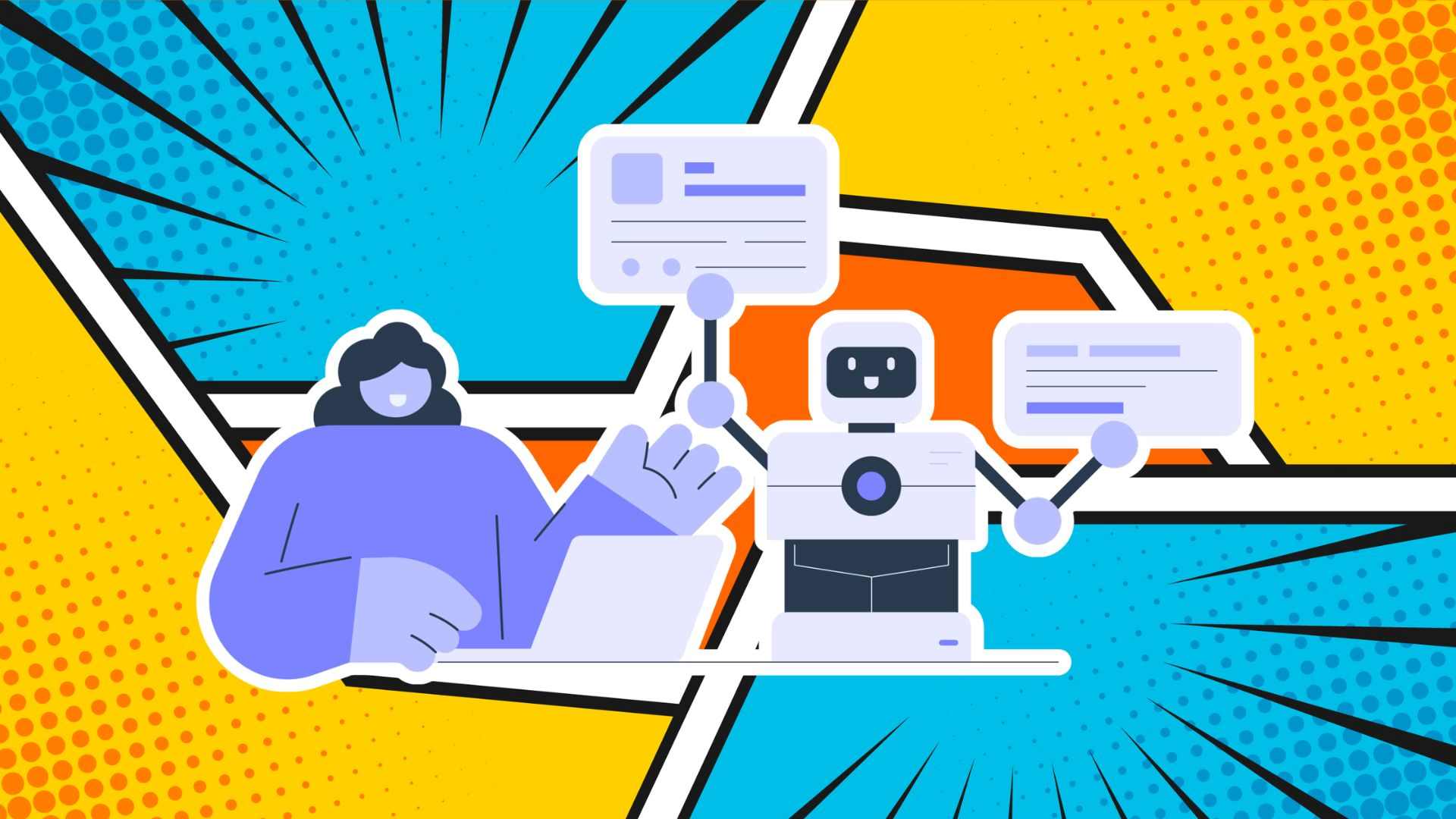
artificial intelligence automation
Mindbreeze Targets Enterprise AI Chaos With Governed “Touchpoints” and Workflow Automation
Mindbreeze Targets Enterprise AI Chaos With Governed “Touchpoints” and Workflow Automation
 Business Wire
Published on : Mar 17, 2026
Enterprise AI has a consistency problem. Outputs vary, prompts are unreliable, and decision-making often depends on fragmented data. Mindbreeze is taking aim at that gap with a major update to its Insight Workplace platform.
The company has rolled out new capabilities—Insight Touchpoints and Insight Journeys—designed to help organizations move from ad hoc AI experimentation to structured, governed, and repeatable execution at scale.
In a market flooded with copilots and chat interfaces, Mindbreeze is pushing a different idea: AI should follow business workflows, not the other way around.
From Prompt Chaos to Structured AI Workflows
One of the biggest challenges in enterprise AI adoption isn’t access—it’s control.
Teams often rely on:
-
Inconsistent prompts across users
-
Disconnected data sources
-
Outputs that lack verification or auditability
The result? AI that’s useful in pockets but unreliable at scale.
Mindbreeze’s approach is to standardize how AI is used inside the enterprise, embedding governance directly into workflows. The Insight Workplace acts as a central control plane where AI interactions are predefined, monitored, and repeatable.
Meet “Touchpoints”: AI Apps With a Job Description
At the core of the update are Insight Touchpoints—pre-built, role-specific AI applications.
Instead of asking employees to craft prompts from scratch, Touchpoints are designed by subject-matter experts and configured with:
-
Defined data sources
-
Retrieval logic
-
Governance and permission rules
Think of them less like chatbots and more like purpose-built enterprise apps.
For example, a Touchpoint might handle:
-
Responding to RFPs or questionnaires
-
Generating project updates
-
Identifying the right internal expert
-
Pulling context-specific documentation
The key advantage is consistency. Every user gets the same structured, validated output—reducing variability and risk.
“Journeys” Connect the Dots
If Touchpoints are individual apps, Insight Journeys are the workflows that tie them together.
Journeys connect multiple Touchpoints into end-to-end processes, mirroring how work actually happens across departments. These workflows:
-
Guide users through multi-step tasks
-
Pull real-time data from trusted sources
-
Maintain audit trails and governance controls
A customer support scenario illustrates the idea: instead of jumping between systems, an employee can follow a Journey that pulls product documentation, customer history, and prior resolutions—all within a single structured flow.
It’s a shift from searching for answers to orchestrating decisions.
A Centralized Control Plane for AI
All of this sits within the Insight Workplace, which acts as a governed hub for enterprise AI.
The platform allows organizations to:
-
Capture expert knowledge once and reuse it across teams
-
Standardize AI-driven processes across departments
-
Maintain full auditability and permission control
-
Reduce reliance on individual expertise or tribal knowledge
In effect, Mindbreeze is turning AI into a managed system of record for knowledge and decision-making, rather than a collection of loosely connected tools.
Why This Matters Now
As enterprises scale AI, the conversation is shifting from capability to control.
Key challenges include:
-
Ensuring consistent outputs across teams
-
Managing data access and compliance
-
Reducing risk in AI-assisted decisions
-
Scaling usage without losing oversight
Mindbreeze’s update directly targets these issues, aligning with a broader trend toward governed, enterprise-grade AI systems—especially as agentic AI and automation become more prevalent.
Competing With a Different Model
While many vendors are doubling down on open-ended AI assistants, Mindbreeze is taking a more structured approach.
That puts it in contrast with:
-
General-purpose copilots that rely heavily on user input
-
Standalone AI tools that lack workflow integration
-
Data platforms that don’t enforce governance at the interaction level
Instead, Mindbreeze is positioning itself around repeatability and trust—two qualities that become critical as AI moves deeper into operational decision-making.
The Bottom Line
Mindbreeze’s latest update is a reminder that scaling AI isn’t just about better models—it’s about better systems.
By introducing structured Touchpoints and workflow-driven Journeys, the company is aiming to turn AI from a flexible tool into a reliable, governed layer of enterprise operations.
For organizations struggling to move beyond experimentation, that shift—from prompts to processes—could make all the difference.
Get in touch with our MarTech Experts.




